Diploma in Emergency Medical Technician (EMT)
Mahatma Gandhi Ayurvigyan Vidyapeeth
Course Overview
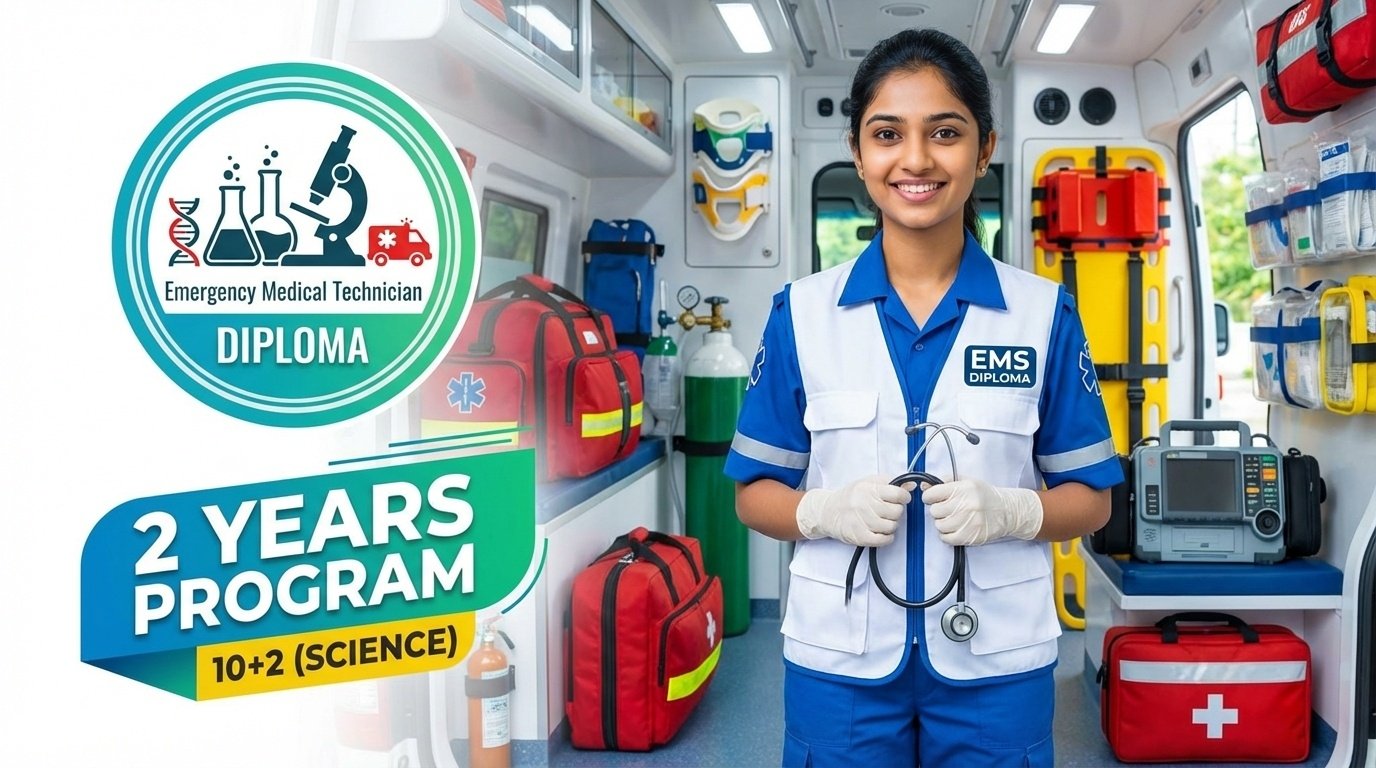
The Diploma in Emergency Medical Technician (EMT) is a focused 2-year paramedical program designed to create skilled first responders who provide critical pre-hospital emergency care. This comprehensive course trains students to become certified EMTs capable of assessing, stabilizing, and transporting patients during medical emergencies—often making the difference between life and death in the crucial moments before hospital arrival.
EMTs are the backbone of emergency medical services (EMS), serving as the first line of medical response in accidents, cardiac arrests, trauma situations, and natural disasters. With India's rapidly expanding emergency healthcare infrastructure and the growth of ambulance services like 108 and 102, trained EMTs are in unprecedented demand across the nation.
This diploma combines theoretical knowledge with intensive hands-on training, preparing graduates to work confidently in high-pressure emergency situations while providing compassionate, professional patient care.
Course Information
✅ Eligibility Criteria
- Educational Qualification: 10+2 (Science Stream) from a recognized board
- Mandatory Subjects: Physics, Chemistry, and Biology
- Minimum Percentage: As per institute norms (typically 40-50%)
- Age Limit: Generally 17-35 years at the time of admission
- Physical Requirements: Good physical fitness and stamina
- Medical Fitness: Valid medical certificate confirming fitness for emergency work
- Personal Qualities: Quick thinking, emotional stability, compassion, teamwork ability
Comprehensive Course Curriculum
Year 1: Foundation & Core EMT Skills
Semester 1: Fundamentals of Emergency Medical Services
- Introduction to EMS - History, Structure, and Career Pathways
- Medical Terminology and Healthcare Communication
- Human Anatomy & Physiology (Focus on Emergency Systems)
- Basic Life Support (BLS) - Theory and Certification
- Patient Assessment - Primary and Secondary Survey
- Vital Signs - Measurement and Interpretation
- Medical Ethics and Legal Responsibilities of EMTs
- Infection Control and Personal Protective Equipment (PPE)
- Communication Skills - Patient, Family, and Team Interaction
- Documentation and Medical Record Keeping
Semester 2: Emergency Response & Basic Care
- Airway Management - Basic Techniques
- Oxygen Therapy - Delivery Systems and Administration
- CPR (Cardiopulmonary Resuscitation) - Adult, Child, and Infant
- Automated External Defibrillator (AED) Operation
- Bleeding Control and Shock Management
- First Aid - Comprehensive Training
- Bandaging and Dressing Techniques
- Patient Moving and Lifting - Proper Techniques
- Ambulance Familiarization - Equipment and Layout
- Pharmacology Basics - Emergency Medications
Year 2: Advanced EMT Skills & Specialization
Semester 3: Advanced Emergency Care
- Trauma Management - Assessment and Stabilization
- Fractures and Dislocations - Splinting and Immobilization
- Spinal Injury Management - C-spine Protection and Backboarding
- Burns Management - Assessment and Initial Care
- Head Injuries - Recognition and Management
- Chest and Abdominal Trauma
- Cardiac Emergencies - Heart Attack, Angina, Cardiac Arrest
- Respiratory Emergencies - Asthma, COPD, Respiratory Distress
- Stroke Recognition and Management
- Diabetic Emergencies - Hypoglycemia and Hyperglycemia
- Seizures and Altered Mental Status
- Poisoning and Overdose Management
- Environmental Emergencies - Heat, Cold, Drowning
Semester 4: Specialized Training & Field Experience
- Obstetric Emergencies - Childbirth and Complications
- Pediatric Emergencies - Children and Infants
- Geriatric Emergency Care
- Psychiatric Emergencies and Behavioral Crisis
- Mass Casualty Incidents (MCI) and Triage
- Disaster Management and Response
- Extrication Techniques - Vehicle and Confined Space
- Advanced Patient Assessment
- Ambulance Operations - Driving and Scene Safety
- Radio Communication and Dispatch Procedures
- Hospital Emergency Department Internship (8-10 weeks)
- Ambulance Field Training (108/102 Services)
- Practical Examinations and Skill Assessment
- Project Work - Emergency Case Studies
Key Learning Outcomes
Upon successful completion, EMT diploma graduates will be able to:
Clinical Competencies:
- ✅ Rapid Assessment: Conduct quick, accurate patient evaluations in emergency situations
- ✅ Life-Saving Interventions: Perform CPR, use AED, control bleeding, manage airways
- ✅ Trauma Care: Stabilize fractures, manage burns, immobilize spinal injuries
- ✅ Medical Emergencies: Recognize and respond to cardiac, respiratory, and neurological emergencies
- ✅ Patient Transport: Safely move and transport patients using proper techniques and equipment
- ✅ Vital Signs: Accurately measure and interpret blood pressure, pulse, respiration, and temperature
- ✅ Oxygen Administration: Set up and manage various oxygen delivery systems
- ✅ Medication Assistance: Help patients take prescribed emergency medications
Operational Skills:
- ✅ Ambulance Operations: Navigate safely, maintain equipment, follow protocols
- ✅ Scene Management: Ensure safety, coordinate with police/fire services
- ✅ Communication: Use radio systems, liaise with hospitals, document care
- ✅ Triage: Prioritize patients in mass casualty situations
- ✅ Equipment Proficiency: Operate stretchers, backboards, splints, suction devices, monitors
Professional Attributes:
- ✅ Decision Making: Make critical choices under time pressure
- ✅ Team Collaboration: Work effectively with paramedics, doctors, and other responders
- ✅ Emotional Resilience: Manage stress and maintain composure in crisis situations
- ✅ Ethical Practice: Maintain patient confidentiality and professional standards
- ✅ Continuous Learning: Stay updated with latest emergency care protocols
Career Opportunities
EMT diploma graduates have excellent employment prospects across diverse sectors:
Primary Job Roles:
- Emergency Medical Technician (EMT-Basic)
- 108/102 Ambulance Technician (Government Emergency Services)
- Private Ambulance Service EMT
- Hospital Emergency Room Technician
- Pre-Hospital Care Provider
- Emergency Response Team Member
- Disaster Response Specialist
- Industrial Emergency Medical Officer
- Event Medical Support Staff
- Emergency Medical Dispatcher
- Patient Transport Technician
- Emergency Call Center Operator
- First Aid Trainer/Instructor
- Community Health Emergency Responder
Employment Sectors:
Government Services:
- 108 Emergency Response Service (State-run)
- 102 Ambulance Service (National Health Mission)
- Railway Medical Services
- Airport Medical Emergency Services
- Fire Department Medical Wing
- Civil Defense and Disaster Management
- Armed Forces Medical Corps
- Police Department Medical Units
Private Healthcare:
- Multi-specialty Hospital Emergency Departments
- Private Ambulance Companies (Ziqitza, BVG, CATS, etc.)
- Corporate Hospitals Emergency Services
- Standalone Emergency Centers
- Air Ambulance Services
- Medical Transport Companies
Specialized Services:
- Industrial Emergency Response Teams (Factories, Construction)
- Event Management Companies (Concerts, Sports, Festivals)
- Educational Institutions (School/College Medical Services)
- Shopping Malls and Commercial Complexes
- Tourist Resorts and Adventure Sports Centers
- Maritime and Offshore Medical Services
- Mining and Oil & Gas Sector Emergency Services
NGOs & Social Sector:
- Red Cross Society
- St. John Ambulance
- International Humanitarian Organizations
- Community Health Programs
- Disaster Relief Organizations
Salary Expectations (2026)
EMT Compensation Package:
Sector-Wise Salary Comparison:
Additional Income Sources:
- Overtime: 1.5x to 2x regular hourly rate
- Night Shift Allowance: ₹2,000-5,000/month
- Holiday Duty: Double pay on national holidays
- Performance Bonuses: ₹10,000-50,000 annually
- Training Services: ₹500-2,000 per session as first aid trainer
- Part-time Event Coverage: ₹1,500-3,500 per event
Note: Metro cities (Mumbai, Delhi, Bangalore) typically offer 25-40% higher salaries compared to tier-2 and tier-3 cities.
Why Choose Diploma in EMT?
1. High Demand Career
India needs over 1 lakh trained EMTs to meet growing emergency service requirements. The expansion of 108 services to all states creates continuous job openings.
2.Quick Entry to Healthcare
Start your healthcare career in just 2 years with a job-ready diploma. No need for lengthy MBBS or nursing degrees.
3. Government Job Opportunities
Direct employment in state 108/102 ambulance services with job security, regular salary, and benefits.
4. Affordable Education
At just ₹70,000 for 2 years (₹35,000/year), this is one of the most cost-effective healthcare training programs with excellent ROI.
5. Job Security
Emergency medical services are essential 24/7 services. EMTs enjoy recession-proof employment.
6. Multiple Career Paths
Work in ambulances, hospitals, industries, events, or progress to advanced paramedic roles with further training.
7. National Mobility
EMT skills are universally needed. Work anywhere in India with your diploma and certifications.
8. ⚡ Dynamic Work Environment
Every day brings new challenges and experiences. Never a dull moment in emergency medical services.
9. Social Recognition
Be respected as a first responder and community hero. EMTs receive public appreciation and recognition.
10. Growth Potential
Progress to advanced EMT, paramedic, emergency department supervisor, or even start your own ambulance service.
Unique Course Features
Industry-Standard Training:
- BLS Certification included in course curriculum
- ACLS Preparation - Advanced cardiac life support basics
- First Aid Certification - Recognized by Red Cross/St. John
- Ambulance Operations - Real vehicle training
- Simulation Labs - Practice on medical mannequins
Real-World Exposure:
- Hospital ER Rotations - 8-10 weeks in active emergency departments
- Ambulance Ride-Alongs - Experience real emergency calls
- 108/102 Service Partnerships - Direct exposure to government ambulance operations
- Disaster Drill Participation - Mass casualty incident simulations
- Community Health Camps - Practical outreach experience
Comprehensive Skill Development:
- Physical Fitness Training - Strength and endurance building
- Stress Management - Coping with emotional challenges
- Communication Workshops - Patient, family, and team interaction
- Leadership Development - Crisis management and decision-making
- Language Skills - Medical terminology in English and Hindi
Modern Infrastructure:
- Fully equipped ambulance for training
- Emergency simulation lab with advanced mannequins
- Trauma care equipment and supplies
- Computer lab for e-learning and documentation practice
- Library with emergency medicine resources
Further Education & Career Advancement
Higher Education Options:
- B.Sc. in Emergency Medical Services (Lateral Entry after diploma)
- B.Sc. in Emergency & Trauma Care Technology
- Advanced Paramedic Diploma (Critical Care Paramedic)
- B.Sc. in Nursing (with bridge course)
- Post-Graduate Diploma in Emergency Medicine
- Bachelor of Emergency Health Sciences
Professional Certifications:
- Advanced EMT (AEMT) Certification
- Paramedic Certification
- ACLS (Advanced Cardiac Life Support)
- PHTLS (Pre-Hospital Trauma Life Support)
- ITLS (International Trauma Life Support)
- PALS (Pediatric Advanced Life Support)
- NREMT (National Registry of EMT - USA) for international opportunities
Career Progression Path:
EMT-Basic → EMT-Advanced → Paramedic → Senior Paramedic/Supervisor → Emergency Services Coordinator → EMS Manager → Director of Emergency Services
Entrepreneurial Opportunities:
- Start private ambulance service
- Establish first aid training center
- Provide event medical coverage services
- Corporate health and safety consulting
- Medical equipment supply business
Why Choose Mahatma Gandhi Ayurvigyan Vidyapeeth?
- ✅ Experienced Faculty: Learn from certified EMTs, paramedics, and emergency physicians
- ✅ Real Ambulance Training: Practice in actual ambulance vehicles
- ✅ Hospital Partnerships: Clinical rotations in reputed emergency departments
- ✅ 108 Service Collaboration: Direct exposure to government emergency services
- ✅ BLS Certification: Included in course at no extra cost
- ✅ Modern Simulation Labs: Practice realistic emergency scenarios
- ✅ Placement Support: Direct recruitment drives by ambulance services and hospitals
- ✅ Affordable Fees: Quality education at just ₹70,000 (2 years)
- ✅ Flexible Payment: Installment options available
- ✅ Government Recognition: Institute approved and diploma recognized
- ✅ High Success Rate: 90%+ students secure jobs within 6 months
- ✅ Alumni Network: Connect with working EMTs for guidance and opportunities
Admission Process
Simple 6-Step Enrollment:
Step 1: Online Application ⏰ (10 minutes)
Step 2: Document Submission
- Submit scanned copies of required documents (list below)
- Ensure clarity and completeness
Step 3: Eligibility Verification ✅
- Institute reviews your 10+2 marks
- Background verification
- Typically completed within 2-3 days
Step 4: Admission Counseling
- One-on-one session with admission counselor
- Course details, career prospects discussion
- Campus tour (virtual/physical)
- Doubt clarification
Step 5: Fee Payment
- Pay first semester/annual fees
- Multiple payment modes accepted
- Receive official fee receipt
Step 6: Enrollment Confirmation
- Receive admission letter
- Get student ID card
- Collect course materials
- Join orientation program
- Begin your EMT journey!
Required Documents Checklist
Please keep these documents ready:
Academic Documents:
- ☑️ 10th Standard Mark Sheet & Certificate
- ☑️ 12th Standard Mark Sheet & Certificate (Science with PCB)
- ☑️ Transfer Certificate from previous institution
- ☑️ Migration Certificate (if from different board)
- ☑️ Character Certificate from school/college
Identity & Medical:
- ☑️ Aadhar Card (mandatory)
- ☑️ PAN Card (if available)
- ☑️ Medical Fitness Certificate from registered doctor
- ☑️ Passport Size Photographs (8 copies)
- ☑️ Blood Group Certificate
Additional (if applicable):
- ☑️ Caste Certificate (for reservation benefits)
- ☑️ Domicile Certificate
- ☑️ Income Certificate (for fee concessions/scholarships)
- ☑️ GAP Certificate (if applicable)
Course Delivery Methodology
Teaching Approach:
Theory Classes (30%):
- Interactive lectures with multimedia presentations
- Case-based learning and discussions
- Guest lectures from emergency physicians and experienced EMTs
- Video demonstrations of emergency procedures
Practical Training (50%):
- Hands-on skill practice in simulation labs
- CPR and BLS practice sessions
- Ambulance equipment familiarization
- Patient assessment drills
- Trauma management simulations
- Real emergency department rotations
Field Experience (15%):
- Ambulance ride-alongs with 108/102 services
- Community first aid camps
- Disaster management drills
- Industrial site visits
- Event medical coverage participation
Assessment & Evaluation (5%):
- Monthly skill assessments
- Theory examinations (semester-wise)
- Practical examinations (OSCE format)
- Emergency scenario evaluations
- Clinical logbook maintenance
- Final comprehensive examination
⚡ A Day in the Life of an EMT
Typical Work Scenarios:
Morning Shift (6 AM - 2 PM):
- Equipment check and ambulance inspection
- Respond to road traffic accident - stabilize trauma victim
- Transport cardiac patient to hospital
- Restock ambulance supplies
- Documentation and handover
Evening Shift (2 PM - 10 PM):
- Receive emergency call - difficulty breathing
- Provide oxygen therapy and transport
- Standby at community event for medical emergencies
- Assist hospital ER during patient influx
- Training session with new EMT recruits
Night Shift (10 PM - 6 AM):
- Emergency response to chest pain call - possible heart attack
- Perform CPR on cardiac arrest patient
- Transport obstetric emergency
- Scene safety management at accident site
- Rest between calls, equipment maintenance
No two days are the same! EMTs experience diverse situations, meet different people, and continuously learn on the job.
Start Your EMT Career Today!
Join the Diploma in Emergency Medical Technician program at Mahatma Gandhi Ayurvigyan Vidyapeeth and become a certified first responder. Save lives, serve your community, and build a stable, rewarding career in emergency medical services!