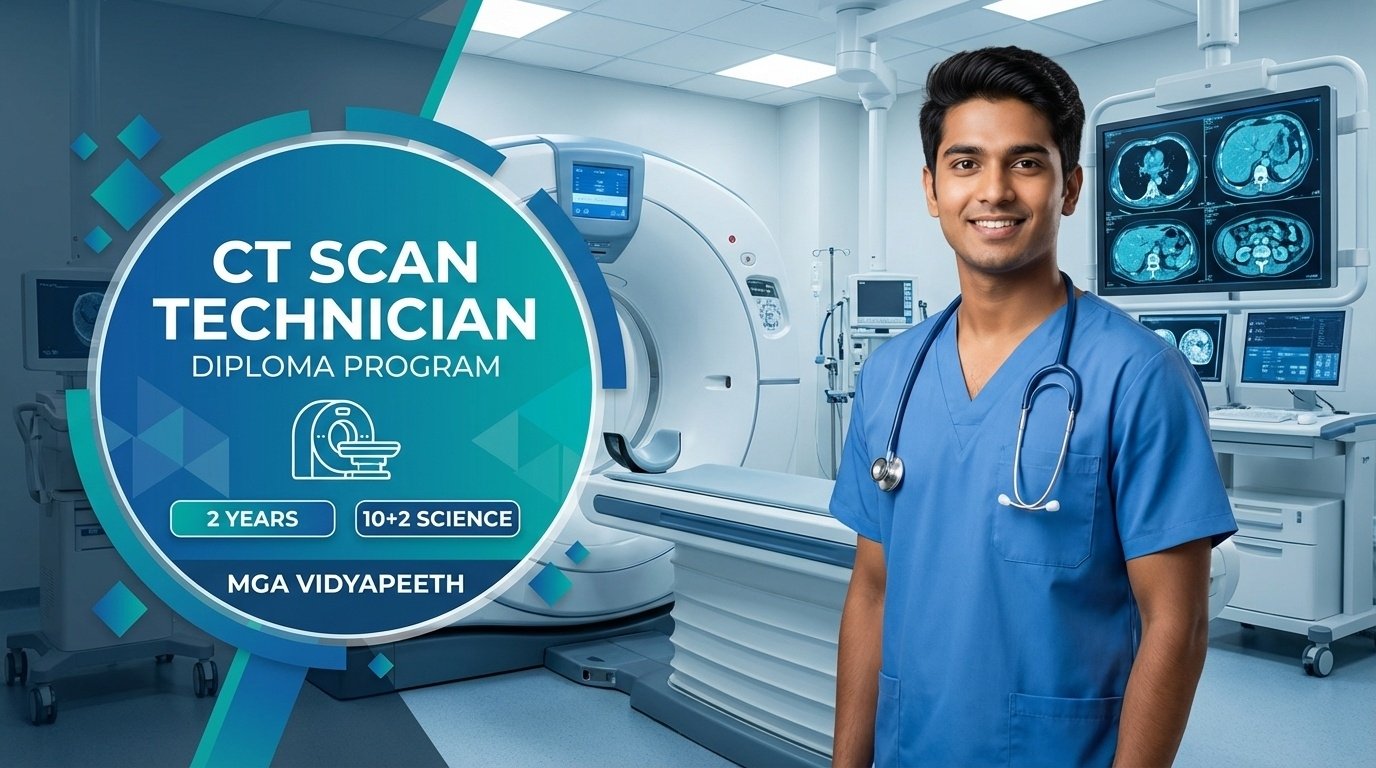
The Diploma in CT Scan Technician is a specialized 2-year paramedical program designed to train students in operating advanced Computed Tomography (CT) scanning equipment and producing high-quality diagnostic images. This course combines theoretical knowledge of anatomy, radiological physics, and patient care with intensive hands-on training in CT scan technology, preparing graduates for critical roles in modern diagnostic imaging departments.
Computed Tomography (CT) scanning is one of the most sophisticated and widely used diagnostic imaging techniques in modern medicine. CT technicians are specialized healthcare professionals who operate multi-million-dollar equipment to create detailed cross-sectional images of the body, helping physicians diagnose diseases, plan treatments, and save lives. With healthcare advancing rapidly and diagnostic imaging becoming increasingly crucial, CT scan technicians are among the most sought-after professionals in the medical field.
Course Highlights
✅ Eligibility Criteria
Academic Requirements
- Educational Qualification: 10+2 (Higher Secondary) from a recognized board
- Stream: Science (Physics, Chemistry, Biology) OR (Physics, Chemistry, Mathematics)
- Minimum Marks: 45-50% aggregate in Science subjects
- Age Limit: Minimum 17 years at the time of admission
- Medical Fitness: Good physical health, no visual impairment
Preferred Skills
- Basic understanding of physics and biology
- Good hand-eye coordination
- Attention to detail and precision
- Comfortable working with technology
- Patient and empathetic nature
- Good communication skills
- Ability to work under pressure
Ideal Candidates
Students who are:
- Interested in medical technology and healthcare
- Fascinated by diagnostic imaging and radiology
- Detail-oriented and technically inclined
- Willing to work in hospital environments
- Committed to patient safety and care
- Eager to work with advanced medical equipment
Comprehensive Course Curriculum
The 2-year diploma program provides extensive theoretical knowledge and practical training:
Year 1 - Foundation & Basic Sciences
Semester 1
Module 1: Human Anatomy - I
- General Anatomy:
- Introduction to anatomical terminology
- Body planes and directions
- Organ systems overview
- Systematic Anatomy:
- Skeletal system (Osteology)
- Muscular system (Myology)
- Cardiovascular system
- Respiratory system
- Digestive system
- Surface Anatomy & Landmarks
- Practical: Anatomical models and charts study
Module 2: Human Physiology
- Cell physiology and tissues
- Blood and circulatory system
- Heart and blood vessels function
- Respiratory physiology
- Digestive and metabolic processes
- Renal system
- Endocrine system basics
- Laboratory Practicals
Module 3: Biochemistry
- Basic biochemistry concepts
- Biomolecules (proteins, carbohydrates, lipids)
- Enzymes and metabolism
- Clinical biochemistry
- Body fluids and electrolytes
- Acid-base balance
- Lab Work: Basic biochemical tests
Module 4: General & Radiological Physics
- Basic Physics:
- Matter and energy
- Heat and temperature
- Electricity and magnetism
- Wave motion and radiation
- Radiation Physics:
- Nature of X-rays
- Production of X-rays
- Interaction of radiation with matter
- Radiation measurement
- Electromagnetic spectrum
- Nuclear Physics Basics
Semester 2
Module 5: Radiological Anatomy
- Cross-Sectional Anatomy:
- Head and brain anatomy
- Thorax anatomy
- Abdomen and pelvis anatomy
- Spine anatomy
- Musculoskeletal anatomy
- Surface Markings for CT
- Anatomical Variations
- Pathological Anatomy Basics
- Practical: CT image interpretation basics
Module 6: CT Scan Technology & Physics
- Introduction to CT Scanning:
- History and evolution of CT
- Principles of computed tomography
- CT vs. conventional X-ray
- CT Scanner Components:
- Gantry and its components
- X-ray tube and detector systems
- Computer and reconstruction systems
- Table and positioning devices
- CT Physics:
- Image formation and reconstruction
- Hounsfield units (HU)
- Window width and window level
- Spatial resolution and contrast
- CT artifacts and their causes
- Types of CT Scanners:
- Single-slice CT
- Multi-slice CT (MSCT)
- Spiral/Helical CT
- Dual-energy CT
Module 7: Patient Care & Safety
- Patient assessment and screening
- Patient preparation for CT procedures
- Communication with patients
- Managing anxious patients
- Pediatric patient handling
- Geriatric patient care
- Emergency patient management
- Infection control protocols
- Patient privacy and dignity
Module 8: Computer Applications
- Computer fundamentals
- Medical imaging software
- PACS (Picture Archiving and Communication System)
- DICOM (Digital Imaging and Communications in Medicine)
- Image processing basics
- Data management
- Hospital Information System (HIS)
Year 2 - Advanced CT Techniques & Clinical Practice
Semester 3
Module 9: Advanced CT Scanning Techniques
- CT Scanning Protocols:
- Brain CT protocols
- Chest CT protocols
- Abdominal CT protocols
- Pelvic CT protocols
- Spine CT protocols
- Musculoskeletal CT protocols
- Specialized CT Procedures:
- CT Angiography (CTA)
- CT Pulmonary Angiography (CTPA)
- Cardiac CT
- Virtual Colonoscopy
- CT Urography
- High-Resolution CT (HRCT)
- 3D CT reconstruction
- Patient Positioning:
- Supine, prone, lateral positions
- Gantry angulation
- Positioning aids and accessories
- Immobilization techniques
Module 10: Contrast Media in CT
- Contrast Agents:
- Types of contrast media (ionic, non-ionic)
- Iodinated contrast agents
- Mechanism of action
- Indications and contraindications
- Contrast Administration:
- Oral contrast
- Intravenous (IV) contrast
- Injection rates and protocols
- Bolus timing and tracking
- Power injector operation
- Contrast Reactions:
- Minor reactions (nausea, hives)
- Moderate reactions (vomiting, bronchospasm)
- Severe reactions (anaphylaxis, cardiac arrest)
- Emergency management protocols
- Patient Screening:
- Kidney function assessment (Creatinine levels)
- Allergy history
- Medication review
- Pregnancy screening
Module 11: Radiation Safety & Protection
- Radiation Biology:
- Effects of radiation on human body
- Acute vs. chronic effects
- Deterministic vs. stochastic effects
- Radiation sensitivity of organs
- Radiation Protection Principles:
- ALARA (As Low As Reasonably Achievable)
- Time, distance, shielding
- Dose optimization techniques
- Radiation Dosimetry:
- CTDIvol (CT Dose Index)
- DLP (Dose Length Product)
- Effective dose calculation
- Dose monitoring and recording
- Protection Practices:
- Staff protection measures
- Patient dose reduction
- Pediatric dose considerations
- Pregnant patient protocols
- Protective equipment and barriers
Semester 4
Module 12: CT Pathology & Image Interpretation
- Neurological CT:
- Stroke (ischemic, hemorrhagic)
- Brain tumors
- Head trauma
- Hydrocephalus
- Infections
- Thoracic CT:
- Lung diseases (pneumonia, TB, cancer)
- Pulmonary embolism
- Mediastinal masses
- Pleural diseases
- Abdominal & Pelvic CT:
- Liver pathology
- Kidney stones and masses
- Pancreatic diseases
- Bowel obstruction
- Appendicitis
- Musculoskeletal CT:
- Fractures and dislocations
- Bone tumors
- Joint diseases
- Image Quality Assessment:
- Identifying good vs. poor images
- Artifact recognition
- Image optimization
Module 13: Advanced Applications & Special Procedures
- 3D/4D CT Imaging
- Volume rendering
- Maximum intensity projection (MIP)
- Multiplanar reconstruction (MPR)
- Virtual reality imaging
- CT-Guided Interventions:
- CT-guided biopsy
- CT-guided drainage
- Assistance during procedures
- Post-procedure care
- Cardiac CT:
- Coronary angiography
- Calcium scoring
- ECG gating techniques
- Pediatric CT:
- Age-specific protocols
- Dose reduction strategies
- Child-friendly techniques
- Emergency CT:
- Trauma protocols
- Stroke protocols
- Rapid scanning techniques
Module 14: Quality Assurance & Equipment Maintenance
- Quality Control (QC):
- Daily QC procedures
- Weekly and monthly checks
- Calibration protocols
- Performance testing
- Equipment Maintenance:
- Preventive maintenance
- Troubleshooting common issues
- Tube life monitoring
- Software updates
- Image Quality Standards:
- Noise assessment
- Contrast resolution
- Spatial resolution
- Uniformity checks
- Documentation & Record Keeping:
- QC logs
- Maintenance records
- Incident reporting
Module 15: Professional Practice & Ethics
- Medical Ethics:
- Patient rights and confidentiality
- Informed consent
- Professional conduct
- Ethical dilemmas in imaging
- Legal Aspects:
- Medical negligence
- Documentation requirements
- Medicolegal cases
- Patient safety regulations
- Communication Skills:
- Interdisciplinary communication
- Patient counseling
- Report writing
- Presentation skills
- Hospital Administration Basics:
- Departmental workflow
- Inventory management
- Billing and coding basics
- Healthcare regulations
Clinical Training & Internship
Throughout the Course (800+ Hours)
Hospital Attachments:
- 6-month intensive clinical internship in final semester
- Rotating postings in CT imaging departments
- Hands-on training on CT scanners
- Real patient scanning under supervision
- Emergency department experience
- OPD and IPD imaging procedures
Practical Training Includes:
- Patient positioning and preparation
- Scanner operation and protocol selection
- Contrast administration
- Image acquisition and reconstruction
- Quality control procedures
- Emergency management
- Report generation
- PACS operation
Clinical Competencies:
- Minimum 200+ supervised CT scans
- Various anatomical regions
- Routine and emergency procedures
- Pediatric and adult patients
- Contrast and non-contrast studies
- Portfolio building and case documentation
Expansive Career Opportunities
CT Scan Technicians enjoy excellent career prospects in the rapidly growing healthcare sector:
Hospital & Healthcare Settings
1. CT Scan Technician/Technologist
- Multi-specialty hospitals
- Super-specialty hospitals
- Diagnostic centers
- Imaging clinics
- Salary: ₹20,000 - ₹45,000 per month
2. Senior CT Technologist
- Lead technologist positions
- Protocol development
- Quality assurance responsibility
- Salary: ₹35,000 - ₹65,000 per month
3. Chief CT Technologist
- Department head positions
- Team management
- Equipment procurement
- Salary: ₹50,000 - ₹90,000 per month
Specialized Imaging Centers
4. Cardiac CT Specialist
- Specialized cardiac imaging centers
- Heart hospitals
- Advanced cardiac CT procedures
- Salary: ₹30,000 - ₹60,000 per month
5. Neuro CT Specialist
- Neuro-imaging centers
- Brain and spine hospitals
- Stroke centers
- Salary: ₹28,000 - ₹55,000 per month
6. Interventional CT Technologist
- CT-guided biopsy procedures
- Interventional radiology departments
- Salary: ₹35,000 - ₹70,000 per month
Research & Education
7. Clinical Applications Specialist
- Medical equipment companies (GE, Siemens, Philips)
- Product demonstrations
- Customer training
- Technical support
- Salary: ₹40,000 - ₹80,000 per month + incentives
8. CT Technology Trainer
- Medical colleges and institutes
- Hospital training departments
- Equipment vendor training programs
- Salary: ₹35,000 - ₹70,000 per month
9. Research Assistant
- Medical research institutions
- Clinical trials
- Imaging research projects
- Salary: ₹30,000 - ₹60,000 per month
Government Sector
10. Government Hospital CT Technician
- AIIMS, PGI, Government Medical Colleges
- District hospitals
- Government diagnostic centers
- Salary: ₹30,000 - ₹70,000 per month + benefits
11. Defense Services Radiology Technician
- Army, Navy, Air Force hospitals
- Paramilitary medical facilities
- Salary: ₹35,000 - ₹80,000 per month + perks
12. Railway/PSU Imaging Technologist
- Railway hospitals
- Public sector undertakings
- Salary: ₹35,000 - ₹75,000 per month
Other Opportunities
13. Mobile CT Service Technician
- Mobile imaging units
- Rural healthcare initiatives
- Remote area services
- Income: ₹25,000 - ₹50,000 per month
14. Quality Assurance Specialist
- Imaging quality control
- Accreditation compliance
- Protocol standardization
- Salary: ₹40,000 - ₹75,000 per month
15. PACS Administrator
- Digital imaging management
- IT integration in radiology
- Data management
- Salary: ₹35,000 - ₹70,000 per month
16. Medical Equipment Sales Representative
- CT scanner companies
- Technical sales and support
- Income: ₹30,000 - ₹60,000 per month + commission
International Opportunities
17. Overseas CT Technologist
- USA, UK, Canada, Australia, UAE, Saudi Arabia
- Hospital and diagnostic center positions
- Better compensation packages
- Salary: $3,500 - $7,000 per month (₹2.9 - 5.8 Lakh)
Salary & Compensation
Entry Level (0-2 Years)
Mid-Level (3-5 Years)
Senior Level (7+ Years)
- Night Shift: Additional ₹5,000 - ₹15,000 per month
- Emergency Duty: ₹500 - ₹1,500 per duty
- Weekend Work: Additional compensation
- Overtime: ₹200 - ₹500 per hour
Private Practice & Consultation
- Per Scan Charges: ₹500 - ₹2,000 (depending on procedure)
- Part-time Consultation: ₹20,000 - ₹40,000 per month
Note: Salaries vary based on location (metro vs. tier-2/3 cities), hospital type (corporate vs. government), experience, and additional certifications. Corporate hospitals in metros pay 30-50% higher than tier-2 cities.
Why Choose CT Scan Technology?
Booming Industry & High Demand
Healthcare Growth:
- India's diagnostic imaging market growing at 12% CAGR
- Increasing disease burden requiring advanced diagnostics
- CT scans essential for cancer, trauma, cardiac, neurological diagnosis
- Post-COVID awareness boosting diagnostic testing
Statistics & Facts:
- Global Shortage: Estimated shortage of qualified CT technicians worldwide
- Job Growth: 5% annual growth projected (2024-2034)
- Openings: 15,400+ positions annually in imaging sector
- Essential Service: CT imaging critical in emergency and critical care
- Technology Advancement: Newer AI-integrated CT scanners increasing demand
Career Advantages
1. High-Tech Healthcare Career
- Work with cutting-edge medical technology
- Multi-million dollar equipment operation
- Advanced computer and software skills
- Constantly evolving technology keeps work interesting
2. Critical Role in Healthcare
- Direct impact on patient diagnosis and treatment
- Essential member of healthcare team
- Work alongside radiologists and physicians
- Contribute to saving lives daily
3. Excellent Job Security
- Healthcare is recession-proof
- CT imaging is irreplaceable diagnostic tool
- Shortage of qualified technicians
- Government and private opportunities
- Essential medical service
4. Quick Career Start
- Only 2 years of education
- Immediate employability after course
- Start earning within 2-3 years after 12th
- Lower education investment compared to medical degrees
5. Diverse Work Environments
- Hospitals (emergency, OPD, IPD)
- Diagnostic centers
- Research institutions
- Medical equipment companies
- Mobile imaging units
- Teaching institutions
6. Regular Working Hours
- Shift-based work (morning, evening, night)
- Fixed duty hours (8-9 hours)
- Overtime compensation
- Leave benefits
7. Continuous Learning
- Regular technology upgrades
- Workshops and training programs
- Certification courses available
- Conference attendance opportunities
8. Global Career Mobility
- High demand worldwide
- Transferable skills
- International certifications available
- Better compensation abroad
9. Respect & Recognition
- Valued healthcare professional
- Work in sterile, professional environment
- White-coat profession
- Interaction with medical professionals
10. Multiple Career Paths
- Clinical practice
- Teaching and training
- Research
- Medical equipment industry
- Healthcare administration
- Quality assurance
Industry Insights
CT Imaging Market in India
Market Size & Growth:
- Diagnostic imaging market: ₹20,000+ crore
- CT equipment market growing at 8-10% annually
- 5,000+ CT scanners operational in India
- Metro cities leading in advanced imaging facilities
Technology Trends:
- AI Integration: Artificial intelligence for image reconstruction
- Dual-Energy CT: Enhanced tissue characterization
- 4D CT: Time-resolved imaging
- Low-Dose CT: Reduced radiation exposure
- Mobile CT Units: Rural healthcare outreach
- Cloud-based PACS: Remote image access
Key Drivers:
- Rising cancer incidence (CT crucial for diagnosis and staging)
- Trauma care expansion (CT essential for emergency)
- Cardiac disease burden (Cardiac CT angiography demand)
- Aging population (increased diagnostic needs)
- Insurance coverage expansion
- Medical tourism growth
Higher Education & Specialization
After completing the Diploma in CT Scan Technician, graduates can pursue:
Bachelor's Programs
- B.Sc. Medical Imaging Technology - 3 years
- B.Sc. Radiology & Imaging Technology - 3 years
- B.Sc. CT & MRI Technology - 3 years
- Lateral Entry into 2nd/3rd year (depending on eligibility)
Advanced Diplomas & Certifications
- Advanced Diploma in MRI Technology - 1 year
- PG Diploma in Radiology & Imaging - 1-2 years
- Certificate in Cardiac CT - 3-6 months
- Certificate in Interventional Radiology - 6 months
- PACS Administration Certification
- Radiation Safety Officer Course
Specialized Training
- 3D/4D CT Reconstruction
- CT Angiography Specialist
- Pediatric CT Imaging
- Dental CT (CBCT)
- PET-CT Technology
International Certifications
- ARRT (American Registry of Radiologic Technologists) - USA
- CAMRT Certification - Canada
- ASRT Member Certification - USA
- European Board Certification
Master's Programs
- M.Sc. Medical Imaging Technology - 2 years
- M.Sc. Radiology - 2 years
- MBA Healthcare Management - 2 years
About Mahatma Gandhi Ayurvigyan Vidyapeeth
Mahatma Gandhi Ayurvigyan Vidyapeeth is committed to producing highly skilled CT scan technicians equipped with both theoretical knowledge and practical expertise.
Why Choose Us?
Expert Faculty
- Qualified radiographers and technologists
- Experienced radiologists as guest faculty
- Certified CT specialists
- Regular faculty development programs
State-of-the-Art Training Facilities
- Modern CT Scanner Lab: Latest generation multi-slice CT scanner
- Simulation Training: CT scanner simulator for practice
- Anatomy Lab: 3D models and specimens
- Physics Lab: Radiation measurement equipment
- Computer Labs: PACS and imaging software training
- Well-equipped Library: Radiology books and journals
Industry Partnerships
- Hospital Collaborations: 15+ multi-specialty hospitals for internship
- Equipment Manufacturers: Tie-ups with GE, Siemens, Philips
- Diagnostic Centers: 20+ diagnostic centers for clinical posting
- Guest Lectures: Regular sessions by senior radiologists
100% Placement Assistance
- Dedicated placement cell
- Campus recruitment drives
- Hospital tie-ups for direct placement
- Interview preparation and resume building
- Job alerts and career counseling
- Alumni network support
Unique Features
- Small Batch Size: Personalized attention (max 30 students/batch)
- Hands-on Training: Minimum 800 hours clinical exposure
- Industry Exposure: Regular hospital and equipment company visits
- Workshops: Monthly skill development workshops
- Certification: Additional courses in radiation safety, PACS
- Modern Curriculum: Updated with latest CT techniques and AI integration
Student Support
- Scholarships for meritorious students
- Financial aid for economically weak students
- Hostel facilities (separate for boys and girls)
- Library and study materials
- Sports and extracurricular activities
- Counseling and mentorship
Admission Process
Step-by-Step Application Guide
Step 1: Eligibility Check
- Verify 10+2 Science qualification
- Ensure minimum percentage requirement
- Check age criteria (17+ years)
- Medical fitness verification
Step 2: Online Registration
Step 3: Application Form
- Complete detailed application form
- Provide academic details
- Enter personal information
- Upload photograph
Step 4: Document Upload
- Scan and upload all required documents
- Ensure clear, readable copies
- Verify information accuracy
Step 5: Application Fee Payment
- Pay application fee (₹1,000-1,500) online
- Payment through credit/debit card, net banking, UPI
- Save payment receipt
Step 6: Entrance Test (If Applicable)
- Written test on Physics, Chemistry, Biology
- General knowledge and aptitude
- English proficiency
- Test duration: 2 hours
Step 7: Personal Interview
- Shortlisted candidates called for interview
- Assessment of communication skills
- Interest and aptitude evaluation
- Career goal discussion
Step 8: Merit List & Counseling
- Merit list published on website
- Check admission status online
- Attend counseling session (if selected)
- Document verification
Step 9: Admission Confirmation
- Pay admission fees
- Submit original documents
- Collect admission kit, ID card, uniform
- Attend orientation program
Required Documents Checklist
✅ Academic Certificates
- 10th mark sheet and certificate
- 12th mark sheet and certificate (Science)
- School leaving certificate/Transfer Certificate
- Migration certificate (if from another board)
- Character certificate from school
✅ Identity Proof
- Aadhar Card (mandatory)
- PAN Card (if available)
- Passport (optional)
- Voter ID (if available)
✅ Medical Certificates
- Medical fitness certificate from registered physician
- Eye test report (vision should be normal/corrected)
- No communicable disease certificate
- Blood group report
✅ Photographs
- 10 passport-size color photographs
- Recent (not older than 3 months)
- White background preferred
✅ Other Documents
- Category certificate (SC/ST/OBC if applicable)
- Income certificate (for scholarship)
- Domicile certificate (if required)
- Gap certificate (if gap after 12th)
- Residence proof
Fee Structure
Additional Expenses:
- Books and study materials: ₹5,000-7,000
- Lab coat and uniform: ₹2,000-3,000
- Internship expenses: Minimal
- ID card and badges: ₹500
Payment Options:
- Lump Sum: Full payment at admission (5% discount available)
- Annual Payment: Pay year-wise
- Semester Payment: Pay semester-wise
- EMI Options: Through education loan partners
- Education Loan: Facilitation with partner banks
Scholarships & Financial Aid:
- Merit Scholarship: Up to 30% fee waiver for top performers
- Reserved Category: Government scheme benefits
- Economically Weaker Section (EWS): Up to 50% concession
- Girl Child Scholarship: 10% additional discount
- Sports Quota: Special concessions for state/national players
Student Life & Learning Experience
Typical Daily Schedule
Morning Session (8:00 AM - 1:00 PM)
- Theory lectures (anatomy, physics, technology)
- Practical demonstrations
- Simulator training
- Interactive sessions with radiologists
Afternoon Session (2:00 PM - 5:00 PM)
- CT scanner operation training
- Clinical postings in hospitals
- Patient positioning practice
- Image processing and PACS training
- Case discussions
Self-Study & Activities
- Library study time
- Assignment completion
- Research and presentations
- Quiz preparations
Hands-On Learning
Laboratory Training:
- CT scanner simulator practice (100+ hours)
- Real CT scanner operation (under supervision)
- Patient positioning on mannequins
- Contrast injector operation
- Quality control procedures
- Emergency scenario drills
Clinical Training:
- Hospital department rotations
- Real patient scanning (supervised)
- Different CT protocols practice
- Emergency CT procedures
- Interaction with radiologists
- Report generation training
Skills Development:
- Technical skills (scanner operation)
- Patient care and communication
- Emergency response
- Teamwork and collaboration
- Professional ethics
- Time management
Campus Activities
- World Radiology Day celebrations (Nov 8)
- Health Awareness Camps (free CT screening camps)
- Technical Workshops by equipment companies
- Guest Lectures by senior radiologists
- Inter-college Competitions (quiz, paper presentations)
- Industrial Visits to imaging centers
- Sports and Cultural Events
- Annual Function and Awards