Diploma in Medical Imaging Technology (DMIT)
Course Overview
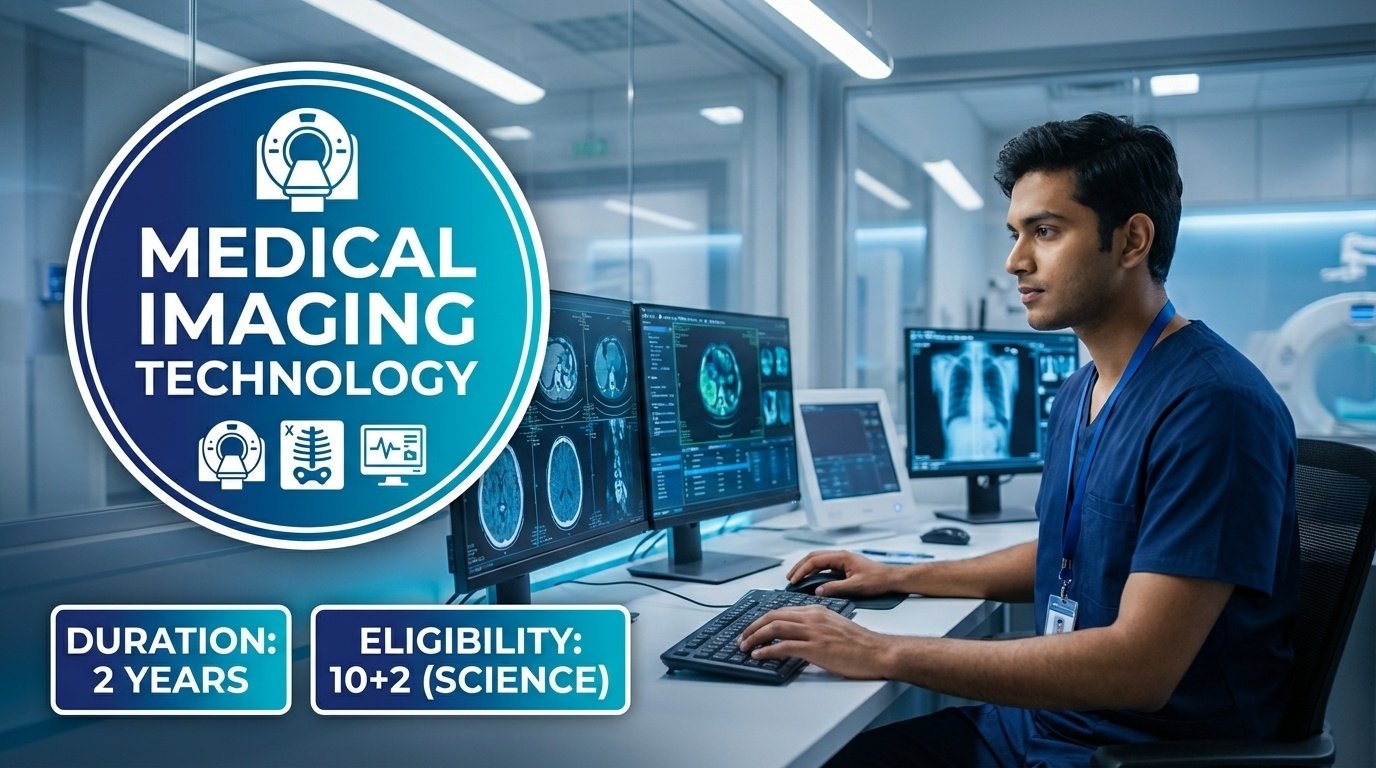
The Diploma in Medical Imaging Technology (DMIT) is a specialized paramedical program that trains students in advanced medical imaging techniques essential for modern diagnostic healthcare. This 2-year diploma course equips students with the technical expertise to operate sophisticated imaging equipment and produce high-quality diagnostic images that assist physicians in accurate diagnosis and treatment planning.
Program Highlights
Course Details
- Program Name: Diploma in Medical Imaging Technology
- Category: Paramedical
- Duration: 2 Years (4 Semesters)
- Course Fee: ₹1,00,000 (Total Program)
- Eligibility: 10+2 (Science Stream with Physics, Chemistry, Biology)
Mahatma Gandhi Ayurvigyan Vidyapeeth
- Recognized institution with state-of-the-art imaging facilities
- Trained faculty with clinical radiology experience
- Modern equipment for hands-on training
- Strong industry connections and placement support
Course Curriculum
Year 1 - Foundation & Basic Imaging
Semester 1:
- Human Anatomy & Physiology
- Basics of Physics & Radiation Physics
- Introduction to Radiography
- Patient Care & Communication
- Medical Terminology & Ethics
- Computer Applications in Radiology
Semester 2:
- Radiographic Techniques & Positioning
- X-Ray Equipment & Technology
- Darkroom Techniques & Digital Imaging
- Radiation Safety & Protection
- Basic Pathology
- Practical Training I
Year 2 - Advanced Imaging Modalities
Semester 3:
- Advanced Radiographic Procedures
- CT Scan (Computed Tomography)
- MRI (Magnetic Resonance Imaging)
- Ultrasound/Sonography Basics
- Contrast Media & Administration
- Quality Assurance in Imaging
- Practical Training II
Semester 4:
- Specialized Imaging Techniques
- Mammography & Bone Densitometry
- Interventional Radiology Basics
- Picture Archiving & Communication Systems (PACS)
- Hospital Internship & Clinical Training
- Project Work & Case Studies
- Professional Development
Key Imaging Technologies Covered
Diagnostic Modalities:
1. X-Ray Radiography
- Conventional radiography
- Digital radiography (DR)
- Computed radiography (CR)
- Fluoroscopy
2. Computed Tomography (CT)
- CT scan principles and operation
- Multi-slice CT imaging
- 3D reconstruction techniques
- CT protocols for different body parts
3. Magnetic Resonance Imaging (MRI)
- MRI physics and safety
- Pulse sequences
- Contrast enhancement
- Patient positioning
4. Ultrasound/Sonography
- Basic ultrasound principles
- Doppler imaging
- Abdominal and pelvic scanning
- Obstetric ultrasonography
5. Specialized Imaging
- Mammography
- Bone densitometry (DEXA)
- Dental radiography
- Portable imaging
Career Opportunities
DMIT graduates have excellent career prospects in:
✅ Hospitals - Multi-specialty, Government & Private ✅ Diagnostic Centers - Standalone radiology & imaging centers ✅ Medical Colleges - Teaching hospitals and research institutions ✅ Polyclinics - Community healthcare facilities ✅ Corporate Health Centers - Occupational health departments ✅ Mobile Imaging Units - Rural and emergency healthcare ✅ Medical Equipment Companies - Application specialists ✅ Telemedicine Centers - Remote diagnostic services
Job Roles:
- Radiographer / X-Ray Technician
- CT Scan Technologist
- MRI Technologist
- Sonographer / Ultrasound Technician
- Mammography Technologist
- PACS Administrator
- Radiology Department Coordinator
- Application Specialist (Medical Equipment)
- Quality Control Officer (Imaging)
Skills You'll Develop
Technical Skills:
- Operating complex imaging equipment (X-Ray, CT, MRI, Ultrasound)
- Patient positioning and examination protocols
- Image acquisition, processing, and quality control
- Radiation safety and protection measures
- PACS and digital image management
- Equipment maintenance and troubleshooting
Professional Skills:
- Patient care and communication
- Attention to detail and precision
- Critical thinking and problem-solving
- Teamwork and collaboration
- Documentation and record management
- Emergency response protocols
Safety Expertise:
- Radiation protection principles (ALARA)
- Personal protective equipment usage
- Contrast media safety
- Infection control protocols
Salary Expectations
- Fresher (Entry Level): ₹15,000 - ₹25,000 per month
- Experienced (2-5 years): ₹25,000 - ₹45,000 per month
- Senior Technologist (5+ years): ₹45,000 - ₹70,000+ per month
- Specialized Roles (CT/MRI): ₹50,000 - ₹1,00,000+ per month
Note: Salaries vary significantly based on location, specialization, employer type, and expertise level. Metro cities offer higher compensation.
Admission Requirements
Eligibility Criteria:
- Completion of 10+2 (Higher Secondary) from a recognized board
- Science stream with Physics, Chemistry, and Biology (PCB)
- Minimum aggregate marks: 50% or above
- Age limit: Generally 17-35 years
- Physically fit for handling equipment and standing long hours
Documents Required:
- 10th & 12th mark sheets and certificates
- Transfer certificate
- Migration certificate (if applicable)
- Character certificate
- Identity proof (Aadhar card, PAN card)
- Passport size photographs (recent)
- Medical fitness certificate
- Caste certificate (if applicable for reservation)
Why Choose DMIT at Mahatma Gandhi Ayurvigyan Vidyapeeth?
✨ High-Tech Career: Work with cutting-edge medical imaging technology
✨ Growing Demand: Rapid expansion of diagnostic centers and hospitals creates continuous job opportunities
✨ Hands-On Training: Practical exposure to real imaging equipment and clinical settings
✨ Specialization Options: Multiple career paths (X-Ray, CT, MRI, Ultrasound)
✨ Competitive Salary: Higher earning potential compared to many paramedical courses
✨ Job Security: Essential healthcare service with stable employment prospects
✨ Respected Profession: Play crucial role in patient diagnosis and treatment
✨ International Opportunities: Global demand for skilled imaging technologists
Future Prospects & Higher Education
After completing DMIT, students can advance their careers through:
B.Sc. in Medical Imaging Technology / Radiology (Lateral Entry) ???? B.Sc. in Radiography and Imaging Technology ???? Advanced Diploma in CT/MRI Technology ???? Post Graduate Diploma in Medical Imaging ???? Specialized Certifications:
- Advanced CT Technology
- Advanced MRI Technology
- Interventional Radiology
- Cardiac Imaging
- Pediatric Imaging
Work Environment
DMIT professionals typically work in:
Hospital Radiology Departments: Operating various imaging equipment in diagnostic centers
Technical Settings: Climate-controlled rooms with sophisticated equipment
Collaborative Teams: Working with radiologists, physicians, and healthcare staff
⏰ Flexible Shifts: Opportunities for day, evening, and night shifts
Emergency Services: Critical role in trauma and emergency care
Certification & Registration
Upon completion, graduates can:
- Register with state medical councils as Radiographer/Imaging Technologist
- Obtain professional certifications from recognized bodies
- Pursue international certifications (ARRT, CAMRT for overseas opportunities)
Frequently Asked Questions
Q: Is radiation exposure dangerous in this profession? A: With proper safety protocols, protective equipment, and adherence to ALARA (As Low As Reasonably Achievable) principles, radiation exposure is minimal and safe. The course extensively covers radiation safety.
Q: Can I specialize in CT or MRI specifically? A: Yes, after completing DMIT, you can pursue specialized training in CT, MRI, or other advanced imaging modalities through additional certifications.
Q: What is the difference between DMIT and B.Sc. in Radiology? A: DMIT is a 2-year diploma focusing on practical skills, while B.Sc. is a 3-4 year degree with more theoretical depth. Both lead to similar entry-level positions, but the degree offers better advancement opportunities.
Q: Are there opportunities abroad? A: Yes, skilled imaging technologists are in demand globally. You may need additional certifications like ARRT (USA) or CAMRT (Canada) for international practice.
Q: Is physical fitness required? A: Yes, the job involves standing for extended periods, moving equipment, and assisting patients. Basic physical fitness is necessary.
Q: Can females pursue this course? A: Absolutely! Medical imaging is an excellent career for both males and females, with many hospitals preferring female technologists for certain examinations.
Career Growth Path
Entry Level (0-2 years): Junior Radiographer → X-Ray Technician
Mid Level (2-5 years): Senior Technologist → Specialized Technologist (CT/MRI/Ultrasound)
Senior Level (5-10 years): Chief Technologist → Department Coordinator → Application Specialist
Advanced Level (10+ years): Radiology Manager → Training Coordinator → Consultant
Industry Recognition
DMIT is recognized by:
- State Medical Councils
- Indian Association of Medical Radiation Technologists (IAMRT)
- Hospitals and Healthcare Organizations
- Medical Equipment Manufacturers
Ready to Launch Your Career in Medical Imaging?
Join the forefront of diagnostic healthcare technology!
Secure Your Future in a High-Tech Medical Career
Visit our admission portal to learn more about:
- Detailed admission process and timeline
- Fee payment options and installment plans
- Scholarship and financial aid opportunities
- Campus tour and facility demonstrations
- Hostel and accommodation facilities
- Placement records and industry partnerships
- Faculty profiles and expertise
- Student testimonials and success stories
Mahatma Gandhi Ayurvigyan Vidyapeeth
Why Students Choose Us:
- ✓ Modern imaging equipment for training
- ✓ Experienced clinical faculty
- ✓ 100% practical training focus
- ✓ Strong hospital tie-ups for internships
- ✓ Dedicated placement cell
- ✓ Affordable fee structure with quality education
- ✓ Industry-relevant curriculum