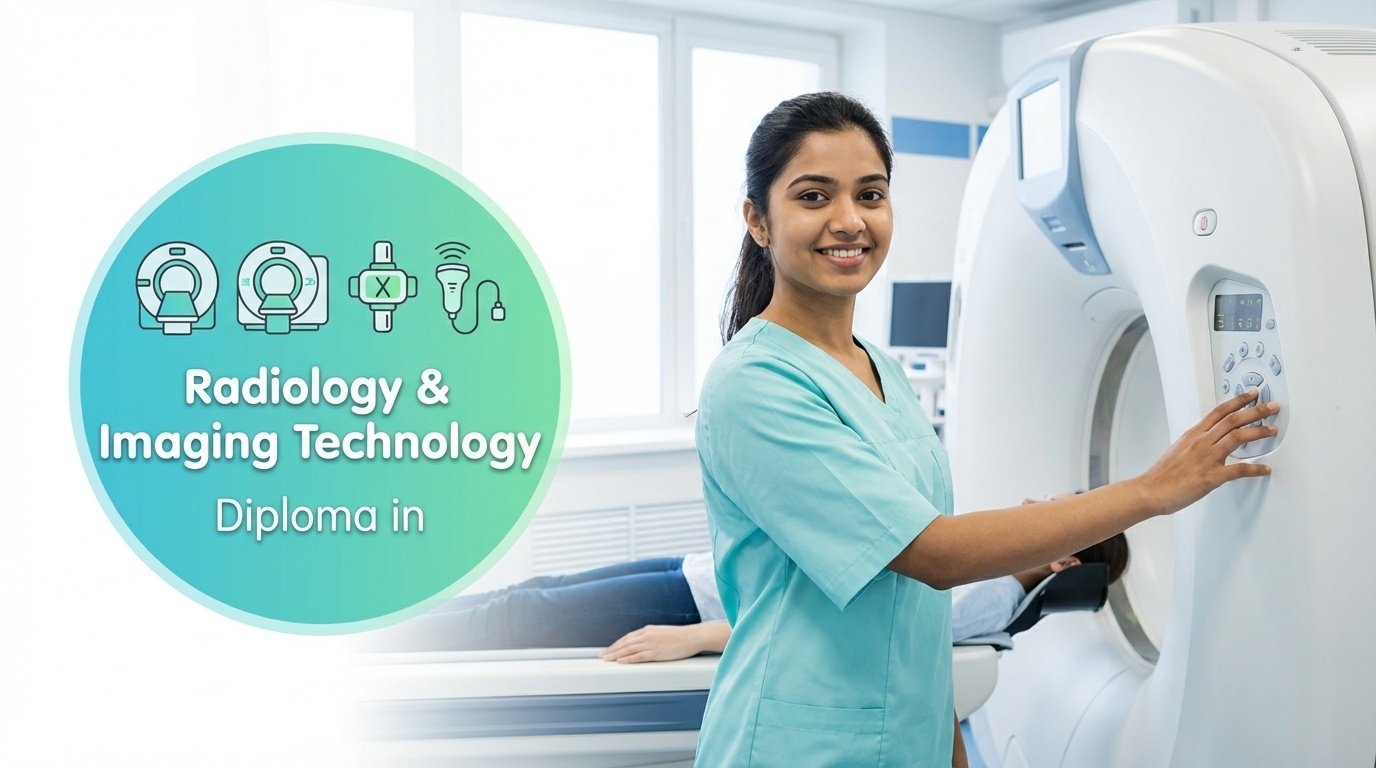
Diploma in Radiology & Imaging Technology (DRIT)
Course Overview
The Diploma in Radiology & Imaging Technology (DRIT) is a comprehensive paramedical program that combines traditional radiography with modern imaging technologies. This 2-year diploma course provides students with extensive training in various diagnostic imaging modalities, preparing them to become versatile imaging professionals capable of operating multiple radiological equipment and contributing significantly to accurate medical diagnosis.
Program Highlights
Course Details
- Program Name: Diploma in Radiology & Imaging Technology
- Category: Paramedical / Allied Health Sciences
- Duration: 2 Years (4 Semesters)
- Course Fee: ₹1,00,000 (Total Program)
- Eligibility: 10+2 (Science Stream with Physics, Chemistry, Biology)
Mahatma Gandhi Ayurvigyan Vidyapeeth
- Premier institution for paramedical education
- State-of-the-art imaging laboratories
- Multi-modality training facilities
- Expert faculty with clinical radiology experience
- Strong hospital network for clinical training
- Excellent placement track record
Course Curriculum
Year 1 - Foundation & Core Radiography
Semester 1:
- Human Anatomy & Physiology (Systemic)
- Radiation Physics & Radiobiology
- Fundamentals of Radiography
- X-Ray Equipment Technology
- Patient Care & Communication Skills
- Medical Ethics & Professional Conduct
- Computer Applications in Healthcare
- Introduction to Medical Imaging
Semester 2:
- Radiographic Positioning & Techniques
- Conventional & Digital Radiography
- Darkroom Techniques & Image Processing
- Radiation Safety & Protection
- Basic Pathology & Microbiology
- Biochemistry & Clinical Biochemistry
- First Aid & Emergency Management
- Practical Training I (X-Ray & General Radiography)
Year 2 - Advanced Imaging Modalities
Semester 3:
- Advanced Radiographic Procedures
- Computed Tomography (CT) Technology
- Magnetic Resonance Imaging (MRI) Principles
- Ultrasound & Doppler Imaging
- Mammography & Women's Imaging
- Contrast Media & Administration
- Interventional Radiology Basics
- Nuclear Medicine & PET Scan Overview
- Quality Assurance & Quality Control
- Picture Archiving & Communication Systems (PACS)
- Practical Training II (Multi-Modality)
Semester 4:
- Specialized Imaging Techniques
- Advanced CT & MRI Protocols
- Fluoroscopy & Digital Subtraction Angiography
- Bone Densitometry (DEXA)
- Portable & Mobile Imaging
- Radiation Oncology Technology Basics
- Hospital Management & Administration
- Research Methodology & Biostatistics
- Comprehensive Clinical Internship
- Project Work & Case Presentations
- Professional Development & Communication
Comprehensive Imaging Modalities Covered
Core Technologies:
1. Conventional & Digital Radiography
- Plain X-ray imaging
- Digital radiography (DR)
- Computed radiography (CR)
- Portable and mobile radiography
- Dental radiography
- All anatomical regions imaging
2. Computed Tomography (CT Scan)
- CT physics and instrumentation
- Multi-slice CT scanning
- CT angiography (CTA)
- 3D and 4D reconstruction
- CT-guided procedures
- Specialized CT protocols
3. Magnetic Resonance Imaging (MRI)
- MRI physics and safety
- Pulse sequences and protocols
- Functional MRI (fMRI)
- MR angiography (MRA)
- Contrast-enhanced MRI
- Patient safety and screening
4. Ultrasonography
- Basic ultrasound physics
- Abdominal and pelvic scanning
- Obstetric and gynecological ultrasound
- Vascular Doppler studies
- Musculoskeletal ultrasound
- Guided interventional procedures
5. Mammography & Women's Imaging
- Breast imaging techniques
- Digital mammography
- Tomosynthesis
- Breast ultrasound
- Stereotactic biopsy assistance
6. Fluoroscopy & Special Procedures
- Real-time imaging
- Gastrointestinal studies (Barium studies)
- Urological imaging (IVP, RGU, MCU)
- Hysterosalpingography (HSG)
- Arthrography
- Myelography
7. Interventional Radiology Support
- Angiography procedures
- C-arm operation
- Catheterization lab assistance
- Image-guided biopsies
- Therapeutic interventions
8. Additional Modalities (Introduction)
- Nuclear medicine imaging
- PET-CT scanning
- Bone densitometry (DEXA)
- Radiation therapy technology
Career Opportunities
DRIT graduates have extensive career options across healthcare sectors:
✅ Multi-Specialty Hospitals - Public and private sector ✅ Super-Specialty Hospitals - Tertiary care centers ✅ Diagnostic Imaging Centers - Standalone radiology facilities ✅ Medical Colleges & Research Institutes - Academic institutions ✅ Corporate Hospitals - Healthcare chains and networks ✅ Mobile Imaging Services - Field and emergency healthcare ✅ Teleradiology Centers - Remote diagnostic services ✅ Medical Equipment Companies - Application specialists and trainers ✅ Government Health Services - PHCs to district hospitals ✅ Defense Medical Services - Armed forces hospitals ✅ International Healthcare - Overseas opportunities
Job Roles & Positions:
Technical Positions:
- Radiographer / Radiology Technologist
- CT Scan Technologist
- MRI Technologist
- Ultrasound Technician / Sonographer
- Mammography Technologist
- Interventional Radiology Technologist
- Fluoroscopy Specialist
- Multi-Modality Imaging Specialist
Administrative & Support Roles:
- PACS Administrator
- Radiology Department Coordinator
- Quality Control Officer
- Radiation Safety Officer
- Clinical Application Specialist
- Equipment Demonstration Specialist
- Radiology Trainer / Instructor
- Imaging Center Manager
Skills & Competencies Development
Technical Expertise:
- Operation of multiple imaging equipment (X-ray, CT, MRI, Ultrasound)
- Advanced patient positioning techniques
- Image acquisition, optimization, and processing
- Multi-modality protocol selection
- PACS and DICOM system management
- Equipment calibration and quality control
- Radiation dose management and optimization
- Contrast media administration
- Troubleshooting and basic maintenance
Safety & Compliance:
- Comprehensive radiation protection (ALARA)
- MRI safety protocols and screening
- Contrast media safety and adverse reaction management
- Infection control procedures
- Emergency response protocols
- Regulatory compliance (AERB, PCPNDT)
- Personal and patient dosimetry
- Equipment safety standards
Professional Competencies:
- Patient assessment and care
- Clinical communication skills
- Cross-functional team collaboration
- Critical thinking and problem-solving
- Documentation and record management
- Time management and prioritization
- Ethical decision-making
- Continuous learning and adaptability
Digital Skills:
- PACS (Picture Archiving Communication System)
- RIS (Radiology Information System)
- DICOM standards and protocols
- Image post-processing and reconstruction
- 3D visualization software
- Electronic medical records (EMR)
- Teleradiology platforms
Salary & Compensation
Expected Salary Range:
Fresher (0-1 year):
- Entry Level: ₹15,000 - ₹25,000 per month
- Private Sector: ₹18,000 - ₹28,000 per month
- Government Sector: ₹20,000 - ₹35,000 per month
Experienced (2-5 years):
- Mid Level: ₹28,000 - ₹45,000 per month
- Specialized Skills (CT/MRI): ₹35,000 - ₹55,000 per month
- Multi-modality Expert: ₹40,000 - ₹60,000 per month
Senior Level (5-10 years):
- Senior Technologist: ₹50,000 - ₹75,000 per month
- Department Coordinator: ₹60,000 - ₹85,000 per month
- Specialist Roles: ₹70,000 - ₹1,00,000 per month
Expert Level (10+ years):
- Chief Technologist: ₹80,000 - ₹1,20,000 per month
- Radiology Manager: ₹1,00,000 - ₹1,50,000+ per month
- Training & Development Head: ₹1,20,000 - ₹2,00,000+ per month
Additional Benefits:
- Night shift allowances (20-30% extra)
- Overtime compensation
- Health insurance and medical benefits
- Provident fund and gratuity
- Performance bonuses
- Professional development allowances
- Housing benefits (government sector)
Note: Salaries vary by location, institution type, specialization, and individual expertise. Metro cities offer 30-50% higher compensation.
Admission Requirements
Eligibility Criteria:
Academic Qualifications:
- 10+2 (Higher Secondary) from recognized board
- Mandatory Subjects: Physics, Chemistry, and Biology (PCB)
- Minimum Percentage: 50% aggregate (45% for SC/ST/OBC)
- Mathematics or Computer Science as additional subject (advantageous)
Age Criteria:
- Minimum age: 17 years (as on December 31 of admission year)
- Maximum age: 35 years (relaxation for reserved categories)
Physical Requirements:
- Medically fit for handling equipment
- Good physical stamina (standing for long hours)
- No major visual or hearing impairments
- Ability to lift and assist patients
Additional Preferences:
- Good communication skills
- Basic computer knowledge
- Interest in technology and healthcare
Selection Process:
- Merit-Based Admission (Based on 12th marks)
- Entrance Test (if applicable)
- Personal Interview (assessment of aptitude and interest)
- Document Verification
- Medical Fitness Certificate
- Final Admission Confirmation
Required Documents:
Academic Documents:
- 10th mark sheet and certificate
- 12th mark sheet and certificate
- Transfer certificate (TC)
- Migration certificate (if from different board/state)
- Character certificate from school/college
- Provisional certificate (if applicable)
Identity & Address Proof:
- Aadhar card (mandatory)
- PAN card (if available)
- Domicile certificate
- Passport (if available)
- Voter ID (if applicable)
Category Certificates:
- SC/ST/OBC certificate (if applicable)
- EWS certificate (if applicable)
- Disability certificate (if applicable)
Other Documents:
- Passport size photographs (8-10 recent)
- Medical fitness certificate
- COVID-19 vaccination certificate
- Gap certificate (if applicable)
- Affidavit (if required)
Why Choose DRIT at Mahatma Gandhi Ayurvigyan Vidyapeeth?
Program Advantages:
✨ Comprehensive Training: Multi-modality expertise in single program
✨ Industry-Relevant: Curriculum aligned with current healthcare technology
✨ Higher Earning Potential: Better salary prospects than single-modality courses
✨ Career Flexibility: Multiple specialization options and career paths
✨ Job Security: High demand across all healthcare sectors
✨ Technology-Driven: Work with cutting-edge medical imaging equipment
✨ Growth Opportunities: Clear advancement path to senior positions
✨ Versatile Skill Set: Adaptable to various radiology settings
Institutional Excellence:
✅ Modern Infrastructure: Latest imaging equipment for hands-on training
✅ Experienced Faculty: Qualified instructors with clinical expertise
✅ Clinical Partnerships: Tie-ups with premier hospitals for internships
✅ Placement Support: Dedicated placement cell with strong industry connections
✅ Affordable Fees: Quality education at reasonable ₹1,00,000 investment
✅ Recognized Certification: Valid nationwide and internationally accepted
✅ Continuous Updates: Regular curriculum revision per industry standards
✅ Student Support: Mentoring, counseling, and career guidance
Future Prospects & Career Advancement
Higher Education Options:
Undergraduate Programs:
- B.Sc. in Radiology & Imaging Technology (Lateral Entry)
- B.Sc. in Medical Imaging Technology
- B.Sc. in Allied Health Sciences
- Bachelor of Radio-Imaging Technology
Postgraduate Programs:
- M.Sc. in Radiology & Imaging Technology
- M.Sc. in Medical Physics
- MBA in Hospital Administration
- MPH (Master of Public Health)
Specialized Certifications:
- Advanced CT Technology Certification
- Advanced MRI Technology Certification
- Interventional Radiology Training
- Cardiac Imaging Specialization
- Pediatric Imaging Certification
- Neuroradiology Imaging
- Musculoskeletal Imaging
- Women's Imaging Specialization
International Certifications:
- ARRT (American Registry of Radiologic Technologists) - USA
- CAMRT (Canadian Association of Medical Radiation Technologists) - Canada
- SCoR (Society of Radiographers) - UK
- ASMIRT (Australian Society of Medical Imaging) - Australia
Career Growth Trajectory:
Level 1 (0-2 years): Foundation Building
- Junior Radiographer/Technologist
- Learning multiple modalities
- Building technical competence
- Clinical skill development
Level 2 (2-5 years): Specialization
- Senior Technologist
- Modality specialist (CT/MRI/Ultrasound)
- Training junior staff
- Quality control responsibilities
Level 3 (5-10 years): Leadership
- Chief Technologist
- Department Supervisor
- Multi-modality coordinator
- Clinical instructor/trainer
Level 4 (10-15 years): Management
- Radiology Manager
- Department Head
- Application Specialist (Equipment companies)
- Regional Training Manager
Level 5 (15+ years): Executive
- Director of Imaging Services
- Consultant and Advisor
- Independent imaging center owner
- Academic leadership roles
Work Environment & Lifestyle
Work Settings:
- Hospital radiology departments
- Outpatient imaging centers
- Emergency and trauma units
- Surgical suites (intraoperative imaging)
- Mobile imaging units
- Research facilities
⏰ Work Schedule:
- Shift-based (8-12 hour shifts)
- Rotational duty (day/evening/night)
- On-call emergency duties
- Weekend and holiday rosters
- Part-time opportunities available
- Flexible scheduling in private sector
Physical Demands:
- Standing for extended periods
- Patient lifting and positioning
- Equipment maneuvering
- Working in temperature-controlled rooms
- Wearing protective equipment
- Quick response in emergencies
Work-Life Balance:
- Structured shift patterns
- Compensatory offs
- Annual leave entitlements
- Professional development time
- Opportunities for part-time work
- Work-from-home (for PACS/reporting support)
Industry Recognition & Accreditation
Professional Recognition:
- State Medical Council Registration
- Indian Association of Medical Radiation Technologists (IAMRT)
- Radiological Society of India (RSI)
- Indian Radiological & Imaging Association (IRIA)
- Society of Interventional Radiology (SIR)
Quality Standards:
- AERB (Atomic Energy Regulatory Board) compliance
- NABH (National Accreditation Board for Hospitals)
- JCI (Joint Commission International) standards
- ISO certification standards
- PCPNDT Act compliance
Technology Trends in Radiology
Emerging Technologies:
- Artificial Intelligence in imaging
- 3D and 4D imaging advancements
- Hybrid imaging (PET-CT, PET-MRI)
- Photon-counting CT
- High-resolution ultrasound
- Molecular imaging
- Portable and point-of-care imaging
- Virtual and augmented reality in training
Digital Healthcare:
- Cloud-based PACS
- Teleradiology expansion
- Mobile imaging apps
- AI-assisted diagnosis
- Blockchain in medical imaging
- Remote monitoring systems
DRIT program prepares students for these emerging technologies
Student Support Services
Academic Support:
- Regular faculty mentoring
- Doubt-clearing sessions
- Supplementary study materials
- Online learning resources
- Library and e-library access
- Peer study groups
Career Services:
- Resume building workshops
- Interview preparation training
- Mock interviews
- Job fair participation
- Industry networking events
- Alumni mentorship program
- Placement assistance
- Entrepreneurship guidance
Campus Facilities:
- Hostel accommodation (separate for boys/girls)
- Library with digital resources
- Computer lab with internet
- Cafeteria and mess
- Sports and recreation
- Medical facilities
- Transport services
- 24/7 security
Frequently Asked Questions
Q1: What is the difference between DRIT and DXT? A: DRIT covers multiple imaging modalities (X-ray, CT, MRI, Ultrasound) while DXT focuses primarily on X-ray technology. DRIT offers broader career opportunities and higher salary potential.
Q2: Is radiation exposure dangerous? A: With proper safety protocols, protective equipment, and adherence to ALARA principles, radiation exposure is minimal and well within safe limits. MRI and ultrasound don't use ionizing radiation at all.
Q3: Can I specialize in a specific modality after DRIT? A: Yes, after completing DRIT, you can pursue specialized certifications in CT, MRI, ultrasound, interventional radiology, or other advanced imaging techniques.
Q4: What are government job opportunities? A: DRIT graduates can apply for radiographer/imaging technologist positions in government hospitals, AIIMS, PGI, ESI, Railways, Defense, and state health departments.
Q5: Is this course suitable for women? A: Absolutely! Radiology is an excellent career for women with equal opportunities, good work environment, and special safety provisions during pregnancy.
Q6: Can I work internationally? A: Yes, with additional certifications like ARRT (USA), CAMRT (Canada), or country-specific qualifications, international opportunities are available in developed countries.
Q7: What is the job placement rate? A: DRIT graduates typically have 90-95% placement rate within 6-12 months due to high industry demand for multi-modality trained professionals.
Q8: Is the course difficult? A: The course requires dedication and consistent study, especially in physics and anatomy. However, with proper guidance and practical training, students successfully complete the program.
Q9: Can I start my own imaging center? A: Yes, with experience (5-10 years), proper licensing, and capital investment, you can establish your own diagnostic imaging center.
Q10: How is DRIT different from B.Sc. Radiology? A: DRIT is a 2-year diploma with strong practical focus, while B.Sc. is a 3-4 year degree with more theoretical depth. Both lead to similar job roles initially, but degrees offer better long-term advancement.
Q11: Are there scholarship opportunities? A: Yes, merit-based scholarships, government scholarships (SC/ST/OBC/EWS), and financial aid options are available. Check with the admission office for details.
Q12: What is the selection ratio? A: Admission is primarily merit-based. With good 12th marks (above 60%) in PCB, candidates have excellent chances of selection.
Comparative Analysis
DRIT vs Other Radiology Courses:
Key Responsibilities:
- Patient preparation and positioning
- Equipment operation and parameter selection
- Image quality verification
- PACS upload and documentation
- Communication with radiologists
- Equipment maintenance and QC
- Emergency response readiness
Patient Interactions:
- Explaining procedures
- Addressing concerns and anxiety
- Ensuring comfort and safety
- Following up on contrast reactions
- Coordinating with nursing staff
Continuing Professional Development
Lifelong Learning Opportunities:
Workshops & Conferences:
- National radiology conferences
- Equipment manufacturer training
- Technique optimization workshops
- Safety and regulatory updates
- Leadership development programs
Online Learning:
- Webinars on emerging technologies
- Certification courses
- Virtual case discussions
- International expert lectures
- E-learning modules
Professional Associations:
- IAMRT membership benefits
- RSI student/professional membership
- International society affiliations
- Networking opportunities
- Research collaborations
Transform Your Future with Radiology & Imaging Technology!
Launch Your Multi-Specialty Healthcare Career
Join the elite group of multi-modality imaging professionals who are shaping the future of diagnostic healthcare!
Limited Seats Available!
Early Registration Benefits:
- Priority seat allocation
- Early batch selection
- Scholarship consideration
- Campus tour opportunity
- One-on-one counseling
Complete Admission Support
Visit Our Admission Portal For:
✅ Application Process:
- Step-by-step application guide
- Online form filling assistance
- Document upload instructions
- Application status tracking
✅ Financial Information:
- Detailed fee structure
- Installment payment options
- Scholarship opportunities
- Education loan assistance
- Fee waiver for merit students
✅ Infrastructure Tour:
- Virtual campus tour
- Equipment laboratory videos
- Clinical training facilities
- Student testimonial videos
- Faculty introduction
✅ Career Information:
- Placement statistics and records
- Recruiting hospital list
- Alumni success stories
- Salary trends and growth
- Career counseling sessions
✅ Student Facilities:
- Hostel accommodation details
- Mess and cafeteria facilities
- Library and learning resources
- Sports and recreation
- Medical and insurance coverage
✅ Contact & Support:
- Admission helpline
- Email support
- WhatsApp counseling
- Campus visit scheduling
- Parent counseling sessions
Why Students Choose Us
Proven Excellence:
✓ High Placement Rate: 90%+ students placed within 6 months ✓ Top Recruiters: AIIMS, Fortis, Apollo, Max, Medanta, and 50+ hospitals ✓ Quality Education: Industry-aligned curriculum with latest technology ✓ Experienced Faculty: 20+ years combined teaching experience ✓ Modern Equipment: Access to CT, MRI, Ultrasound, Digital X-ray ✓ Clinical Training: Partnerships with 15+ multi-specialty hospitals ✓ Affordable Fees: Best value-for-money in paramedical education ✓ Flexible Payment: EMI options and scholarship support ✓ Continuous Support: From admission to placement and beyond
Quick Action Steps
Start Your Journey Today:
Step 1: Visit admission portal Step 2: Fill the online application form Step 3: Upload required documents Step 4: Pay application fee Step 5: Attend counseling session Step 6: Complete admission formalities Step 7: Begin your exciting career journey!
Important Information
⏰ Admission Timeline:
- Application Period: Rolling admissions throughout the year
- Counseling: Scheduled after document verification
- Class Commencement: Multiple batches annually
- Early Bird Advantage: Apply 2-3 months before preferred start date
Need Help?
- Visit admission portal for instant chat support
- Download prospectus and detailed information
- Schedule campus visit
- Talk to admission counselor
- Connect with current students
- Explore virtual tour