Diploma in X-Ray Technology (DXT)
Course Overview
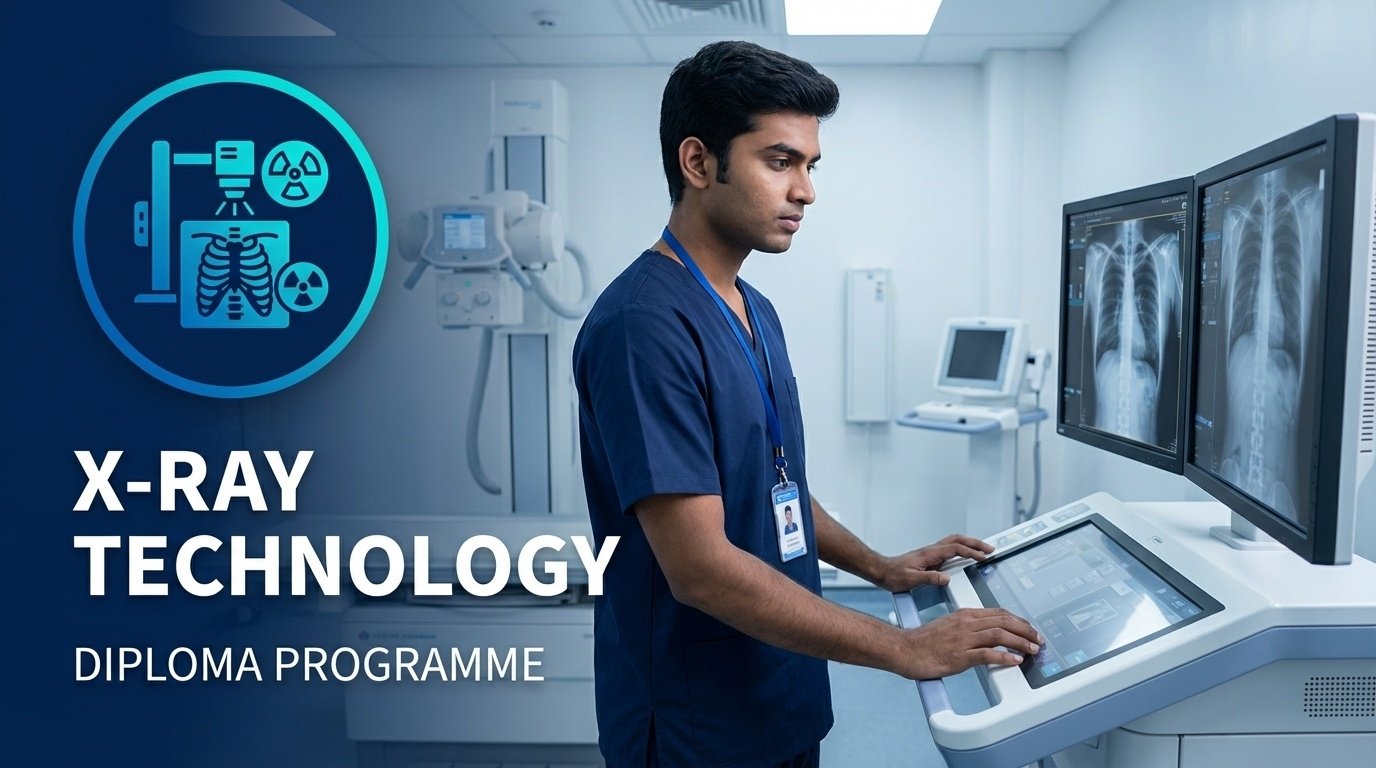
The Diploma in X-Ray Technology (DXT) is a focused paramedical program designed to train students in radiographic imaging and X-ray technology. This 2-year diploma course prepares students to become skilled X-ray technicians capable of operating radiographic equipment, producing quality diagnostic images, and ensuring patient safety while following radiation protection protocols.
Program Highlights
Course Details
- Program Name: Diploma in X-Ray Technology
- Category: Paramedical
- Duration: 2 Years (4 Semesters)
- Course Fee: ₹80,000 (Total Program)
- Eligibility: 10+2 (Science Stream with Physics, Chemistry, Biology)
Mahatma Gandhi Ayurvigyan Vidyapeeth
- Recognized institution with quality radiology education
- Well-equipped X-ray laboratories and training facilities
- Experienced radiography faculty
- Clinical training in reputed hospitals
- Excellent placement assistance
Course Curriculum
Year 1 - Foundation & Basic Radiography
Semester 1:
- Human Anatomy & Physiology
- Physics of Radiation
- Introduction to Radiography
- X-Ray Equipment & Technology
- Patient Care & Hospital Management
- Medical Terminology
- Computer Basics
Semester 2:
- Radiographic Techniques & Procedures
- Positioning & Projection Techniques
- Darkroom Techniques & Film Processing
- Digital Radiography Basics
- Radiation Physics & Protection
- First Aid & Emergency Care
- Practical Training I
Year 2 - Advanced Techniques & Specialization
Semester 3:
- Advanced Radiographic Positioning
- Contrast Radiography
- Portable & Mobile Radiography
- Fluoroscopy Techniques
- Special Radiographic Procedures
- Quality Assurance & Quality Control
- Radiographic Pathology
- Practical Training II
Semester 4:
- Radiation Safety & Regulations
- Equipment Maintenance & Troubleshooting
- Image Processing & Digital Systems
- Clinical Internship
- Professional Ethics & Communication
- Documentation & Record Keeping
- Project Work & Case Studies
- Comprehensive Practical Training
Core Areas of Study
Radiographic Techniques:
1. General Radiography
- Chest X-rays
- Skeletal radiography
- Abdominal imaging
- Spinal radiography
- Skull and facial bone imaging
2. Specialized Procedures
- Contrast studies (Barium studies)
- Intravenous pyelography (IVP)
- Hystero-salpingography (HSG)
- Arthrography
- Dental radiography
3. Technical Skills
- Patient positioning
- Exposure technique selection
- Image quality assessment
- Film processing and development
- Digital image acquisition
4. Equipment Operation
- X-ray machines (fixed and portable)
- Fluoroscopy units
- Digital radiography systems
- Computed radiography (CR)
- C-arm operation
5. Safety Protocols
- ALARA principles (As Low As Reasonably Achievable)
- Radiation protection measures
- Personal dosimetry
- Shielding techniques
- Patient safety procedures
Career Opportunities
DXT graduates can find employment in diverse healthcare settings:
✅ Government Hospitals - District, state, and central government facilities ✅ Private Hospitals - Multi-specialty and super-specialty hospitals ✅ Diagnostic Centers - Standalone radiology and imaging centers ✅ Medical Colleges - Teaching hospitals and research institutions ✅ Primary Health Centers - Rural and community healthcare ✅ Nursing Homes - Private clinics and polyclinics ✅ Corporate Health Centers - Industrial and occupational health ✅ Defense Medical Services - Armed forces hospitals ✅ Mobile X-Ray Units - Emergency and field healthcare
Job Roles:
- X-Ray Technician / Radiographer
- Radiographic Technologist
- Diagnostic Imaging Technician
- Mobile X-Ray Operator
- Fluoroscopy Technician
- Quality Control Technician
- Radiology Assistant
- Equipment Application Specialist
- Medical Imaging Coordinator
Skills You'll Develop
Technical Competencies:
- Operating X-ray equipment safely and efficiently
- Patient positioning for optimal image quality
- Selecting appropriate exposure parameters
- Film processing and digital image handling
- Equipment calibration and maintenance
- Quality control procedures
- Radiation dose management
Safety Skills:
- Radiation protection protocols
- Use of protective equipment
- Dose monitoring and documentation
- Emergency response procedures
- Infection control measures
Professional Skills:
- Patient communication and care
- Working under pressure
- Attention to detail
- Documentation accuracy
- Team collaboration
- Time management
- Ethical decision-making
Salary Expectations
- Fresher (Entry Level): ₹12,000 - ₹20,000 per month
- Experienced (2-5 years): ₹20,000 - ₹35,000 per month
- Senior Technician (5-10 years): ₹35,000 - ₹50,000 per month
- Chief Technologist (10+ years): ₹50,000 - ₹75,000+ per month
Additional Benefits:
- Night shift allowances
- Government jobs with pension benefits
- Incentives in private sector
- Overtime opportunities
- Housing and medical benefits (government sector)
Note: Salaries vary based on location, employer type, shift timings, and experience level
Admission Requirements
Eligibility Criteria:
- Completion of 10+2 (Higher Secondary) from a recognized board
- Mandatory subjects: Physics, Chemistry, and Biology (PCB)
- Minimum marks: 50% aggregate (45% for reserved categories)
- Age limit: 17-35 years
- Medically fit (good physical condition)
Selection Process:
- Merit-based admission (12th marks)
- Personal interview (if applicable)
- Document verification
- Medical fitness certificate
Documents Required:
- 10th & 12th mark sheets and certificates
- Transfer certificate (TC)
- Migration certificate (if from different board)
- Character certificate
- Aadhar card / Identity proof
- Domicile certificate (if applicable)
- Category certificate (SC/ST/OBC)
- Passport size photographs (6-8 recent)
- Medical fitness certificate
Why Choose Diploma in X-Ray Technology?
✨ Affordable Education: Cost-effective program at ₹80,000 for complete 2-year course
✨ Quick Entry to Workforce: Start your career in just 2 years
✨ High Demand: Every hospital and diagnostic center requires X-ray technicians
✨ Job Security: Essential healthcare service with stable employment
✨ Government Opportunities: Eligible for government hospital positions
✨ Flexible Work Options: Day/night shifts, part-time opportunities available
✨ Respect & Recognition: Important role in patient diagnosis and care
✨ Practical Training: Extensive hands-on experience with real equipment
✨ Career Growth: Opportunities for specialization and advancement
✨ Social Impact: Directly contribute to saving lives through accurate diagnosis
Future Prospects & Higher Education
After completing DXT, graduates can pursue:
Further Education:
- B.Sc. in Medical Imaging Technology (Lateral Entry)
- B.Sc. in Radiography & Imaging Technology
- Advanced Diploma in CT/MRI Technology
- Certificate courses in specialized imaging
Specialization Areas:
- Computed Tomography (CT)
- Interventional Radiology
- Cardiac Catheterization
- Mobile/Portable Radiography
- Quality Assurance & Safety
Professional Development:
- Workshop certifications
- Equipment-specific training
- International certifications (ARRT)
- Teaching and training roles
Work Environment & Schedule
Typical Work Settings:
Hospital radiology departments
Climate-controlled equipment rooms
Collaborative healthcare teams
Shift-based schedules
Work Schedule:
- 8-hour shifts (day/evening/night)
- Rotational shift patterns
- Emergency on-call duties
- Weekend and holiday rosters
- Flexible part-time options available
Physical Requirements:
- Ability to stand for extended periods
- Lifting and assisting patients
- Manual positioning of equipment
- Good hand-eye coordination
- Visual acuity for image assessment
Employment Statistics
Job Market Overview:
- Placement Rate: 85-95% within 6 months
- Average Starting Salary: ₹15,000 - ₹18,000
- Government Vacancies: Regular recruitment in state hospitals
- Private Sector Growth: Expanding diagnostic center chains
- Career Longevity: Stable 30-year career span
Certification & Registration
Upon successful completion:
- Diploma Certificate from Mahatma Gandhi Ayurvigyan Vidyapeeth
- Registration with State Medical Council as X-Ray Technician
- Professional Membership: Eligible for radiography associations
- Continuing Education: Regular updates through workshops and seminars
Day in the Life of an X-Ray Technician
Morning Shift (8:00 AM - 4:00 PM):
- 8:00 AM - Equipment check and warm-up
- 8:30 AM - Patient scheduling review
- 9:00 AM - Routine X-ray examinations
- 12:00 PM - Lunch break
- 1:00 PM - Afternoon procedures
- 3:00 PM - Image quality review and documentation
- 4:00 PM - Equipment shutdown and handover
Responsibilities:
- Patient preparation and positioning
- Equipment operation and exposure
- Image quality verification
- Record maintenance
- Equipment care and safety checks
- Coordination with radiologists and doctors
Safety & Regulations
Radiation Safety:
- Personal dosimeter badge monitoring
- Lead apron and protective gear usage
- Distance and shielding protocols
- Pregnancy declaration and safety measures
- Regular health check-ups
Regulatory Compliance:
- Atomic Energy Regulatory Board (AERB) guidelines
- State radiation safety regulations
- Hospital accreditation standards
- Quality assurance programs
Frequently Asked Questions
Q: Is X-ray technology harmful to health? A: When proper safety protocols are followed, including use of protective equipment and ALARA principles, radiation exposure to technicians is minimal and well within safe limits. Regular monitoring ensures safety.
Q: Can I work in government hospitals? A: Yes, DXT graduates are eligible for X-ray technician positions in government hospitals through state and central recruitment examinations.
Q: What is the difference between DXT and DMIT? A: DXT focuses specifically on X-ray radiography, while DMIT covers multiple imaging modalities (X-ray, CT, MRI, Ultrasound). DXT is more affordable and focused.
Q: Are night shifts mandatory? A: Most hospitals operate 24/7, so shift work is common. However, scheduling is usually rotational, and some positions offer day-shift-only options.
Q: Can I pursue higher studies after DXT? A: Yes, you can pursue B.Sc. in Radiology/Medical Imaging through lateral entry or take specialized courses in CT, MRI technology.
Q: Is this course suitable for females? A: Absolutely! X-ray technology is an excellent career choice for women with equal opportunities and additional provisions for safety during pregnancy.
Q: What happens if I'm pregnant while working? A: Strict safety protocols exist for pregnant technicians, including reassignment to minimal radiation areas and additional protective measures.
Q: Can I work abroad with this diploma? A: With additional certifications (like ARRT in USA) and meeting country-specific requirements, international opportunities are available.
Career Advancement Path
Level 1 (0-2 years): Junior X-Ray Technician → Learning and skill development
Level 2 (2-5 years): Senior X-Ray Technician → Independent operation and training juniors
Level 3 (5-10 years): Chief Technician / Supervisor → Team management and quality control
Level 4 (10+ years): Radiology Manager / Training Coordinator → Department management and policy implementation
Start Your Journey in X-Ray Technology Today!
Join a rewarding healthcare career with excellent job prospects!
Limited Seats Available - Secure Your Future!
Contact & Admission Information
What You Get:
✓ Comprehensive 2-year training program ✓ Modern X-ray equipment for hands-on practice ✓ Clinical internship in reputed hospitals ✓ Experienced faculty with industry expertise ✓ Placement assistance and career guidance ✓ Affordable fee structure with installment options ✓ Recognized diploma certificate ✓ Professional development workshops
Visit Our Admission Portal For:
- Detailed application process
- Fee payment options and schedules
- Scholarship and financial aid information
- Campus infrastructure and facilities tour
- Faculty profiles and expertise areas
- Hospital tie-ups for clinical training
- Placement records and recruiting companies
- Student testimonials and alumni network
- Hostel and accommodation details
- FAQs and counseling support
Mahatma Gandhi Ayurvigyan Vidyapeeth Your Gateway to a Successful Career in Medical Radiography
Why Choose Us:
Quality Education - Curriculum aligned with industry standards
Practical Focus - More than 60% hands-on training
Industry Connections - Strong hospital partnerships
Proven Track Record - High placement success rate
Affordable Fees - Quality education at reasonable cost
Experienced Faculty - Learn from industry professionals
Clinical Exposure - Real-world hospital training
Recognized Certificate - Accepted nationwide
Quick Admission Checklist
✅ Check eligibility (10+2 Science with 50%) ✅ Gather required documents ✅ Fill online application form ✅ Pay application fee ✅ Attend counseling/interview (if required) ✅ Complete admission formalities ✅ Pay course fee (installment options available) ✅ Begin your exciting career journey!
Important Dates:
- Admission Open: Throughout the year (Rolling admissions)
- Classes Commence: Based on admission batch
- Early Bird Benefit: Apply early for better batch timing
Disclaimer: Course curriculum, fee structure, eligibility criteria, and other details are subject to change as per university/regulatory guidelines. Candidates are advised to verify all information from the official admission office before applying. Placement assistance is provided but job guarantee is not assured.
Make a Difference in Healthcare - One Image at a Time!
X-ray technology is the backbone of diagnostic medicine. Every day, you'll play a crucial role in helping doctors make accurate diagnoses and save lives. This is not just a job; it's a meaningful career that combines technology, patient care, and medical science.
Your Future Awaits - Apply Now!
For Queries Contact: Visit the admission portal or contact the institute directly through the website for personalized counseling and course guidance.
Mahatma Gandhi Ayurvigyan Vidyapeeth - Building Healthcare Professionals Since Years