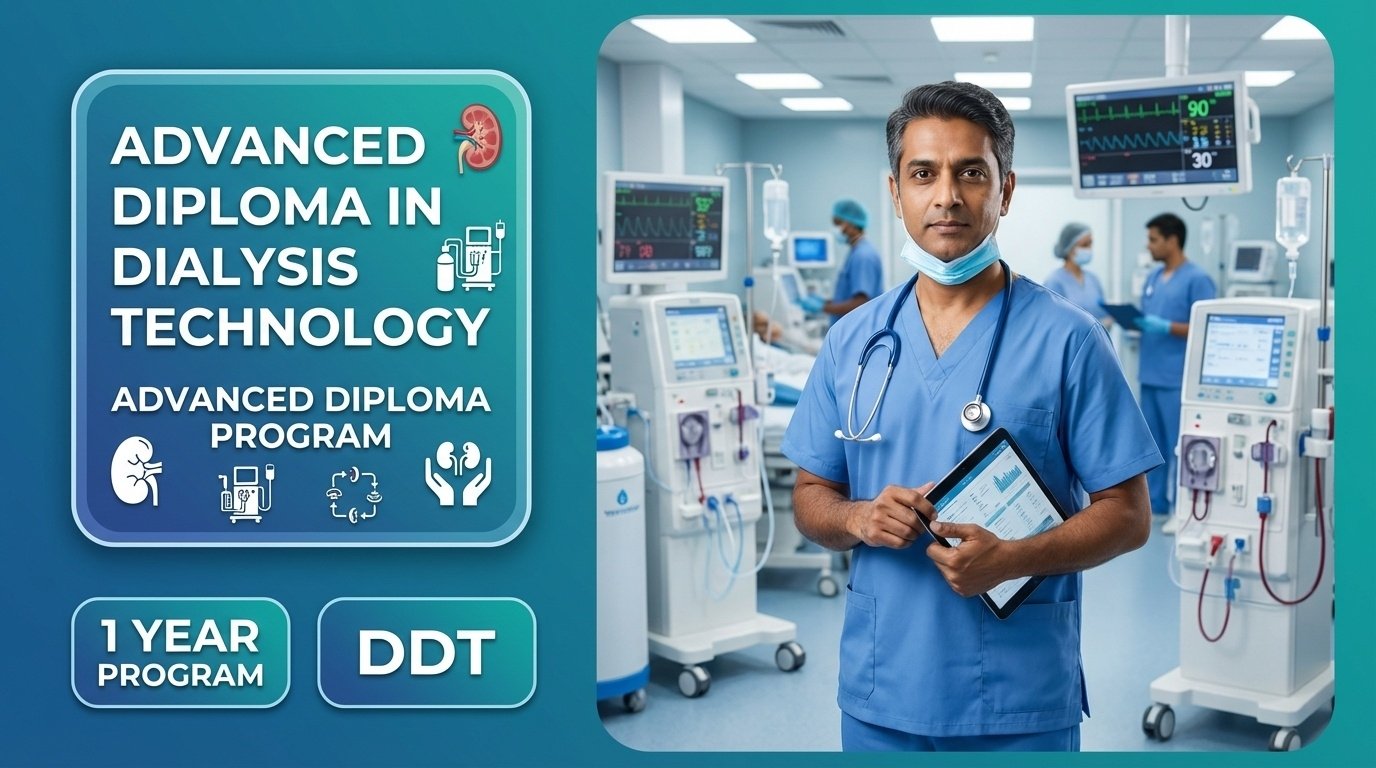
Advanced Diploma in Dialysis Technology
Overview
The Advanced Diploma in Dialysis Technology is a specialized paramedical program designed to train healthcare professionals in the life-saving field of renal care and dialysis therapy. This intensive one-year course provides comprehensive knowledge and practical skills in operating dialysis equipment, managing patients with kidney disorders, and delivering quality renal replacement therapy. With kidney diseases on the rise globally, dialysis technicians are among the most sought-after healthcare professionals today.
Course Details
About the Program
Dialysis Technology is a critical healthcare specialty focused on treating patients with acute and chronic kidney failure. Dialysis technicians work on the frontlines of renal care, operating sophisticated dialysis machines and providing compassionate patient care. This advanced diploma program delivers:
- Comprehensive renal care knowledge covering kidney anatomy, physiology, and pathology
- Expert-level dialysis skills in hemodialysis and peritoneal dialysis
- Hands-on equipment training with modern dialysis machines and technology
- Patient care expertise including vascular access management and complication handling
- Infection control mastery critical for dialysis unit operations
- Emergency management skills for dialysis-related complications
Key Subjects Covered
Core Modules:
-
Anatomy & Physiology of Renal System
- Kidney structure and function
- Urinary system anatomy
- Fluid and electrolyte balance
- Acid-base regulation
- Nephron physiology
-
Renal Pathology & Diseases
- Acute kidney injury (AKI)
- Chronic kidney disease (CKD)
- End-stage renal disease (ESRD)
- Glomerulonephritis
- Diabetic nephropathy
- Hypertensive nephropathy
- Polycystic kidney disease
-
Hemodialysis Technology
- Principles of hemodialysis
- Dialysis machine operation
- Dialyzer types and selection
- Water treatment systems
- Dialysate preparation
- Anticoagulation during dialysis
- Monitoring and troubleshooting
-
Peritoneal Dialysis
- Principles of peritoneal dialysis
- Continuous ambulatory peritoneal dialysis (CAPD)
- Automated peritoneal dialysis (APD)
- Catheter care and management
- Patient training and education
-
Vascular Access Management
- Arteriovenous fistula (AVF)
- Arteriovenous graft (AVG)
- Central venous catheters
- Access site preparation
- Cannulation techniques
- Access complications and management
-
Patient Care & Assessment
- Pre-dialysis patient assessment
- Vital signs monitoring
- Patient positioning and comfort
- Post-dialysis care
- Patient education and counseling
- Nutritional guidelines for dialysis patients
-
Clinical Biochemistry
- Blood urea nitrogen (BUN)
- Serum creatinine
- Electrolyte analysis
- Calcium and phosphorus metabolism
- Anemia management
- Laboratory interpretation
-
Infection Control & Safety
- Universal precautions
- Sterilization and disinfection
- Bloodborne pathogen prevention
- Hepatitis B and C protocols
- HIV safety measures
- Biomedical waste management
-
Dialysis Complications & Emergency Management
- Hypotension management
- Muscle cramps
- Nausea and vomiting
- Chest pain and cardiac events
- Air embolism
- Dialysis disequilibrium syndrome
- Emergency response protocols
-
Dialysis Unit Management
- Quality assurance programs
- Equipment maintenance
- Documentation and record keeping
- Inventory management
- Staff coordination
- Regulatory compliance
-
Renal Transplantation Basics
- Pre-transplant evaluation
- Post-transplant care
- Immunosuppressive therapy
- Rejection management
Practical Training
Students receive extensive hands-on training including:
✓ Dialysis machine operation - Setup, priming, and troubleshooting
✓ Patient assessment - Pre and post-dialysis evaluation
✓ Vascular access cannulation - Safe and effective techniques
✓ Water treatment systems - Operation and quality testing
✓ Emergency management - Simulation-based training
✓ Peritoneal dialysis procedures - CAPD and APD techniques
✓ Clinical rotations - Real dialysis unit experience in hospitals
✓ Patient interaction - Communication and counseling skills
✓ Documentation - Electronic health records and reporting
✓ Quality control - Equipment testing and maintenance protocols
Career Opportunities
Graduates can pursue rewarding careers in various healthcare settings:
✅ Dialysis Technician in multi-specialty hospitals
✅ Hemodialysis Technologist in dedicated dialysis centers
✅ Peritoneal Dialysis Coordinator in renal care units
✅ Nephrology Department Assistant supporting nephrologists
✅ Dialysis Unit Supervisor managing dialysis operations
✅ Clinical Application Specialist for dialysis equipment companies
✅ Renal Transplant Coordinator in transplant centers
✅ Dialysis Quality Assurance Officer ensuring compliance
✅ Patient Care Coordinator for dialysis programs
✅ Medical Equipment Sales Representative (dialysis division)
✅ Clinical Instructor in paramedical institutions
✅ Home Dialysis Trainer for peritoneal dialysis patients
✅ Dialysis Center Entrepreneur establishing your own facility
Why Choose Dialysis Technology?
✓ Life-Saving Profession
Directly impact patient survival and quality of life through critical renal care services.
✓ Explosive Demand
Rising diabetes and hypertension rates have created massive demand for dialysis services globally.
✓ Job Security & Stability
Chronic kidney disease requires ongoing treatment, ensuring continuous employment opportunities.
✓ Attractive Compensation
Dialysis technicians command competitive salaries due to specialized skills and high demand.
✓ Rapid Career Entry
One-year intensive program prepares you for immediate employment in the healthcare sector.
✓ Affordable Investment
At ₹80,000, this course provides exceptional ROI with strong earning potential.
✓ Technology-Driven Field
Work with cutting-edge medical equipment and stay at the forefront of renal care technology.
✓ Patient Relationships
Build meaningful relationships with patients through regular, ongoing care.
✓ Career Growth
Advance to supervisory roles, specialize further, or establish your own dialysis center.
Skills You'll Master
Technical Competencies:
- Dialysis machine operation and maintenance
- Vascular access techniques
- Water treatment system management
- Laboratory parameter interpretation
- Equipment troubleshooting
- Infection control protocols
Clinical Skills:
- Patient assessment and monitoring
- Emergency response and intervention
- Complication identification and management
- Nutritional counseling
- Medication administration
- Vital signs interpretation
Soft Skills:
- Compassionate patient communication
- Family counseling and education
- Team collaboration
- Time management under pressure
- Documentation accuracy
- Ethical decision-making
- Cultural sensitivity
Industry Demand & Statistics
Growing Need:
- Over 10 million people worldwide require dialysis
- India alone has 2+ lakh patients on regular dialysis
- Dialysis centers expanding rapidly across urban and rural areas
- Shortage of trained dialysis technicians nationwide
Employment Rate:
- Near 100% placement rate for qualified dialysis technicians
- Multiple job offers common for skilled graduates
- Government and private sector opportunities
Admission Requirements
Eligibility Criteria:
- Completion of 10+2 (Higher Secondary) from a recognized board
- Science stream with Biology and Chemistry as mandatory subjects
- Minimum aggregate marks as per institute norms
- Physical fitness and medical clearance
- Compassionate nature and patient care aptitude
- Valid academic transcripts and certificates
Desired Qualities:
- Attention to detail and precision
- Ability to work under pressure
- Strong communication skills
- Technical aptitude
- Empathy and patience
- Willingness to learn continuously
Admission Process:
- Complete the online application form
- Submit academic documents and certificates
- Appear for entrance test/interview (if applicable)
- Medical fitness assessment
- Fee payment upon selection
- Orientation and course commencement
Course Structure
Learning Methodology:
Theory Component (40%):
- Classroom lectures by nephrologists and experienced technicians
- Audio-visual presentations
- Case study discussions
- Guest lectures from industry experts
Practical Component (60%):
- Laboratory sessions with dialysis equipment
- Simulation-based training
- Clinical postings in hospital dialysis units
- Hands-on patient care experience
- Internship in dialysis centers
Assessment:
- Monthly tests and assignments
- Practical skill evaluations
- Mid-term examinations
- Final theory and practical exams
- Clinical competency assessment
- Project work and presentations
Salary Prospects
Fresher Level: ₹18,000 - ₹30,000 per month
Experienced (2-4 years): ₹35,000 - ₹50,000 per month
Senior Level (5+ years): ₹55,000 - ₹80,000+ per month
Supervisor/Manager: ₹80,000 - ₹1,20,000+ per month
Additional Benefits:
- Night shift allowances
- Performance bonuses
- Health insurance
- Career advancement opportunities
- Skill development programs
Salaries vary based on location, facility type, shift timings, experience, and specialization.
Future Prospects & Career Growth
- Join dialysis units in hospitals immediately after graduation
- Work in standalone dialysis centers
- Government hospital positions through recruitment exams
Advanced Learning:
- Pursue B.Sc. in Dialysis Technology or Renal Care Technology
- Specialize in pediatric dialysis
- Train in home dialysis programs
- Obtain international certifications (CHT - Certified Hemodialysis Technician)
Career Advancement:
- Progress to Senior Dialysis Technician
- Advance to Dialysis Unit Supervisor
- Become Dialysis Center Manager
- Train as Clinical Application Specialist
- Transition to Nephrology Nursing with additional qualifications
Entrepreneurship:
- Establish independent dialysis centers
- Start home dialysis services
- Provide dialysis equipment maintenance services
- Offer dialysis training programs
Global Opportunities:
- Middle East countries (UAE, Saudi Arabia, Kuwait, Qatar)
- United Kingdom and European nations
- United States and Canada
- Australia and New Zealand
- Southeast Asian countries
Why Mahatma Gandhi Ayurvigyan Vidyapeeth?
Excellence in Paramedical Education:
State-of-the-Art Facilities
- Modern dialysis training laboratory
- Latest dialysis machines and equipment
- Simulation training center
- Well-equipped library and resources
Expert Faculty
- Experienced nephrologists
- Certified dialysis technologists
- Industry practitioners
- Dedicated support staff
Clinical Partnerships
- Tie-ups with leading hospitals
- Access to busy dialysis units
- Real patient care experience
- Industry mentorship programs
Placement Support
- Dedicated placement cell
- Job placement assistance
- Industry connections
- Career counseling services
Recognized Certification
- Industry-recognized diploma
- Credentials valued by employers
- Foundation for higher studies
- Professional credibility
Student Success Stories
Our graduates are successfully working in:
- AIIMS and premier medical institutions
- Leading corporate hospitals (Apollo, Fortis, Max, Medanta)
- Dedicated dialysis chains (NephroPlus, DaVita)
- Government hospitals nationwide
- International healthcare facilities
Apply Now
Transform your passion for healthcare into a rewarding career in Dialysis Technology!
Begin Your Journey to Save Lives!
APPLY NOW →
Contact Information
For detailed information about the course, campus facilities, admission process, or any queries:
Official Website: Mahatma Gandhi Ayurvigyan Vidyapeeth
Direct Admission Form: Click Here to Apply
Email Inquiry: Contact through website
Important Dates
⏰ Admissions: Rolling admissions throughout the year
Limited Seats: Early application recommended
Course Start: As per academic calendar
Document Verification: Upon application submission
Frequently Asked Questions
Q: Is dialysis technology a good career choice?
A: Absolutely! With rising kidney disease prevalence, dialysis technicians are in high demand with excellent job security and growth prospects.
Q: Can I work internationally after this course?
A: Yes, with additional certifications and licensing requirements of the destination country, you can pursue opportunities abroad.
Q: What is the work environment like?
A: You'll work in clean, controlled dialysis units with modern equipment. Shifts may include nights and weekends based on patient needs.
Q: Is the course difficult?
A: The course is practical and application-focused. With dedication and regular practice, students find it manageable and rewarding.
Q: Are there government job opportunities?
A: Yes, government hospitals regularly recruit dialysis technicians through various health department exams.
Take the Next Step
Your Future in Renal Care Awaits!
Don't miss this opportunity to join one of healthcare's most critical and rewarding specialties. Every day, dialysis technicians make life possible for thousands of kidney disease patients.
Secure Your Seat Today:
CLICK HERE TO APPLY NOW