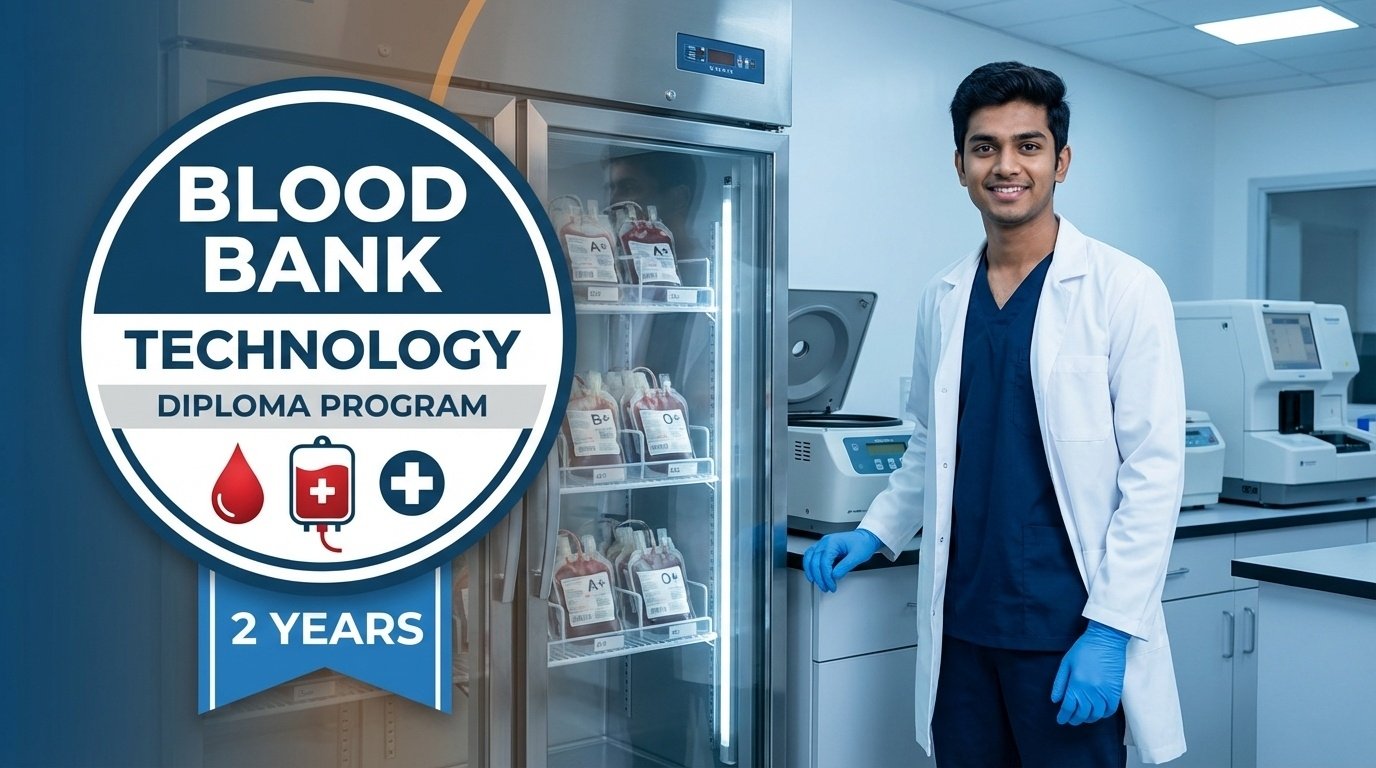
Diploma in Blood Bank Technology
Course Overview
The Diploma in Blood Bank Technology is a specialized 2-year paramedical program designed to train competent healthcare professionals in the critical field of blood banking and transfusion medicine. This comprehensive course equips students with the knowledge and skills necessary to collect, test, process, store, and manage blood and blood components safely and efficiently.
Blood bank technicians play a life-saving role in healthcare, ensuring the availability of safe blood for transfusions, surgeries, emergency care, and treating various blood disorders. This program combines theoretical knowledge with extensive practical training to prepare students for this vital healthcare specialty.
Course Details at a Glance
Why Choose Blood Bank Technology?
Critical Healthcare Service
Blood banking is the backbone of modern healthcare, supporting:
- Emergency medical services and trauma care
- Surgical procedures and organ transplants
- Treatment of blood disorders (anemia, hemophilia, thalassemia)
- Cancer treatment and chemotherapy
- Maternity and childbirth complications
- Chronic disease management
Life-Saving Profession
Blood bank technicians are:
- Guardians of safe blood supply
- Essential members of life-saving medical teams
- Skilled professionals in high demand
- Contributors to public health and emergency preparedness
- Key players in voluntary blood donation programs
Growing Demand
With increasing awareness of blood donation, expansion of healthcare facilities, and stricter blood safety regulations, the demand for qualified blood bank technicians continues to rise across India.
Eligibility Criteria
- Academic Qualification: Candidates must have completed 10+2 (Higher Secondary) with Science stream
- Mandatory Subjects: Physics, Chemistry, and Biology
- Minimum Marks: Generally 45-50% aggregate in qualifying examination
- Age Limit: Typically 17-35 years
- Physical Requirements: Good health, no color blindness (for certain tests)
- Aptitude: Interest in laboratory work and attention to detail
Comprehensive Curriculum
The 2-year diploma program provides in-depth training in all aspects of blood banking and transfusion medicine:
Year 1: Foundation Studies
Basic Medical Sciences
- Human Anatomy & Physiology: Focus on circulatory system, blood composition, and immune system
- Hematology: Study of blood cells, their formation, and functions
- Immunology: Principles of immune response and antibody-antigen reactions
- Biochemistry: Blood chemistry, enzymes, and metabolic processes
- Microbiology: Infection control, sterilization, and blood-borne pathogens
- Medical Terminology: Healthcare communication and documentation
Blood Banking Fundamentals
- Introduction to Blood Banking: History, organization, and regulatory framework
- Blood Groups & Typing: ABO, Rh, and other blood group systems
- Blood Collection Procedures: Donor selection, phlebotomy techniques, and safety protocols
- Blood Components: Whole blood, packed cells, platelets, plasma, cryoprecipitate
- Blood Storage & Preservation: Temperature control, anticoagulants, and shelf life
- Quality Assurance: Standard operating procedures and good laboratory practices
Laboratory Techniques
- Basic Laboratory Skills: Equipment handling, measurement, and safety
- Serological Testing: Blood grouping and cross-matching techniques
- Microscopy: Blood cell identification and counting
- Laboratory Safety: Biohazard management and infection control
- Documentation & Record Keeping: Maintaining accurate laboratory records
Year 2: Advanced Training & Specialization
Advanced Blood Banking
- Immunohematology: Advanced blood group serology and antibody identification
- Blood Transfusion Science: Compatibility testing, cross-matching, and transfusion reactions
- Component Therapy: Preparation and therapeutic use of blood components
- Apheresis Technology: Platelet pheresis, plasma exchange, and stem cell collection
- Transfusion Transmitted Infections (TTI): HIV, Hepatitis B & C, Syphilis, Malaria screening
- Blood Donor Management: Recruitment, counseling, and retention strategies
Specialized Procedures
- Pre-Transfusion Testing: Complete compatibility procedures
- Antibody Detection & Identification: Complex serological investigations
- Hemolytic Disease of Newborn (HDN): Rh incompatibility management
- Therapeutic Phlebotomy: Treatment of polycythemia and hemochromatosis
- Autologous Blood Transfusion: Self-donation procedures
- Emergency Blood Release Protocols: Critical care situations
Technology & Equipment
- Automated Blood Banking Systems: Cell separators and blood analyzers
- Blood Component Separators: Centrifugation and filtration techniques
- Blood Warmer & Infusion Devices: Safe transfusion equipment
- Laboratory Information Systems: Digital record management
- Equipment Maintenance: Calibration and troubleshooting
Regulatory & Management
- Blood Bank Regulations: NACO guidelines, Drug Controller regulations
- Quality Control & Accreditation: NABH standards and quality indicators
- Blood Bank Management: Inventory control, donor database, and logistics
- Medical Ethics & Law: Confidentiality, consent, and legal aspects
- Disaster Management: Mass casualty protocols and emergency preparedness
Clinical Training
- Hospital Blood Bank Internship: Hands-on experience in transfusion services
- Blood Donation Camps: Field experience in mobile blood collection
- Component Laboratory Training: Practical component preparation
- Quality Control Lab: Testing and validation procedures
- Emergency Department Rotation: Critical care transfusion support
Skills You Will Develop
Technical Competencies
- Blood collection techniques (venipuncture and donor management)
- Blood grouping and cross-matching procedures
- Antibody screening and identification
- Component preparation and quality control
- Operation of automated blood banking equipment
- Transfusion-transmitted infection screening
- Apheresis procedures and techniques
- Laboratory quality assurance and calibration
Clinical Skills
- Donor selection and assessment
- Pre-transfusion compatibility testing
- Managing transfusion reactions
- Emergency blood release procedures
- Patient blood management
- Hemolytic disease management
- Therapeutic apheresis support
Professional Skills
- Attention to detail and precision
- Time management in critical situations
- Effective communication with donors and medical staff
- Team collaboration in multi-disciplinary settings
- Problem-solving in complex serological cases
- Ethical decision-making
- Documentation and record maintenance
Career Opportunities
Blood bank technology graduates can pursue diverse roles across healthcare sectors:
Employment Sectors
- Hospital Blood Banks: Government and private multi-specialty hospitals
- Standalone Blood Banks: Independent blood collection and storage centers
- Blood Donation Organizations: Red Cross, voluntary blood donation societies
- Transfusion Medicine Departments: Specialized transfusion services
- Component Separation Laboratories: Advanced blood processing facilities
- Diagnostic Laboratories: Clinical pathology labs with blood banking
- Research Institutions: Medical research centers and universities
- Pharmaceutical Companies: Quality control in blood product manufacturing
- Government Health Services: National Blood Transfusion Council (NBTC), state blood banks
Job Roles Available
- Blood Bank Technician/Technologist
- Transfusion Medicine Technician
- Blood Donor Counselor
- Component Laboratory Technician
- Apheresis Technician
- Quality Control Officer (Blood Banking)
- Blood Bank Supervisor
- Laboratory Information System Coordinator
- Blood Bank Manager (with experience)
- Clinical Research Coordinator (Hematology/Transfusion)
Government Opportunities
- State Blood Transfusion Councils
- Government Hospital Blood Banks
- Medical College Blood Banks
- District Blood Storage Centers
- Mobile Blood Collection Units
Salary Expectations in India
Entry-Level (0-2 years experience)
- Annual Salary: ₹2.5 - 3.5 Lakhs per annum
- Monthly Earnings: ₹18,000 - ₹30,000 per month
Mid-Level (2-5 years experience)
- Annual Salary: ₹3.5 - 5.5 Lakhs per annum
- Monthly Earnings: ₹30,000 - ₹45,000 per month
Senior-Level (5+ years experience)
- Annual Salary: ₹5.5 - 8.0 Lakhs per annum
- Monthly Earnings: ₹45,000 - ₹70,000 per month
Specialized Roles (Apheresis, Component Lab Supervisors)
- Annual Salary: ₹6 - 10 Lakhs per annum
Government Positions
- Starting Salary: ₹25,000 - ₹40,000 per month (with benefits)
- Additional Benefits: Job security, pension, medical benefits, allowances
Salary Influencing Factors
- Type of healthcare facility (government vs. private)
- Geographic location (metro cities offer higher packages)
- Specialization (apheresis, component therapy)
- Additional certifications and qualifications
- Years of experience and expertise
- Shift patterns (night duties often have premiums)
Higher Education Pathways
After completing the diploma, students can pursue advanced qualifications:
- B.Sc. in Medical Laboratory Technology (with specialization in Blood Banking)
- B.Sc. in Transfusion Medicine
- Advanced Diploma in Transfusion Medicine
- M.Sc. in Medical Laboratory Technology (after Bachelor's)
- M.Sc. in Transfusion Medicine & Immunohematology
- Specialized Certifications:
- AABB Specialist in Blood Banking (SBB)
- Component Therapy Certification
- Apheresis Technology Certification
- Quality Management Systems in Blood Banking
Scope & Future Trends
The field of blood banking is evolving with technological advancements:
Emerging Technologies
- Automated Blood Typing Systems: High-throughput molecular testing
- Pathogen Reduction Technology: Enhanced blood safety
- Artificial Blood & Substitutes: Research in synthetic blood products
- Cold Chain Management: Advanced storage and transportation
- Digital Blood Banking: Cloud-based donor and inventory management
- Molecular Testing: NAT (Nucleic Acid Testing) for infectious diseases
- RFID Technology: Tracking and traceability of blood units
Growing Areas
- Stem Cell Banking: Cord blood collection and storage
- Regenerative Medicine: Cellular therapy and tissue engineering
- Personalized Transfusion Medicine: Precision medicine approaches
- Plasma Fractionation: Therapeutic plasma products
- Home-Based Collection: Mobile phlebotomy services
Program Highlights at Mahatma Gandhi Ayurvigyan Vidyapeeth
✓ Experienced Faculty: Transfusion medicine specialists and seasoned blood bank technologists
✓ Modern Blood Bank Lab: Well-equipped with latest blood banking equipment
✓ Clinical Partnerships: Tie-ups with reputed hospital blood banks for internships
✓ Hands-on Training: Extensive practical sessions with real-world scenarios
✓ Donor Camp Participation: Field experience in blood donation drives
✓ Quality Standards: Training aligned with NACO and NABH guidelines
✓ Placement Support: Career guidance and job placement assistance
✓ Affordable Fee: ₹70,000 for the complete 2-year program
✓ Industry-Relevant Curriculum: Updated to match current transfusion medicine practices
Who Should Apply?
This course is ideal for students who:
- Have a strong interest in laboratory medicine and healthcare
- Enjoy meticulous and detail-oriented work
- Want to contribute to life-saving medical services
- Possess good manual dexterity for laboratory procedures
- Have patience and compassion for working with blood donors
- Are interested in immunology and serology
- Desire a stable career in the healthcare sector
- Want to work in a critical but less stressful environment compared to clinical nursing
Course Advantages
Professional Benefits
- Recognized qualification in a specialized healthcare niche
- Quick entry into the healthcare job market (2 years)
- Work in clean, controlled laboratory environments
- Regular working hours (compared to nursing shifts)
- Job security in essential healthcare service
- Opportunities in both government and private sectors
- Lower physical stress compared to bedside nursing
Personal Growth
- Develop critical thinking and analytical skills
- Master sophisticated laboratory techniques
- Contribute directly to saving lives
- Work with cutting-edge medical technology
- Build expertise in a specialized field
- Opportunities for continuous learning and advancement
Day in the Life of a Blood Bank Technician
Morning Shift:
- Review blood inventory and expiry dates
- Perform quality control checks on equipment
- Process blood grouping and cross-matching requests
- Prepare blood components for surgery patients
- Screen donor blood samples for infectious diseases
Afternoon Activities:
- Conduct pre-transfusion compatibility testing
- Assist in blood donation camps
- Perform antibody screening and identification
- Maintain records and documentation
- Coordinate with clinical departments for blood requirements
Quality & Admin:
- Equipment maintenance and calibration
- Update donor database and inventory system
- Participate in quality audits
- Training and supervision of junior staff
- Emergency blood release as needed
Admission Process
Step-by-Step Guide
- Online Application: Complete the admission form on the institute website
- Document Submission: Upload required certificates and marksheets
- Entrance/Merit Assessment: Based on 12th-grade marks or entrance test
- Counseling Session: Course orientation and career guidance
- Fee Payment: Secure your seat with initial fee payment
- Medical Examination: Basic health check-up (if required)
- Enrollment: Complete admission formalities and document verification
Important Documents Required
- 10th and 12th standard mark sheets and passing certificates
- Transfer certificate from previous institution
- Character certificate
- Recent passport-size photographs (6 copies)
- Identity proof (Aadhar card/PAN card/Voter ID)
- Domicile certificate (if applicable)
- Caste certificate (for reservation benefits, if applicable)
- Migration certificate (for students from other boards)
- Medical fitness certificate
Why This Field Matters
Public Health Impact
- Blood Donation Awareness: Promoting voluntary blood donation culture
- Blood Safety: Ensuring disease-free blood supply
- Emergency Preparedness: Maintaining adequate blood reserves
- Patient Safety: Preventing transfusion reactions and complications
- Healthcare Support: Enabling complex surgeries and treatments
Social Contribution
Blood bank technicians are unsung heroes who:
- Enable life-saving transfusions for accident victims
- Support cancer patients undergoing chemotherapy
- Assist in safe childbirth and maternal health
- Help thalassemia and hemophilia patients lead normal lives
- Contribute to organ transplantation success
Career Success Stories
Graduates of Blood Bank Technology programs have achieved:
- Employment in premier hospitals like AIIMS, Fortis, Apollo
- Positions in prestigious blood banks like Red Cross, Rotary Blood Bank
- Government jobs in state blood transfusion councils
- Supervisory roles in component separation laboratories
- Research opportunities in transfusion medicine
- International placements in developed countries
- Advanced degrees and academic careers
Frequently Asked Questions
Q: Is there a risk of infection while working in a blood bank?
A: With proper safety protocols, personal protective equipment, and adherence to universal precautions, the risk is minimal. Students are thoroughly trained in biosafety measures.
Q: Can I work internationally with this diploma?
A: Yes, but you may need additional certifications recognized in that country (like ASCP in the USA). Many countries value Indian blood banking training.
Q: Is this field suitable for women?
A: Absolutely! Blood banking is an excellent career choice for women, offering regular working hours, safe laboratory environments, and equal career growth opportunities.
Q: What's the difference between Blood Bank Technology and Medical Laboratory Technology?
A: Blood Bank Technology is a specialized branch focusing exclusively on blood banking, transfusion medicine, and immunohematology, while MLT covers broader laboratory diagnostics.
Q: Are there night shift requirements?
A: Most blood banks operate during regular hours, though large hospital blood banks may have night shifts for emergency transfusion support. Night duty often comes with additional allowances.
Q: Can I start my own blood bank?
A: With experience, additional qualifications, and proper licensing, you can establish a blood bank. However, it requires significant investment and regulatory approvals.
Q: Is the work physically demanding?
A: Blood bank work is primarily laboratory-based and not physically strenuous. It requires standing for periods and manual dexterity but is less physically demanding than clinical nursing.
Industry Recognition & Accreditation
Blood bank technicians trained at recognized institutions are eligible for:
- Employment in NABH-accredited blood banks
- National Blood Transfusion Council (NBTC) registered positions
- Certification programs from professional bodies
- Participation in national and international conferences
- Membership in transfusion medicine societies
Ready to Start a Life-Saving Career?
Join Mahatma Gandhi Ayurvigyan Vidyapeeth and become a skilled Blood Bank Technologist in just 2 years!
Every unit of blood you process can save up to three lives. Be part of this noble profession that combines science, service, and social contribution.
Contact Information
For admission inquiries, course details, and campus visits: