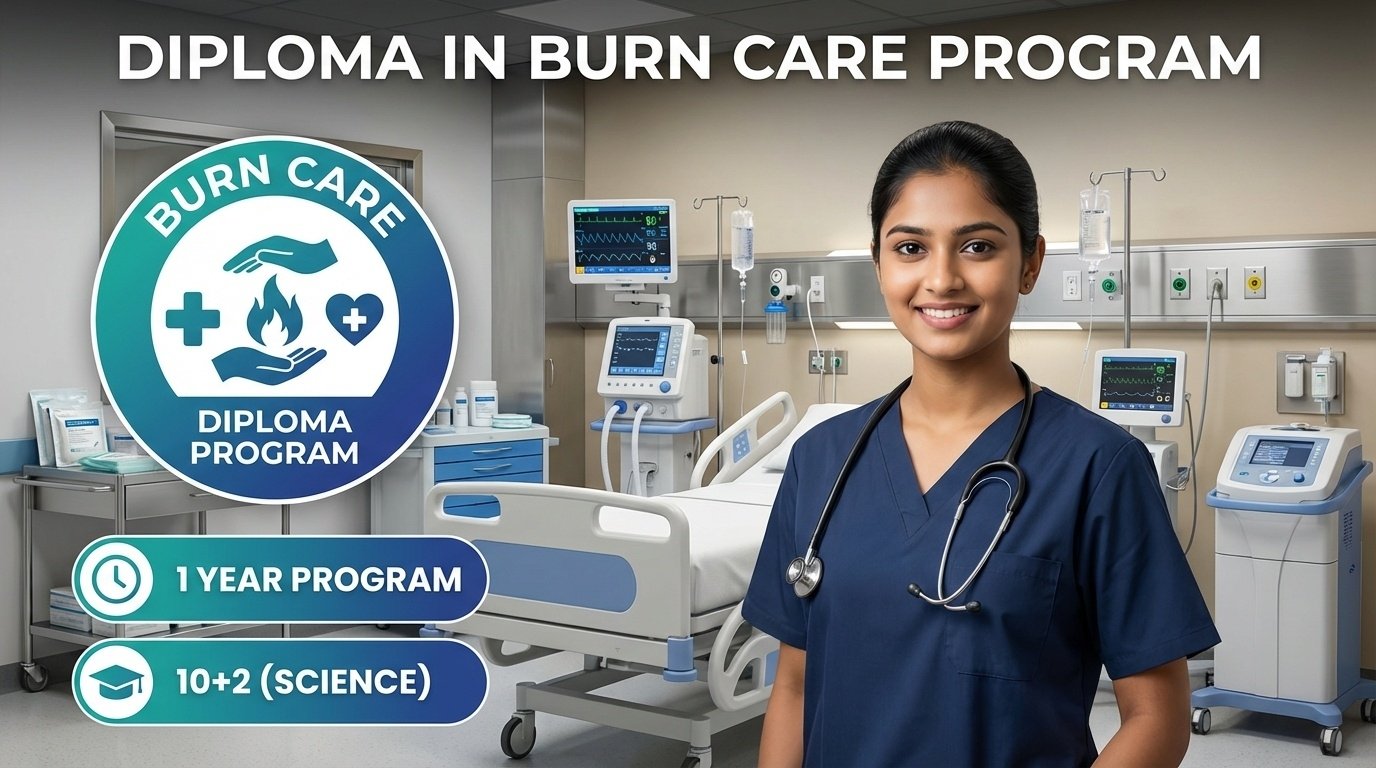
Diploma in Burn Care
Complete Course Guide & Specialized Career Pathway
Course Overview
The Diploma in Burn Care is a highly specialized paramedical program designed to train expert healthcare professionals in the comprehensive management of burn injuries. This advanced course focuses on the assessment, treatment, rehabilitation, and psychosocial support of burn patients across all age groups and severity levels.
Burn care specialists are critical members of multidisciplinary healthcare teams who possess unique expertise in managing one of the most complex and challenging medical conditions. Burns affect not only the skin but multiple body systems, requiring specialized knowledge of wound care, infection control, fluid management, pain management, surgical procedures, and long-term rehabilitation.
This program combines cutting-edge medical science with compassionate care approaches, preparing students to work in burn units, plastic surgery departments, intensive care units, and rehabilitation centers. With increasing industrial accidents, domestic injuries, and trauma cases, trained burn care professionals are in high demand across healthcare facilities.
Course at a Glance
Program Objectives
- Comprehensive Burn Management: Master all phases of burn care from emergency to rehabilitation
- Advanced Wound Care: Develop expertise in burn wound assessment, dressing, and healing techniques
- Infection Prevention: Implement strict infection control protocols in burn units
- Critical Care Skills: Manage severely burned patients in intensive care settings
- Surgical Support: Assist in burn surgeries, skin grafting, and reconstructive procedures
- Pain Management: Provide effective pain relief and comfort measures
- Rehabilitation Expertise: Guide patients through physical and occupational therapy
- Psychosocial Support: Address emotional and psychological trauma of burn patients
- Research & Innovation: Stay updated with latest burn care technologies and treatments
Detailed Curriculum Structure
YEAR 1 - Foundation & Basic Burn Care
Semester 1: Medical Sciences Foundation
Human Anatomy & Physiology (Specialized)
- Integumentary system in-depth (skin layers, functions, healing)
- Cardiovascular and respiratory systems
- Renal and hepatic systems (fluid balance, detoxification)
- Nervous system and pain pathways
- Musculoskeletal system (contractures, mobility)
- Endocrine and metabolic systems
Pathophysiology of Burns
- Burn injury mechanisms (thermal, chemical, electrical, radiation)
- Cellular and tissue damage pathways
- Inflammatory response and healing cascade
- Systemic effects of major burns
- Burn shock and fluid shifts
- Metabolic response to burns
- Inhalation injury pathophysiology
Microbiology & Infection Control
- Common burn wound pathogens (Pseudomonas, Staphylococcus, MRSA)
- Biofilm formation in burn wounds
- Antibiotic resistance patterns
- Sterile techniques in burn care
- Isolation protocols
- Nosocomial infection prevention
- Environmental hygiene in burn units
Biochemistry & Nutrition in Burns
- Hypermetabolic state management
- Protein requirements for healing
- Micronutrients and wound repair
- Enteral and parenteral nutrition
- Fluid and electrolyte balance
- Burn cachexia prevention
- Nutritional assessment tools
Pharmacology for Burn Care
- Analgesics and pain management
- Topical antimicrobials (silver sulfadiazine, mafenide acetate)
- Systemic antibiotics
- Anti-inflammatory medications
- Sedatives and anxiolytics
- Immunosuppressants (for grafts)
- Medications for scar management
Basic Burn Assessment & Classification
- Burn depth assessment (superficial, partial, full thickness)
- Rule of Nines and Lund-Browder charts
- Total Body Surface Area (TBSA) calculation
- Burn severity classification (minor, moderate, major)
- Special area burns (face, hands, feet, genitalia)
- Inhalation injury indicators
- Documentation and charting
Semester 2: Clinical Burn Care Fundamentals
Emergency Burn Management
- Initial assessment (ABCDE approach)
- Airway management in burn patients
- Fluid resuscitation protocols (Parkland formula)
- Cooling and first aid techniques
- Escharotomy procedures
- Transfer criteria to burn centers
- Emergency department protocols
Burn Wound Care & Dressing
- Wound cleansing techniques
- Debridement methods (mechanical, enzymatic, surgical)
- Dressing types and selection
- Biological dressings (xenografts, allografts)
- Synthetic dressings and skin substitutes
- Negative pressure wound therapy (NPWT)
- Wound bed preparation
- Infection signs and management
Infection Control in Burn Units
- Burn unit design and layout
- Barrier nursing techniques
- Hand hygiene protocols
- Personal protective equipment (PPE)
- Patient isolation procedures
- Equipment sterilization
- Surveillance and monitoring
- Outbreak management
Pain Management in Burns
- Pain assessment scales
- Pharmacological pain control
- Non-pharmacological interventions
- Procedural pain management
- Chronic pain in burns
- Opioid administration and safety
- Patient-controlled analgesia (PCA)
- Psychological pain management
Basic Life Support & Critical Care
- CPR in burn patients
- Ventilator basics
- Hemodynamic monitoring
- Vital signs in burn shock
- Urinary catheterization
- Nasogastric tube management
- IV line care and central lines
Communication & Patient Education
- Therapeutic communication with burn patients
- Family counseling and support
- Breaking bad news
- Patient education for home care
- Discharge planning basics
- Cultural sensitivity in burn care
YEAR 2 - Advanced Burn Care & Specialization
Semester 3: Advanced Clinical Practice
Advanced Burn Surgery & Grafting
- Surgical wound excision techniques
- Split-thickness skin graft (STSG) harvesting
- Full-thickness skin graft (FTSG)
- Meshed vs. sheet grafts
- Donor site management
- Graft fixation techniques
- Cultured epithelial autografts (CEA)
- Dermal regeneration templates
- Surgical assisting in burn procedures
Critical Care Management of Burn Patients
- ICU protocols for major burns
- Ventilator management for inhalation injury
- Hemodynamic support (vasopressors, inotropes)
- Renal support and dialysis in burn patients
- Sepsis recognition and management
- Multi-organ dysfunction syndrome (MODS)
- Compartment syndrome management
- Critical care nursing in burns
Plastic & Reconstructive Surgery
- Burn scar management
- Contracture release procedures
- Flap surgeries (local, regional, free flaps)
- Facial reconstruction
- Hand reconstruction
- Microvascular surgery basics
- Tissue expansion techniques
- Laser therapy for scars
Pediatric Burn Care
- Burn patterns in children (scalds, contact burns)
- Child abuse recognition
- Pediatric fluid resuscitation
- Growth considerations in burn injuries
- Play therapy and child life support
- Family-centered care approach
- Long-term developmental monitoring
- Psychological support for children
Special Burns Management
- Chemical Burns: Specific neutralization and treatment protocols
- Electrical Burns: Deep tissue damage assessment and management
- Radiation Burns: Acute and delayed effects management
- Tar and Grease Burns: Removal techniques
- Frostbite: Cold injury management
- Friction Burns: Road rash and carpet burns
- Inhalation Injury: Bronchoscopy, ventilator strategies
Rehabilitation & Physical Therapy
- Early mobilization protocols
- Range of motion exercises
- Splinting and positioning
- Pressure garment therapy
- Massage and manual therapy
- Functional training
- Occupational therapy integration
- Adaptive equipment and aids
Semester 4: Specialization & Professional Practice
Scar Management & Aesthetic Outcomes
- Hypertrophic scar prevention
- Keloid management
- Pressure therapy
- Silicone gel applications
- Laser treatments (CO2, pulsed dye laser)
- Steroid injections
- Skin camouflage techniques
- Cosmetic considerations
Psychosocial Aspects of Burn Care
- Post-traumatic stress disorder (PTSD) in burns
- Body image issues
- Depression and anxiety management
- Family dynamics and support
- Peer support programs
- Reintegration into society
- Return to work/school counseling
- Suicide risk assessment
Quality & Safety in Burn Care
- Clinical audit in burn units
- Patient safety protocols
- Medication safety
- Error reporting and learning
- Evidence-based practice
- Quality improvement projects
- Accreditation standards
- Outcome measurement
Research Methods in Burn Care
- Literature review and critical appraisal
- Research design basics
- Data collection and analysis
- Ethical considerations in burn research
- Writing research proposals
- Evidence-based practice implementation
- Case study presentations
Professional Development & Ethics
- Legal aspects of burn care
- Ethical dilemmas in severe burns
- End-of-life care decisions
- Consent and documentation
- Professional boundaries
- Teamwork and leadership
- Continuing education planning
- Career pathways in burn care
Community Burn Prevention
- Epidemiology of burn injuries
- Home safety education
- School programs
- Workplace burn prevention
- Public awareness campaigns
- First aid training for communities
- Policy advocacy
- Media engagement
Clinical Training Components
Clinical Rotations (throughout 2 years):
- Burn Units: 12-16 weeks intensive training
- Burn ICU: 6-8 weeks critical care exposure
- Plastic Surgery Departments: 6-8 weeks
- Operation Theaters: 8-10 weeks (burn surgeries, grafting)
- Emergency Departments: 4-6 weeks
- General ICU: 4 weeks
- Rehabilitation Centers: 4-6 weeks
- Outpatient Burn Clinics: 4 weeks
Practical Skills Training:
- Wound dressing techniques (200+ supervised procedures)
- Assisting in skin grafting surgeries (50+ cases)
- Fluid resuscitation practice
- Splinting and positioning
- Rehabilitation exercises
- Patient assessment documentation
- Emergency burn management simulations
Project Work:
- Case study analysis (minimum 10 detailed cases)
- Research dissertation on burn care topic
- Quality improvement project
- Community burn prevention program
- Portfolio development
Career Opportunities & Job Profiles
Hospital-Based Positions
1. Burn Unit Specialist/Technician
- Primary burn wound care and management
- Patient monitoring and assessment
- Assist in burn surgeries
- Salary: ₹25,000 - ₹45,000/month
- Employers: Dedicated burn centers, tertiary hospitals
2. Burn ICU Nurse/Technician
- Critical care of severely burned patients
- Ventilator and hemodynamic monitoring
- Complex wound management
- Salary: ₹30,000 - ₹55,000/month
- Employers: Major hospitals with burn ICUs
3. Plastic Surgery Department Technician
- Assist in reconstructive procedures
- Post-operative care
- Scar management programs
- Salary: ₹28,000 - ₹50,000/month
- Employers: Plastic surgery centers, cosmetic clinics
4. Operation Theater Technician (Burns & Plastics)
- Surgical instrumentation
- Graft preparation and storage
- Equipment sterilization
- Salary: ₹25,000 - ₹48,000/month
5. Wound Care Specialist
- Complex wound management across specialties
- Chronic wound clinics
- Diabetic foot care (burns background valuable)
- Salary: ₹30,000 - ₹60,000/month
6. Rehabilitation Coordinator (Burn Patients)
- Physical therapy programs
- Occupational therapy integration
- Long-term follow-up
- Salary: ₹28,000 - ₹50,000/month
Specialized Healthcare Facilities
7. Burn Center Clinical Coordinator
- Unit management and workflow
- Staff supervision
- Quality assurance
- Salary: ₹40,000 - ₹70,000/month
- Employers: National burn centers, apex hospitals
8. Scar Clinic Manager
- Run specialized scar management services
- Laser therapy coordination
- Cosmetic consultations
- Salary: ₹35,000 - ₹65,000/month
9. Telemedicine Burn Consultant
- Remote consultation for burn injuries
- Tele-guidance for rural healthcare providers
- Digital wound assessment
- Salary: ₹30,000 - ₹55,000/month + consultancy fees
Industrial & Occupational Health
10. Industrial Safety Medical Officer (Burns Focus)
- Chemical and thermal burn prevention
- Emergency response training
- On-site first aid management
- Salary: ₹35,000 - ₹65,000/month
- Industries: Chemical plants, manufacturing, oil & gas
11. Fire Department Medical Specialist
- Burn first aid for firefighters
- Training programs
- Emergency response
- Salary: ₹30,000 - ₹55,000/month
Education & Training
12. Burn Care Educator/Trainer
- Nursing school faculty
- Hospital in-service training
- Community education programs
- Salary: ₹35,000 - ₹60,000/month
- Employers: Medical colleges, training institutes
13. Simulation Lab Instructor
- Burn management simulations
- Skills training
- Assessment and evaluation
- Salary: ₹32,000 - ₹55,000/month
Research & Academic Positions
14. Clinical Research Coordinator (Burn Studies)
- Burn treatment research trials
- Data collection and analysis
- Publication support
- Salary: ₹35,000 - ₹65,000/month
- Employers: Research hospitals, pharmaceutical companies
15. Burn Registry Coordinator
- Database management
- Outcome tracking
- Quality metrics
- Salary: ₹30,000 - ₹50,000/month
International & NGO Opportunities
16. International Burn Relief Organizations
- Humanitarian burn care missions
- Disaster response (fire, explosions)
- Training in developing countries
- Compensation: Variable + travel + accommodation
- Organizations: Médecins Sans Frontières, Operation Smile, ReSurge International
17. Medical Tourism Coordinator
- International burn patients
- Liaison and care coordination
- Salary: ₹35,000 - ₹70,000/month
Entrepreneurial Opportunities
18. Private Burn Care Consultancy
- Home-based burn wound care services
- Scar therapy clinics
- Income: ₹50,000 - ₹1,50,000/month (established practice)
19. Medical Equipment Sales (Burn Products)
- Wound dressings, pressure garments
- Technical consultation
- Income: ₹30,000 - ₹80,000/month + commissions
20. Burn Prevention Program Developer
- Corporate safety training
- Educational materials development
- Consultancy fees: ₹2,000 - ₹10,000/session
Salary Progression
Factors affecting salary:
- Location (Metro cities pay 20-40% more)
- Hospital reputation (AIIMS, Safdarjung vs. smaller hospitals)
- Additional certifications
- Night shift differentials (20-30% extra)
- Specialization (pediatric burns, plastic surgery)
Skills & Competencies Developed
Clinical Expertise:
- ✅ Comprehensive burn assessment (depth, TBSA, severity)
- ✅ Emergency burn management and fluid resuscitation
- ✅ Advanced wound dressing techniques
- ✅ Surgical debridement assistance
- ✅ Skin graft application and donor site care
- ✅ Biological and synthetic dressing application
- ✅ Infection recognition and prevention
- ✅ Pain assessment and management
- ✅ Inhalation injury recognition
- ✅ Escharotomy and fasciotomy assistance
- ✅ Negative pressure wound therapy
- ✅ Scar assessment and management
- ✅ Splinting and positioning techniques
- ✅ Pressure garment fitting and adjustment
Critical Care Skills:
- ✅ ICU patient monitoring
- ✅ Ventilator care basics
- ✅ Hemodynamic monitoring
- ✅ Central line and catheter care
- ✅ Medication administration
- ✅ Emergency response in complications
- ✅ Multi-organ support awareness
Rehabilitation Skills:
- ✅ Range of motion exercises
- ✅ Contracture prevention
- ✅ Functional mobility training
- ✅ Activities of daily living (ADL) support
- ✅ Patient and family education
- ✅ Discharge planning
Psychological Support:
- ✅ Therapeutic communication
- ✅ Crisis intervention
- ✅ Body image counseling
- ✅ Family support strategies
- ✅ Recognition of PTSD, depression
- ✅ Grief and loss support
Technical Skills:
- ✅ Medical equipment operation (burn beds, warming systems)
- ✅ Surgical instruments handling
- ✅ Sterilization protocols
- ✅ Photography for wound documentation
- ✅ Electronic health records
- ✅ Database management (burn registries)
Professional Skills:
- ✅ Multidisciplinary team collaboration
- ✅ Leadership in burn unit
- ✅ Teaching and mentoring
- ✅ Research and audit participation
- ✅ Professional documentation
- ✅ Ethical decision-making
- ✅ Quality improvement
- ✅ Patient advocacy
Soft Skills:
- ✅ Emotional resilience (dealing with severe injuries)
- ✅ Empathy and compassion
- ✅ Stress management
- ✅ Attention to detail
- ✅ Time management in high-acuity settings
- ✅ Cultural sensitivity
- ✅ Adaptability
- ✅ Critical thinking
⭐ Why Choose Diploma in Burn Care?
Highly Specialized Expertise
- Become an expert in a niche, high-demand specialty
- Advanced clinical skills valued across healthcare
- Recognized specialist status in medical teams
Excellent Earning Potential
- Higher salaries than general nursing/paramedic roles
- Specialized skills command premium compensation
- Opportunities for private consultancy
Growing Demand
- India reports 6-7 million burn injuries annually
- Only ~70 dedicated burn centers in India
- Severe shortage of trained burn care professionals
- Government expanding burn care infrastructure
Professional Recognition
- Respected specialty within healthcare
- Critical role in patient outcomes
- Valued team member in plastic surgery and trauma
Life-Changing Impact
- Transform lives through complex care
- Help patients regain function and appearance
- Long-term relationships with patients
- Witness remarkable recoveries
Cutting-Edge Field
- Continuous innovations (stem cells, bioengineered skin)
- Advanced technologies (laser therapy, 3D-printed skin)
- Exciting research opportunities
- International conferences and learning
Career Advancement
- Clear pathway to senior and supervisory roles
- Opportunities to sub-specialize (pediatric, cosmetic)
- Academic and research careers
- Hospital administration and management
International Opportunities
- Universal need for burn care expertise
- International certifications available
- Work with global humanitarian organizations
- Medical tourism opportunities
Personal Growth
- Develop exceptional resilience and strength
- Master complex clinical scenarios
- Become a problem-solver and innovator
- Build deep professional satisfaction
Job Security
- Specialized skill set not easily replaceable
- Essential healthcare service
- Both government and private sector demand
- Recession-proof career
Eligibility Criteria
Academic Qualifications:
Option 1: For Science Students
- ✓ Passed 10+2 with Science stream (PCB)
- ✓ Minimum 50% aggregate marks (45% for reserved categories)
- ✓ Chemistry and Biology mandatory
- ✓ Recognized board (CBSE, State Boards, ICSE)
Option 2: For Nursing Professionals
- ✓ GNM (General Nursing & Midwifery) or
- ✓ B.Sc. Nursing degree
- ✓ Registered with State/Indian Nursing Council
- ✓ Clinical experience in burns/critical care (preferred)
Age Requirements:
- ✓ Minimum: 17 years at admission
- ✓ Maximum: 35 years (relaxation for reserved categories)
- ✓ No upper age limit for nursing professionals seeking specialization
Physical & Medical Fitness:
- ✓ Medically fit for clinical duties
- ✓ Ability to stand for extended periods
- ✓ Manual dexterity for wound care procedures
- ✓ Good vision (essential for detailed wound assessment)
- ✓ Immunizations up-to-date (Hepatitis B mandatory)
- ✓ No severe allergies to common medical materials
Personal Attributes:
- ✓ Emotional maturity to handle severe injuries
- ✓ Compassionate and patient-centered attitude
- ✓ Strong stomach (exposure to severe wounds)
- ✓ Excellent attention to detail
- ✓ Team player mentality
- ✓ Commitment to continuous learning
Other Requirements:
- ✓ Valid identification (Aadhar card)
- ✓ Character certificate
- ✓ Medical fitness certificate
- ✓ No criminal record
- ✓ Basic English proficiency (medical terminology)
Admission Process
Step 1: Research & Preparation
- Identify institutes offering Diploma in Burn Care
- Check affiliations and recognition
- Review faculty expertise in burn care
- Visit facilities if possible (see burn units)
- Understand fee structure and duration
Step 2: Application Submission
- Obtain application form (online/offline)
- Fill completely with accurate information
- Prepare required documents:
- ✓ 10th & 12th mark sheets and certificates
- ✓ Transfer certificate (TC)
- ✓ Migration certificate (if applicable)
- ✓ Character certificate
- ✓ Caste certificate (for reservations)
- ✓ Aadhar card / ID proof
- ✓ Recent passport photographs (4-6)
- ✓ Medical fitness certificate
- ✓ Nursing registration (if applicable)
- ✓ Experience certificates (if applicable)
Step 3: Entrance Examination (if applicable)
- Some institutes conduct entrance tests
- Subjects: Biology, Chemistry, General Aptitude
- Format: MCQs, written test
- Preparation: Focus on anatomy, physiology, basic chemistry
Step 4: Merit List & Counseling
- Merit based on 10+2 marks or entrance scores
- Counseling sessions for course overview
- Interaction with faculty and current students
- Campus and burn unit tour
Step 5: Personal Interview
- Assessment of motivation and aptitude
- Understanding of burn care challenges
- Communication skills evaluation
- Career goals discussion
- Emotional readiness for specialty
Step 6: Medical Screening
- Complete physical examination
- Vision and hearing tests
- Immunization verification
- Allergy assessment
- Psychological readiness evaluation
Step 7: Document Verification
- Original certificates verification
- Background verification (if required)
- Cross-checking of information
Step 8: Fee Payment & Enrollment
- Pay admission and first semester fees
- Collect student ID card
- Receive course materials and schedule
- Uniform and equipment requirements briefed
- Induction program attendance
Typical Admission Timeline:
- Applications Open: April - June
- Entrance Tests (if any): June - July
- Merit List Announcement: July
- Counseling & Interviews: July - August
- Admissions Close: August
- Academic Session Begins: August - September
Additional Certifications & Specializations
During/After Diploma:
International Burn Certifications:
- Certified Burn Care Nurse (CBRN) - American Burn Association
- Advanced Burn Life Support (ABLS) Provider
- International Burn Care Course - Various global organizations
Related Advanced Certifications:
- Wound Care Certification - Wound, Ostomy & Continence Nurses Society
- Advanced Cardiac Life Support (ACLS)
- Pediatric Advanced Life Support (PALS)
- Critical Care Nursing Certification (CCRN)
- Infection Prevention & Control Certification
Specialized Training Programs:
- Laser therapy for scars
- Microsurgery techniques
- Tissue engineering applications
- Telemedicine in burn care
- Burn rehabilitation certification
- Pain management specialization
Value of Additional Certifications:
- Salary increase: ₹8,000 - ₹20,000/month
- International job opportunities
- Promotion to senior/specialist roles
- Academic teaching eligibility
- Private practice credibility
Further Education Pathways
Bachelor's Programs:
- B.Sc. in Burn Care Technology (if available)
- B.Sc. in Plastic Surgery Technology
- B.Sc. in Critical Care Technology
- B.Sc. in Wound Care
- B.Sc. Nursing (lateral entry for diploma holders)
- Bachelor in Emergency Medicine
Postgraduate Options:
- M.Sc. in Burn & Plastic Surgery Nursing
- M.Sc. in Critical Care Nursing
- M.Sc. in Wound Care Management
- Post-Basic B.Sc. Nursing (for GNM holders)
- MBA in Hospital/Healthcare Management
- PG Diploma in Clinical Research
Doctoral Programs:
-
Diploma in Burn Care
Course Overview
The Diploma in Burn Care is an intensive, specialized 1-year paramedical program designed to train healthcare professionals in the comprehensive management of burn injuries. This focused course equips students with advanced knowledge and practical skills in burn assessment, emergency care, wound management, rehabilitation, and psychological support for burn victims.
Burn injuries are among the most complex and challenging medical emergencies, requiring specialized care from trained professionals. This program addresses the critical shortage of skilled burn care specialists in India, preparing students to deliver life-saving interventions and compassionate care to burn patients across all phases of recovery.
Course Details at a Glance
Why Choose Burn Care as a Specialty?
Critical Healthcare Need
Burn injuries affect millions annually in India:
- High Incidence: Over 1 million burn injuries occur in India each year
- Domestic Accidents: Kitchen burns, electrical accidents, chemical exposure
- Industrial Burns: Workplace safety incidents
- Acid Attacks: Need for specialized rehabilitation
- Fire Disasters: Mass casualty situations requiring trained personnel
Specialized Expertise Required
Burn care is a highly specialized field requiring:
- Advanced wound management techniques
- Understanding of complex pathophysiology
- Emergency resuscitation skills
- Long-term rehabilitation knowledge
- Psychological counseling capabilities
- Multi-disciplinary team coordination
Rewarding Career Path
Burn care specialists are:
- Essential members of trauma and critical care teams
- In high demand at specialized burn centers
- Capable of making transformative differences in patients' lives
- Part of a noble profession restoring hope and dignity
- Well-compensated for their specialized skills
Eligibility Criteria
- Academic Qualification: Candidates must have completed 10+2 (Higher Secondary) with Science stream
- Mandatory Subjects: Physics, Chemistry, and Biology
- Minimum Marks: Generally 45-50% aggregate in qualifying examination
- Age Limit: Typically 17-35 years
- Personal Qualities: Compassion, emotional resilience, attention to detail
- Physical Fitness: Ability to handle demanding clinical situations
- Preferred Background: GNM/B.Sc. Nursing graduates can also apply for advanced learning
Intensive 1-Year Curriculum
The program is divided into two semesters with comprehensive theoretical and practical training:
Semester 1: Foundation & Emergency Burn Care (6 Months)
Module 1: Fundamentals of Burn Care
- Anatomy & Physiology: Skin structure, layers, and functions
- Burn Pathophysiology: Cellular response to thermal injury
- Burn Classification:
- First-degree (superficial burns)
- Second-degree (partial thickness)
- Third-degree (full thickness)
- Fourth-degree (deep tissue involvement)
- Burn Assessment: Total Body Surface Area (TBSA) calculation, Rule of Nines, Lund-Browder chart
- Burn Severity Assessment: Minor, moderate, and major burns
Module 2: Emergency Burn Management
- Initial Assessment & Triage: Primary and secondary survey
- Advanced Burn Life Support (ABLS): Systematic approach to burn emergencies
- Fluid Resuscitation: Parkland formula, modified protocols
- Airway Management: Inhalation injury recognition and management
- Pain Management: Acute pain control strategies
- Emergency Wound Care: Initial debridement and dressing
- Shock Management: Recognition and intervention
- Infection Prevention: Sterile techniques and protocols
Module 3: Burn Types & Special Considerations
- Thermal Burns: Fire, scalds, contact burns
- Chemical Burns: Acid and alkali injuries, decontamination
- Electrical Burns: High and low voltage injuries
- Radiation Burns: Management protocols
- Inhalation Injury: Smoke inhalation, carbon monoxide poisoning
- Pediatric Burns: Special considerations in children
- Geriatric Burns: Age-specific management
- Special Populations: Pregnancy, immunocompromised patients
Module 4: Critical Care for Burn Patients
- ICU Burn Care: Monitoring and life support
- Ventilator Management: For inhalation injuries
- Hemodynamic Monitoring: Vital signs, fluid balance
- Infection Control: Prevention of burn wound sepsis
- Nutrition Support: Hypermetabolic response management
- Complications Management: Organ failure, sepsis, compartment syndrome
Semester 2: Advanced Management & Rehabilitation (6 Months)
Module 5: Advanced Wound Management
- Wound Assessment: Documentation and progression monitoring
- Debridement Techniques: Surgical, mechanical, enzymatic, autolytic
- Dressing Selection: Modern wound dressings (hydrocolloids, hydrogels, silver dressings)
- Topical Antimicrobial Therapy: Silver sulfadiazine, mafenide acetate
- Negative Pressure Wound Therapy (NPWT): Vacuum-assisted closure
- Biological Dressings: Skin grafts, tissue-engineered skin substitutes
- Wound Infection Management: Recognition and treatment
Module 6: Surgical Burn Care
- Surgical Procedures: Escharotomy, fasciotomy
- Skin Grafting: Split-thickness and full-thickness grafts
- Flap Reconstruction: Advanced surgical techniques
- Scar Management: Prevention and treatment of hypertrophic scars and keloids
- Pre and Post-operative Care: Surgical patient management
- Assisting in OT: Role of burn care technician in surgery
Module 7: Burn Rehabilitation
- Physical Rehabilitation: Range of motion exercises, positioning
- Occupational Therapy: Activities of daily living (ADL) training
- Splinting & Positioning: Prevention of contractures
- Scar Management: Pressure garments, silicone therapy, massage
- Pain Management in Rehabilitation: Chronic pain strategies
- Functional Recovery: Goal-setting and progress monitoring
- Discharge Planning: Community reintegration
Module 8: Psychosocial Care & Holistic Management
- Psychological Impact: Trauma, PTSD, depression, anxiety
- Counseling Skills: Therapeutic communication
- Body Image Issues: Supporting patients with disfigurement
- Family Support: Involving caregivers in recovery
- Pediatric Psychology: Child-specific interventions
- Social Reintegration: Community support and resources
- Quality of Life: Long-term well-being strategies
Module 9: Specialized Topics
- Burn Prevention: Community education and safety programs
- Mass Casualty Burns: Disaster management protocols
- Telemedicine in Burn Care: Remote consultation and monitoring
- Research in Burn Care: Evidence-based practices
- Medico-legal Aspects: Documentation, consent, legal issues
- Quality Improvement: Standards and accreditation
- Professional Ethics: Patient rights and confidentiality
Module 10: Clinical Practicum
- Burn Unit Rotation: Hands-on experience in specialized burn centers (Minimum 4-6 weeks)
- Emergency Department: Acute burn management
- Operating Theatre: Surgical procedures observation and assistance
- Outpatient Clinic: Follow-up care and wound clinic
- Rehabilitation Center: Physical and occupational therapy
- Case Studies: Real-world patient management scenarios
- Skill Demonstrations: Practical competency assessments
Skills You Will Develop
Technical Competencies
- Accurate burn assessment and TBSA calculation
- Emergency resuscitation and fluid management
- Advanced wound care and dressing techniques
- Aseptic technique and infection control
- Pain assessment and management
- Scar management and compression therapy
- Splinting and positioning techniques
- Equipment operation (wound VAC, debriders)
Clinical Skills
- Patient assessment and monitoring
- Vital signs interpretation
- Medication administration
- Intravenous therapy management
- Catheterization and drain management
- Nutritional support administration
- Documentation and record keeping
- Emergency response capabilities
Interpersonal Skills
- Compassionate patient care
- Effective communication with patients and families
- Psychological support and counseling
- Team collaboration in multi-disciplinary settings
- Cultural sensitivity
- Crisis management
- Patient advocacy
- Family education and support
Professional Skills
- Critical thinking and problem-solving
- Evidence-based practice
- Continuous learning mindset
- Ethical decision-making
- Time management in high-pressure situations
- Leadership in burn care teams
- Quality improvement initiatives
Career Opportunities
Graduates can pursue specialized roles in burn care across various healthcare settings:
Healthcare Facilities
- Specialized Burn Centers: Dedicated burn units and hospitals
- Multi-specialty Hospitals: Trauma and critical care units with burn facilities
- Plastic Surgery Centers: Reconstructive and cosmetic surgery clinics
- Emergency Departments: Acute burn management
- Intensive Care Units: Critical burn patient care
- Rehabilitation Centers: Long-term burn recovery facilities
- Wound Care Clinics: Outpatient burn and wound management
- Military Hospitals: Armed forces medical facilities
- Industrial Medical Centers: Occupational health units
Government Sector
- Government Hospital Burn Units: State and central government facilities
- District Hospitals: Peripheral burn care services
- Medical Colleges: Teaching hospitals with burn units
- Disaster Response Teams: Emergency medical services
- Public Health Programs: Burn prevention initiatives
Job Roles Available
- Burn Care Specialist/Technician
- Burn Unit Nursing Staff (with nursing background)
- Wound Care Specialist
- Burn Rehabilitation Technician
- Plastic Surgery Assistant
- Critical Care Technician (Burn Unit)
- Emergency Medical Technician (Burn Specialist)
- Burn Prevention Educator
- Clinical Research Coordinator (Burn Care)
- Burn Camp Coordinator
- Quality Improvement Officer (Burn Units)
International Opportunities
- Developed Countries: USA, UK, Canada, Australia (with credential evaluation)
- Middle East: Gulf countries with modern burn centers
- International NGOs: Disaster relief and humanitarian missions
- Cruise Lines: Medical staff with specialized training
- Medical Tourism: International patient care facilities
Salary Expectations in India
Entry-Level (0-2 years experience)
- Annual Salary: ₹2.5 - 3.5 Lakhs per annum
- Monthly Earnings: ₹20,000 - ₹30,000 per month
Mid-Level (2-5 years experience)
- Annual Salary: ₹3.5 - 5.5 Lakhs per annum
- Monthly Earnings: ₹30,000 - ₹45,000 per month
Senior-Level (5+ years experience)
- Annual Salary: ₹5.5 - 8.0 Lakhs per annum
- Monthly Earnings: ₹45,000 - ₹70,000 per month
Specialized Positions (Burn Unit Supervisors, Coordinators)
- Annual Salary: ₹7 - 12 Lakhs per annum
International Packages
- Middle East: ₹8 - 15 Lakhs per annum (tax-free)
- Western Countries: $40,000 - $70,000 per annum (after credential evaluation)
Salary Influencing Factors
- Type of healthcare facility (specialized burn centers pay more)
- Geographic location (metro cities offer higher packages)
- Additional qualifications (nursing degree, certifications)
- Experience in specialized procedures (skin grafting assistance)
- Shift patterns (night and emergency duties)
- Teaching roles in medical institutions
Higher Education & Certification Pathways
After completing the diploma, students can pursue:
Advanced Degrees
- B.Sc. in Burn & Plastic Surgery Nursing
- B.Sc. in Critical Care Technology
- Post-Basic B.Sc. Nursing (if GNM qualified)
- M.Sc. in Burn Care & Wound Management
- M.Sc. in Plastic Surgery Nursing
Professional Certifications
- Advanced Burn Life Support (ABLS) - American Burn Association
- Certified Burn Nurse (CBRN) - ABLS International
- Wound Care Certification - Various professional bodies
- Advanced Trauma Life Support (ATLS)
- Pediatric Advanced Life Support (PALS)
- Burn Rehabilitation Specialist Certification
Specialized Training
- Certificate in Scar Management
- Advanced Wound Dressing Techniques
- Laser Therapy for Burn Scars
- Occupational Therapy in Burn Care
- Psychological Counseling for Burn Victims
Future Scope & Emerging Trends
The field of burn care is advancing rapidly:
Technological Advancements
- Regenerative Medicine: Stem cell therapy for burn wounds
- 3D Bioprinting: Printed skin grafts and tissue
- Artificial Skin: Tissue-engineered skin substitutes
- Telemedicine: Remote burn consultation and monitoring
- Laser Therapy: Advanced scar treatment
- Smart Dressings: Sensors for wound monitoring
- Virtual Reality: Pain management and rehabilitation
Growing Specializations
- Pediatric Burn Care: Child-specific expertise
- Cosmetic Reconstruction: Aesthetic rehabilitation
- Occupational Burn Care: Industrial safety and treatment
- Burn Research: Clinical trials and studies
- Disaster Medicine: Mass casualty burn management
- Burn Prevention Programs: Community education
Program Highlights at Mahatma Gandhi Ayurvigyan Vidyapeeth
✓ Intensive 1-Year Program: Fast-track your specialized career
✓ Expert Faculty: Plastic surgeons, burn specialists, and experienced nurses
✓ Clinical Exposure: Extensive hands-on training in affiliated burn units
✓ Modern Facilities: Simulation labs with latest burn care equipment
✓ Small Batch Size: Personalized attention and mentorship
✓ ABLS Training: Opportunity for international certification
✓ Placement Support: Career guidance and hospital placement assistance
✓ Affordable Fee: ₹60,000 for the complete program
✓ Guest Lectures: Renowned burn surgeons and specialists
✓ Research Opportunities: Participate in burn care research projects
Who Should Apply?
This specialized course is ideal for:
Fresh Science Graduates
- Students passionate about critical care and specialized nursing
- Those seeking a focused, intensive healthcare career path
- Individuals interested in trauma and emergency medicine
Healthcare Professionals Seeking Specialization
- GNM/B.Sc. Nursing graduates wanting burn care expertise
- Paramedics seeking advanced specialization
- OT technicians interested in plastic surgery
- Critical care staff wanting burn unit expertise
Personal Attributes
- Compassionate and empathetic nature
- Emotional resilience and stress management
- Excellent observational skills
- Ability to work in challenging environments
- Strong commitment to patient advocacy
- Team player with leadership potential
Course Advantages
Professional Benefits
- Rapid Specialization: Gain expertise in just 1 year
- High Demand: Shortage of trained burn care specialists
- Job Security: Essential healthcare service
- Career Flexibility: Multiple practice settings
- Competitive Salary: Specialized skills command higher pay
- Global Opportunities: International demand for burn care experts
- Continuous Learning: Ever-evolving field with new techniques
Personal Rewards
- Life-Changing Impact: Transform patients' lives through recovery
- Professional Respect: Specialized expertise earns recognition
- Diverse Challenges: Every patient case is unique
- Holistic Care: Address physical, emotional, and social needs
- Research Potential: Contribute to advancing burn care knowledge
- Community Service: Participate in burn prevention education
Day in the Life of a Burn Care Specialist
Morning Shift
- Ward rounds with plastic surgery team
- Assess and document burn wounds
- Perform wound debridement and dressing changes
- Administer medications and pain management
- Monitor fluid balance and vital signs
- Coordinate with physiotherapy for patient exercises
Afternoon Duties
- Assist in operating theatre for skin grafting
- Prepare patients for surgical procedures
- Counsel families and provide emotional support
- Update patient care plans
- Participate in multi-disciplinary team meetings
- Maintain equipment and supplies
Evening Tasks
- Complete documentation and charting
- Handover to next shift with detailed patient status
- Respond to emergency admissions
- Educate families on home care procedures
- Participate in case discussions and learning sessions
Real-World Impact Stories
Burn care specialists make profound differences:
- Accident Victims: Helping road accident burn victims regain mobility and independence
- Domestic Violence Survivors: Supporting acid attack survivors through physical and emotional recovery
- Industrial Workers: Treating workplace burns and preventing complications
- Children: Restoring childhood joy after traumatic burn injuries
- Disaster Response: Providing critical care during fire disasters and mass casualties
Admission Process
Step-by-Step Application
- Online Application: Complete the form at mgavidyapeeth.com/addmission-form
- Document Submission: Upload required certificates (10th, 12th marksheets, ID proof)
- Entrance/Merit Assessment: Based on 12th-grade marks or entrance test
- Personal Interview: Assess commitment to burn care specialty
- Counseling Session: Course orientation and career guidance
- Fee Payment: Secure your seat with initial payment
- Medical Fitness: Basic health check-up
- Enrollment: Complete admission formalities
Important Documents Required
- 10th and 12th standard mark sheets and certificates
- Transfer certificate from previous institution
- Character certificate
- Recent passport-size photographs (6 copies)
- Identity proof (Aadhar card/PAN card)
- Caste certificate (if applicable for reservations)
- Medical fitness certificate
- If applicable: GNM/B.Sc. Nursing degree and registration certificate
Frequently Asked Questions
Q: Can I pursue this course immediately after 12th?
A: Yes, 10+2 with Science is the minimum eligibility. However, candidates with nursing background may find it easier to grasp clinical concepts.
Q: Is this course physically and emotionally demanding?
A: Yes, burn care requires emotional resilience as you'll work with critically injured patients. The program includes training in self-care and stress management.
Q: Will I get international recognition?
A: The diploma is recognized in India. For international practice, you may need additional certifications like ABLS or credential evaluation in the destination country.
Q: Can I work in government hospitals?
A: Yes, many government hospitals with burn units recruit specialized burn care staff through regular recruitment drives.
Q: Is there job placement assistance?
A: Yes, the institute provides placement support with tie-ups to leading hospitals and burn centers.
Q: What's the difference between this and general nursing?
A: This is a specialized program focused exclusively on burn care, providing in-depth knowledge and skills specific to burn management, whereas general nursing covers broader healthcare topics.
Q: Are there opportunities for research?
A: Yes, burn care is an active research field. With experience and higher education, you can contribute to clinical research and evidence-based practice development.
Q: What is the scope for opening private burn clinics?
A: With experience and additional qualifications, you can establish wound care clinics. However, major burn cases require hospital infrastructure.
Why Burn Care Matters
Public Health Perspective
- Prevention: Educated burn care specialists lead community safety programs
- Early Intervention: Proper first aid reduces severity and complications
- Quality Care: Specialized treatment improves survival rates and outcomes
- Rehabilitation: Comprehensive care restores function and dignity
- Awareness: Professionals educate communities about burn prevention
Individual Impact
Every burn patient's journey from injury to recovery is a testament to the dedication of burn care specialists who:
- Save lives in critical first hours
- Prevent infections and complications
- Minimize scarring and disfigurement
- Restore physical function
- Support psychological healing
- Advocate for patient rights and quality care
Career Success Indicators
Graduates of specialized burn care programs have achieved:
- Positions in premier burn centers (Safdarjung Hospital Burn Unit, AIIMS)
- Employment in top private hospitals (Apollo, Fortis, Max Healthcare)
- International placements in Gulf countries
- Leadership roles as burn unit coordinators
- Teaching positions in nursing colleges
- Recognition for excellence in burn care
- Contributions to burn care research and publications
Program Accreditation & Recognition
The Diploma in Burn Care prepares students for:
- Employment in NABH-accredited hospitals
- Certification examinations (ABLS, wound care)
- Professional membership in burn care societies
- Participation in national and international conferences
- Continuing education and specialization opportunities
Ready to Transform Lives Through Specialized Burn Care?
Join Mahatma Gandhi Ayurvigyan Vidyapeeth and become a skilled Burn Care Specialist in just 1 year!
In the field of burn care, you're not just treating wounds – you're restoring hope, rebuilding confidence, and giving patients a second chance at life.
Contact Information
For admission inquiries, course details, and campus visits: