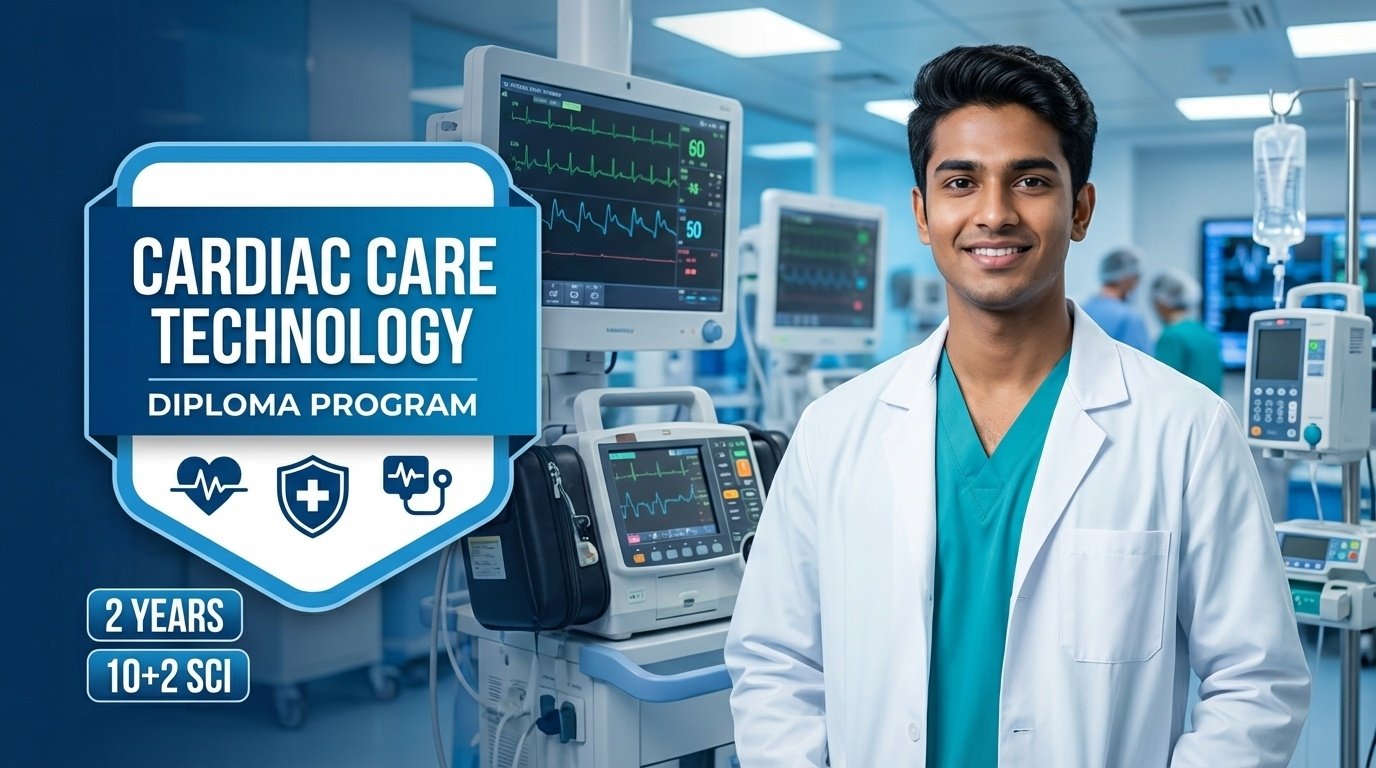
Diploma in Cardiac Care Technology
Course Overview
The Diploma in Cardiac Care Technology is an intensive 2-year paramedical program designed to produce highly skilled professionals specialized in cardiovascular diagnostics and patient care. This comprehensive course trains students to assist cardiologists and cardiac surgeons in diagnosing and treating heart and blood vessel disorders using advanced cardiac technology and equipment.
In today's healthcare landscape, cardiovascular diseases are among the leading causes of mortality globally, making cardiac care specialists indispensable members of the medical team. This program equips students with both theoretical knowledge and hands-on expertise in modern cardiac care procedures.
Course Details at a Glance
Why Choose Cardiac Care Technology?
Critical Healthcare Need
Cardiovascular diseases account for a significant percentage of health complications in India. The demand for trained cardiac care technicians has surged with:
- Increasing prevalence of heart diseases
- Rising number of cardiac care units and specialized heart hospitals
- Advanced diagnostic and treatment technologies
- Growing awareness about preventive cardiac care
Rewarding Career Path
Cardiac care technicians are:
- Essential members of life-saving cardiac teams
- Operators of sophisticated diagnostic equipment
- Direct contributors to patient recovery and well-being
- In high demand across healthcare facilities
Eligibility Criteria
- Academic Qualification: Candidates must have completed 10+2 (Higher Secondary) with Science stream
- Mandatory Subjects: Physics, Chemistry, and Biology
- Minimum Marks: Generally 45-50% aggregate in qualifying examination
- Age Limit: Typically 17-35 years
- Physical Fitness: Good health and stamina (as the job involves patient handling)
Comprehensive Curriculum
The 2-year diploma program includes extensive training in both theoretical and practical aspects:
Year 1: Foundation Studies
Basic Medical Sciences
- Human Anatomy & Physiology: Focus on cardiovascular system, heart structure, blood circulation
- Cardiac Anatomy: Detailed study of heart chambers, valves, vessels, and conduction system
- Medical Terminology: Healthcare communication and documentation
- Biochemistry: Blood chemistry and cardiac biomarkers
- Microbiology: Infection control and prevention
Core Cardiac Subjects
- Introduction to Cardiology: Overview of heart diseases and conditions
- Cardiac Disease Management: Understanding various heart disorders
- Pathology of Cardiovascular Diseases: Disease processes and manifestations
- Basic Pharmacology: Cardiac medications and emergency drugs
- Patient Care Fundamentals: Communication, ethics, and bedside manner
Diagnostic Basics
- Electrocardiography (ECG/EKG): Principles and interpretation basics
- Medical Equipment Introduction: Overview of cardiac diagnostic tools
- Cardiac Emergency Care: First aid and CPR certification
Year 2: Advanced Training & Specialization
Advanced Diagnostic Procedures
- Advanced Electrocardiography: 12-lead ECG, interpretation, and troubleshooting
- Echocardiography: Ultrasound imaging of the heart
- Cardiac Catheterization: Invasive diagnostic procedures
- Holter Monitoring: 24-hour ambulatory ECG monitoring
- Stress Testing: Exercise ECG and pharmacological stress tests
- Cardiac CT & MRI: Advanced imaging modalities
Specialized Technical Skills
- Cardiac Life Support: Advanced cardiac life support (ACLS) training
- Invasive Cardiology Procedures: Assisting in angioplasty, stenting
- Pacemaker Technology: Implantation and monitoring
- Cardiac Rehabilitation: Post-operative care and recovery programs
- Interventional Cardiology: Support in cardiac catheterization lab
Clinical Management
- Critical Care Management: ICU and CCU patient monitoring
- Emergency Cardiac Care: Handling cardiac emergencies
- Quality Control & Safety: Equipment maintenance and calibration
- Medical Record Management: Documentation and reporting
- Research Methodology: Basic research skills and evidence-based practice
Practical Training
- Hospital Internship: Hands-on experience in cardiac care units
- Catheterization Lab Training: Real-world exposure to invasive procedures
- Emergency Department Rotation: Critical care experience
- Diagnostic Center Practice: Outpatient cardiac testing
Skills You Will Develop
Technical Competencies
- Operating ECG, Echocardiography, and Holter monitoring equipment
- Performing cardiac catheterization assistance
- Conducting stress tests and exercise ECG
- Interpreting basic cardiac rhythm strips
- Maintaining and troubleshooting cardiac equipment
Clinical Skills
- Patient assessment and vital sign monitoring
- Pre and post-procedure patient care
- Cardiac emergency response
- Sterile technique in cardiac procedures
- IV line management for contrast media
Professional Skills
- Effective communication with patients and medical teams
- Attention to detail and precision
- Quick decision-making in emergencies
- Compassionate patient care
- Team collaboration in high-pressure environments
Career Opportunities
Graduates can pursue diverse roles in the rapidly expanding cardiac care sector:
Healthcare Facilities
- Multi-specialty Hospitals: Government and private cardiac care units
- Dedicated Heart Hospitals: Specialized cardiac centers
- Diagnostic Centers: Non-invasive cardiology labs
- Cardiac Catheterization Labs: Invasive procedure support
- Critical Care Units: ICU, CCU, and emergency departments
- Cardiac Rehabilitation Centers: Post-operative recovery facilities
- Medical Research Institutes: Clinical trials and research
- Mobile Cardiac Units: Emergency ambulance services
Job Roles Available
- Cardiac Care Technician/Technologist
- ECG Technician
- Echocardiography Technician
- Cardiac Catheterization Lab Technician
- Stress Test Technician
- Holter Monitor Technician
- Cardiac ICU Technician
- Pacemaker Technician
- Cardiovascular Equipment Specialist
- Clinical Research Coordinator (Cardiology)
Salary Expectations in India
Entry-Level (0-2 years experience)
- Annual Salary: ₹2.5 - 4.0 Lakhs per annum
- Monthly Earnings: ₹20,000 - ₹35,000 per month
Mid-Level (2-5 years experience)
- Annual Salary: ₹4.5 - 6.5 Lakhs per annum
- Monthly Earnings: ₹40,000 - ₹55,000 per month
Senior-Level (5+ years experience)
- Annual Salary: ₹6.5 - 10+ Lakhs per annum
- Monthly Earnings: ₹55,000 - ₹85,000+ per month
Specialized Roles (Cath Lab, Echo specialists)
- Annual Salary: ₹8 - 15 Lakhs per annum
Salary Factors
- Type of healthcare facility (multi-specialty vs. dedicated heart hospitals)
- Geographic location (metro cities offer higher packages)
- Specialization area (invasive cardiology pays more)
- Additional certifications (ACLS, BLS, specialized training)
- Shift patterns (night shifts and emergency duties often have premiums)
Higher Education Pathways
After completing the diploma, ambitious students can pursue:
- B.Sc. in Cardiac Care Technology (3-year degree program)
- B.Sc. in Cardiovascular Technology (lateral entry)
- Advanced Diploma in Echocardiography
- Certification in Cardiac Catheterization
- M.Sc. in Cardiac Care Technology (after Bachelor's)
- Specialized Certifications: ACLS, BLS, PALS, Advanced Echocardiography
International Opportunities
Cardiac care technology graduates are in demand globally, particularly in:
- United States: High demand with competitive salaries
- United Kingdom: NHS and private hospitals
- Canada: Growing healthcare sector
- Australia: Excellent career prospects
- Gulf Countries: UAE, Saudi Arabia, Qatar (tax-free salaries)
- Singapore: Advanced cardiac care facilities
International opportunities typically require credential evaluation and country-specific certification.
Future Scope & Emerging Technologies
The field of cardiac care is constantly evolving with:
- Artificial Intelligence: AI-assisted ECG interpretation and diagnosis
- 3D Cardiac Imaging: Advanced visualization techniques
- Remote Monitoring: Telemedicine and home-based cardiac monitoring
- Minimally Invasive Procedures: Robot-assisted cardiac interventions
- Wearable Technology: Continuous cardiac monitoring devices
- Stem Cell Therapy: Regenerative cardiology
- Precision Medicine: Personalized cardiac treatment approaches
Program Highlights at Mahatma Gandhi Ayurvigyan Vidyapeeth
✓ Experienced Faculty: Cardiologists and experienced cardiac technologists as mentors
✓ Modern Infrastructure: Well-equipped cardiac labs with latest equipment
✓ Clinical Exposure: Tie-ups with reputed hospitals for internships
✓ Hands-on Training: Extensive practical sessions in simulated environments
✓ Certification Support: Preparation for ACLS, BLS, and other certifications
✓ Placement Assistance: Career guidance and hospital placement support
✓ Affordable Fee Structure: ₹1,00,000 for the complete 2-year program
✓ Industry-Relevant Curriculum: Updated to match current healthcare demands
Who Should Apply?
This course is ideal for students who:
- Have a genuine interest in cardiac healthcare
- Want to work in a life-saving medical specialty
- Enjoy working with advanced medical technology
- Can handle high-pressure emergency situations
- Possess good interpersonal and communication skills
- Are detail-oriented and precise in their work
- Desire a stable and rewarding healthcare career
Course Advantages
Professional Benefits
- Recognized qualification in a specialized healthcare field
- Quick entry into the job market (2 years)
- Opportunities to work with cutting-edge technology
- Direct patient interaction and care
- Part of critical life-saving teams
- Job security in growing healthcare sector
Personal Growth
- Develop technical and clinical expertise
- Build confidence in emergency situations
- Make a meaningful difference in patients' lives
- Continuous learning environment
- Opportunities for specialization and advancement
Admission Process
- Application: Fill out the online admission form
- Document Submission: Provide 10+2 mark sheets and certificates
- Entrance/Merit: Based on 12th-grade marks or entrance test (if applicable)
- Counseling: Career guidance and course orientation
- Fee Payment: Secure your seat with fee payment
- Enrollment: Complete admission formalities
Important Documents Required
- 10th and 12th standard mark sheets and certificates
- Transfer certificate from previous institution
- Character certificate
- Passport-size photographs
- Identity proof (Aadhar card/PAN card)
- Caste certificate (if applicable for reservations)
- Medical fitness certificate
Career Success Stories
Cardiac care technology graduates have gone on to:
- Work in premier heart hospitals like Fortis, Apollo, Medanta
- Secure positions in leading diagnostic chains
- Pursue higher education and research
- Migrate to developed countries for advanced practice
- Establish their own cardiac diagnostic centers
Ready to Save Lives and Build a Rewarding Career?
Join Mahatma Gandhi Ayurvigyan Vidyapeeth and become a skilled Cardiac Care Technologist in just 2 years!
Contact Information
For admission inquiries, course details, and campus visits:
Important Notice
- Admission Deadlines: Check website for current academic year dates
- Seat Availability: Limited seats - early application recommended
- Verification: Candidates should verify current fee structure and eligibility criteria with the institute
- Clinical Training: Requires attendance at affiliated hospitals and cardiac centers
- Professional Conduct: Students must maintain high ethical standards throughout the program
Frequently Asked Questions
Q: Is certification mandatory after completing the diploma?
A: While the diploma itself is recognized, additional certifications like BLS and ACLS enhance employability and are often preferred by employers.
Q: Can I work internationally with this diploma?
A: Yes, but you may need to undergo credential evaluation and obtain country-specific certifications. Many countries value Indian cardiac care training.
Q: What is the difference between Cardiac Care Technology and Cardiology?
A: Cardiologists are doctors (MBBS + MD), while cardiac care technologists are allied health professionals who assist doctors and operate diagnostic equipment.
Q: Are there job opportunities in government hospitals?
A: Yes, government hospitals regularly recruit cardiac care technicians through various health department recruitments.
Q: Can I pursue this course through distance learning?
A: No, this is a practical skill-intensive program requiring hands-on training and hospital internships, so it must be completed as a full-time on-campus program.
Take the First Step Towards a Life-Saving Career!
Enroll in the Diploma in Cardiac Care Technology program and join the ranks of healthcare heroes making a real difference in cardiac patient care every day.
Your journey to becoming a Cardiac Care Specialist starts here!