Diploma in Cardiology Technology
The Diploma in Cardiology Technology is a comprehensive paramedical program designed to train highly skilled professionals in the specialized field of cardiac diagnost…
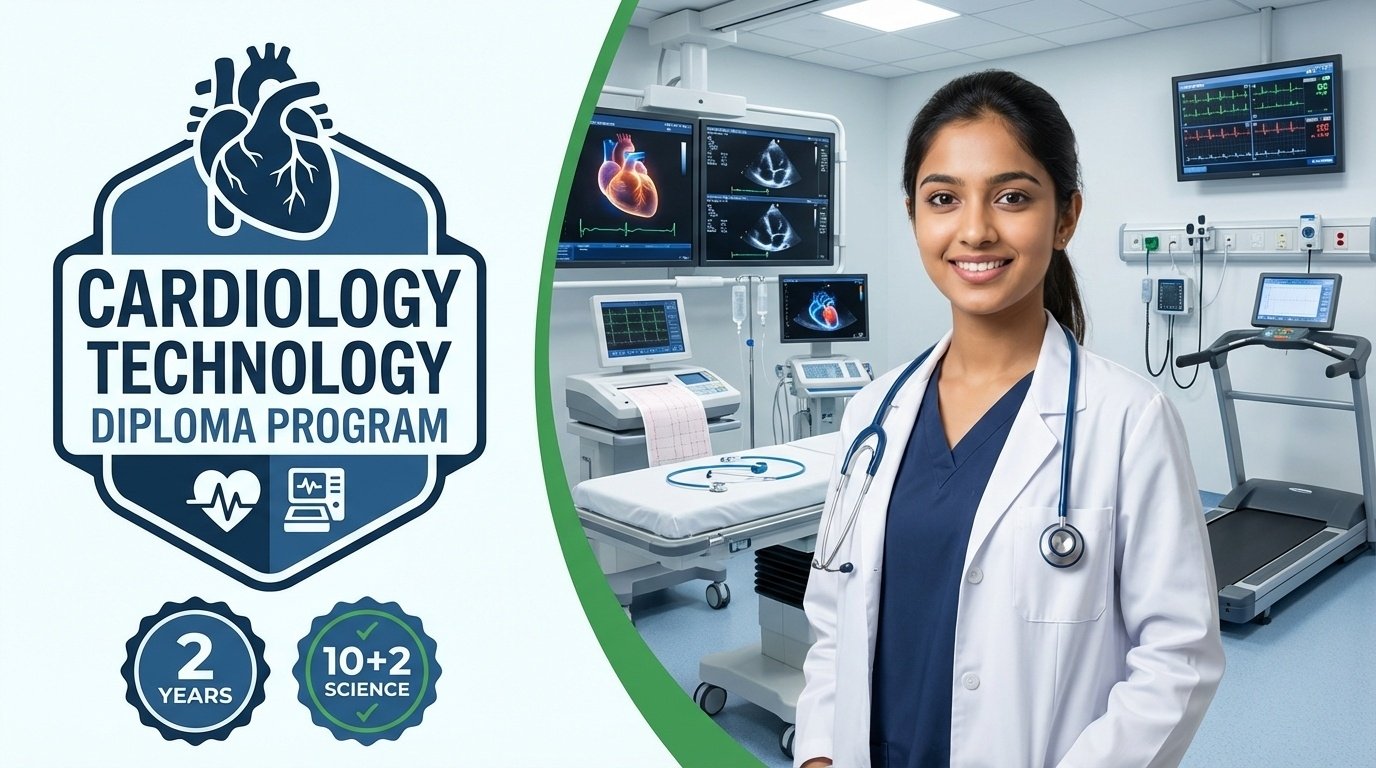
Course Overview
Course Details at a Glance
| Parameter | Details |
|---|---|
| Course Name | Diploma in Cardiology Technology |
| Duration | 2 Years (4 Semesters) |
| Category | Paramedical - Specialized Cardiology |
| Eligibility | 10+2 (Science Stream - PCB) |
| Course Fee | ₹1,00,000 (Complete Program) |
| Institute | Mahatma Gandhi Ayurvigyan Vidyapeeth |
| Mode of Study | Full-time with Intensive Clinical Training |
| Course Structure | Theory (40%) + Practical Labs (30%) + Clinical Internship (30%) |
| Certification | Recognized Diploma with BLS/ACLS Training |
| Clinical Training | Minimum 900 Hours in Multiple Cardiac Departments |
✅ Eligibility Criteria
Academic Qualifications
- Educational Requirement: 10+2 (Higher Secondary) with Science stream
- Mandatory Subjects: Physics, Chemistry, and Biology (PCB)
- Minimum Percentage: 50% aggregate marks in 10+2 (45% for SC/ST/OBC candidates)
- Age Limit:
- Minimum: 17 years (completed)
- Maximum: 35 years (relaxation for reserved categories)
- Medical Fitness: Physically and mentally fit for clinical duties
Desirable Attributes
- Strong interest in cardiac care and medical sciences
- Good manual dexterity for operating sophisticated equipment
- Excellent attention to detail and precision
- Ability to work calmly under pressure and emergency situations
- Strong interpersonal and communication skills
- Empathy and compassion for patients
- Physical stamina for long clinical hours
- Basic computer literacy
Not Eligible
- Students from Commerce or Arts stream (without PCB)
- Those with certain medical conditions affecting clinical work
- Color blindness (for certain cardiac imaging procedures)
Comprehensive Course Curriculum & Syllabus
The Diploma in Cardiology Technology offers an extensive, industry-aligned curriculum:
YEAR 1 - Foundation & Core Cardiology
Semester 1 - Basic Medical Sciences & Cardiac Fundamentals
1. Human Anatomy & Physiology (Cardio-Focus)
- General Anatomy: Cell biology, tissues, organ systems
- Cardiovascular System Anatomy:
- Heart structure: chambers, valves, walls, septum
- Cardiac muscle histology and ultrastructure
- Pericardium and mediastinum
- Coronary arteries and venous drainage
- Conduction system of the heart
- Great vessels (aorta, pulmonary arteries/veins, vena cava)
- Vascular System:
- Arterial system (systemic and pulmonary)
- Venous system and portal circulation
- Lymphatic system
- Microcirculation and capillary networks
- Cardiovascular Physiology:
- Cardiac cycle and heart sounds
- Cardiac output and stroke volume
- Blood pressure regulation
- Hemodynamics and flow dynamics
- Cardiac metabolism and oxygen consumption
- Autonomic control of heart rate
- Respiratory System: (Related to cardiac function)
- Pulmonary circulation
- Gas exchange
- Ventilation-perfusion relationship
- Renal System: (Fluid and electrolyte balance)
- Endocrine System: (Hormonal effects on heart)
2. Biochemistry & Clinical Pathology
- Basic biochemistry principles
- Carbohydrate, protein, and lipid metabolism
- Cardiac Biochemistry:
- Cardiac biomarkers (Troponin I, T, CK-MB, Myoglobin)
- Brain Natriuretic Peptide (BNP, NT-proBNP)
- Lipid profile (Cholesterol, LDL, HDL, Triglycerides)
- Inflammatory markers (CRP, ESR)
- Blood chemistry and electrolytes (Sodium, Potassium, Calcium, Magnesium)
- Blood gas analysis (ABG interpretation)
- Coagulation profile (PT, APTT, INR)
- Renal and liver function tests
- Laboratory sample collection and handling
- Quality control in laboratory
3. Microbiology & Infection Control
- Basics of medical microbiology
- Bacterial, viral, and fungal infections
- Cardiac-Related Infections:
- Infective endocarditis
- Myocarditis
- Pericarditis
- Post-cardiac surgery infections
- Infection prevention and control protocols
- Sterilization and disinfection techniques
- Universal precautions
- Biomedical waste management
- Hospital-acquired infections prevention
- Antibiotic resistance
4. General & Cardiac Pathology
- Introduction to pathology
- Cell injury, adaptation, and death
- Inflammation and healing processes
- Thrombosis, embolism, and infarction
- Cardiovascular Pathology:
- Atherosclerosis pathogenesis
- Ischemic heart disease
- Myocardial infarction pathology
- Cardiomyopathies
- Valvular heart disease pathology
- Congenital heart defects
- Tumors of the heart
5. Medical Physics & Electronics
- Basic physics principles
- Electricity and magnetism
- Medical Physics:
- Ultrasound physics
- X-ray physics basics
- Radiation physics (for Cath Lab)
- Doppler effect
- Medical Electronics:
- Basic electronics for medical devices
- Cardiac monitors and displays
- Signal processing basics
- Electrical safety in hospitals
- Equipment grounding and isolation
6. Medical Terminology & Healthcare Communication
- Medical abbreviations and symbols
- Anatomical terms and directional language
- Disease terminology and nomenclature
- Pharmacological terminology
- Surgical and procedural terms
- Professional Communication:
- Patient communication skills
- Interprofessional communication
- Medical documentation
- Report writing
- Presentation skills
7. Introduction to Cardiology Technology
- History and evolution of cardiology
- Overview of cardiac care specialties
- Role of cardiology technician
- Healthcare delivery systems
- Hospital organization and structure
- Cardiac care units and departments
- Career pathways in cardiology technology
- Professional ethics and conduct
- Legal aspects of healthcare
- Patient rights and responsibilities
8. Practical Laboratory - Phase I
- Anatomy models and specimens study
- Cardiovascular system dissection (animal hearts)
- Microscopy of cardiac tissues
- Basic physiological experiments
- Blood pressure measurement techniques
- ECG electrode placement practice
- Medical equipment familiarization
- Laboratory safety protocols
Semester 2 - Cardiac Diseases & Non-Invasive Diagnostics
1. Cardiovascular Diseases & Clinical Cardiology
A. Congenital Heart Diseases
- Atrial Septal Defect (ASD)
- Ventricular Septal Defect (VSD)
- Patent Ductus Arteriosus (PDA)
- Tetralogy of Fallot (TOF)
- Coarctation of aorta
- Transposition of great arteries
- Truncus arteriosus
- Hypoplastic left heart syndrome
B. Valvular Heart Diseases
- Mitral stenosis and regurgitation
- Aortic stenosis and regurgitation
- Tricuspid valve disorders
- Pulmonary valve disorders
- Prosthetic valve complications
- Infective endocarditis
C. Coronary Artery Disease (CAD)
- Atherosclerosis and risk factors
- Stable angina pectoris
- Unstable angina
- Acute coronary syndrome (ACS)
- ST-elevation myocardial infarction (STEMI)
- Non-ST-elevation myocardial infarction (NSTEMI)
- Complications of MI
- Post-MI management
D. Heart Failure
- Acute vs. chronic heart failure
- Systolic and diastolic dysfunction
- Left-sided vs. right-sided failure
- Classification (NYHA, ACC/AHA)
- Cardiogenic shock
- Acute decompensated heart failure
E. Cardiomyopathies
- Dilated cardiomyopathy (DCM)
- Hypertrophic cardiomyopathy (HCM)
- Restrictive cardiomyopathy
- Arrhythmogenic right ventricular cardiomyopathy
- Takotsubo cardiomyopathy
F. Arrhythmias & Conduction Disorders
- Sinus rhythm abnormalities
- Atrial arrhythmias (AFib, AFlutter, SVT)
- Ventricular arrhythmias (VT, VF, PVCs)
- Heart blocks (1st, 2nd, 3rd degree)
- Bundle branch blocks (LBBB, RBBB)
- Pre-excitation syndromes (WPW)
- Long QT syndrome
G. Pericardial Diseases
- Acute and chronic pericarditis
- Pericardial effusion
- Cardiac tamponade
- Constrictive pericarditis
H. Vascular Diseases
- Hypertension and hypertensive heart disease
- Peripheral arterial disease (PAD)
- Deep vein thrombosis (DVT)
- Pulmonary embolism
- Aortic aneurysms and dissection
- Carotid artery disease
I. Other Cardiac Conditions
- Rheumatic heart disease
- Cardiac tumors (myxoma)
- Cardiac trauma
- Pregnancy and heart disease
- Diabetes and heart disease
2. Electrocardiography (ECG/EKG) - Comprehensive
A. ECG Fundamentals
- Cardiac electrical activity and ion channels
- Action potential and depolarization/repolarization
- ECG leads and electrode placement
- Limb leads (I, II, III, aVR, aVL, aVF)
- Precordial leads (V1-V6)
- Modified leads and special positions
- ECG paper and calibration
- ECG machine operation and troubleshooting
B. Normal ECG
- P wave morphology and significance
- PR interval assessment
- QRS complex analysis
- ST segment evaluation
- T wave characteristics
- QT interval measurement and correction (QTc)
- U waves
- Normal variants
C. Abnormal ECG Patterns
- Chamber enlargement (atrial and ventricular)
- Axis deviation (left, right)
- Bundle branch blocks
- Fascicular blocks
- Q waves and myocardial infarction
- ST-segment elevation and depression
- T wave inversions
- Hyperacute T waves
D. Arrhythmia Recognition
- Systematic approach to rhythm interpretation
- Sinus rhythms (sinus tachycardia, bradycardia, arrhythmia)
- Atrial arrhythmias identification
- Junctional rhythms
- Ventricular arrhythmias recognition
- AV blocks differentiation
- Escape rhythms
- Pacemaker rhythms
E. Special ECG Situations
- Acute MI ECG evolution
- Electrolyte abnormalities on ECG
- Drug effects on ECG
- Pericarditis ECG changes
- Pulmonary embolism ECG
- WPW pattern recognition
- Brugada syndrome
- Pediatric ECG differences
F. Advanced ECG Techniques
- 15-lead and 18-lead ECG
- Right-sided ECG (V3R, V4R)
- Posterior ECG (V7, V8, V9)
- Signal-averaged ECG basics
- High-resolution ECG
- Body surface mapping
3. Holter Monitoring & Ambulatory ECG
- Principles of continuous ECG monitoring
- Holter monitor types and technology
- Patient preparation and electrode application
- Diary maintenance and event marking
- Device removal and data downloading
- Analysis software operation
- Arrhythmia detection and quantification
- Heart rate variability analysis
- ST-segment trending
- Report generation
- Event recorders and loop recorders
- Mobile cardiac telemetry (MCT)
4. Exercise Stress Testing (Treadmill Test - TMT)
A. Stress Test Fundamentals
- Indications and contraindications
- Types of stress tests (exercise vs. pharmacological)
- Bruce protocol and modified protocols
- Patient preparation and consent
- Pre-test assessment and risk stratification
B. Procedure Performance
- Treadmill operation and safety
- Continuous ECG monitoring during exercise
- Blood pressure monitoring
- Symptom assessment
- Heart rate response evaluation
- Achieving target heart rate
- Termination criteria
C. Interpretation & Reporting
- ST-segment changes analysis
- Arrhythmia occurrence during stress
- Hemodynamic response
- Exercise capacity assessment (METs)
- Duke Treadmill Score
- Risk stratification based on results
- Post-test monitoring and recovery
D. Pharmacological Stress Testing
- Dobutamine stress echocardiography
- Adenosine/Dipyridamole stress
- Regadenoson stress protocol
- Safety monitoring
- Reversal agents
E. Emergency Management
- Recognition of ischemic changes
- Management of chest pain during test
- Treatment of arrhythmias
- Hypotension management
- CPR readiness
5. Basic Echocardiography
A. Ultrasound Physics Review
- Transducer types and frequencies
- Image resolution and optimization
- Artifacts in ultrasound
- Doppler principles (CW, PW, Color)
- Tissue Doppler imaging
B. Echocardiography Equipment
- Ultrasound machine components
- Transducer selection
- Controls and adjustments (gain, depth, focus)
- Image storage and PACS integration
C. Standard Echocardiographic Views
- Patient positioning
- Parasternal Views:
- Long axis (PLAX)
- Short axis at multiple levels
- Apical Views:
- 4-chamber (A4C)
- 2-chamber (A2C)
- 3-chamber / 5-chamber
- Long axis
- Subcostal Views:
- 4-chamber
- IVC view
- Abdominal aorta
- Suprasternal Views:
- Aortic arch
- Great vessels
D. M-Mode Echocardiography
- M-mode principles
- Measurement techniques
- Left ventricular dimensions
- Wall thickness measurements
- Valve motion assessment
E. Two-Dimensional (2D) Echocardiography
- Chamber size assessment
- Wall motion evaluation
- Regional wall motion abnormalities
- Valve structure visualization
- Pericardium assessment
F. Basic Doppler Echocardiography
- Color Doppler flow patterns
- Continuous wave Doppler
- Pulsed wave Doppler
- Velocity measurements
- Pressure gradient calculations
G. Basic Cardiac Measurements
- Left ventricular ejection fraction (LVEF) - Simpson's method
- Fractional shortening
- Cardiac output calculation
- Stroke volume
- Valve area estimation
6. Cardiovascular Pharmacology
A. Drug Administration Fundamentals
- Routes of administration
- Pharmacokinetics (absorption, distribution, metabolism, excretion)
- Pharmacodynamics
- Drug interactions
- Adverse drug reactions
B. Cardiac Medications
Anti-Hypertensive Drugs
- ACE inhibitors
- Angiotensin receptor blockers (ARBs)
- Beta-blockers
- Calcium channel blockers
- Diuretics (thiazide, loop, potassium-sparing)
- Alpha-blockers
- Vasodilators
Anti-Anginal Drugs
- Nitrates (sublingual, oral, transdermal)
- Beta-blockers
- Calcium channel blockers
- Ranolazine
Anti-Arrhythmic Drugs
- Class I: Sodium channel blockers
- Class II: Beta-blockers
- Class III: Potassium channel blockers (Amiodarone, Sotalol)
- Class IV: Calcium channel blockers
- Other (Digoxin, Adenosine)
Anticoagulants & Antiplatelets
- Heparin (unfractionated, low molecular weight)
- Warfarin
- Novel oral anticoagulants (NOACs): Dabigatran, Rivaroxaban, Apixaban
- Aspirin
- Clopidogrel, Prasugrel, Ticagrelor
- GP IIb/IIIa inhibitors
Heart Failure Medications
- Diuretics
- ACE inhibitors / ARBs
- Beta-blockers
- Aldosterone antagonists
- Sacubitril/Valsartan (ARNI)
- Digoxin
- Ivabradine
Lipid-Lowering Agents
- Statins (Atorvastatin, Rosuvastatin)
- Ezetimibe
- PCSK9 inhibitors
- Fibrates
- Niacin
Emergency Cardiac Drugs
- Epinephrine/Adrenaline
- Atropine
- Dopamine
- Dobutamine
- Norepinephrine
- Amiodarone
- Lidocaine
- Adenosine
- Calcium chloride/gluconate
- Sodium bicarbonate
- Magnesium sulfate
C. Intravenous Fluid Therapy
- Crystalloids and colloids
- Fluid resuscitation protocols
- Blood transfusion basics
7. Patient Care & Nursing in Cardiology
- Pre-procedure patient assessment
- Vital signs monitoring (BP, HR, SpO2, Temp, RR)
- Patient positioning for comfort and procedures
- Oxygen therapy administration
- IV access and cannulation
- Medication administration
- Catheter care (urinary, central lines)
- Wound care and dressing changes
- Patient hygiene and comfort measures
- Nutrition support for cardiac patients
- Mobility and rehabilitation
- Post-procedure monitoring
- Discharge planning
8. Practical Training - Phase II
- ECG recording on real patients (minimum 200 ECGs)
- Holter monitor application and removal
- Stress test performance under supervision
- Basic echo scanning practice (100+ scans)
- Patient vital signs monitoring
- Emergency response drills
- Clinical observation in cardiology OPD
- Case discussions and presentations
YEAR 2 - Advanced Procedures & Specialization
Semester 3 - Invasive Cardiology & Advanced Diagnostics
1. Cardiac Catheterization Laboratory Technology (Cath Lab)
A. Cath Lab Fundamentals
- Introduction to interventional cardiology
- Cath Lab setup and equipment
- Angiography suite design
- Radiation safety principles (ALARA)
- Sterile technique and surgical asepsis
- Personal protective equipment
- Team roles and responsibilities
B. Cardiac Catheterization Equipment
- C-arm fluoroscopy system
- Cine-angiography equipment
- Contrast injectors
- Hemodynamic monitoring systems
- Pressure transducers and recorders
- Intravascular ultrasound (IVUS) system
- Optical coherence tomography (OCT) system
- Fractional flow reserve (FFR) equipment
C. Catheterization Procedure
- Vascular access techniques
- Femoral artery approach
- Radial artery approach (transradial)
- Brachial approach
- Catheter types and selection
- Diagnostic catheters
- Guiding catheters
- Balloon catheters
- Stent delivery systems
- Guide wires and their manipulation
- Sheath insertion and management
D. Coronary Angiography
- Pre-procedure patient preparation
- Informed consent process
- Local anesthesia administration
- Right and left coronary artery cannulation
- Standard angiographic views
- Coronary anatomy visualization
- Lesion assessment and grading
- Collateral circulation identification
- Intra-procedure monitoring
- Hemodynamic data recording
- Complication recognition
E. Percutaneous Coronary Intervention (PCI)
- Balloon angioplasty technique
- Stent types (bare metal, drug-eluting)
- Stent deployment procedure
- Post-dilation techniques
- Rotational atherectomy basics
- Thrombus aspiration
- Chronic total occlusion (CTO) intervention basics
- Bifurcation lesion treatment
F. Structural Heart Interventions
- Transcatheter aortic valve replacement (TAVR)
- Mitral valve repair (MitraClip)
- Patent foramen ovale (PFO) closure
- Atrial septal defect (ASD) closure
- Ventricular septal defect (VSD) closure
- Patent ductus arteriosus (PDA) closure
- Left atrial appendage (LAA) closure
- Paravalvular leak closure
G. Contrast Agents
- Types of contrast media
- Iodine-based contrast properties
- Contrast-induced nephropathy prevention
- Allergic reactions and management
- Contrast dose calculation
- Hydration protocols
H. Hemodynamic Monitoring
- Arterial pressure waveforms
- Right heart catheterization
- Pulmonary artery pressure measurement
- Cardiac output measurement (Fick, thermodilution)
- Pressure gradient assessment
- Shunt detection and quantification
I. Post-Procedure Care
- Sheath removal techniques
- Manual compression vs. closure devices
- Hemostasis achievement
- Vascular access site monitoring
- Hematoma and pseudoaneurysm detection
- Post-procedure vitals monitoring
- Patient mobilization protocols
J. Complications & Emergency Management
- Vascular complications (bleeding, hematoma, dissection)
- Coronary dissection
- Coronary perforation
- No-reflow phenomenon
- Acute stent thrombosis
- Arrhythmias during procedure
- Contrast reactions
- Cardiac tamponade
- Stroke during procedure
2. Electrophysiology (EP) Laboratory
A. Cardiac Electrophysiology Basics
- Intracardiac electrograms
- Electrophysiology study (EPS) principles
- Mapping systems (3D electroanatomical mapping)
- Ablation energy sources (radiofrequency, cryoablation)
B. EP Study Procedures
- Catheter positioning (His bundle, RV apex, CS, RA)
- Programmed electrical stimulation
- Arrhythmia induction protocols
- Conduction system assessment
- Accessory pathway localization
C. Catheter Ablation Procedures
- Atrial fibrillation ablation (pulmonary vein isolation)
- Atrial flutter ablation (cavotricuspid isthmus)
- Supraventricular tachycardia (SVT) ablation
- Ventricular tachycardia (VT) ablation
- AV node ablation
- Accessory pathway ablation (WPW syndrome)
D. EP Lab Role of Technician
- Equipment setup and testing
- Sterile field maintenance
- Recording systems operation
- Catheter tracking and documentation
- Emergency equipment readiness
3. Pacemaker & Implantable Cardiac Device Technology
A. Cardiac Pacing Fundamentals
- Indications for pacing
- Pacing modes and nomenclature (VVI, DDD, etc.)
- Rate-adaptive pacing
- Pacemaker components
B. Temporary Pacing
- Transvenous temporary pacemaker
- Transcutaneous pacing
- Epicardial pacing (post-cardiac surgery)
- Pacing threshold testing
- Troubleshooting capture and sensing issues
C. Permanent Pacemaker Implantation
- Single chamber vs. dual chamber
- Lead placement (atrial, ventricular)
- Pocket creation
- Pacemaker programming basics
- Testing and optimization
D. Implantable Cardioverter Defibrillator (ICD)
- ICD indications (primary and secondary prevention)
- ICD components and functions
- Defibrillation threshold testing
- ICD programming
- Shock delivery mechanisms
E. Cardiac Resynchronization Therapy (CRT)
- Biventricular pacing concept
- CRT indications (heart failure)
- LV lead placement via coronary sinus
- CRT-P vs. CRT-D devices
- Optimization protocols
F. Leadless Pacemakers
- New technology overview
- Micra and Nanostim devices
- Implantation technique
- Advantages and limitations
G. Device Follow-up & Troubleshooting
- Device interrogation
- Battery status assessment
- Lead impedance testing
- Sensing and capture thresholds
- Arrhythmia log review
- Device reprogramming
- Magnet testing
- Common device malfunctions
4. Advanced Echocardiography & 3D Echo
A. Comprehensive 2D Echocardiography
- Detailed valvular assessment
- Mitral valve (stenosis grading, regurgitation quantification)
- Aortic valve assessment
- Tricuspid valve evaluation
- Pulmonary valve
- Prosthetic valve assessment
- Chamber quantification
- Diastolic function assessment
- Systolic function evaluation (global and regional)
B. Advanced Doppler Techniques
- Pressure half-time method
- PISA (Proximal Isovelocity Surface Area) method
- Continuity equation
- Bernoulli equation application
- Pulmonary artery systolic pressure estimation
- Diastolic function parameters (E/A ratio, E/e' ratio)
C. Transesophageal Echocardiography (TEE)
- TEE indications and contraindications
- Patient preparation and sedation
- TEE probe handling
- Multiplane imaging
- Standard TEE views (transgastric, mid-esophageal, upper esophageal)
- TEE in endocarditis
- TEE for LAA thrombus detection
- TEE guidance for interventions
- Complications and safety
D. 3D Echocardiography
- 3D echo technology
- Real-time 3D imaging
- 3D color Doppler
- Volumetric analysis
- Valve en-face views
- Quantification advantages
- 3D TEE
E. Contrast Echocardiography
- Contrast agents (microbubbles)
- Left ventricular opacification
- Perfusion imaging
- Safety considerations
F. Stress Echocardiography
- Exercise stress echo
- Dobutamine stress echo
- Wall motion score index
- Viability assessment
- Ischemia detection
G. Strain Imaging
- Speckle tracking echocardiography
- Global longitudinal strain (GLS)
- Strain rate imaging
- Applications in cardiomyopathies
5. Cardiac Intensive Care Unit (CICU/CCU) Management
A. CICU Setup & Organization
- Unit design and equipment
- Patient monitoring systems
- Advanced hemodynamic monitoring
- Ventilator setup
- Invasive monitoring lines
B. Advanced Cardiac Monitoring
- Continuous ECG telemetry
- ST-segment monitoring
- Arrhythmia detection and alarms
- Central venous pressure (CVP) monitoring
- Pulmonary artery catheterization (Swan-Ganz)
- Arterial line management
- Cardiac output monitoring (continuous)
C. Mechanical Circulatory Support
- Intra-aortic balloon pump (IABP)
- Indications and contraindications
- Insertion and management
- Timing and waveform interpretation
- Weaning protocols
- Complications
- Ventricular assist devices (VAD) basics
- Extracorporeal membrane oxygenation (ECMO) overview
- Impella device basics
D. Ventilator Management for Cardiac Patients
- Indications for mechanical ventilation
- Ventilator modes
- Settings and parameters
- Weaning strategies
- Non-invasive ventilation (NIV)
E. Critical Cardiac Conditions Management
- Acute coronary syndrome (ACS)
- Cardiogenic shock
- Acute decompensated heart failure
- Hypertensive crisis
- Cardiac tamponade
- Aortic dissection
- Pulmonary embolism
- Post-cardiac arrest care
F. Inotropic & Vasopressor Support
- Dopamine dosing and effects
- Dobutamine administration
- Norepinephrine use
- Epinephrine indications
- Milrinone therapy
- Vasopressin use
- Titration protocols
6. Cardiac Emergency & Advanced Life Support
A. Basic Life Support (BLS) - Certification Included
- Scene safety assessment
- Recognition of cardiac arrest
- High-quality CPR technique
- Compression rate and depth
- Chest compression fraction
- Minimizing interruptions
- AED operation
- Relief of choking (Heimlich maneuver)
- Recovery position
- Two-rescuer CPR
- Pediatric BLS differences
B. Advanced Cardiac Life Support (ACLS) - Certification Included
- ACLS algorithms
- Cardiac Arrest Algorithms:
- VF/pVT (shockable rhythms)
- PEA/Asystole (non-shockable rhythms)
- Post-cardiac arrest care
- Acute Coronary Syndromes Algorithm
- Bradycardia Algorithm
- Tachycardia Algorithm:
- Stable vs. unstable tachycardia
- Synchronized cardioversion
- Pharmacological management
- Stroke Algorithm (basic)
- Advanced airway management
- Medications in ACLS
- Team dynamics and communication
- Megacode scenarios
C. Defibrillation & Cardioversion
- Manual defibrillator operation
- Energy selection
- Pad placement
- Safety protocols
- Synchronized vs. unsynchronized shock
- Biphasic vs. monophasic defibrillation
D. Emergency Drug Administration
- IV access in emergencies
- Intraosseous (IO) access
- Drug preparation and dosing
- Infusion calculations
- Emergency drug cart organization
E. Cardiac Emergency Recognition
- Acute MI recognition (STEMI vs. NSTEMI)
- Unstable angina
- Cardiac tamponade
- Tension pneumothorax
- Massive pulmonary embolism
- Aortic dissection
- Hypertensive emergency
F. Crash Cart Management
- Equipment checklist
- Daily checks
- Medication inventory
- Defibrillator testing
- Documentation
7. Vascular Ultrasound (Doppler Studies)
- Carotid Doppler ultrasound
- Peripheral arterial Doppler
- Venous Doppler (DVT detection)
- Abdominal aorta scanning
- Renal artery Doppler
8. Practical Training - Phase III
- Cath Lab observation and assistance (minimum 100 cases)
- ECG monitoring in CICU (200+ hours)
- Pacemaker interrogation practice
- Advanced echo scanning (200+ comprehensive studies)
- Emergency response participation
- Clinical case presentations
- Supervised performance of procedures
Semester 4 - Specialized Areas, Rehabilitation & Professional Development
1. Cardiac Rehabilitation & Preventive Cardiology
A. Cardiac Rehabilitation Principles
- Phases of cardiac rehabilitation (I, II, III, IV)
- Goals and benefits of cardiac rehab
- Patient selection and assessment
- Risk stratification
B. Exercise Prescription
- Exercise physiology for cardiac patients
- Target heart rate calculation
- Exercise intensity monitoring (RPE scale)
- Types of exercise (aerobic, resistance)
- Exercise progression protocols
- Home exercise programs
- Exercise contraindications
C. Patient Education & Counseling
- Disease process education
- Medication compliance
- Dietary modifications
- Weight management
- Smoking cessation strategies
- Alcohol consumption guidelines
- Stress management techniques
- Sleep hygiene
D. Cardiac Risk Factor Modification
- Hypertension management
- Diabetes control
- Dyslipidemia treatment
- Obesity management
- Physical inactivity
- Psychosocial factors
E. Diet & Nutrition
- DASH diet principles
- Mediterranean diet
- Low sodium diet
- Heart-healthy fats
- Fiber intake
- Portion control
- Reading food labels
F. Return-to-Work Counseling
- Vocational assessment
- Activity limitations
- Job modifications
- Driving restrictions
2. Pediatric & Congenital Cardiology
A. Pediatric Cardiac Anatomy & Physiology
- Fetal circulation
- Transitional circulation
- Developmental changes
B. Common Congenital Heart Defects
- Detailed study of ASD, VSD, PDA, TOF
- Coarctation of aorta
- Transposition of great arteries
- Single ventricle physiology
- Hypoplastic left heart syndrome (HLHS)
C. Pediatric Echocardiography
- Scanning techniques in children
- Fetal echocardiography basics
- Assessment of congenital defects
- Post-operative evaluation
D. Pediatric Cardiac Catheterization
- Indications in children
- Device closure procedures
- Balloon valvuloplasty
- Coarctation angioplasty
3. Cardiac Surgery & Perioperative Care
A. Cardiac Surgical Procedures
- Coronary artery bypass grafting (CABG)
- Valve replacement and repair
- Congenital defect repairs
- Heart transplantation basics
- Ventricular assist device implantation
- Aortic surgery
B. Cardiopulmonary Bypass (CPB)
- Heart-lung machine components
- Perfusion basics
- Off-pump CABG
C. Perioperative Echocardiography
- Intraoperative TEE
- Pre-bypass assessment
- Post-bypass evaluation
- De-airing procedures
D. Post-Cardiac Surgery Care
- ICU monitoring
- Chest tube management
- Temporary pacing wires
- Early mobilization
- Complication detection (bleeding, tamponade)
4. Nuclear Cardiology & Advanced Imaging
A. Nuclear Cardiology Basics
- Radiopharmaceuticals (Tc-99m, Thallium-201)
- SPECT imaging
- PET imaging
- Myocardial perfusion imaging
- Viability studies
- Radiation safety
B. Cardiac CT & MRI
- CT coronary angiography (CCTA)
- Calcium scoring
- Cardiac MRI sequences
- Role in congenital heart disease
- Viability assessment with MRI
C. Multimodality Imaging Integration
- Combining echo with CT/MRI
- Fusion imaging for interventions
5. Research Methodology, Biostatistics & Evidence-Based Practice
A. Medical Research Fundamentals
- Types of research studies
- Research design (observational, experimental)
- Case reports and case series
- Cohort studies
- Randomized controlled trials (RCTs)
- Meta-analysis and systematic reviews
B. Biostatistics
- Descriptive statistics (mean, median, mode)
- Measures of dispersion
- Normal distribution
- Hypothesis testing
- P-values and statistical significance
- Confidence intervals
- Correlation and regression basics
- Sensitivity and specificity
- Survival analysis basics (Kaplan-Meier curves)
C. Evidence-Based Medicine
- Critical appraisal of literature
- Levels of evidence
- Guidelines and recommendations
- Applying evidence to practice
- Clinical decision-making
D. Research Proposal Development
- Research question formulation (PICO format)
- Literature review
- Methodology planning
- Ethical considerations
- Data collection methods
E. Medical Writing & Publication
- Scientific paper structure (IMRAD)
- Abstract writing
- Case report writing
- Poster presentation design
- Oral presentation skills
- Citation and referencing
F. Data Analysis Software
- Introduction to SPSS
- Excel for medical data
- GraphPad Prism basics
6. Healthcare Quality Management & Accreditation
A. Quality in Healthcare
- Quality concepts and dimensions
- Quality indicators in cardiology
- Continuous quality improvement (CQI)
- Plan-Do-Study-Act (PDSA) cycles
- Root cause analysis
- Failure mode and effects analysis (FMEA)
B. Patient Safety
- Patient safety culture
- Medication safety
- Infection prevention
- Fall prevention
- Error reporting systems
- Adverse event management
C. Accreditation Standards
- NABH (National Accreditation Board for Hospitals)
- JCI (Joint Commission International)
- ISO standards
- NABL for laboratories
- Documentation requirements
- Mock drills and preparedness
D. Clinical Audit
- Audit cycle
- Criteria and standards
- Data collection
- Analysis and reporting
- Implementing changes
7. Hospital Administration & Cardiac Department Management
A. Healthcare Delivery Systems
- Public vs. private healthcare
- Insurance and reimbursement
- Health policies in India
- Ayushman Bharat scheme
B. Cardiac Care Unit Management
- Staff scheduling and rostering
- Equipment inventory management
- Budgeting basics
- Vendor management
- Maintenance contracts
C. Legal & Ethical Aspects
- Medical negligence and liability
- Informed consent (detailed)
- Patient confidentiality and HIPAA equivalent
- Documentation and medical records
- Medico-legal cases
- Consumer Protection Act
- Medical ethics principles (autonomy, beneficence, non-maleficence, justice)
- Ethical dilemmas in cardiology
D. Leadership & Team Management
- Leadership styles
- Team building
- Conflict resolution
- Effective communication
- Time management
- Stress management for healthcare workers
8. Emerging Technologies & Future of Cardiology
A. Digital Health & Telemedicine
- Telecardiology applications
- Remote patient monitoring
- Wearable cardiac devices (smartwatches, patches)
- Mobile health (mHealth) apps
- Electronic health records (EHR)
B. Artificial Intelligence in Cardiology
- AI-assisted ECG interpretation
- Machine learning in echo analysis
- Predictive analytics for cardiac events
- Risk stratification algorithms
C. Minimally Invasive & Robotic Procedures
- Robotic-assisted cardiac surgery
- Percutaneous valve interventions
- Leadless pacemakers
- Subcutaneous ICDs
D. Regenerative Medicine
- Stem cell therapy for heart disease
- Tissue engineering
- Gene therapy approaches
E. Precision Medicine
- Genetic testing for cardiac diseases
- Pharmacogenomics
- Personalized treatment strategies
F. 3D Printing & Bioprinting
- 3D-printed heart models for surgical planning
- Patient-specific prosthetics
- Bioprinting research
9. Professional Development & Career Planning
- Resume/CV writing
- Interview skills
- Professional networking
- Continuing medical education (CME)
- Certification pathways
- International opportunities
- Entrepreneurship in healthcare
- Ethical practice and professional conduct
10. Comprehensive Clinical Internship - Phase IV
Extensive Hospital-Based Training (Minimum 900 Hours Total)
Rotation Schedule:
-
Cardiology OPD (100 hours)
- Patient history taking
- Physical examination assistance
- ECG recording and interpretation
- Patient education
-
Non-Invasive Cardiology Lab (200 hours)
- ECG (independent performance)
- Holter monitoring
- Stress testing
- Echocardiography (comprehensive studies)
-
Cardiac Catheterization Laboratory (150 hours)
- Pre-procedure preparation
- Intra-procedure assistance
- Hemodynamic monitoring
- Post-procedure care
-
Cardiac Intensive Care Unit (200 hours)
- Patient monitoring
- Advanced hemodynamic monitoring
- Emergency response
- Device management
-
Electrophysiology Lab (50 hours)
- EP study observation
- Ablation procedure assistance
- Device implantation support
-
Cardiac Rehabilitation Center (50 hours)
- Exercise prescription
- Patient counseling
- Stress management programs
-
Cardiac Emergency Department (100 hours)
- Triage assistance
- Emergency ECG
- BLS/ACLS application
- Rapid response team participation
-
Night Duties (50 hours)
- 24x7 cardiac care experience
- Emergency handling
- On-call responsibilities
Competency Assessment:
-
Minimum procedures to be performed independently:
- ECG: 500 recordings
- Echocardiography: 300 comprehensive studies
- Holter monitoring: 50 applications
- Stress testing: 100 tests
- Cath Lab assistance: 150 procedures
- CICU monitoring: 100 patients
-
Case Presentations: Minimum 10 detailed case presentations
-
Research Project: One original research project with data collection
-
Final Clinical Examination: Practical and viva-voce assessment
-
Log Book Maintenance: Complete documentation of all procedures
-
Feedback Sessions: Regular evaluation and mentoring
Comprehensive Learning Outcomes
Upon successful completion, graduates will demonstrate:
Technical & Clinical Competencies
Diagnostic Excellence ✓ Independently perform and interpret 12-lead ECGs with 95%+ accuracy
✓ Conduct comprehensive echocardiographic examinations (2D, M-mode, Doppler)
✓ Execute stress testing protocols with complete safety monitoring
✓ Perform Holter monitoring setup, analysis, and reporting
✓ Operate advanced cardiac imaging equipment proficiently
Invasive Procedure Proficiency ✓ Assist in cardiac catheterization and angiography procedures
✓ Support interventional cardiology procedures (PCI, structural interventions)
✓ Prepare and maintain sterile field in Cath Lab
✓ Monitor hemodynamic parameters during invasive procedures
✓ Manage vascular access sites post-procedure
Critical Care Expertise ✓ Monitor critically ill cardiac patients in ICU/CCU settings
✓ Operate advanced hemodynamic monitoring systems
✓ Assist with mechanical circulatory support devices (IABP)
✓ Manage temporary pacing systems
✓ Recognize and respond to cardiac emergencies
Emergency Management ✓ Perform high-quality CPR (BLS certified)
✓ Execute ACLS algorithms independently (ACLS certified)
✓ Operate defibrillators and perform cardioversion
✓ Administer emergency cardiac medications
✓ Function effectively in code blue situations
Device Management ✓ Assist in pacemaker and ICD implantations
✓ Perform device interrogation and follow-up
✓ Troubleshoot pacing and sensing issues
✓ Program basic device parameters under supervision
Analytical & Interpretive Skills
✓ Interpret complex ECG patterns including arrhythmias and ischemic changes
✓ Analyze echocardiographic images for structural and functional abnormalities
✓ Assess hemodynamic data and recognize abnormal patterns
✓ Correlate clinical findings with diagnostic test results
✓ Recognize life-threatening cardiac conditions promptly
✓ Apply evidence-based guidelines in clinical decision-making
Patient Care Excellence
✓ Provide comprehensive pre-, intra-, and post-procedure patient care
✓ Educate patients about cardiac conditions and lifestyle modifications
✓ Counsel patients on medication compliance and risk factor reduction
✓ Offer psychological support to cardiac patients and families
✓ Maintain patient dignity, privacy, and comfort
✓ Communicate effectively with patients from diverse backgrounds
Professional Attributes
✓ Collaborate effectively with multidisciplinary cardiac care teams
✓ Maintain highest standards of medical ethics and patient confidentiality
✓ Demonstrate critical thinking in complex clinical situations
✓ Practice infection control and safety protocols rigorously
✓ Document procedures and findings accurately and comprehensively
✓ Engage in continuous professional development and lifelong learning
✓ Supervise and mentor junior technicians and students
✓ Participate in quality improvement initiatives
✓ Conduct basic research and present findings
Equipment & Technology Mastery
✓ Operate, troubleshoot, and maintain cardiac diagnostic equipment
✓ Ensure proper calibration and quality control of devices
✓ Adapt to new technologies and equipment rapidly
✓ Manage PACS and digital imaging systems
✓ Utilize electronic medical records (EMR) effectively
✓ Apply radiation safety principles in fluoroscopy-based procedures
Extensive Career Opportunities & Job Roles
Cardiology Technology graduates enjoy diverse, high-demand career options:
Primary Clinical Positions
1. Cardiology Technologist (Multi-Skilled)
- Comprehensive role performing multiple cardiac procedures
- ECG, Echo, Holter, Stress testing
- Employment: Multi-specialty hospitals, cardiac centers
- Salary Range: ₹2.5-5 Lakhs (entry) to ₹8-15 Lakhs (experienced)
2. Cardiac Catheterization Laboratory (Cath Lab) Technologist
- Assisting in diagnostic and interventional cardiac procedures
- Coronary angiography and PCI support
- High-tech, high-demand role
- Employment: Tertiary care hospitals, specialized cardiac centers
- Salary Range: ₹4-7 Lakhs (entry) to ₹10-20 Lakhs (experienced)
3. Echocardiography Technician / Cardiac Sonographer
- Performing comprehensive 2D, 3D, and Doppler echo studies
- TEE assistance
- Employment: Echo labs, cardiology clinics, hospitals
- Salary Range: ₹3-5 Lakhs (entry) to ₹6-12 Lakhs (experienced)
4. Electrocardiography (ECG/EKG) Technician
- 12-lead ECG recording and preliminary interpretation
- Holter and event monitoring
- Employment: Hospitals, diagnostic centers, clinics
- Salary Range: ₹2-3.5 Lakhs (entry) to ₹4-8 Lakhs (experienced)
5. Cardiac Intensive Care Technologist (CICU/CCU)
- Advanced monitoring of critically ill cardiac patients
- Hemodynamic monitoring and support
- Employment: ICUs, CCUs, post-op cardiac units
- Salary Range: ₹3-5 Lakhs (entry) to ₹7-14 Lakhs (experienced)
6. Electrophysiology (EP) Lab Technician
- Assisting in EP studies and ablation procedures
- Specialized, high-skill role
- Employment: Specialized cardiac hospitals, EP labs
- Salary Range: ₹5-8 Lakhs (entry) to ₹12-22 Lakhs (experienced)
7. Cardiac Device Specialist / Pacemaker Technician
- Pacemaker and ICD implantation assistance
- Device interrogation and follow-up
- Employment: Device clinics, cardiac centers
- Salary Range: ₹4-6 Lakhs (entry) to ₹8-16 Lakhs (experienced)
8. Stress Test / Exercise Tolerance Test (ETT) Technician
- Conducting treadmill and pharmacological stress tests
- Exercise physiology application
- Employment: Cardiac rehab centers, hospitals
- Salary Range: ₹2.5-4 Lakhs (entry) to ₹5-10 Lakhs (experienced)
9. Cardiac Rehabilitation Specialist
- Exercise prescription and monitoring
- Patient education and lifestyle counseling
- Employment: Rehabilitation centers, wellness clinics
- Salary Range: ₹3-5 Lakhs (entry) to ₹6-12 Lakhs (experienced)
10. Non-Invasive Cardiology Technologist
- Specializing in outpatient diagnostic procedures
- Echo, ECG, Holter, stress testing
- Employment: Diagnostic centers, OPD cardiology
- Salary Range: ₹2.5-4.5 Lakhs (entry) to ₹6-11 Lakhs (experienced)
Advanced & Specialized Roles
11. Interventional Cardiology Technologist (Advanced)
- Complex interventional procedures
- Structural heart interventions (TAVR, MitraClip)
- Requires: 3-5 years experience + specialized training
- Salary Range: ₹8-15 Lakhs to ₹18-30 Lakhs
12. Clinical Application Specialist
- Medical device company representative
- Product training and technical support
- Employment: Medical device manufacturers (GE, Philips, Siemens, Abbott, Medtronic)
- Salary Range: ₹6-10 Lakhs (entry) to ₹12-25 Lakhs (experienced)
13. Cardiac Research Coordinator / Clinical Trial Coordinator
- Managing cardiology research projects
- Patient recruitment and data management
- Employment: Research institutions, pharmaceutical companies, CROs
- Salary Range: ₹4-7 Lakhs (entry) to ₹10-18 Lakhs (experienced)
14. Cardiology Department Supervisor / Manager
- Managing cardiac diagnostic departments
- Staff supervision and quality control
- Requires: 5-8 years experience + management skills
- Salary Range: ₹10-18 Lakhs to ₹25-40 Lakhs
15. Cardiac Sonographer Educator / Clinical Instructor
- Teaching in paramedical colleges
- Clinical training supervision
- Employment: Educational institutions, hospitals with training programs
- Salary Range: ₹4-8 Lakhs (entry) to ₹10-20 Lakhs (experienced)
16. Healthcare Quality Coordinator (Cardiology)
- Quality assurance in cardiac care
- Accreditation and compliance
- Employment: Multi-specialty hospitals, healthcare consulting
- Salary Range: ₹5-9 Lakhs (entry) to ₹12-22 Lakhs (experienced)
17. Telemedicine Cardiology Specialist
- Remote ECG interpretation
- Virtual patient monitoring
- Employment: Telemedicine companies, rural health programs
- Salary Range: ₹4-7 Lakhs to ₹10-18 Lakhs
18. Medical Equipment Service Engineer (Cardiac Specialty)
- Equipment maintenance and repair
- Technical troubleshooting
- Employment: Medical equipment companies, hospitals
- Salary Range: ₹4-6 Lakhs (entry) to ₹8-15 Lakhs (experienced)
Employment Sectors
Healthcare Institutions (Primary)
- Super-specialty Cardiac Hospitals (Fortis, Apollo, Narayana Health, Medanta)
- Multi-specialty Corporate Hospitals
- Government Medical Colleges and Hospitals
- AIIMS and other premier institutes
- Dedicated Cardiac Care Centers
- Cardiac Surgery Centers
- Teaching Hospitals with Cardiology Departments
Diagnostic & Research
- Advanced Cardiac Diagnostic Laboratories
- Standalone Echo and ECG Centers
- Clinical Research Organizations (CROs)
- Pharmaceutical Companies (clinical trials)
- Cardiac Research Institutions
- Medical Colleges with Research Departments
Medical Device Industry
- Equipment Manufacturers: GE Healthcare, Philips Healthcare, Siemens Healthineers
- Device Companies: Abbott, Medtronic, Boston Scientific, Johnson & Johnson
- Consumables: Contrast agents, catheters, stents
- Roles: Clinical applications, technical support, sales, training, R&D support
Government & Public Sector
- All India Institute of Medical Sciences (AIIMS) - across India
- State Government Hospitals and Medical Colleges
- Central Government Health Scheme (CGHS) Hospitals
- Armed Forces Medical Services (Army, Navy, Air Force hospitals)
- Railway Hospitals
- ESI (Employee State Insurance) Hospitals
- District Hospitals with Cardiology Departments
- Primary Health Centers (with cardiac screening units)
Emergency & Mobile Services
- Advanced Cardiac Life Support (ACLS) Ambulances
- Mobile Cardiac Catheterization Units
- Air Ambulance Services (cardiac emergencies)
- Emergency Response Teams (cardiac specialists)
- Disaster Management Medical Teams
Corporate & Insurance
- Corporate Healthcare Centers (TCS, Infosys, etc.)
- Occupational Health Services
- Health Insurance Companies (medical claim assessment)
- Third-Party Administrators (TPA)
- Employee Wellness Programs
Education & Training
- Paramedical Colleges and Institutes
- Medical Simulation Centers
- Continuing Medical Education (CME) Organizers
- Workshop and Seminar Facilitators
- Online Education Platforms (health tech)
Curriculum
DCT101Human Anatomy
DCT102Physiology of Heart
DCT103ECG Technology
DCT104Medical Terminology
DCT105Basic Pharmacology
DCT106Patient Monitoring
DCT201Echocardiography
DCT202Cardiac Catheterization
DCT203Stress Testing
DCT204Cardiac Equipment
DCT205Clinical Cardiology
DCT206Internship
Get Your Certificate
- Marksheet and certificate from Mahatma Gandhi Ayurvigyan Vidyapeeth after passing the examination.
- Result and certificate can be checked online on this website.
- Theory and practical examination in every subject.
Certificate
Start Learning Today!
Admission, fees or course related questions