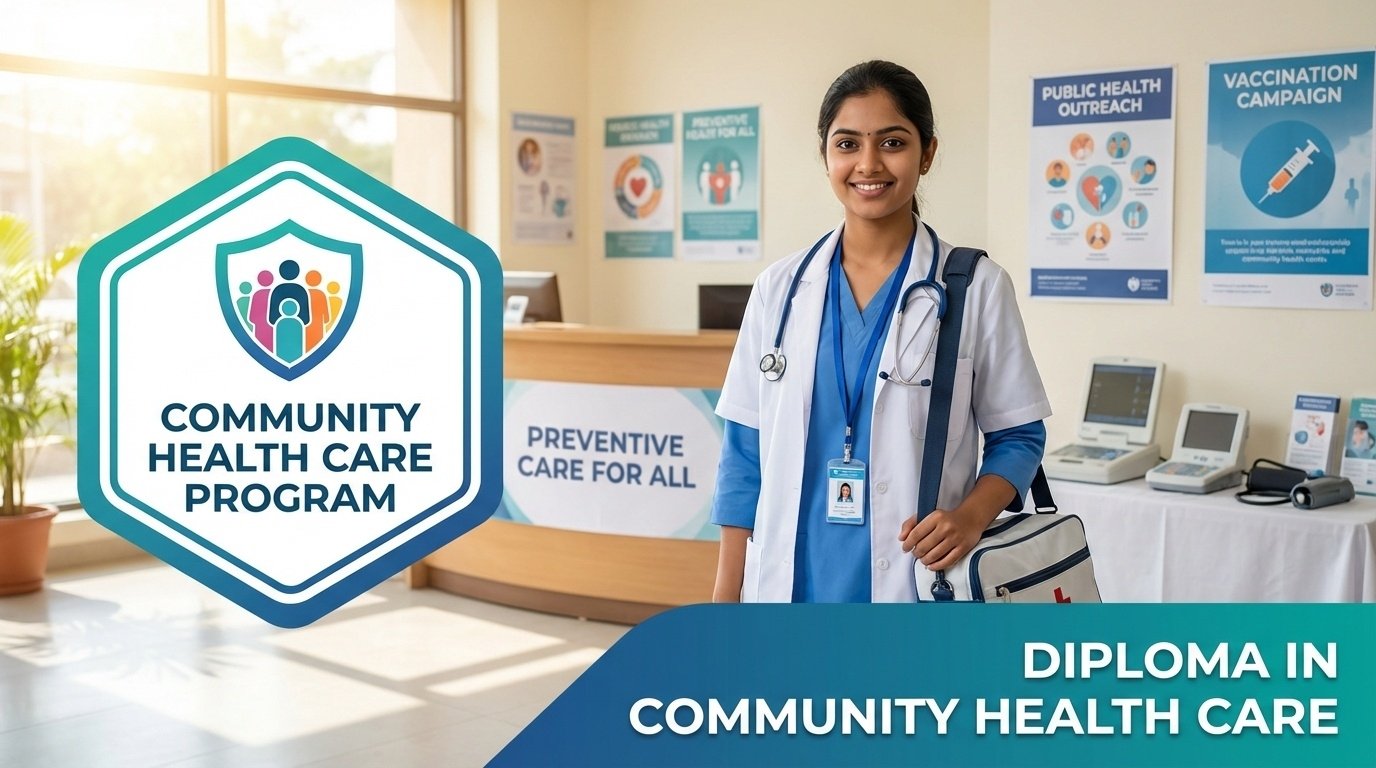
Diploma in Community Health Care – Complete Course Description
Program Overview
The Diploma in Community Health Care is a comprehensive 1-year paramedical program designed to train healthcare professionals in delivering essential primary and community-based health services. This course emphasizes practical, community-focused healthcare delivery, preparing students to work at the grassroots level in rural and urban healthcare settings.
Institute: Mahatma Gandhi Ayurvigyan Vidyapeeth
Duration: 1 Year (Full-time with Practical Training)
Course Fees: ₹40,000 (Total)
Eligibility: 10+2 from any stream
Course Structure & Fee Breakdown
Mode: Full-time with mandatory field training and community health practicum
Eligibility Criteria
Academic Requirements:
- 10+2 (Higher Secondary) from any recognized board
- Minimum 45-50% marks (varies by category)
- Science stream preferred but not mandatory
Other Requirements:
- Minimum age: 17 years
- Basic proficiency in English and Hindi/Regional language
- Physical and mental fitness for fieldwork
- Compassionate attitude toward community service
- Medical fitness certificate
- No prior healthcare experience required
Curriculum Highlights
The curriculum is divided into 12 comprehensive modules covering theoretical knowledge and practical skills:
- Concept of community health
- Primary Health Care (PHC) principles
- Health care delivery systems in India
- Role of community health workers
- Public health infrastructure overview
- Community surveys and profiling
- Health needs assessment
- Epidemiological methods
- Disease surveillance systems
- Data collection and analysis
Module 3: Communicable Disease Management
- Common infectious diseases (TB, malaria, dengue, etc.)
- Vector-borne disease control
- Water-borne diseases
- Immunization schedules and vaccine management
- Disease prevention strategies
Module 4: Non-Communicable Disease Management
- Diabetes, hypertension, cardiovascular diseases
- Cancer screening and awareness
- Mental health basics
- Lifestyle diseases prevention
- Health promotion activities
Module 5: Maternal and Child Health Care
- Antenatal and postnatal care
- Safe delivery practices
- Newborn care essentials
- Child growth monitoring
- Immunization programs
- Reproductive and Child Health (RCH) initiatives
Module 6: Nutrition and Sanitation
- Nutritional assessment and counseling
- Malnutrition identification and management
- Food safety and hygiene
- WASH (Water, Sanitation, Hygiene) programs
- Mid-day meal and ICDS programs
Module 7: First Aid and Emergency Care
- Basic life support (BLS)
- Emergency medical response
- Wound care and trauma management
- Snake bite and poisoning management
- Disaster preparedness and management
Module 8: Pharmacology and Drug Administration
- Essential drugs list
- Safe drug storage and handling
- Dosage calculation
- Adverse drug reactions
- Rational drug use
Module 9: National Health Programs
- National Health Mission (NHM)
- Ayushman Bharat scheme
- RMNCH+A programs
- TB eradication program (NTEP)
- National Programme for Prevention and Control of Cancer, Diabetes, Cardiovascular Diseases and Stroke (NPCDCS)
- Swachh Bharat Abhiyan
Module 10: Health Education and Communication
- Interpersonal communication skills
- Health education methodologies
- Community mobilization
- Behavioral change communication
- Audio-visual aids and IEC materials
Module 11: Record Keeping and Reporting
- Health records maintenance
- Health Management Information System (HMIS)
- Report writing
- Documentation standards
- Digital health records
Module 12: Practical Training and Field Work
- PHC/CHC attachment (4-6 weeks)
- Community health camps
- Home visits and surveys
- School health programs
- Internship at rural/urban health centers
Career Opportunities & Salary Expectations
Job Roles & Monthly Salary (India)
Salary Progression:
- Entry-level (0-2 years): ₹20,000 – ₹35,000/month (Govt: ₹25,000-35,000; Private/NGO: ₹20,000-30,000)
- Mid-level (3-5 years): ₹30,000 – ₹50,000/month
- Senior-level (5+ years): ₹45,000 – ₹70,000/month
- Average Annual: ₹7.17 – ₹8.25 LPA (with experience)
Work Settings & Employment Sectors
Government Sector:
- Primary Health Centres (PHCs)
- Community Health Centres (CHCs)
- Sub-health centres
- District hospitals
- Urban health centers
- Government health programs (NHM, Ayushman Bharat)
Private Sector:
- Private hospitals and clinics
- Corporate healthcare companies
- Home healthcare services
- Telemedicine centers
Non-Governmental Organizations (NGOs):
- Community development organizations
- Health-focused NGOs
- International development agencies
- Rural development projects
Other Settings:
- School health programs
- Occupational health services
- Health insurance companies
- Pharmaceutical companies (community outreach)
- Research institutions
- Health tech startups
Top Recruiters & Organizations
Government Bodies:
- National Health Mission (NHM)
- State Health Departments
- Ayushman Bharat – Health and Wellness Centres
- ICDS (Integrated Child Development Services)
- District Health Offices
- Municipal Health Departments
NGOs & International Organizations:
- WHO India
- UNICEF India
- Population Foundation of India
- PATH India
- Save the Children
- CRY (Child Rights and You)
- Smile Foundation
- HelpAge India
- Goonj
- Rural Healthcare Organizations
Private Healthcare:
- Apollo Hospitals
- Fortis Healthcare
- Max Healthcare
- Manipal Hospitals
- Healthcare at Home
- Portea Medical
Skills Developed
Technical Skills:
- Primary healthcare delivery
- Disease prevention and health promotion
- Maternal and child health management
- Immunization administration
- Health assessment and screening
- Basic first aid and emergency response
- Health data collection and analysis
- Community health education
- Sanitation and hygiene promotion
- National health program implementation
Soft Skills:
- Interpersonal communication
- Community engagement and mobilization
- Empathy and compassion
- Cultural sensitivity
- Problem-solving
- Teamwork and collaboration
- Patience and resilience
- Time management
- Leadership in community settings
- Report writing and documentation
Learning Outcomes
Upon successful completion of the Diploma in Community Health Care, graduates will be able to:
- Deliver Primary Healthcare: Provide basic health services at the community level
- Conduct Health Assessments: Identify health needs and conduct community surveys
- Manage Common Conditions: Recognize and manage common communicable and non-communicable diseases
- Promote Health Education: Educate communities on disease prevention and healthy lifestyles
- Support Maternal & Child Health: Assist in antenatal, postnatal, and child health programs
- Implement National Programs: Participate in government health initiatives and schemes
- Provide Emergency Care: Deliver basic first aid and emergency medical response
- Maintain Health Records: Keep accurate health records and reports
- Mobilize Communities: Engage and organize communities for health activities
- Work in Multidisciplinary Teams: Collaborate effectively with healthcare professionals
Higher Education Opportunities
After completing the Diploma in Community Health Care, students can pursue:
Advanced Diplomas:
- Advanced Diploma in Public Health
- Post-Graduate Diploma in Community Health
- Diploma in Health Education
- Diploma in Hospital Management
Bachelor's Degrees:
- Bachelor of Public Health (BPH)
- Bachelor of Science in Community Health
- B.Sc. Nursing (lateral entry where applicable)
- Bachelor of Health Administration
Certifications:
- Certified Community Health Worker (CCHW)
- Emergency Medical Technician (EMT)
- TB Treatment Supporter Certification
- Diabetes Educator Certification
- Mental Health First Aid
Postgraduate Options (after Bachelor's):
- Master of Public Health (MPH)
- Master of Health Administration (MHA)
- MD Community Medicine
Career Scope & Future Prospects
Why Choose This Course?
- High Demand: Growing need for community health workers in rural and urban India
- Government Focus: Strong support through National Health Mission and Ayushman Bharat
- Affordable Education: Cost-effective 1-year program with immediate employment
- Grassroots Impact: Direct contribution to community health and social development
- Job Security: Government sector offers stable employment
- National Priority: Aligned with India's Universal Health Coverage goals
- Diverse Opportunities: Multiple career paths across sectors
- Social Service: Meaningful work improving community health outcomes
- Foundation for Growth: Pathway to advanced healthcare qualifications
- Flexible Work Settings: Options in government, private, and NGO sectors
Future Trends & Growth:
- Universal Health Coverage: India's push toward Ayushman Bharat creates massive demand
- Rural Health Expansion: Government focus on strengthening PHC infrastructure
- Digital Health Integration: E-health and telemedicine creating new roles
- Preventive Healthcare Focus: Shift from curative to preventive care increases demand
- COVID-19 Impact: Pandemic highlighted critical importance of community health workers
- Aging Population: Growing need for community-based elderly care
- Lifestyle Disease Burden: Rising NCDs require community-level interventions
- Health Insurance Growth: Expansion of health schemes creates employment opportunities
Job Growth: Expected ~10-15% annual growth in community health workforce (2026-2030)
Admission Process
Step-by-Step Admission:
Step 1: Eligibility Check
- Verify 10+2 completion and minimum percentage requirements
- Ensure age criteria is met (minimum 17 years)
- Confirm medical fitness
Step 2: Application Submission
Step 3: Document Submission Required documents:
- 10th and 12th mark sheets and certificates
- Transfer/Migration certificate
- Character certificate
- Medical fitness certificate
- Aadhar card and photographs
- Caste certificate (if applicable for reserved category)
Step 4: Counseling/Interview
- Attend counseling session (if required)
- Personal interview for merit assessment
Step 5: Admission Confirmation
- Receive admission letter
- Pay course fees (₹40,000)
- Complete admission formalities
Step 6: Course Commencement
- Attend orientation program
- Receive study materials and schedule
- Begin classes and practical training
Important Dates
- Admissions: Generally year-round admissions based on seat availability
- Course Duration: 12 months (including practical training)
- Application Deadline: Varies; contact institute for specific session dates
- Document Verification: Within 2 weeks of application submission
- Course Commencement: Multiple batches throughout the year
Why Choose Mahatma Gandhi Ayurvigyan Vidyapeeth?
- Recognized Institute: Accredited paramedical training institution
- Affordable Fees: Competitive fee structure at ₹40,000 total
- Practical Focus: Strong emphasis on field training and community exposure
- Experienced Faculty: Qualified instructors with community health expertise
- Infrastructure: Well-equipped laboratories and training facilities
- Placement Support: Career guidance and placement assistance
- Community Partnerships: Tie-ups with PHCs, CHCs, and NGOs for internships
- Holistic Development: Focus on both technical and soft skills
- Flexible Learning: Practical training integrated with theoretical learning
Institute: Mahatma Gandhi Ayurvigyan Vidyapeeth
Apply Online: https://mgavidyapeeth.com/addmission-form
Website: https://mgavidyapeeth.com
Frequently Asked Questions (FAQs)
Q1: Is science stream mandatory for admission?
A: No, students from any stream (Science, Commerce, Arts) can apply after 10+2.
Q2: What is the minimum percentage required?
A: Generally 45-50% in 10+2; may vary by category (General/SC/ST/OBC).
Q3: Are there government job opportunities after this diploma?
A: Yes, opportunities in PHCs, CHCs, NHM programs, ASHA coordination, and government health schemes.
Q4: Can I pursue higher education after this diploma?
A: Yes, you can pursue BPH, B.Sc. Nursing (lateral entry), MPH, and various advanced diplomas.
Q5: Is practical training included in the course?
A: Yes, 4-6 weeks of mandatory field training at PHCs/CHCs and community health centers.
Q6: What is the average starting salary?
A: Entry-level positions offer ₹20,000-35,000/month depending on sector (government/private/NGO).
Q7: Can I work in urban areas with this qualification?
A: Yes, opportunities exist in both rural and urban healthcare settings.
Q8: Is accommodation provided by the institute?
A: Contact the institute directly regarding hostel and accommodation facilities.
Conclusion
The Diploma in Community Health Care at Mahatma Gandhi Ayurvigyan Vidyapeeth is an excellent entry-level qualification for individuals passionate about grassroots healthcare and community service. With affordable fees (₹40,000), just 1 year of study, and strong employment prospects across government, private, and NGO sectors, this program offers a meaningful career pathway in India's expanding healthcare system.
The course aligns with national health priorities including Ayushman Bharat, National Health Mission, and Universal Health Coverage, ensuring sustained demand for qualified community health professionals. Graduates play a vital role in bridging the healthcare gap between communities and formal health systems, making a tangible difference in public health outcomes.