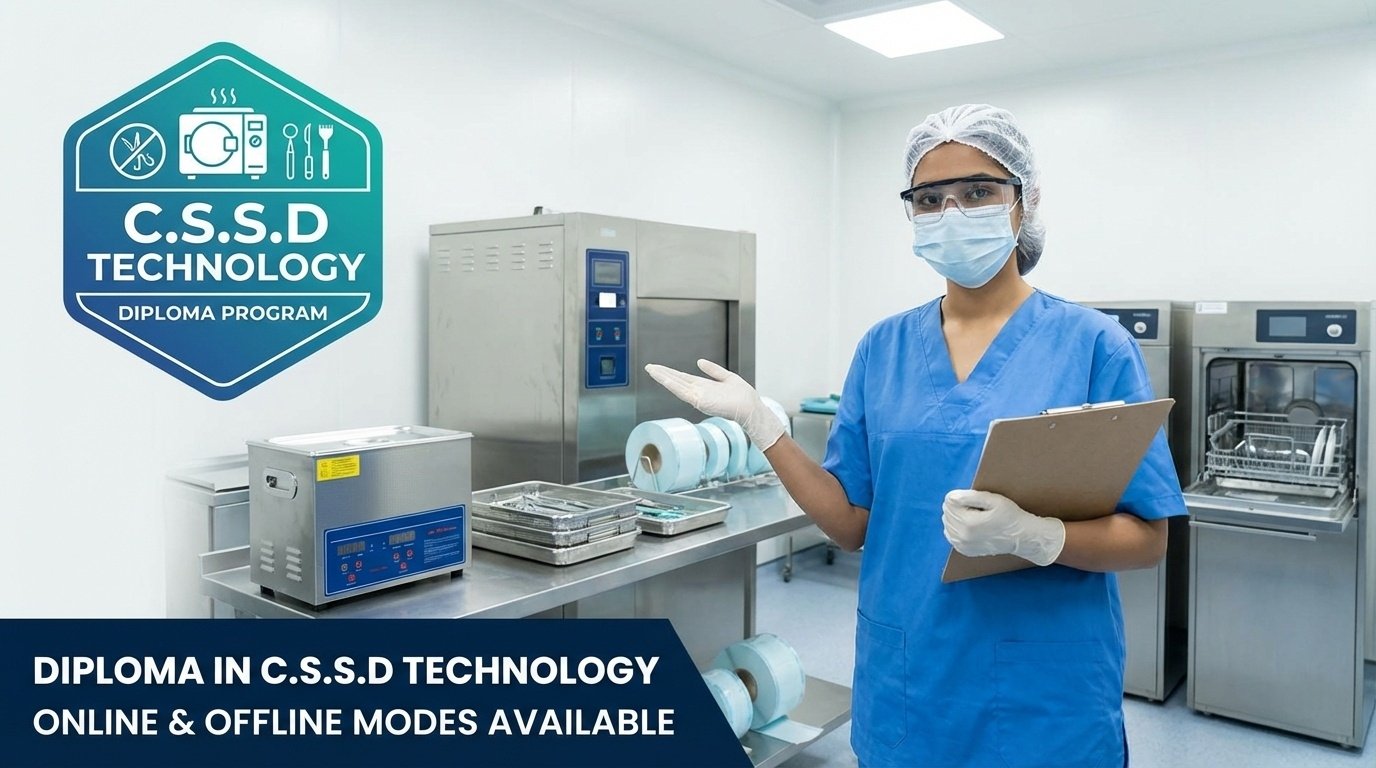
Diploma in CSSD Technology
The Diploma in Central Sterile Supply Department (CSSD) Technology is a specialized paramedical program designed to train healthcare professionals in the sterilization, disinfection, and safe handling of medical instruments and equipment. CSSD plays a crucial role in maintaining infection control standards in hospitals and healthcare facilities by ensuring that all surgical instruments, medical tools, and equipment are properly sterilized and safe for patient use.
What is CSSD?
CSSD stands for Central Sterile Supply Department. It is a specialized department in hospitals responsible for:
- Cleaning, disinfecting, and sterilizing surgical instruments
- Preparing and packing medical equipment for operations
- Storing sterilized items in proper conditions
- Distributing sterilized supplies to operation theatres, ICUs, emergency wards, and other departments
- Preventing hospital-acquired infections (HAIs) through strict hygiene protocols
CSSD technicians are the unsung heroes who work behind the scenes to ensure patient safety by maintaining a 100% sterile environment for medical procedures.
Course Duration & Type
- Duration: 1-2 years (varies by institution)
- Certificate programs: 6 months - 1 year
- Diploma programs: 1-2 years
- Advanced/Extended programs: Up to 18 months
- Course Type: Full-time
- Course Level: Diploma/Certificate
Course Objectives
The main objectives of the Diploma in CSSD Technology program are:
- Provide in-depth knowledge about sterilization techniques and infection control in healthcare settings
- Train students in handling medical instruments and equipment to meet required hygiene standards
- Develop skills in managing the CSSD to ensure equipment is sterile, safe, and ready for medical procedures
- Educate on quality assurance protocols and safety standards to maintain infection-free healthcare environments
- Foster professional development and the ability to work in clinical and healthcare environments ensuring patient safety
- Prepare competent sterilization professionals capable of running a Central Sterile Supply Department
Eligibility Criteria
Educational Qualification:
- Candidates must have completed Class 10 or Class 12 (10+2) from a recognized educational board
- Science stream preferred (Physics, Chemistry, Biology) but students from other streams can also apply
- Some institutions accept 10th pass students for certificate programs
Minimum Marks:
- Generally, candidates should have secured 40-50% marks in their qualifying examination (varies by institution)
Age Requirement:
- Typically between 17-30 years old at the time of admission
- No strict upper age limit in most institutions
Physical Requirements:
- Good physical fitness and stamina to work long hours
- Good eyesight and attention to detail
- Ability to stand for extended periods
- Capability to handle delicate surgical instruments
Other Requirements:
- Medical fitness certificate may be required
- Basic computer knowledge is advantageous
- Strong discipline, patience, and responsible attitude
Admission Process
Application Process:
- Research programs at various institutions offering CSSD Technology diplomas
- Meet eligibility requirements and gather necessary documents
- Fill application form (online or offline) through the institution's website
- Submit required documents:
- 10th and 12th mark sheets
- Bonafide certificate/School leaving certificate
- Transfer certificate
- Caste certificate (if applicable)
- Passport size photographs
- Aadhar card
- Migration certificate (for students from other states)
Selection Process:
- Merit-based admission based on 10th/12th marks
- Some institutions may conduct entrance exams or interviews
- First-come-first-served basis in some colleges
Application Fee:
- Average application fee ranges from ₹1,000 (varies by institution)
Course Fees
- Fee Range: ₹30,000 - ₹80,000 for the entire program
- Year 1 Fees: ₹30,000 (approximately)
- Year 2 Fees: ₹30,000 (approximately)
- Fees vary depending on:
- Type of institution (government/private)
- Location of the institute
- Duration of the program
- Facilities and internship opportunities provided
Note: Government institutions typically charge lower fees compared to private colleges.
Course Curriculum & Syllabus
YEAR 1 (First Year Subjects)
1. Introduction to CSSD Technology
- Role and importance of CSSD in healthcare settings
- Overview of CSSD processes, workflows, and responsibilities
- Hygiene and sterilization standards in the medical field
- Hospital awareness and healthcare environment
2. Basics of Anatomy & Physiology
- Basic knowledge of human anatomy and physiology
- Understanding body systems relevant to infection control
- Impact of infection on the human body
- Importance of sterilization in surgeries and medical procedures
3. Microbiology and Infection Control
- Basics of microbiology related to infection control
- Types of pathogens and their transmission in healthcare settings
- Bacteria, viruses, and other microorganisms
- Hospital-acquired infections (HAIs) and prevention measures
- Infection control protocols to reduce HAIs
4. Basics of Biochemistry
- Basic biochemical principles relevant to sterilization
- Chemical agents used in disinfection and sterilization
- pH levels, solutions, and their applications
5. Basics of Pathology
- Understanding disease processes
- Pathogen identification
- Role of CSSD in disease prevention
6. Instrumentation and Equipment
- Types of surgical instruments and their functions
- Identification and handling of equipment used in healthcare settings
- Understanding the maintenance and care of instruments
- Medical equipment used in operation theatres
7. Sterilization Techniques
- Methods of sterilization (heat, chemicals, radiation, gas)
- Steam sterilization (Autoclaving) - principles and procedures
- Dry heat sterilization
- Chemical sterilization using disinfectants
- Gas sterilization (Ethylene Oxide - ETO)
- Radiation sterilization
- Practical use of sterilization equipment
8. Packaging and Sterile Storage
- Packaging techniques to ensure sterilization integrity
- Different types of packaging materials
- Storage of sterilized items in sterile conditions
- Ensuring the longevity and safety of sterile products
- Labeling and tracking sterilized items
9. Quality Assurance
- Ensuring quality control in sterilization processes
- Monitoring and verifying sterilization effectiveness
- Biological indicators and chemical indicators
- Implementing regular audits and checks to maintain standards
10. Occupational Health and Safety
- Health and safety regulations in CSSD and healthcare environments
- Personal Protective Equipment (PPE) and safe working practices
- Handling hazardous materials
- Prevention of exposure to infections
- Biomedical waste management
YEAR 2 (Second Year Subjects)
1. Advanced Sterilization Techniques
- Advanced methods and technologies in sterilization
- Low-temperature sterilization methods
- Validation of sterilization cycles and processes
- Sterilization of complex medical instruments and equipment
- Sterilization of endoscopes and specialized equipment
2. Surgical Instruments and Equipment
- In-depth knowledge of various surgical instruments used in different specialties
- Orthopedic instruments
- Cardiac instruments
- Laparoscopic instruments
- Neurosurgery instruments
- Maintenance, handling, and care of delicate surgical instruments
- Equipment identification and classification
3. Infection Control in Healthcare Facilities
- Comprehensive strategies for infection prevention in hospitals and clinics
- Roles of CSSD in infection control
- Hospital infection control committees
- Surveillance of hospital-acquired infections
4. Regulatory Compliance
- Understanding national and international regulations regarding sterilization
- Compliance with healthcare standards:
- WHO guidelines
- CDC guidelines
- JCI (Joint Commission International) standards
- ISO standards for sterilization
- Ensuring all practices meet legal and health safety requirements
5. Operation Theatre Protocols
- Understanding OT layout, design, and equipment
- Technique of receiving, shifting, and handling patients
- Positioning of patients for different operations
- Principles of IV line, fluids, and transfusion
- Routine care and maintenance of surgical instruments and equipment
- Providing assistance to surgeons, anesthesiologists, and nurses
- OT sterilization and fumigation procedures
- Basic understanding of drugs and medications used in surgery
- Antiseptics and disinfectants
- Anesthetic gases and their handling
7. Management and Leadership
- Leadership skills for managing a CSSD team
- Efficient workflow management in CSSD
- Conflict resolution and team coordination
- Stock maintenance and inventory management
- Bookkeeping and record maintenance
8. Research and Continuous Improvement
- Promoting evidence-based practices in sterilization and infection control
- Research methods for improving sterilization techniques
- Continuous Quality Improvement (CQI) in healthcare settings
- Latest innovations in CSSD technology
9. Respiratory & Source Infections
- Understanding respiratory infections in hospital settings
- Source identification and control
10. Biomedical Sciences & Physical Examinations
- Basic biomedical principles
- Physical examination procedures
- Cardiac procedures awareness
11. Professional Development & Ethics
- Ethical practices and professionalism in healthcare
- Continuous learning and staying updated on industry standards
- Career development in the CSSD field
- Patient confidentiality and ethical considerations
12. Clinical Practicum/Internship
- Hands-on training in real-world CSSD settings
- Practical experience in sterilizing, packaging, and storing medical instruments
- Supervised clinical placements in hospitals or clinics
- Direct experience in operation theatres and CSSD departments
- Exposure to emergency sterilization procedures
Practical Training Components
Hands-on Skills Training:
- Operating autoclaves and sterilization equipment
- Cleaning and decontamination procedures
- Instrument identification and handling
- Packaging techniques
- Storage and distribution systems
- Quality control testing
- Maintenance of sterilization equipment
Internship/Clinical Training:
- Mandatory practical training in hospitals
- Working in actual CSSD departments
- Exposure to operation theatre environments
- Real-world experience with infection control protocols
- Supervised by experienced CSSD professionals
Key Equipment and Processes Taught
Sterilization Equipment:
- Autoclaves (Steam Sterilizers)
- Hot Air Ovens (Dry Heat Sterilizers)
- ETO Sterilizers (Ethylene Oxide Gas Sterilizers)
- Chemical Sterilizers
- Ultrasonic Cleaners
- Washer-Disinfectors
- Biological indicators
- Chemical indicators
- Temperature and pressure recorders
- Bowie-Dick test packs
Skills Developed During the Course
Technical Skills:
- Sterilization and disinfection expertise - Operating autoclaves, ultrasonic cleaners, and chemical sterilizers
- Infection control techniques - Implementing protocols to prevent hospital-acquired infections
- Equipment handling and maintenance - Managing delicate surgical instruments safely
- Quality control procedures - Monitoring sterilization effectiveness using indicators
Soft Skills:
- Attention to detail and accuracy - Meticulous work to ensure patient safety
- Record-keeping and documentation - Maintaining sterilization logs and equipment records
- Teamwork and communication - Collaborating with doctors, nurses, and OT staff
- Time management - Working efficiently in fast-paced hospital environments
- Emergency handling - Responding to urgent sterilization needs
- Professional ethics - Maintaining confidentiality and ethical standards
Career Opportunities
Job Roles:
- CSSD Technician - Managing sterilization processes in hospitals
- Sterile Processing Technician - Handling sterilization machines and preparing surgical kits
- Infection Control Assistant - Assisting infection control teams
- Hospital Infection Controller - Monitoring and preventing hospital infections
- Operation Theatre Technician - Supporting OT operations with sterile supplies
- Medical Equipment Sterilization Staff - Managing sterilization equipment
- Hospital Instrument Technician - Inventory management and instrument maintenance
- Sterilization Supervisor - Overseeing sterilization processes and staff
- Quality Assurance Officer - Ensuring compliance with sterilization standards
- CSSD Manager - Managing overall CSSD department operations
- Healthcare Facilities Consultant - Advising on sterilization and infection control
- Trainer/Educator - Training new CSSD technicians
Work Settings:
- Government hospitals and healthcare institutions
- Private multi-specialty hospitals
- Corporate hospitals (Apollo, Fortis, Max, Manipal)
- Nursing homes and clinics
- Surgical centers and day-care surgery units
- Diagnostic and pathology laboratories
- Medical colleges and teaching hospitals
- Research laboratories
- Medical equipment companies (sales and marketing)
- Healthcare training centers
- International healthcare services
Salary & Compensation
Starting Salary:
- ₹15,000 - ₹25,000 per month for fresh graduates
- ₹1.8 - 3 LPA annually
Experienced Professionals:
- ₹30,000 - ₹50,000 per month
- ₹3.6 - 6 LPA annually
Senior/Supervisory Positions:
- ₹40,000 - ₹70,000 per month
- ₹5 - 8.5 LPA annually
Salary factors:
- Type of healthcare facility (government vs. private)
- Location (metro cities offer higher salaries)
- Experience and expertise
- Additional certifications and specializations
- Job responsibilities and designation
Career Growth & Advancement
- Junior CSSD Technician → Senior CSSD Technician
- CSSD Supervisor → CSSD Manager
- Infection Control Officer → Infection Control Coordinator
- Quality Assurance Specialist → Quality Manager
Further Education:
- Advanced Diploma in CSSD Technology
- Bachelor's degree in Medical Technology
- Specialized certifications in infection control
- Healthcare Management courses
- International certifications (CRCST, CIS, CHL)