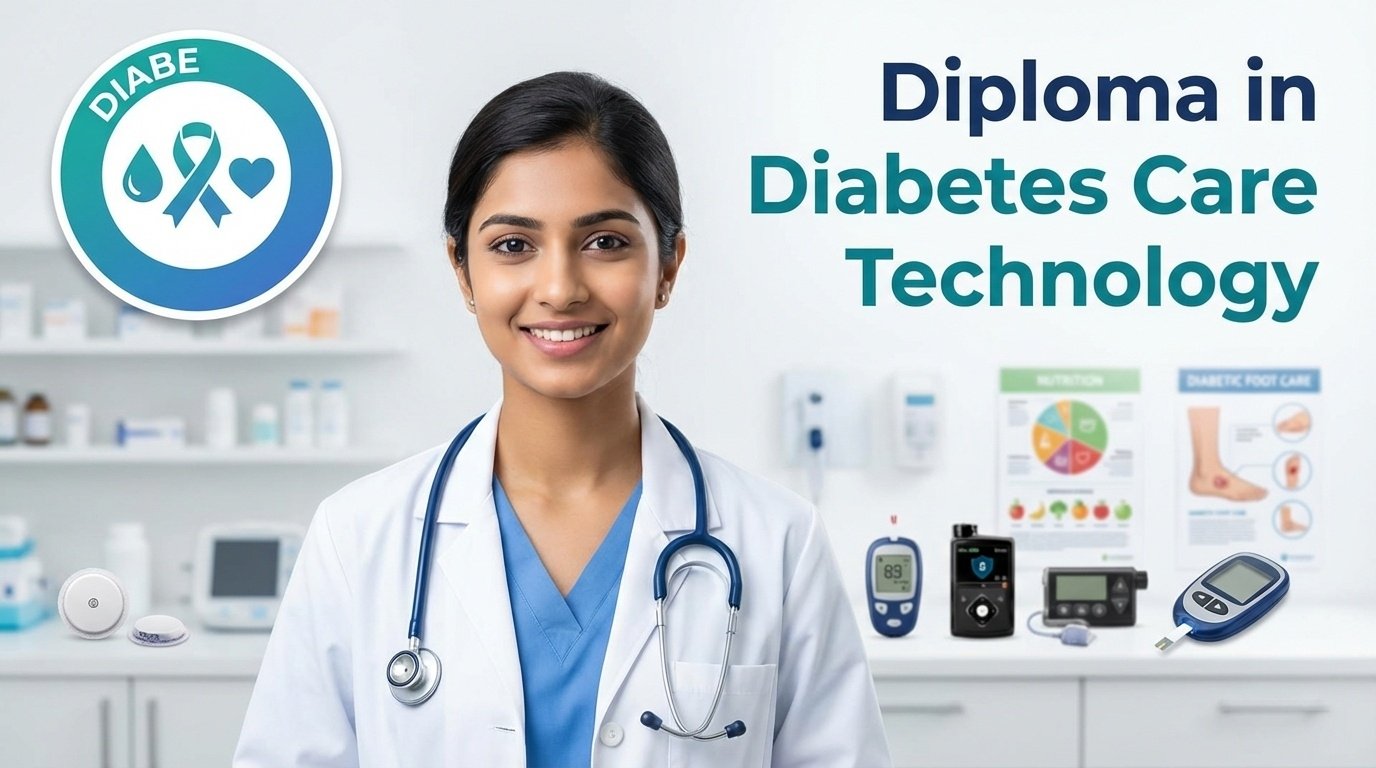
Diploma in Diabetes Care Technology
Course Overview
The Diploma in Diabetes Care Technology is a specialized 1-year intensive paramedical program designed to train healthcare professionals in the comprehensive management of diabetes mellitus—one of the fastest-growing health challenges worldwide. This focused course prepares you to become a Certified Diabetes Educator and Diabetes Care Specialist, equipped to provide education, lifestyle counseling, insulin management, complication prevention, and holistic care to millions of diabetic patients. As India emerges as the diabetes capital of the world with 100+ million diabetics, the demand for specialized diabetes care professionals has never been higher.
Course Details
About the Program
The Diploma in Diabetes Care Technology addresses India's most urgent healthcare crisis—the diabetes epidemic. This intensive 1-year program transforms you into a diabetes care specialist capable of:
✅ Educating patients on diabetes self-management ✅ Monitoring blood glucose and glycemic control ✅ Managing insulin therapy and medication adherence ✅ Preventing and detecting diabetic complications ✅ Providing nutrition and lifestyle counseling ✅ Conducting diabetic foot care and wound management ✅ Operating diabetes technology (CGM, insulin pumps) ✅ Supporting patients psychologically and emotionally
With India having 101 million diabetics (2021) projected to reach 150 million by 2030, diabetes educators and care specialists are critically needed across hospitals, clinics, wellness centers, pharmaceutical companies, and digital health platforms.
Why Diabetes Care Technology?
Explosive Demand
- India: Diabetes capital with 101 million diabetics
- Critical Shortage: Less than 5,000 certified diabetes educators for 100+ million patients
- Growing Awareness: Patients seeking specialized diabetes care
- 90%+ Placement Rate: Immediate employment opportunities
Attractive Compensation
- Starting Salary: ₹20,000 - ₹40,000/month
- Experienced: ₹40,000 - ₹70,000/month
- Senior Specialist: ₹70,000 - ₹1,20,000/month
- Consultant/Own Practice: ₹1,00,000 - ₹2,50,000+/month
Focused Specialization
Unlike general nursing or healthcare courses, this specialized diploma makes you an expert in one critical condition, giving you competitive advantage and recognition.
Meaningful Impact
Help millions manage diabetes, prevent complications, avoid amputations, and live healthier, longer lives—true healthcare heroism!
Diverse Career Paths
Hospitals, diabetes clinics, pharmaceutical companies, digital health startups, corporate wellness, home healthcare, international opportunities.
Emerging Field
Digital diabetes management, continuous glucose monitoring (CGM), insulin pumps, telemedicine consultations—technology-driven growth.
Quick Credential
Just 1 year to become a certified specialist in high-demand field—fastest pathway to specialized healthcare career.
Comprehensive Curriculum
SEMESTER 1: Diabetes Fundamentals & Clinical Management
Module 1: Diabetes Mellitus - Comprehensive Understanding
1.1 Introduction to Diabetes
- What is diabetes mellitus?
- Global and Indian diabetes epidemic
- Economic and social burden
- Public health perspective
1.2 Types of Diabetes
- Type 1 Diabetes: Autoimmune destruction, insulin dependency
- Type 2 Diabetes: Insulin resistance, lifestyle factors
- Gestational Diabetes: Pregnancy-related, screening
- Prediabetes: Early intervention opportunities
- LADA, MODY: Special diabetes types
- Secondary Diabetes: Drug-induced, pancreatogenic
1.3 Pathophysiology
- Pancreas anatomy and insulin production
- Insulin and glucose metabolism
- Beta cell dysfunction
- Insulin resistance mechanisms
- Genetic and environmental factors
- Metabolic syndrome
1.4 Risk Factors & Prevention
- Modifiable risk factors (obesity, sedentary lifestyle)
- Non-modifiable factors (age, genetics, ethnicity)
- Primary prevention strategies
- Screening guidelines
- Population-based interventions
Module 2: Diagnosis & Monitoring
2.1 Diagnostic Criteria
- Fasting blood glucose (FBG)
- Postprandial blood glucose (PPBG)
- HbA1c (Glycated hemoglobin)
- Oral glucose tolerance test (OGTT)
- Random blood glucose
- American Diabetes Association (ADA) criteria
2.2 Blood Glucose Monitoring
- Self-monitoring blood glucose (SMBG)
- Glucometer operation and maintenance
- Proper testing technique
- Interpretation of results
- Monitoring frequency guidelines
- Record keeping and logs
2.3 Advanced Monitoring
- Continuous Glucose Monitoring (CGM):
- Technology overview
- Sensor insertion and management
- Data interpretation
- Patient training
- Flash Glucose Monitoring
- Time in Range (TIR) analysis
2.4 Laboratory Tests
- HbA1c monitoring (every 3 months)
- Lipid profile
- Kidney function tests (creatinine, eGFR)
- Liver function tests
- Urine microalbumin
- Thyroid function tests
- Vitamin B12, Vitamin D levels
Module 3: Pharmacological Management
3.1 Oral Antidiabetic Medications
- Metformin: First-line therapy, mechanism
- Sulfonylureas: Glimepiride, gliclazide
- DPP-4 Inhibitors: Sitagliptin, vildagliptin
- SGLT-2 Inhibitors: Dapagliflozin, empagliflozin
- GLP-1 Receptor Agonists: Liraglutide, semaglutide
- Thiazolidinediones: Pioglitazone
- Alpha-glucosidase Inhibitors: Acarbose, voglibose
- Combination therapies
3.2 Insulin Therapy (Comprehensive)
-
Types of Insulin:
- Rapid-acting (Lispro, Aspart, Glulisine)
- Short-acting (Regular insulin)
- Intermediate-acting (NPH)
- Long-acting (Glargine, Detemir, Degludec)
- Premixed insulins
- Biosimilar insulins
-
Insulin Administration:
- Injection techniques (subcutaneous)
- Injection sites and rotation
- Syringe, pen, and pump delivery
- Storage and handling
- Dose calculation
- Timing of doses
-
Insulin Regimens:
- Basal-bolus therapy
- Split-mixed regimens
- Sliding scale
- Correction doses
- Sick day management
-
Insulin Pump Therapy:
- How pumps work
- Patient selection criteria
- Pump programming
- Troubleshooting
- Patient education
3.3 Medication Adherence
- Barriers to adherence
- Patient counseling strategies
- Simplifying regimens
- Cost considerations
- Follow-up protocols
Module 4: Medical Nutrition Therapy
4.1 Nutrition Fundamentals
- Carbohydrates, proteins, fats
- Glycemic index and glycemic load
- Dietary fiber importance
- Micronutrients for diabetics
- Reading nutrition labels
4.2 Diabetes Meal Planning
- Calorie requirements calculation
- Carbohydrate counting
- Plate method (half vegetables, quarter protein, quarter carbs)
- Exchange lists
- Glycemic index-based diets
- Portion control techniques
4.3 Special Dietary Considerations
- Type 1 vs Type 2 dietary needs
- Gestational diabetes nutrition
- Pediatric diabetes diet
- Elderly diabetic nutrition
- Cultural and religious food adaptations
- Vegetarian and vegan options
4.4 Meal Timing & Distribution
- Pre and post-meal blood glucose targets
- Snacking strategies
- Dining out guidelines
- Alcohol consumption guidelines
- Fasting and festivals
4.5 Medical Nutrition Therapy Protocols
- Individualized meal plans
- Weight management integration
- Nutrition counseling techniques
- Recipe modification
- Cooking demonstrations
Module 5: Physical Activity & Exercise
5.1 Exercise Benefits in Diabetes
- Improved insulin sensitivity
- Blood glucose control
- Weight management
- Cardiovascular benefits
- Mental health improvement
5.2 Exercise Prescription
- Aerobic exercise (walking, cycling, swimming)
- Resistance training (strength exercises)
- Flexibility and balance exercises
- Exercise frequency and duration
- Intensity monitoring (heart rate zones)
5.3 Exercise Safety
- Pre-exercise screening
- Blood glucose monitoring before/during/after
- Hypoglycemia prevention during exercise
- Foot care during physical activity
- Cardiac precautions
- Exercise in complications (retinopathy, neuropathy)
5.4 Customized Exercise Programs
- For Type 1 diabetes
- For Type 2 diabetes
- For elderly patients
- For obese patients
- Home-based exercises
- Gym and outdoor activities
SEMESTER 2: Complications Management & Specialized Care
Module 6: Acute Complications
6.1 Hypoglycemia (Low Blood Sugar)
- Causes and triggers
- Symptoms recognition (mild, moderate, severe)
- Treatment protocols (Rule of 15)
- Severe hypoglycemia management
- Glucagon administration
- Prevention strategies
- Hypoglycemia unawareness
6.2 Hyperglycemia (High Blood Sugar)
- Causes and contributing factors
- Symptoms and signs
- Management approach
- Correction doses
- Prevention strategies
6.3 Diabetic Ketoacidosis (DKA)
- Pathophysiology
- Warning signs
- Emergency recognition
- Hospital referral protocols
- Prevention education
6.4 Hyperosmolar Hyperglycemic State (HHS)
- Pathophysiology
- Clinical presentation
- Emergency management
- Risk factors
Module 7: Chronic Complications - Prevention & Management
7.1 Diabetic Neuropathy
-
Peripheral Neuropathy:
- Sensory loss, pain, numbness
- Foot examination techniques
- Monofilament testing
- Vibration perception testing
-
Autonomic Neuropathy:
- Cardiac autonomic neuropathy
- Gastroparesis
- Bladder dysfunction
- Sexual dysfunction
-
Management:
- Pain management
- Foot protection strategies
- Medication adherence
7.2 Diabetic Retinopathy
- Pathophysiology
- Screening guidelines
- Stages (non-proliferative to proliferative)
- Vision loss prevention
- Regular ophthalmology referrals
- Patient education on eye care
7.3 Diabetic Nephropathy
- Kidney function decline stages
- Microalbuminuria screening
- Blood pressure control
- Dietary protein management
- Medication adjustments
- Dialysis preparation education
7.4 Cardiovascular Disease
- Atherosclerosis and heart disease
- Hypertension management
- Cholesterol control
- Aspirin therapy
- Lifestyle modifications
- Cardiac risk reduction
7.5 Diabetic Foot Disease
- Foot anatomy and risk factors
- Charcot foot
- Foot ulcer formation
- Infection recognition
- Amputation prevention
8.1 Foot Assessment
- Comprehensive foot examination
- Vascular assessment (pulses, capillary refill)
- Neurological assessment (sensation testing)
- Skin and nail inspection
- Deformity identification
- Risk stratification (low, moderate, high)
8.2 Foot Care Education
- Daily foot inspection techniques
- Proper footwear selection
- Nail care guidelines
- Moisturization protocols
- Temperature testing before bathing
- Professional pedicure vs. self-care
8.3 Wound Care & Ulcer Management
- Wound classification (Wagner, PEDIS)
- Debridement techniques (basic)
- Dressing selection and application
- Offloading strategies
- Infection management
- Healing monitoring
- Referral protocols
8.4 Footwear & Orthotics
- Diabetic-friendly footwear features
- Custom orthotics
- Accommodative insoles
- Footwear fitting guidelines
Module 9: Special Populations
9.1 Gestational Diabetes
- Screening during pregnancy
- Maternal and fetal risks
- Blood glucose targets in pregnancy
- Nutrition in gestational diabetes
- Postpartum management
- Future diabetes risk
9.2 Pediatric Diabetes
- Type 1 diabetes in children
- School management plans
- Adolescent challenges
- Growth and development monitoring
- Family support strategies
9.3 Elderly Diabetes Care
- Hypoglycemia risk in elderly
- Simplified treatment regimens
- Cognitive impairment considerations
- Caregiver training
- Nursing home diabetes care
9.4 Prediabetes Management
- Lifestyle intervention programs
- Progression prevention
- Weight loss goals
- Regular monitoring
Module 10: Diabetes Education & Counseling
10.1 Patient Education Principles
- Adult learning theories
- Health literacy assessment
- Teaching methods (demonstration, return demonstration)
- Educational materials creation
- Visual aids and models
- Technology-based education
10.2 Diabetes Self-Management Education (DSME)
- AADE7 Self-Care Behaviors:
- Healthy eating
- Being active
- Monitoring
- Taking medication
- Problem solving
- Healthy coping
- Reducing risks
10.3 Behavioral Change Strategies
- Motivational interviewing
- Goal setting (SMART goals)
- Overcoming barriers
- Relapse prevention
- Building self-efficacy
10.4 Psychosocial Support
- Diabetes distress and burnout
- Depression and anxiety screening
- Coping strategies
- Support groups facilitation
- Family involvement
Module 11: Diabetes Technology
11.1 Glucose Monitoring Devices
- Blood glucose meters (brands, features)
- Continuous glucose monitors (CGM)
- Flash glucose monitoring
- Data downloading and analysis
- Smartphone integration
11.2 Insulin Delivery Systems
- Insulin pens (reusable, disposable)
- Insulin pumps (tubed, tubeless)
- Smart insulin pens
- Artificial pancreas systems
- Closed-loop systems
11.3 Digital Health Applications
- Diabetes management apps
- Telemedicine platforms
- Remote monitoring systems
- Artificial intelligence in diabetes care
Module 12: Clinical Practice & Internship
12.1 Diabetes Clinic Operations
- Patient consultation structure
- History taking and documentation
- Physical examination
- Treatment plan formulation
- Follow-up protocols
12.2 Practical Training (Minimum 300 Hours)
- Work in diabetes clinics/hospitals
- Patient education sessions (individual and group)
- Blood glucose monitoring practice
- Insulin injection training supervision
- Foot examination practice
- CGM sensor application
- Dietary counseling sessions
- Case presentations
- Community diabetes screening camps
12.3 Project Work
- Diabetes awareness campaign
- Patient case study documentation
- Research project on diabetes management
- Final presentation and viva voce
Key Competencies & Skills
Clinical Skills:
✅ Comprehensive diabetes assessment ✅ Blood glucose monitoring and interpretation ✅ Insulin administration and patient training ✅ Foot examination and wound assessment ✅ Complication screening (retinopathy, neuropathy, nephropathy) ✅ Hypoglycemia recognition and management ✅ Emergency diabetes care ✅ Medical device operation (glucometers, CGM, pumps)
Educational Skills:
✅ Patient education on diabetes self-management ✅ Nutrition counseling and meal planning ✅ Exercise prescription and motivation ✅ Medication adherence counseling ✅ Lifestyle modification coaching ✅ Group education sessions ✅ Community awareness programs ✅ Cultural sensitivity in education
Pharmacological Knowledge:
✅ Oral antidiabetic medication classes ✅ Insulin types and regimens ✅ Drug interactions and side effects ✅ Medication titration protocols ✅ Polypharmacy management
Technical Skills:
✅ Glucometer operation and troubleshooting ✅ CGM sensor insertion and management ✅ Insulin pump programming ✅ Data downloading and analysis ✅ Telemedicine platform use ✅ Electronic health records
Counseling Skills:
✅ Motivational interviewing ✅ Behavioral change strategies ✅ Psychological support ✅ Goal setting and action planning ✅ Problem-solving facilitation ✅ Family counseling
Career Opportunities - High-Demand Field
Hospitals & Diabetes Centers:
Certified Diabetes Educator (CDE)
- Provide comprehensive diabetes education
- Individual and group counseling
- Protocol development
- Salary: ₹20,000 - ₹45,000/month
Diabetes Care Specialist
- Clinical diabetes management support
- Complication screening
- Patient monitoring
- Salary: ₹25,000 - ₹50,000/month
Diabetic Foot Care Specialist
- Foot assessments and wound care
- Prevention education
- Footwear counseling
- Salary: ₹25,000 - ₹55,000/month
Diabetes Clinic Coordinator
- Manage diabetes clinic operations
- Staff training and supervision
- Quality assurance
- Salary: ₹35,000 - ₹65,000/month
Pharmaceutical & Medical Device Companies:
Diabetes Product Specialist
- Represent insulin/diabetes medication companies
- Healthcare provider education
- Product demonstrations
- Salary: ₹30,000 - ₹70,000/month + incentives
Medical Device Trainer (CGM/Insulin Pumps)
- Train patients and healthcare providers
- Technical support
- Territory management
- Salary: ₹35,000 - ₹80,000/month + incentives
Clinical Liaison Officer
- Hospital liaison for diabetes products
- Clinical trial support
- Medical information services
- Salary: ₹30,000 - ₹65,000/month
Digital Health & Telemedicine:
Digital Diabetes Coach (Apps/Platforms)
- Remote patient coaching
- App-based education
- Data review and feedback
- Salary: ₹25,000 - ₹60,000/month
Telemedicine Diabetes Consultant
- Virtual consultations
- Online education sessions
- Remote monitoring support
- Salary: ₹30,000 - ₹70,000/month
Corporate Wellness:
Corporate Diabetes Wellness Coordinator
- Employee diabetes screening programs
- Workplace wellness education
- Health risk assessments
- Salary: ₹30,000 - ₹70,000/month
Home Healthcare:
Home-Based Diabetes Care Specialist
- In-home patient visits
- Elderly diabetes management
- Family caregiver training
- Salary: ₹25,000 - ₹60,000/month + travel allowance
Educational Institutions:
Diabetes Education Instructor
- Teach nursing/paramedical students
- Clinical supervision
- Curriculum development
- Salary: ₹30,000 - ₹60,000/month
NGOs & Public Health:
Community Diabetes Program Officer
- Rural diabetes awareness programs
- Screening camps
- Government program implementation
- Salary: ₹20,000 - ₹45,000/month
Entrepreneurship:
Own Diabetes Care Clinic/Consultancy
- Independent diabetes education center
- Nutrition and lifestyle counseling
- Corporate tie-ups
- Earnings: ₹60,000 - ₹2,50,000+/month
Diabetes Prevention Programs
- Prediabetes reversal programs
- Weight loss coaching
- Lifestyle intervention programs
- Earnings: ₹50,000 - ₹2,00,000+/month
Salary Progression
Entry Level (0-2 Years): ₹20,000 - ₹40,000/month
- Junior diabetes educator
- Clinical assistant roles
- Annual Package: ₹3 - 6 Lakhs
Mid-Level (3-6 Years): ₹40,000 - ₹70,000/month
- Senior diabetes educator
- Specialized roles (foot care, pump therapy)
- Annual Package: ₹6 - 10 Lakhs
Senior Level (7-12 Years): ₹70,000 - ₹1,20,000/month
- Diabetes program manager
- Clinical diabetes specialist
- Annual Package: ₹10 - 18 Lakhs
Expert/Consultant (12+ Years): ₹1,00,000 - ₹2,50,000+/month
- Independent consultant
- Own diabetes care center
- Annual Package: ₹15 - 40+ Lakhs
Top Employers
Leading Diabetes Centers:
- Dr. Mohan's Diabetes Specialities Centre
- Jothydev's Diabetes Research Centre
- Chellaram Diabetes Institute
- Diabetic Foot Care Centres
- Apollo Sugar Clinics
- Medanta Medicity Diabetes Center
Hospital Chains:
- Apollo Hospitals
- Fortis Healthcare
- Max Healthcare
- Manipal Hospitals
- Narayana Health
- AIIMS and Government Hospitals
Pharmaceutical Companies:
- Novo Nordisk (insulin)
- Sanofi (insulin)
- Eli Lilly (insulin)
- Abbott (glucose monitoring)
- Roche Diabetes Care
- Medtronic (insulin pumps)
- BeatO
- Fitterfly
- Twin Health
- Wellthy Therapeutics
- mfine
- Practo
Why Choose This Course?
India's Diabetes Crisis = Your Opportunity
- 101 million diabetics in India (2021)
- 150 million projected by 2030
- Less than 5,000 certified diabetes educators
- 1:20,000 ratio (Need: 1:500)
- MASSIVE opportunity gap!
Multiple Career Pathways:
Unlike general nursing or lab tech courses, diabetes care opens doors to:
- Clinical roles
- Corporate wellness
- Pharmaceutical industry
- Digital health startups
- Own consultancy
- International opportunities
⏱️ Quick Specialization:
Just 1 year to become a recognized specialist in critical healthcare need!
Return on Investment:
- Course Fee: ₹60,000
- Starting Salary: ₹20,000-₹40,000/month
- ROI Period: 2-4 months
- 5-Year Earnings: ₹25-70 Lakhs
Eligibility & Admission
Educational Requirements:
- Qualification: 10+2 (Science)
- Mandatory Subjects: Physics, Chemistry, Biology
- Minimum Marks: 50% (45% for reserved categories)
Desirable Qualities:
- Empathy and patience for chronic disease patients
- Strong communication and counseling skills
- Interest in nutrition and lifestyle medicine
- Detail-oriented and organized
- Passion for preventive healthcare
Admission Process
Step 1: Online registration
Step 2: Application form submission
Step 3: Document upload
Step 4: Fee payment ✅ Step 5: Verification
Step 6: Confirmation
Step 7: Orientation and classes
Required Documents:
10th & 12th mark sheets
Transfer Certificate
Character Certificate
Medical fitness certificate
Photographs
ID Proof
FAQs
Q1: Is this course recognized? A: Yes, paramedical diplomas from recognized institutions are accepted by hospitals and healthcare organizations.
Q2: Can I become a Certified Diabetes Educator (CDE)? A: This diploma provides foundational training. CDE certification requires additional clinical hours and examination.
Q3: Do I need medical/nursing background? A: No, 10+2 Science is sufficient. The course provides comprehensive training from basics.
Q4: Can I work in hospitals? A: Yes! Hospitals actively hire diabetes educators for their diabetes clinics and endocrinology departments.
Q5: Is there scope for private practice? A: Yes! Many diabetes educators run successful independent consultancies and education centers.
Take Action Now!
FIGHT INDIA'S DIABETES EPIDEMIC
Be part of the solution to India's biggest health crisis. Every diabetic patient needs a diabetes educator—and that could be YOU!
Duration: 1 Year | Investment: ₹60,000 | Impact: Millions of Lives
SART YOUR DIABETES CARE CAREER
Limited seats. High demand field. Apply today!
Contact Information
Institute: Mahatma Gandhi AyurvigyanVidyapeeth
Website: mgavidyapeeth.com
Admission: Apply Online