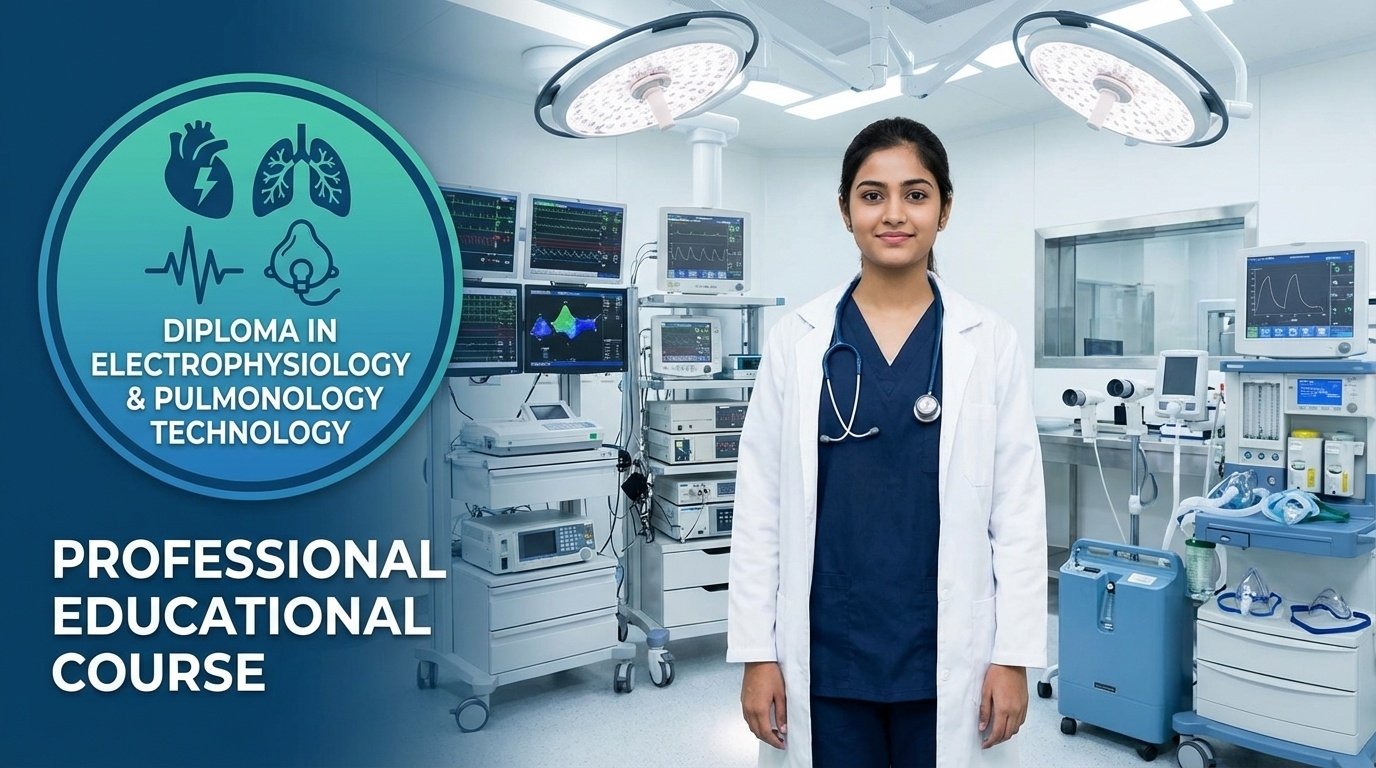
Diploma in Electrophysiology & Pulmonology Technology
The Diploma in Electrophysiology & Pulmonology Technology is a specialized healthcare technology program designed to train students in cardiac electrophysiology and pulmonary function diagnostics. This comprehensive course prepares graduates to work in the rapidly growing field of cardiovascular and respiratory care technology.
Course Duration
1-2 Years (Typically 2 years)
Eligibility Criteria
- Educational Qualification: Candidates must have completed 12th grade with PCB (Physics, Chemistry, and Biology)
- Minimum percentage requirements may vary by institution
Course Curriculum & Subjects
The curriculum integrates both theoretical knowledge and practical training across multiple specialized areas:
Core Subject Areas:
1. Cardiac Electrophysiology
- Cardiac anatomy and physiology
- ECG (Electrocardiography) principles and interpretation
- Cardiac pathology and arrhythmia analysis
- Cardiac monitoring systems
- Electrophysiology lab procedures
- Catheter placement techniques
- Invasive electrophysiologic testing
- Cardiac imaging fundamentals
2. Pulmonology & Respiratory Technology
- Pulmonary anatomy and physiology
- Spirometry and pulmonary function testing
- Respiratory pathology
- Bronchial asthma management
- Respiratory failure
- Tuberculosis and other respiratory diseases
- Cardiopulmonary system mechanisms
3. Diagnostic Technology
- Diagnostic test interpretation
- Medical equipment operation and maintenance
- Patient care protocols
- Safety and infection control procedures
4. Clinical Training
- Hands-on EP lab training
- Hospital-based practical sessions
- Diagnostic lab experience
- Real-world patient interaction
Job Roles & Career Opportunities
Graduates can pursue various specialized positions in healthcare facilities:
Primary Career Roles:
- Electrophysiology Technician/Technologist
- Pulmonary Function Technician
- Cardiac Care Assistant
- Respiratory Therapy Technician
- ECG Technician
- Cardiac Monitoring Specialist
- Diagnostic Lab Technician
Work Settings:
- Hospitals and medical centers
- Cardiac care centers
- Diagnostic laboratories
- Specialized cardiology clinics
- Pulmonary function testing centers
- Healthcare facilities
- Research institutions
Salary & Compensation
The field offers competitive compensation with excellent growth potential:
- Entry-Level Salary: $55,000 - $75,000 annually (US)
- Average Salary: $90,000 - $97,000 annually
- Experienced Professionals: $120,000 - $150,000+ annually
- Hourly Rate: $26 - $72+ per hour (depending on experience and location)
- Travel Positions: $2,000 - $3,600 per week
Note: Salaries vary based on location, experience, certification, and healthcare facility type
Career Growth & Job Outlook
- Projected Job Growth: 10% by 2025
- High Demand: Increasing need for cardiovascular and respiratory diagnostic specialists
- Advancement Opportunities: Specialization in cardiac electrophysiology, supervisory roles, and advanced certifications
- The aging population and rising cardiovascular disease rates ensure strong career prospects
Certification Opportunities
Graduates can pursue professional certifications to enhance their credentials:
- RCES (Registered Cardiac Electrophysiology Specialist)
- RCIS (Registered Cardiovascular Invasive Specialist)
- State-specific licensing as required
Key Skills Developed
- Advanced ECG interpretation
- Cardiac catheter placement techniques
- Pulmonary function test administration
- Medical equipment operation
- Patient care and safety protocols
- Diagnostic data analysis
- Clinical documentation
- Emergency response procedures
- Collaborative healthcare teamwork
Why Choose This Course?
✅ Emerging Healthcare Specialty: Electrophysiology is a rapidly growing field with increasing demand
✅ Dual Specialization: Combines cardiac and pulmonary expertise for broader career opportunities
✅ Competitive Compensation: Above-average salaries compared to many allied health professions
✅ Job Security: Strong employment outlook with projected growth
✅ Meaningful Work: Direct impact on patient diagnosis and treatment outcomes
✅ Advancement Potential: Multiple pathways for career progression and specialization