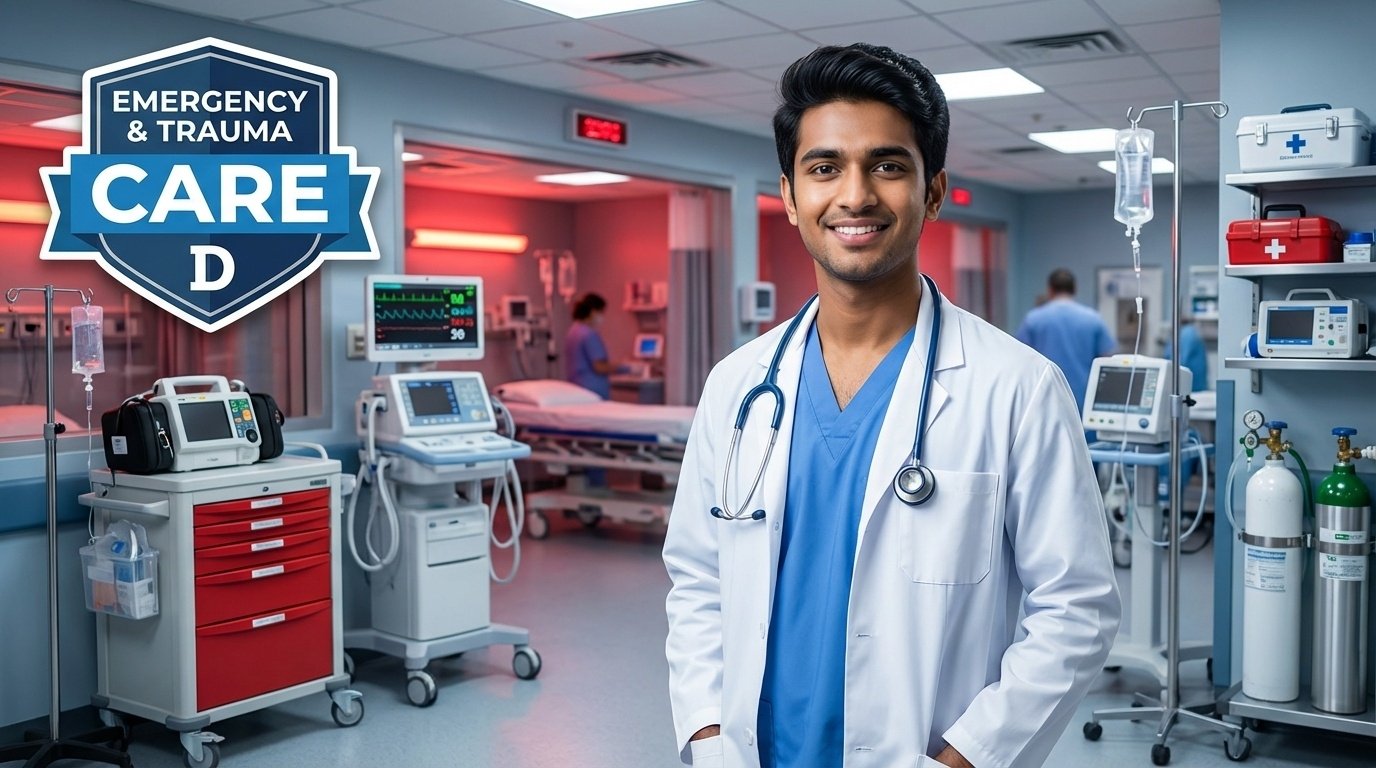
Diploma in Emergency & Trauma Care
Mahatma Gandhi Ayurvigyan Vidyapeeth
Course Overview
The Diploma in Emergency & Trauma Care is an intensive 2-year paramedical program designed to create frontline healthcare heroes who provide life-saving interventions during critical moments. This specialized course trains students in emergency medical response, trauma management, pre-hospital care, and critical care support—preparing them to handle medical emergencies with confidence, skill, and composure.
In emergency medicine, every second counts. This diploma equips students with the knowledge, practical skills, and decision-making abilities needed to stabilize patients during the crucial "Golden Hour"—the first 60 minutes after a traumatic injury when immediate medical care can mean the difference between life and death.
Emergency care professionals are the first responders in accidents, disasters, cardiac arrests, and medical crises, making this one of the most rewarding and impactful careers in healthcare.
Course Information
✅ Eligibility Criteria
- Educational Qualification: 10+2 (Science Stream) from a recognized board
- Mandatory Subjects: Physics, Chemistry, and Biology
- Minimum Percentage: As per institute norms (typically 45-50%)
- Age Limit: Generally 17-35 years at the time of admission
- Physical Fitness: Good physical and mental fitness required (medical certificate needed)
- Personal Attributes: Quick decision-making ability, emotional resilience, teamwork skills
Course Curriculum & Syllabus
Year 1: Foundation & Basic Emergency Care
Semester 1: Fundamentals of Emergency Medicine
- Human Anatomy & Physiology (Focus on emergency systems)
- Basic Life Support (BLS) and CPR Techniques
- Medical Terminology and Communication
- First Aid and Emergency Response
- Basics of Pharmacology (Emergency Medications)
- Infection Control and Biosafety
- Medical Ethics and Legal Aspects
- Patient Assessment and Triage Principles
Semester 2: Pre-Hospital & Trauma Care
- Advanced Trauma Life Support (ATLS) Basics
- Pre-Hospital Emergency Care (PHEC)
- Trauma Management - Skeletal, Soft Tissue, Head Injuries
- Burns and Blast Injuries
- Emergency Obstetrics and Gynecological Emergencies
- Pediatric Emergency Care
- Ambulance Operations and Patient Transport
- Emergency Medical Equipment Handling
Year 2: Advanced Emergency Care & Specialization
Semester 3: Critical Care & Advanced Procedures
- Advanced Cardiac Life Support (ACLS)
- Airway Management and Ventilation Techniques
- Cardiac Emergencies - MI, Cardiac Arrest, Arrhythmias
- Neurological Emergencies - Stroke, Seizures, Head Trauma
- Toxicology and Poisoning Management
- Respiratory Emergencies and Critical Care
- Emergency Room (ER) Protocols
- IV Access, Fluid Management, and Shock Treatment
- ECG Interpretation and Cardiac Monitoring
Semester 4: Disaster Management & Clinical Training
- Mass Casualty Management and Disaster Response
- Hazardous Materials (HAZMAT) Handling
- Emergency Department Management
- Simulation Training - Real-life Emergency Scenarios
- Hospital Emergency Department Internship
- Ambulance Field Training (108/102 Services)
- Project Work and Case Studies
- Comprehensive Practical Examination
Key Learning Outcomes
Upon successful completion, graduates will be able to:
- Life-Saving Skills: Perform CPR, BLS, ACLS, and emergency resuscitation procedures
- Trauma Management: Stabilize patients with fractures, burns, bleeding, and multiple injuries
- Critical Assessment: Conduct rapid patient assessment and implement triage protocols
- Emergency Procedures: Manage airways, administer oxygen therapy, establish IV access, and control bleeding
- Medical Emergencies: Respond to cardiac arrests, strokes, seizures, and respiratory failures
- Disaster Response: Function effectively in mass casualty incidents and disaster situations
- Ambulance Operations: Provide pre-hospital care and safe patient transport
- Equipment Proficiency: Operate defibrillators, ventilators, monitors, and emergency medical devices
- Team Coordination: Work seamlessly with doctors, nurses, and emergency response teams
- Documentation: Maintain accurate patient records and emergency care reports
Career Opportunities
Graduates can pursue diverse and exciting career paths:
Job Roles:
- Emergency Medical Technician (EMT)
- Trauma Care Technician
- Ambulance Paramedic (108/102 Emergency Services)
- Emergency Room (ER) Technician
- Critical Care Technician
- Disaster Response Team Member
- Pre-Hospital Care Provider
- ICU Support Technician
- Emergency Department Coordinator
- Flight Paramedic (Air Ambulance Services)
- Event Medical Support Staff
- Industrial Emergency Response Coordinator
- Emergency Medical Dispatcher
- Trauma Center Technologist
Employment Sectors:
- Government & Private Hospitals (Emergency Departments)
- Emergency Medical Services (108, 102 Ambulance Services)
- Trauma Centers and Accident Care Units
- Intensive Care Units (ICU) and Critical Care Departments
- Private Ambulance Services (Ziqitza, BVG, etc.)
- Disaster Management Organizations
- Industrial Emergency Response Teams (Manufacturing, Construction)
- Event Management Companies (Medical support at large events)
- Air Ambulance Services
- Armed Forces Medical Corps
- Railway and Airport Medical Services
- Fire and Rescue Services (Medical Wing)
- NGOs and Humanitarian Organizations (Red Cross, WHO)
- Corporate Health Centers (Large industries)
- Medical Equipment Companies (Product Specialists)
Salary Expectations (2026)
Emergency Medical Technician/Trauma Care Specialist:
Specialized Roles (Higher Compensation):
- Flight Paramedics: ₹8-15 Lakhs per annum
- Emergency Department Coordinators: ₹6-12 Lakhs per annum
- Disaster Response Specialists: ₹7-14 Lakhs per annum
- Critical Care Technicians: ₹5-10 Lakhs per annum
- Trauma Center Supervisors: ₹10-18 Lakhs per annum
Additional Income Opportunities:
- Overtime pay during emergency shifts
- Night duty allowances
- Hazard pay and risk allowances
- Festival and holiday bonuses
- Private event medical coverage (₹1,500-3,000 per event)
Note: Salaries vary based on location, type of organization, shift timings, certifications, and specializations. Metropolitan cities offer significantly higher packages.
Why Choose This Course?
1. Critical Healthcare Need
India faces a severe shortage of trained emergency medical professionals. With increasing accidents, cardiac emergencies, and natural disasters, the demand for EMTs is at an all-time high.
2. Be a Real-Life Hero
Save lives during critical moments. Your skills can prevent deaths, minimize disabilities, and provide hope to families in distress.
3. High Job Security
Emergency services are essential 24/7/365 services. Economic conditions don't affect the need for emergency care professionals.
4. Diverse Work Environments
Work in ambulances, hospitals, disaster zones, events, industries, airports, and even on helicopters (air ambulance).
5. ⚡ Dynamic & Exciting Career
No two days are the same. Face new challenges, gain diverse experience, and continuously learn.
6. Fast Career Growth
Quick progression from EMT to senior positions, supervisory roles, or specialized areas like flight paramedics.
7. Government Job Opportunities
Multiple openings in state ambulance services (108/102), railway medical services, armed forces, and disaster management authorities.
8. Global Recognition
With additional international certifications (NREMT, PHTLS), work opportunities available worldwide.
9. Multiple Career Paths
Transition to nursing, emergency medicine physician assistant roles, or healthcare management with further education.
10. Social Respect & Satisfaction
Gain immense respect as a first responder and experience unmatched job satisfaction from saving lives.
Unique Course Features
Hands-On Practical Training:
- Real ambulance ride-along experience
- Hospital ER and ICU rotations
- Simulation labs with mannequins and emergency scenarios
- Live trauma drills and disaster management exercises
- Field training during actual emergency calls
Advanced Skill Development:
- CPR and defibrillator training with certification
- Intubation and airway management practice
- IV cannulation and medication administration
- Splinting, bandaging, and wound care techniques
- Patient extraction and immobilization methods
Industry Exposure:
- Visits to trauma centers and emergency departments
- Guest lectures from experienced paramedics and emergency physicians
- Workshops on latest emergency medical equipment
- Disaster management simulation exercises
- Ambulance service partnerships for practical training
Certification Training:
- Basic Life Support (BLS) Certification
- Advanced Cardiac Life Support (ACLS) Preparation
- Advanced Trauma Life Support (ATLS) Basics
- First Aid Certification
- Fire Safety and Rescue Training
Further Education & Career Advancement
Higher Education Options:
- B.Sc. in Emergency & Trauma Care Technology (Lateral Entry)
- B.Sc. in Critical Care Technology
- B.Sc. in Nursing (with bridge courses)
- Post-Graduate Diploma in Emergency Medicine
- M.Sc. in Emergency Medical Services
- MBA in Healthcare Management
- Advanced Paramedic Certification Programs
International Certifications:
- NREMT (National Registry of Emergency Medical Technicians - USA)
- PHTLS (Pre-Hospital Trauma Life Support)
- ITLS (International Trauma Life Support)
- PALS (Pediatric Advanced Life Support)
- NAEMT Certifications
Career Advancement Path:
EMT → Senior EMT → Paramedic → Critical Care Paramedic → Emergency Department Coordinator → Emergency Services Manager → Director of Emergency Services
Why Choose Mahatma Gandhi Ayurvigyan Vidyapeeth?
- ✅ Expert Faculty: Learn from experienced emergency medicine professionals and paramedics
- ✅ State-of-the-Art Labs: Fully equipped simulation labs with emergency medical equipment
- ✅ Ambulance Training: Partnership with ambulance services for real-world training
- ✅ Hospital Tie-ups: Clinical rotations in renowned emergency departments
- ✅ Certification Support: Assistance with BLS, ACLS, and other certifications
- ✅ Placement Assistance: Strong connections with hospitals, ambulance services, and healthcare organizations
- ✅ Practical Focus: 50% curriculum devoted to hands-on training
- ✅ Affordable Excellence: Quality emergency medical education at reasonable fees
- ✅ 24/7 Learning Environment: Experience shift work and emergency scenarios
- ✅ Soft Skills Training: Communication, crisis management, and emotional resilience development
Admission Process
Step-by-Step Guide:
Step 1: Online Application
- Visit the official admission portal
- Complete the application form with accurate information
- Upload a recent passport-size photograph
Step 2: Document Submission
- Submit all required documents (list below)
- Ensure certificates are attested and legible
Step 3: Eligibility Verification
- Institute reviews academic qualifications
- Medical fitness assessment (if required)
Step 4: Counseling & Orientation
- Attend admission counseling session
- Course overview and career guidance
- Facility tour and interaction with faculty
Step 5: Fee Payment
- Pay admission and semester fees
- Receive fee receipt and admission confirmation
Step 6: Enrollment
- Complete formalities and documentation
- Receive student ID card and course materials
- Begin your journey as a future emergency care professional!
Required Documents
Please arrange the following documents for admission:
- ✓ 10th Standard Mark Sheet & Certificate
- ✓ 12th Standard Mark Sheet & Certificate (Science with PCB)
- ✓ Transfer Certificate from previous institution
- ✓ Migration Certificate (if from different board/university)
- ✓ Character Certificate
- ✓ Medical Fitness Certificate (Physical fitness for emergency work)
- ✓ Passport Size Photographs (6-8 copies)
- ✓ Aadhar Card (mandatory identity proof)
- ✓ Caste Certificate (if applicable for reservation benefits)
- ✓ Domicile Certificate (if applicable)
- ✓ Income Certificate (if applicable for fee concessions)
Course Delivery Method
Blended Learning Approach:
Theory Classes (30%):
- Classroom lectures with multimedia presentations
- Case study discussions and clinical scenario analysis
- Guest lectures from emergency medicine experts
Practical Training (50%):
- Simulation lab sessions with emergency equipment
- Ambulance operation and patient transport training
- Hospital emergency department rotations
- Trauma center clinical postings
- Real emergency call ride-alongs
Skill Development (20%):
- BLS and ACLS certification training
- Communication and crisis management workshops
- Physical fitness and stress management
- Team coordination and leadership development
Assessment Methods:
- Written examinations (theory and case studies)
- Practical skill assessments (OSCE format)
- Emergency scenario simulations
- Clinical logbook and case reports
- Project work and presentations
- Comprehensive final examination
⚡ Real-World Impact: What You'll Experience
As an Emergency & Trauma Care professional, you will:
- Respond to Emergency Calls - Be the first on scene during accidents and medical crises
- Save Lives - Perform CPR and emergency interventions that restore heartbeats
- Stabilize Critical Patients - Manage trauma victims during the crucial "Golden Hour"
- Handle Disasters - Coordinate medical response during natural calamities and mass casualties
- Support Families - Provide compassionate care during the most difficult moments
- Make Split-Second Decisions - Use your training to choose life-saving actions under pressure
- Work as a Team - Collaborate with doctors, nurses, and fellow responders
Your Future Starts Here!
Join the Diploma in Emergency & Trauma Care program at Mahatma Gandhi Ayurvigyan Vidyapeeth and become a certified emergency medical professional. Answer the call to save lives, make a real difference, and build a rewarding career in one of healthcare's most critical fields!
Ready to Become a Life-Saver?
Contact Information:
❓ Frequently Asked Questions (FAQs)
Q1: What is the difference between an EMT and a Paramedic? A: An EMT provides basic emergency medical care and transportation. A Paramedic has advanced training and can perform more complex procedures like medication administration and advanced airway management. This diploma prepares you as an EMT with exposure to advanced paramedic skills.
Q2: Is this job physically demanding? A: Yes, emergency medical work requires good physical fitness. You'll lift patients, work long shifts, and perform physically demanding procedures. However, proper training and team support make it manageable.
Q3: What are the working hours like? A: Emergency services operate 24/7, so you'll work in rotational shifts including nights, weekends, and holidays. Most positions offer 8-12 hour shifts with adequate rest periods.
Q4: Can I work in government ambulance services (108/102)? A: Yes! This diploma qualifies you for government emergency medical services. Many states recruit diploma holders for 108 ambulance services with good salaries and job security.
Q5: Is this course suitable for females? A: Absolutely! Female EMTs are increasingly valued in emergency services, especially for obstetric and pediatric emergencies. Many women excel in this field and have successful careers.
Q6: What is the job placement rate? A: The emergency medical services sector has high demand with excellent placement opportunities. The institute provides placement assistance, and most graduates find employment within 3-6 months.
Q7: Can I work abroad with this diploma? A: With additional international certifications like NREMT (USA), IHCD (UK), or equivalency assessments, you can work in many countries. Emergency medical skills are universally valued.
Q8: Will I get certification along with the diploma? A: Yes, the course includes training for BLS (Basic Life Support) certification. Additional certifications like ACLS may be available through specialized workshops.
Q9: What happens if I can't handle the stress of emergency work? A: The course includes stress management and resilience training. You'll gradually build confidence through simulations before handling real emergencies. Peer support and counseling are available.
Q10: Are there opportunities for specialization? A: Yes! After gaining experience, you can specialize in critical care, flight paramedicine, disaster management, cardiac care, or pursue advanced paramedic training.
Q11: What is the difference between emergency care and general nursing? A: Emergency care focuses specifically on acute, life-threatening situations and pre-hospital care, while nursing covers broader patient care across various medical conditions and hospital departments.
Q12: Can I start my own ambulance service? A: Yes, with experience and additional business knowledge, many EMTs establish private ambulance services, event medical support companies, or first aid training centers.
Success Stories & Career Impact
Life-Saving Contributions:
Emergency care professionals contribute to:
- Road Accident Response - Stabilizing trauma victims and preventing mortality
- Cardiac Emergencies - Performing CPR and defibrillation to restart hearts
- Disaster Management - Coordinating medical response during floods, earthquakes, and calamities
- Industrial Safety - Providing immediate care at manufacturing plants and construction sites
- Community Health - Educating the public on first aid and emergency preparedness
- Event Management - Ensuring medical safety at concerts, sports events, and large gatherings
Real Impact Statistics:
- Every minute of delayed CPR reduces survival chances by 10%
- Proper trauma care in the Golden Hour increases survival by 50-60%
- EMTs handle 60-70% of medical emergencies before hospital arrival
- Emergency medical services save over 100,000 lives annually in India
Skills You'll Master
Technical Skills:
- Advanced CPR and resuscitation techniques
- Airway management and intubation
- IV cannulation and fluid administration
- Wound care and hemorrhage control
- Fracture stabilization and splinting
- ECG monitoring and interpretation
- Defibrillator and AED operation
- Patient extraction and immobilization
Soft Skills:
- Crisis communication and coordination
- Emotional resilience and stress management
- Quick decision-making under pressure
- Team leadership and collaboration
- Empathetic patient interaction
- Family counseling and support
- Documentation and reporting
- Ethical judgment in critical situations
Next Steps to Your Emergency Care Career
Act Now:
- ✅ Visit the official website: mgavidyapeeth.com
- ✅ Fill the online application form
- ✅ Prepare required documents
- ✅ Connect with admission counselors
- ✅ Schedule a campus visit or virtual tour
- ✅ Secure your seat before admissions close
⏰ Don't Wait - Lives Are Waiting!
Emergency medical services are expanding rapidly, and the demand for trained professionals far exceeds supply. Every day of delay means missed opportunities to start your life-saving career.
Join the Elite Emergency Response Community
Emergency medical professionals are respected worldwide as frontline heroes. Join this noble profession and experience:
- Professional Pride - Wear the uniform with honor
- Brotherhood - Bond with fellow first responders
- Personal Growth - Develop courage and confidence
- Recognition - Receive awards and appreciation
- Purpose - Wake up every day knowing your work matters