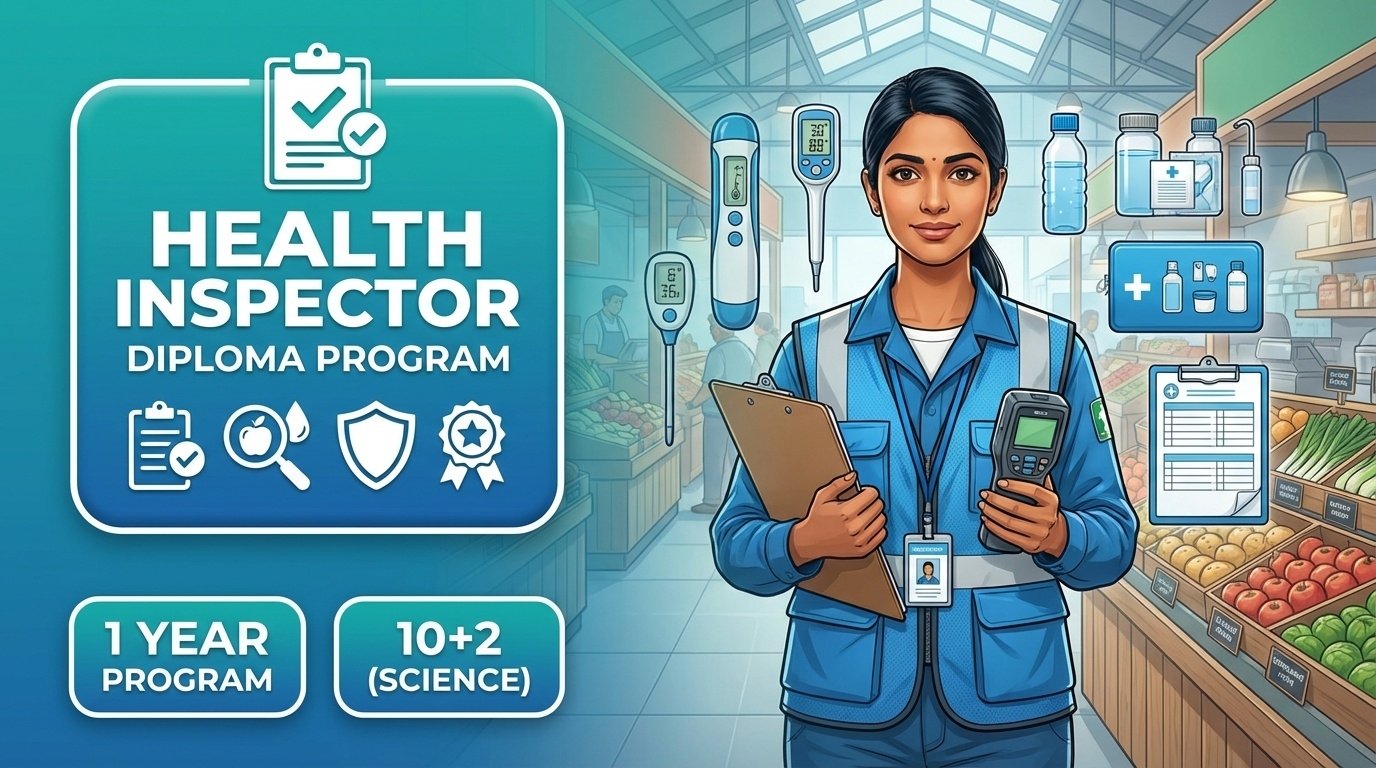
Diploma in Health Inspector
Course Overview
The Diploma in Health Inspector is a specialized paramedical program designed to train professionals in public health surveillance, sanitation, disease prevention, and community health management. This intensive 1-year diploma prepares students to become Health Inspectors (also known as Sanitary Inspectors) who serve as frontline warriors in protecting public health, preventing disease outbreaks, ensuring food safety, and promoting community hygiene—making them indispensable to government health departments and public health organizations.
Course Details
What is a Health Inspector?
A Health Inspector (Sanitary Inspector) is a public health professional responsible for protecting community health through surveillance, inspection, and enforcement of health and sanitation standards. Health Inspectors work at the grassroots level to prevent disease outbreaks and promote healthy living conditions.
Key Responsibilities:
- Conduct sanitation and hygiene inspections
- Monitor food safety in restaurants and food establishments
- Investigate disease outbreaks and epidemics
- Implement disease prevention and control programs
- Ensure safe drinking water supply
- Inspect public places for health hazards
- Educate communities on health and hygiene
- Enforce public health laws and regulations
- Collect and analyze health data
- Coordinate vaccination campaigns
The Critical Role: Health Inspectors are the eyes and ears of public health departments, preventing diseases before they occur and protecting millions of people from health hazards.
Why Choose This Course?
Government Job Guarantee
- Direct entry to government health departments
- Permanent government positions available
- Job security and stability
- Pension benefits and job perks
- Respected government officer status
- Regular promotions and career progression
Essential Public Service
- Critical role in disease prevention
- Protect entire communities
- Work directly with people
- Make tangible difference in public health
- Serve the nation at grassroots level
- COVID-19 highlighted critical importance
Excellent Benefits
- Government salary scales (₹25,000-₹40,000/month)
- Regular pay increments
- Medical benefits for family
- Pension and retirement benefits
- Housing allowances
- Travel allowances
- Job security for life
Career Stability & Growth
- Permanent government positions
- Clear promotion hierarchy
- Additional qualifications lead to higher posts
- Transfer to different locations possible
- Opportunity to serve in rural and urban areas
- Path to administrative positions
Wide-Ranging Work
- Food safety inspections
- Water quality monitoring
- Disease surveillance
- School health programs
- Community health education
- Disaster response
- Environmental health
- Occupational health
⚡ Quick Career Entry
- Only 1-year intensive program
- Direct government job eligibility
- Start serving immediately after course
- Affordable fee: ₹50,000
- High return on investment
Course Curriculum
Semester 1: Public Health Foundations (6 Months)
Module 1: Public Health Sciences
Fundamentals of Public Health
- Concept and scope of public health
- Historical development of public health
- Public health vs. curative medicine
- Primary health care principles
- National health programs and policies
- Health for all initiatives
- Millennium Development Goals (MDGs)
- Sustainable Development Goals (SDGs)
Community Health & Epidemiology
- Community health concepts
- Health and disease determinants
- Epidemiological methods
- Disease surveillance systems
- Outbreak investigation techniques
- Epidemic control measures
- Endemic, epidemic, pandemic concepts
- Disease notification systems
Biostatistics & Health Information
- Basic statistical concepts
- Data collection and compilation
- Vital statistics (birth, death rates)
- Morbidity and mortality indicators
- Health surveys and census
- Data presentation (tables, graphs, charts)
- Health information systems
- Report writing and documentation
Module 2: Preventive & Social Medicine
Communicable Diseases
- Water-borne diseases (Cholera, Typhoid, Hepatitis A)
- Air-borne diseases (Tuberculosis, Diphtheria, Influenza)
- Vector-borne diseases (Malaria, Dengue, Chikungunya)
- Food-borne diseases (Food poisoning, Botulism)
- Sexually transmitted infections (HIV/AIDS, Syphilis)
- Zoonotic diseases (Rabies, Anthrax, Plague)
- Vaccine-preventable diseases
- Emerging and re-emerging infections
Non-Communicable Diseases
- Cardiovascular diseases
- Diabetes mellitus
- Cancer prevention and control
- Chronic respiratory diseases
- Mental health disorders
- Lifestyle diseases
- Risk factors and prevention
- Screening programs
National Health Programs
- National Tuberculosis Elimination Program
- National Vector Borne Disease Control Program
- National Leprosy Eradication Program
- Universal Immunization Program
- National AIDS Control Program
- Reproductive and Child Health Program
- National Mental Health Program
- National Program for Control of Blindness
- National Tobacco Control Program