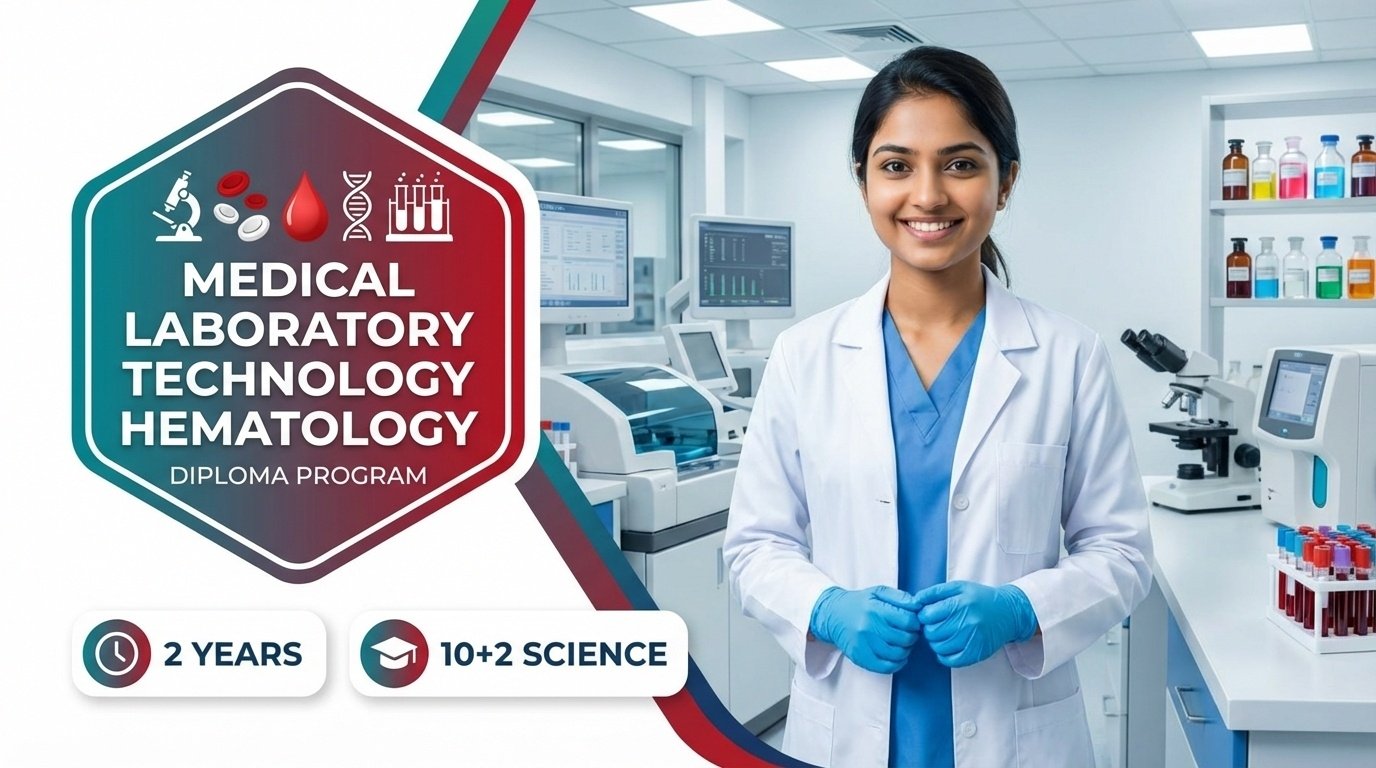
Diploma in Hematology
Mahatma Gandhi Ayurvigyan Vidyapeeth
Course Overview
The Diploma in Hematology is a specialized 2-year paramedical program focused on the comprehensive study of blood, blood-forming organs, blood diseases, and blood banking. This advanced diploma trains students in the science of analyzing blood components, diagnosing blood disorders, and managing blood transfusion services—making them vital specialists in modern healthcare diagnostics.
Hematology is one of the most critical branches of medical laboratory science, playing a crucial role in diagnosing conditions ranging from anemia and leukemia to hemophilia and blood clotting disorders. With blood tests being among the most common diagnostic procedures, hematology specialists are in constant demand across healthcare facilities worldwide.
Course Information
✅ Eligibility Criteria
- Educational Qualification: 10+2 (Science Stream) from a recognized board
- Mandatory Subjects: Physics, Chemistry, and Biology
- Minimum Percentage: As per institute norms (typically 45-50%)
- Age Limit: Generally 17-35 years at the time of admission
- Preferred Background: Students with keen interest in blood sciences and laboratory diagnostics
Course Curriculum & Syllabus
Year 1: Foundation Sciences & Basic Hematology
Semester 1:
- Human Anatomy & Physiology (Focus on circulatory system)
- Basic Biochemistry and Clinical Chemistry
- Introduction to Hematology and Blood Components
- Blood Cell Morphology and Identification
- Basic Microbiology and Immunology
- Laboratory Safety and Quality Assurance
- Medical Ethics and Communication Skills
Semester 2:
- Clinical Hematology - Principles and Practice
- Blood Cell Disorders - Anemia, Leukemia, and Related Conditions
- Coagulation Studies and Hemostasis
- Blood Banking Fundamentals
- Laboratory Techniques in Hematology
- Hematological Instrumentation
- Computer Applications in Laboratory Management
Year 2: Advanced Hematology & Specialization
Semester 3:
- Advanced Clinical Hematology
- Immunohematology and Blood Group Serology
- Blood Transfusion Medicine
- Bone Marrow Examination and Interpretation
- Hemato-Oncology Basics
- Molecular Diagnostics in Hematology
- Quality Control and Laboratory Management
- Research Methodology
Semester 4:
- Advanced Blood Banking Procedures
- Component Therapy and Apheresis
- Pediatric and Neonatal Hematology
- Flow Cytometry and Advanced Techniques
- Clinical Training and Internship (Hospital Posting)
- Diagnostic Case Studies
- Project Work and Dissertation
- Comprehensive Practical Training
???? Key Learning Outcomes
Upon successful completion of this diploma, graduates will be able to:
- Blood Analysis: Perform comprehensive blood tests including CBC, ESR, peripheral smear examination, and reticulocyte count
- Disorder Diagnosis: Identify and analyze various blood disorders, anemias, leukemias, and coagulation abnormalities
- Blood Banking: Manage blood collection, storage, typing, cross-matching, and transfusion procedures
- Advanced Techniques: Operate sophisticated hematology analyzers, flow cytometers, and automated blood banking equipment
- Quality Assurance: Implement stringent quality control measures and maintain laboratory accreditation standards
- Blood Component Preparation: Process whole blood into components like packed RBCs, platelets, plasma, and cryoprecipitate
- Transfusion Safety: Ensure safe blood transfusion practices and manage adverse transfusion reactions
- Research Skills: Conduct hematological research and contribute to clinical studies
- Documentation: Maintain accurate records and generate detailed laboratory reports
???? Career Opportunities
Graduates of this specialized diploma have diverse career prospects in:
Job Roles:
- Hematology Technician/Technologist
- Blood Bank Technician/Officer
- Clinical Laboratory Specialist (Hematology)
- Transfusion Medicine Technician
- Immunohematology Technologist
- Coagulation Laboratory Specialist
- Quality Control Officer (Hematology)
- Blood Bank Manager/Supervisor
- Research Assistant (Hematology)
- Laboratory Coordinator
- Technical Consultant (Blood Sciences)
Employment Sectors:
- Government & Private Hospitals (Hematology Departments)
- Blood Banks and Transfusion Centers
- Diagnostic and Reference Laboratories
- Cancer Treatment Centers and Oncology Hospitals
- Research Institutions and Medical Colleges
- Pharmaceutical Companies (Clinical Trials Division)
- Biotechnology Firms
- Stem Cell Banks and Cord Blood Banks
- Government Health Programs (National Blood Transfusion Services)
- Medical Equipment Companies (Product Specialists)
- Public Health Laboratories
???? Salary Expectations (2026)
Hematology Technician/Blood Bank Specialist:
Note: Salaries vary based on:
- Location (Metro cities offer 30-50% higher packages)
- Type of institution (Private hospitals/diagnostic chains pay more)
- Specialization (Blood banking specialists often earn premium)
- Additional certifications and skills
- Supervisory/managerial responsibilities
Specialized Roles:
- Blood Bank Managers: ₹8-15 Lakhs per annum
- Quality Control Officers: ₹6-12 Lakhs per annum
- Technical Consultants: ₹10-18 Lakhs per annum
???? Why Choose Diploma in Hematology?
1. Specialized Expertise:
Unlike general medical laboratory courses, this diploma provides deep, focused expertise in blood sciences—a critical and highly sought-after specialization in healthcare.
2. Critical Healthcare Need:
Every hospital, diagnostic center, and blood bank requires qualified hematology specialists. Blood disorders affect millions, and blood transfusion services are life-saving necessities.
3. High Growth Potential:
- India faces a shortage of qualified blood bank professionals
- Growing cancer treatment facilities require hematology experts
- Expansion of diagnostic services creates continuous job openings
- Government initiatives for safe blood transfusion increase demand
4. Better Compensation:
Specialized hematology technicians typically earn 20-40% more than general laboratory technicians due to their advanced expertise.
5. Job Security & Stability:
Blood testing and transfusion services are essential medical services required 24/7, ensuring permanent job security regardless of economic conditions.
6. Diverse Career Paths:
Work in clinical settings, research laboratories, public health programs, or even transition to teaching and training roles.
7. Life-Saving Impact:
Play a direct role in diagnosing blood cancers, managing thalassemia patients, ensuring safe transfusions, and saving lives through accurate diagnostics.
8. Continuous Learning:
Hematology is a dynamic field with constant technological advancements, offering opportunities for continuous skill development.
???? Unique Course Features
Hands-On Training:
- Extensive practical sessions with real blood samples
- Experience with modern automated hematology analyzers
- Live blood banking operations exposure
- Bone marrow examination training
Advanced Technology:
- Training on automated cell counters and analyzers
- Flow cytometry techniques
- Molecular diagnostic methods
- Blood component separation equipment
Clinical Exposure:
- Hospital internships in hematology departments
- Blood bank management experience
- Transfusion medicine practical training
- Diagnostic case study analysis
Industry-Relevant Skills:
- Quality assurance and accreditation standards
- Laboratory information systems
- Safety protocols and biosecurity measures
- Team collaboration and communication
???? Further Education & Career Advancement
After completing this diploma, graduates can pursue:
- B.Sc. in Medical Laboratory Technology (Lateral Entry)
- Advanced Diploma in Blood Banking
- Certification Courses in Flow Cytometry, Molecular Diagnostics
- M.Sc. in Clinical Hematology
- Specialized Training in Transfusion Medicine
- Management Courses in Healthcare Administration
- Teaching Positions in Paramedical Colleges
???? Why Choose Mahatma Gandhi Ayurvigyan Vidyapeeth?
- ✅ Specialized Curriculum: Focus on advanced hematology and blood banking
- ✅ Expert Faculty: Learn from experienced hematologists and blood bank specialists
- ✅ Modern Laboratory: Well-equipped with latest hematology analyzers and equipment
- ✅ Clinical Partnerships: Tie-ups with hospitals and blood banks for practical training
- ✅ Industry Exposure: Regular workshops, seminars, and guest lectures
- ✅ Placement Support: Career guidance and job placement assistance
- ✅ Affordable Excellence: High-quality specialized education at reasonable fees
- ✅ Comprehensive Training: Theory, practical, and hands-on clinical experience
- ✅ Skill Development: Focus on both technical expertise and soft skills
???? Admission Process
Step-by-Step Guide:
-
Online Application
- Visit the official admission portal
- Fill out the application form with accurate details
-
Document Submission
- Upload all required documents (see list below)
- Ensure documents are clear and properly scanned
-
Eligibility Verification
- Institute reviews your academic qualifications
- Merit-based or entrance-based selection (as applicable)
-
Counseling Session
- Attend counseling (if required)
- Course orientation and career guidance
-
Fee Payment
- Pay admission and semester fees
- Secure your seat with fee confirmation
-
Enrollment & Commencement
- Complete final formalities
- Receive ID card and begin your learning journey
???? Required Documents
Please keep the following documents ready for admission:
- ✓ 10th Standard Mark Sheet and Certificate
- ✓ 12th Standard Mark Sheet and Certificate (Science Stream with PCB)
- ✓ Transfer Certificate from previous institution
- ✓ Migration Certificate (if applicable)
- ✓ Character Certificate from school/college
- ✓ Recent Passport Size Photographs (4-6 copies)
- ✓ Aadhar Card (mandatory)
- ✓ Caste Certificate (if applicable for reservation)
- ✓ Medical Fitness Certificate
- ✓ Domicile Certificate (if applicable)
???? Course Delivery Method
- Classroom Lectures: Comprehensive theoretical foundation
- Laboratory Practical: Hands-on training with blood samples and equipment
- Clinical Postings: Real-world experience in hospital hematology labs and blood banks
- Workshops & Seminars: Industry exposure and latest developments
- Case Studies: Diagnostic problem-solving and critical thinking
- Project Work: Independent research and presentation
- Assessments: Regular tests, practical exams, and semester examinations
???? Take Your Career to New Heights!
Join the Diploma in Hematology program at Mahatma Gandhi Ayurvigyan Vidyapeeth and become a specialized healthcare professional in one of the most critical and rewarding fields of medical science. Transform your passion for healthcare into a meaningful and prosperous career in blood sciences!
Ready to Begin Your Journey?
Contact Information:
❓ Frequently Asked Questions (FAQs)
Q1: What is the difference between Hematology and general Medical Laboratory Technology? A: Hematology is a specialized branch focusing exclusively on blood, blood disorders, and blood banking. It provides deeper expertise compared to general MLT courses, leading to specialized career opportunities and better compensation.
Q2: Is this diploma recognized for government jobs? A: Yes, diploma holders can apply for various government positions in hospitals, blood banks, and public health laboratories. Please verify specific requirements for particular positions.
Q3: Can I work in private diagnostic labs after this course? A: Absolutely! Private diagnostic chains, pathology labs, and hospitals actively seek qualified hematology specialists for their blood testing departments.
Q4: What are the job prospects after completing this course? A: Excellent! The healthcare sector, especially blood banking and diagnostic services, has consistent demand for hematology specialists. Graduates find positions in hospitals, blood banks, research labs, and diagnostic centers.
Q5: Is practical training included in the course? A: Yes, the course includes extensive hands-on laboratory training and clinical internships in real hospital settings and blood banks.
Q6: Can I pursue higher education after this diploma? A: Yes, you can pursue B.Sc. MLT (lateral entry), M.Sc. in Hematology, specialized certifications, or management courses in healthcare.
Q7: What is the scope of working abroad with this qualification? A: With additional certifications recognized in specific countries, you can work internationally. Many graduates pursue further qualifications like ASCP (American Society for Clinical Pathology) certification for global opportunities.
Q8: Are there scholarship opportunities available? A: Please contact the institute directly for information about scholarships, financial aid, and installment payment options.
Q9: What is the typical working environment for hematology professionals? A: Hematology specialists primarily work in air-conditioned laboratory settings, blood banks, and hospital hematology departments. Work involves operating sophisticated equipment and requires attention to detail.
Q10: Is there a dress code or uniform requirement? A: Yes, laboratory professionals typically wear lab coats and follow specific safety protocols. The institute will provide detailed guidelines.
???? Next Steps
- Visit the official website: mgavidyapeeth.com
- Fill out the inquiry form for course details
- Connect with admission counselors for personalized guidance
- Schedule a campus visit (if available)
- Join information sessions and webinars
Don't Wait - Limited Seats Available!
Specialized courses like Diploma in Hematology have limited intake to ensure quality education and adequate practical training. Apply early to secure your seat and start your journey toward a rewarding healthcare career.
???? Success Stories & Career Impact
Hematology professionals contribute to:
- Early Cancer Detection: Identifying leukemia and lymphoma through blood tests
- Life-Saving Transfusions: Ensuring safe blood supply for emergencies and surgeries
- Chronic Disease Management: Monitoring patients with thalassemia, hemophilia, and sickle cell disease
- Diagnostic Excellence: Providing accurate blood reports that guide treatment decisions
- Public Health: Supporting blood donation drives and community health initiatives
???? Your Future Starts Here!
Transform your interest in medical science into specialized expertise. Become a vital healthcare professional who makes a difference every single day through accurate diagnostics and safe transfusion services.
Apply Today and Take the First Step Toward Excellence in Hematology!