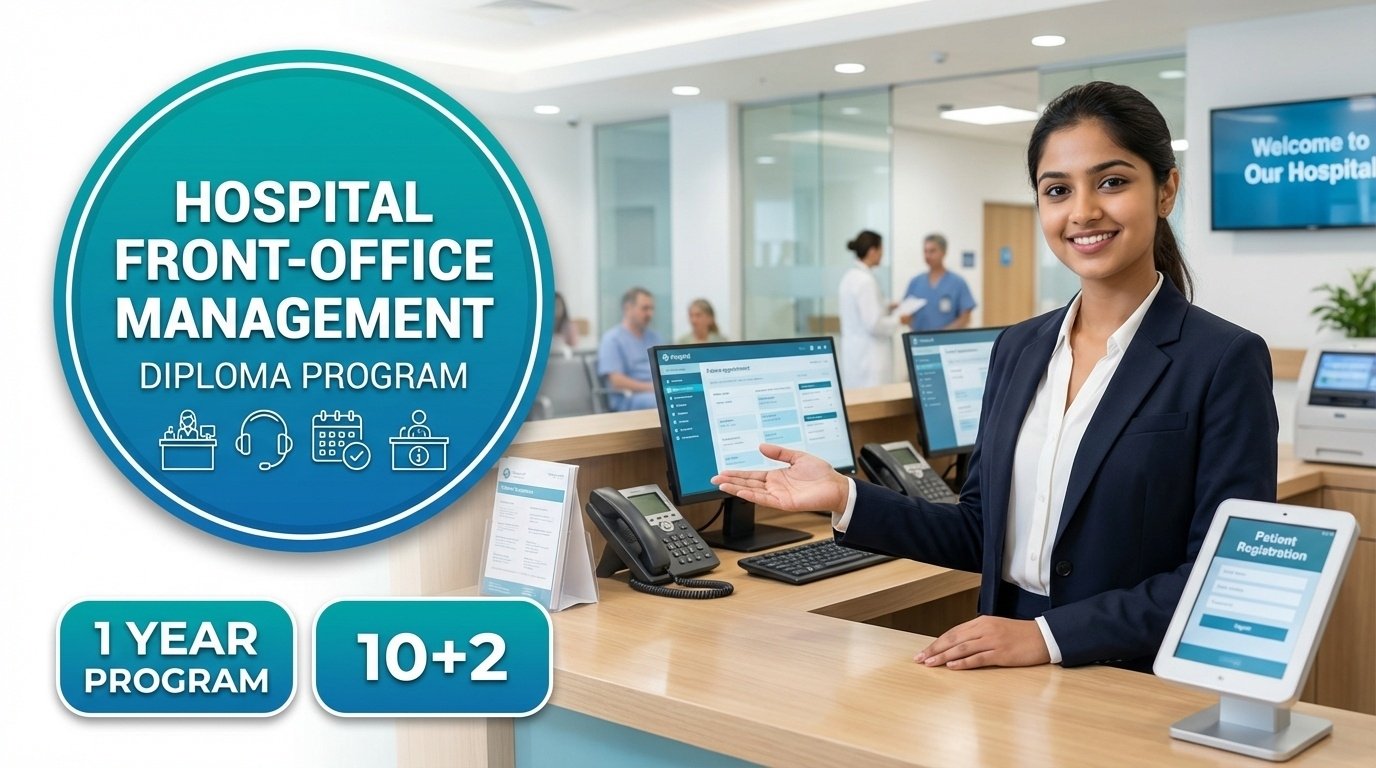
Diploma in Hospital Front-Office Management
Course Overview
The Diploma in Hospital Front-Office Management is a specialized paramedical program designed to train professionals in the art and science of hospital reception, patient relations, and front-desk operations. This intensive 1-year diploma prepares students to become the welcoming face of healthcare facilities—managing patient admissions, coordinating appointments, handling inquiries, and ensuring seamless front-office operations that create the critical first impression of quality healthcare service.
Course Details
What is Hospital Front-Office Management?
Hospital Front-Office Management is the professional discipline focused on managing the patient's first point of contact with healthcare facilities. Front-office professionals serve as the bridge between patients and medical services, handling administrative, communication, and coordination responsibilities.
Key Responsibilities:
- Patient registration and admission
- Appointment scheduling and management
- Telephone and inquiry handling
- Patient information verification
- Insurance and billing coordination
- Emergency patient reception
- Visitor management
- Maintaining patient confidentiality
- Coordinating with medical departments
- Managing waiting areas and patient flow
- Handling complaints and feedback
- Administrative documentation
The Critical Role: Studies show that 70% of patient satisfaction depends on front-office interactions. Front-office professionals shape the entire healthcare experience and directly impact patient trust and hospital reputation.
Why Choose This Course?
Universal Healthcare Demand
- Every hospital, clinic, and diagnostic center needs front-office staff
- Essential position in all healthcare facilities
- Multiple job opportunities across sectors
- Growing healthcare industry in India
- 15%+ annual growth in healthcare jobs
- Patient experience focus increasing importance
Quick Career Entry
- Only 1-year intensive program
- Start earning within 12-15 months
- No medical background required
- Open to all streams (Science/Commerce/Arts)
- Affordable course fee: ₹50,000
- Immediate employment post-completion
Good Earning Potential
- Starting salary: ₹15,000 - ₹25,000/month
- Growth to ₹35,000-₹50,000 with experience
- Performance incentives common
- Multiple shift options (differential pay)
- Additional income through part-time work
- Career progression to supervisory roles
Professional Growth
- Clear advancement path to senior positions
- Opportunities in hospital administration
- Transition to various healthcare roles
- Skills applicable across industries
- Foundation for healthcare MBA
- International hospital opportunities
Diverse Work Settings
- Multi-specialty hospitals
- Clinics and nursing homes
- Diagnostic centers
- Corporate hospitals
- Medical tourism facilities
- Telemedicine companies
- Health insurance companies
- Pharmaceutical companies
✨ Work-Life Balance
- Fixed shift timings (8-9 hours)
- Shift rotation options
- Professional office environment
- No direct patient care pressure
- Clean, air-conditioned workspace
- Respected administrative position
Skill Development
- Communication excellence
- Customer service mastery
- Technology proficiency
- Problem-solving abilities
- Multitasking skills
- Professional etiquette
- Stress management
- Leadership qualities
Course Curriculum
Semester 1: Foundations & Core Skills (6 Months)
Module 1: Healthcare System Fundamentals
Introduction to Healthcare Delivery
- Healthcare system in India
- Types of healthcare facilities
- Hospital organizational structure
- Roles of healthcare professionals
- Departments and their functions
- Patient care continuum
- Healthcare terminology basics
- Medical ethics and patient rights
Hospital Administration Basics
- Hospital management principles
- Quality standards in healthcare
- Patient safety concepts
- Hospital accreditation (NABH, JCI)
- Healthcare regulations and compliance
- Medical-legal aspects
- Confidentiality and HIPAA basics
- Healthcare insurance overview
Medical Terminology
- Root words, prefixes, suffixes
- Body systems terminology
- Common diseases and conditions
- Diagnostic and procedural terms
- Medical abbreviations
- Pharmaceutical terminology
- Emergency medical terms
- Specialty-specific vocabulary
Module 2: Front-Office Operations
Patient Registration & Admission
- New patient registration process
- Patient demographic information collection
- Document verification procedures
- Insurance eligibility verification
- Pre-admission procedures
- Admission formalities
- Consent forms and documentation
- Patient identification protocols
- Emergency admission procedures
- Discharge planning coordination
Appointment Management
- Appointment scheduling systems
- Booking procedures and protocols
- Appointment confirmation calls
- Reminder systems (SMS, email, calls)
- Rescheduling and cancellation management
- Walk-in patient handling
- Queue management strategies
- Doctor availability coordination
- Multiple appointment handling
- Online appointment systems
Telephone & Inquiry Management
- Professional telephone etiquette
- Call answering protocols
- Inquiry handling techniques
- Call transfer procedures
- Message taking and delivery
- Emergency call management
- Complaint handling on phone
- Voicemail management
- Multi-line phone systems
- Teleconferencing basics
Reception Desk Management
- Front desk organization
- Waiting area management
- Visitor registration and control
- Patient flow coordination
- Emergency patient prioritization
- Cash and payment handling
- Receipt issuance procedures
- Queue token systems
- Crowd management during peak hours
- Maintaining cleanliness and order
Module 3: Communication & Customer Service
Communication Skills
- Verbal communication excellence
- Non-verbal communication cues
- Active listening techniques
- Questioning and clarification skills
- Clear and concise speaking
- Professional vocabulary
- Cross-cultural communication
- Language barriers management
- Empathetic communication
- Assertive communication
Customer Service Excellence
- Patient-centered care approach
- Service quality standards
- First impression management
- Building patient rapport
- Handling difficult patients
- Managing patient expectations
- Service recovery techniques
- Patient satisfaction measurement
- Complaint resolution
- Going the extra mile
Interpersonal Skills
- Emotional intelligence
- Conflict resolution
- Team collaboration
- Professional relationships
- Stress management in patients
- Dealing with anxiety and fear
- Cultural sensitivity
- Gender sensitivity
- Age-appropriate communication
- Special needs patient handling
Hospital Information Systems (HIS)
- Introduction to HIS software
- Patient registration modules
- Appointment scheduling systems
- Billing and payment modules
- Insurance claim processing
- Report generation
- Database management basics
- Data entry accuracy
- System navigation
- Common HIS software (e.g., MediSoft, HMS)
Electronic Health Records (EHR)
- EHR concepts and importance
- Patient portal management
- Digital documentation
- Electronic consent forms
- Scanning and archiving
- Data retrieval procedures
- Confidentiality in digital systems
- Backup and security basics
Office Productivity Tools
-
Microsoft Word:
- Professional document creation
- Medical forms and templates
- Letter writing and formatting
- Mail merge for patient communication
-
Microsoft Excel:
- Patient data management
- Appointment schedules
- Billing calculations
- Report generation
- Charts and graphs
-
Microsoft PowerPoint:
- Presentation skills
- Patient education materials
- Department presentations
-
Email & Internet:
- Professional email etiquette
- Email management
- Online appointment systems
- Healthcare portals
- Information searching
- Social media basics for healthcare
Semester 2: Advanced Management & Practice (6 Months)
Module 5: Financial & Insurance Management
Billing & Payment Processing
- Hospital billing procedures
- Cash handling and management
- Credit card processing
- Payment plans and installments
- Billing software operation
- Invoice generation
- Receipt documentation
- Daily cash reconciliation
- Refund procedures
- Collection management
Health Insurance Coordination
- Types of health insurance (Medicaid, Medicare, Private)
- Indian health insurance landscape
- Government schemes (Ayushman Bharat, CGHS, ECHS)
- Third-Party Administrators (TPAs)
- Insurance verification procedures
- Pre-authorization processes
- Claim documentation
- Cashless hospitalization procedures
- Insurance denied claim handling
- Coordination of Benefits (COB)
Financial Counseling
- Cost estimation for patients
- Payment options explanation
- Financial assistance programs
- Insurance coverage explanation
- Billing clarification
- Payment arrangement negotiation
- Charity care programs
- Ethical financial communication
Module 6: Medical Records & Documentation
Medical Records Management
- Medical records importance
- Record creation and maintenance
- Filing systems (alphabetical, numerical, chronological)
- Active vs. inactive records
- Record retention policies
- Release of information procedures
- Legal aspects of medical records
- Confidentiality and privacy (HIPAA)
- Consent for disclosure
- Record request handling
Documentation Standards
- Accurate data entry techniques
- Completeness checks
- Legibility in documentation
- Correction procedures
- Authentication and signatures
- Date and time stamping
- Form completion accuracy
- Documentation auditing
- Quality control measures
Digital Records Management
- Electronic filing systems
- Document scanning procedures
- OCR (Optical Character Recognition)
- Cloud storage basics
- Backup procedures
- Access controls
- Version control
- Disaster recovery basics
Module 7: Emergency & Special Situations
Emergency Department Procedures
- Triage basics and prioritization
- Emergency admission procedures
- Critical patient handling
- Trauma patient documentation
- Police intimation procedures (medico-legal cases)
- Accident and injury reporting
- Emergency contact notification
- Ambulance coordination
- Crisis communication
- Maintaining composure under pressure
Special Patient Populations
-
Pediatric Patients:
- Child-friendly communication
- Parent coordination
- Vaccination schedules
-
Geriatric Patients:
- Elderly care sensitivity
- Hearing and vision considerations
- Patience and support
-
VIP Patients:
- Confidentiality and discretion
- Special protocols
- Privacy management
-
International Patients:
- Language assistance
- Cultural considerations
- Visa and travel documentation
- Medical tourism coordination