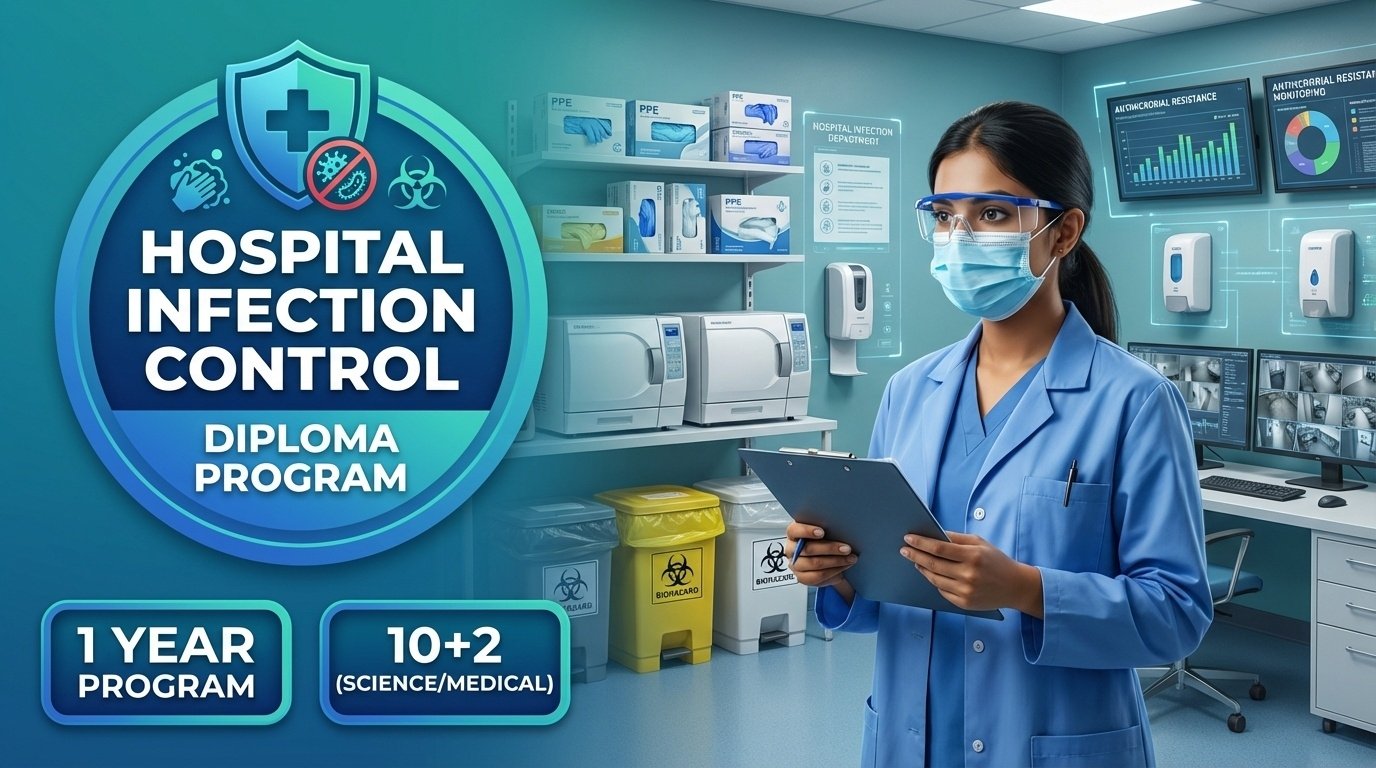
Diploma in Hospital Infection Control
Course Overview
The Diploma in Hospital Infection Control is a specialized paramedical program designed to train professionals in the critical field of healthcare-associated infection prevention and control. This intensive 1-year diploma prepares students to become Infection Control Practitioners who safeguard patients, healthcare workers, and communities from infectious diseases in healthcare settings. With the growing emphasis on patient safety, quality healthcare, and hospital accreditation standards, infection control professionals are now indispensable in every healthcare facility.
Course Details
What is Hospital Infection Control?
Hospital Infection Control, also known as Healthcare-Associated Infection (HAI) Prevention, is the discipline dedicated to preventing and controlling infections acquired by patients during medical treatment, as well as protecting healthcare workers from occupational infections.
Infection Control Professionals are responsible for:
- Surveillance of healthcare-associated infections
- Implementation of infection prevention protocols
- Education and training of healthcare staff
- Outbreak investigation and management
- Ensuring compliance with infection control standards
- Promoting antimicrobial stewardship
- Maintaining patient and staff safety
Healthcare-associated infections affect millions of patients worldwide and are a leading cause of morbidity and mortality. Infection control practitioners play a vital role in reducing these infections, improving patient outcomes, and ensuring healthcare facilities meet national and international quality standards.
Why Choose This Course?
Critical Healthcare Need
- Every hospital requires infection control team
- Mandatory for hospital accreditation (NABH, JCI)
- Government regulations mandate infection control officers
- Essential for patient safety and quality care
- COVID-19 pandemic highlighted critical importance
High-Demand Specialization
- Acute shortage of trained infection control professionals
- 100% job-oriented program
- Immediate employment opportunities
- Growing field with job security
- Essential role in every healthcare facility
Excellent Career Prospects
- Competitive starting salaries
- Rapid career advancement opportunities
- Respected position in hospital hierarchy
- Direct interaction with hospital administration
- Influence on policy and decision-making
Global Relevance
- International standards (WHO, CDC guidelines)
- Opportunities in healthcare facilities worldwide
- Consulting and training opportunities
- Research and academic career paths
- Public health sector opportunities
Make a Real Difference
- Directly save lives through infection prevention
- Protect vulnerable patient populations
- Contribute to antimicrobial resistance control
- Improve healthcare quality standards
- Create safer healthcare environments
Course Curriculum
Semester 1: Foundations of Infection Control (6 Months)
Module 1: Microbiology & Infectious Diseases
-
Medical Microbiology
- Bacteriology: Structure, classification, pathogenesis
- Virology: Viral infections and transmission
- Mycology: Fungal infections in healthcare
- Parasitology: Parasitic diseases
- Laboratory diagnosis of infections
-
Infectious Diseases
- Common healthcare-associated infections
- Bloodstream infections (BSI)
- Surgical site infections (SSI)
- Urinary tract infections (UTI)
- Ventilator-associated pneumonia (VAP)
- Catheter-related infections
- Emerging and re-emerging infections
Module 2: Infection Control Principles
-
Basic Concepts
- Chain of infection
- Modes of disease transmission
- Standard precautions and isolation practices
- Hand hygiene: The cornerstone of infection prevention
- Personal protective equipment (PPE)
- Aseptic techniques
-
Hospital Epidemiology
- Principles of epidemiology
- Disease surveillance methods
- Outbreak investigation
- Data collection and analysis
- Statistical methods in infection control
- Risk assessment and management
Module 3: Healthcare Facility Environment
- Environmental hygiene and cleaning
- Healthcare waste management
- Biomedical waste segregation and disposal
- Water quality and safety
- HVAC systems in healthcare
- Operating room infection control
- Isolation room requirements
- Construction and renovation infection control (ICRA)
Module 4: Sterilization & Disinfection
- Principles of sterilization
- Methods of sterilization (Steam, ETO, Plasma)
- Central Sterile Supply Department (CSSD) operations
- Disinfection levels and methods
- Cleaning and disinfection protocols
- Monitoring sterilization effectiveness
- Reprocessing of medical devices
- Single-use vs. reusable devices
Semester 2: Advanced Practice & Implementation (6 Months)
Module 5: Clinical Infection Prevention
Module 6: Antimicrobial Stewardship
- Principles of antimicrobial stewardship
- Antimicrobial resistance (AMR) crisis
- Rational antibiotic use
- Antibiotic policy development
- Formulary management
- Antibiotic surveillance
- Role of infection control in AMR prevention
- One Health approach
Module 7: Occupational Health & Safety
- Occupational exposures in healthcare
- Bloodborne pathogen prevention
- Needlestick injury prevention and management
- Post-exposure prophylaxis (PEP)
- Tuberculosis exposure control
- Healthcare worker immunization
- Respiratory protection programs
- Latex allergy management
- Occupational health surveillance
Module 8: Quality & Accreditation
Module 9: Special Topics
Module 10: Practical Training & Project
Career Prospects
Job Roles & Responsibilities
1. Infection Control Nurse/Practitioner
Responsibilities:
- Conduct daily surveillance rounds in clinical areas
- Identify and investigate healthcare-associated infections
- Implement infection prevention protocols
- Educate healthcare staff on infection control measures
- Monitor compliance with hand hygiene and PPE use
Salary Range: ₹25,000 - ₹40,000/month
Employment: Hospitals, medical centers, nursing homes
2. Hospital Infection Control Officer
Responsibilities:
- Develop infection control policies and protocols
- Lead infection control committee meetings
- Coordinate outbreak investigation and response
- Ensure regulatory compliance
- Report to hospital administration and quality teams
Salary Range: ₹30,000 - ₹50,000/month
Employment: Multi-specialty hospitals, healthcare chains
3. Infection Prevention Coordinator
Responsibilities:
- Coordinate infection surveillance programs
- Analyze infection data and prepare reports
- Implement evidence-based prevention strategies
- Conduct staff training programs
- Liaise with laboratory and clinical departments
Salary Range: ₹28,000 - ₹45,000/month
Employment: Corporate hospitals, medical colleges
4. CSSD Manager/Supervisor
Responsibilities:
- Manage Central Sterile Supply Department operations
- Ensure proper sterilization and disinfection processes
- Monitor sterilization quality indicators
- Train CSSD staff
- Maintain equipment and inventory
Salary Range: ₹30,000 - ₹50,000/month
Employment: Hospitals, surgical centers, dental clinics
5. Quality Assurance Officer (Infection Control)
Responsibilities:
- Conduct infection control audits
- Monitor compliance with accreditation standards
- Prepare quality reports and presentations
- Implement quality improvement initiatives
- Support NABH/JCI accreditation processes
Salary Range: ₹35,000 - ₹55,000/month
Employment: Quality departments in hospitals
6. Antimicrobial Stewardship Coordinator
Responsibilities:
- Monitor antibiotic usage patterns
- Implement antibiotic stewardship programs
- Conduct antibiotic utilization reviews
- Collaborate with microbiology and pharmacy
- Educate clinicians on rational antibiotic use
Salary Range: ₹30,000 - ₹50,000/month
Employment: Large hospitals, teaching institutions
7. Occupational Health Specialist
Responsibilities:
- Manage healthcare worker immunization programs
- Investigate occupational exposures
- Implement needlestick prevention programs
- Conduct staff health surveillance
- Ensure compliance with occupational safety
Salary Range: ₹28,000 - ₹45,000/month
Employment: Large hospitals, healthcare systems
8. Biomedical Waste Management Officer
Responsibilities:
- Oversee healthcare waste segregation and disposal
- Ensure compliance with biomedical waste regulations
- Train staff on waste management protocols
- Monitor waste treatment and disposal
- Maintain records and regulatory reports
Salary Range: ₹25,000 - ₹40,000/month
Employment: Hospitals, diagnostic centers, clinics
9. Infection Control Consultant
Responsibilities:
- Provide expert consultation to healthcare facilities
- Conduct infection control assessments and audits
- Develop customized infection control programs
- Deliver training workshops and seminars
- Support accreditation preparation
Salary Range: ₹50,000 - ₹1,00,000+/month (with experience)
Employment: Independent consulting, healthcare advisory firms
10. Academic/Research Positions
Responsibilities:
- Teach infection control in nursing/paramedical colleges
- Conduct research on infection prevention
- Publish in scientific journals
- Guide student projects
- Present at conferences
Salary Range: ₹35,000 - ₹60,000/month
Employment: Medical/nursing colleges, research institutes
Employment Sectors
Healthcare Facilities
- Multi-specialty Hospitals
- Super-specialty Hospitals
- Teaching Hospitals and Medical Colleges
- Community Hospitals
- Day Care Surgery Centers
- Maternity and Pediatric Hospitals
Healthcare Support Organizations
- Hospital Management Companies
- Healthcare Consulting Firms
- Accreditation Bodies
- Quality Assessment Organizations
- Medical Equipment Companies (infection control products)
Diagnostic & Research
- Diagnostic Laboratories
- Pathology Centers
- Medical Research Institutions
- Clinical Trial Organizations
- Pharmaceutical Companies
Government & Public Health
- Government Hospitals
- District Health Departments
- State Health Directorates
- National Health Programs
- Disease Surveillance Programs
- WHO, UNICEF, and NGOs
Long-term Care & Specialty
- Nursing Homes and Elderly Care
- Rehabilitation Centers
- Dialysis Centers
- Dental Clinics and Hospitals
- Veterinary Hospitals (One Health approach)
Corporate & Administrative
- Healthcare Insurance Companies
- Medical Tourism Facilitators
- Hospital Administration
- Healthcare IT Companies
- Medical Education Institutions
Salary Progression
Additional Benefits:
- Performance bonuses and incentives
- Health insurance and medical benefits
- Professional development allowances
- Conference and training sponsorships
- Publication and research grants
Skills You'll Master
Technical Knowledge
✅ Comprehensive microbiology and infectious diseases
✅ Hospital epidemiology and surveillance methods
✅ Sterilization and disinfection techniques
✅ Healthcare waste management protocols
✅ Antimicrobial stewardship principles
✅ Occupational health and safety standards
✅ Environmental infection control
✅ Laboratory diagnostic interpretation
Practical Skills
✅ Infection surveillance and data collection
✅ Outbreak investigation and management
✅ Hand hygiene auditing techniques
✅ PPE usage and training
✅ CSSD operations and monitoring
✅ Environmental sampling techniques
✅ Infection control rounds and audits
✅ Isolation precaution implementation
Analytical & Research Skills
✅ Data analysis and interpretation
✅ Statistical software for infection data
✅ Research methodology application
✅ Evidence-based guideline implementation
✅ Root cause analysis
✅ Risk assessment and management
✅ Report writing and documentation
✅ Scientific literature review
Communication & Training
✅ Staff education and training delivery
✅ Presentation and public speaking
✅ Policy and protocol development
✅ Interdisciplinary team collaboration
✅ Patient and family education
✅ Committee meeting facilitation
✅ Written communication skills
✅ Conflict resolution
Quality & Compliance
✅ NABH accreditation standards
✅ JCI infection control requirements
✅ ISO quality management systems
✅ Regulatory compliance knowledge
✅ Audit and inspection preparation
✅ Quality improvement methodologies
✅ Documentation and record-keeping
✅ Performance indicator monitoring
Leadership & Management
✅ Team leadership and supervision
✅ Change management strategies
✅ Strategic planning
✅ Budget management basics
✅ Project management
✅ Policy advocacy
✅ Stakeholder engagement
✅ Crisis management
Eligibility Criteria
Academic Qualification:
Required: 10+2 (Science Stream)
✅ Mandatory Subjects:
- Physics, Chemistry, Biology (PCB)
- OR Physics, Chemistry, Mathematics (PCM) with Biology as additional subject
✅ Eligible Boards:
- CBSE (Central Board of Secondary Education)
- ICSE (Indian Certificate of Secondary Education)
- State Boards (All recognized state education boards)
- NIOS (National Institute of Open Schooling)
✅ Minimum Marks:
- Typically 50% aggregate in 10+2
- Relaxation for reserved categories as per norms