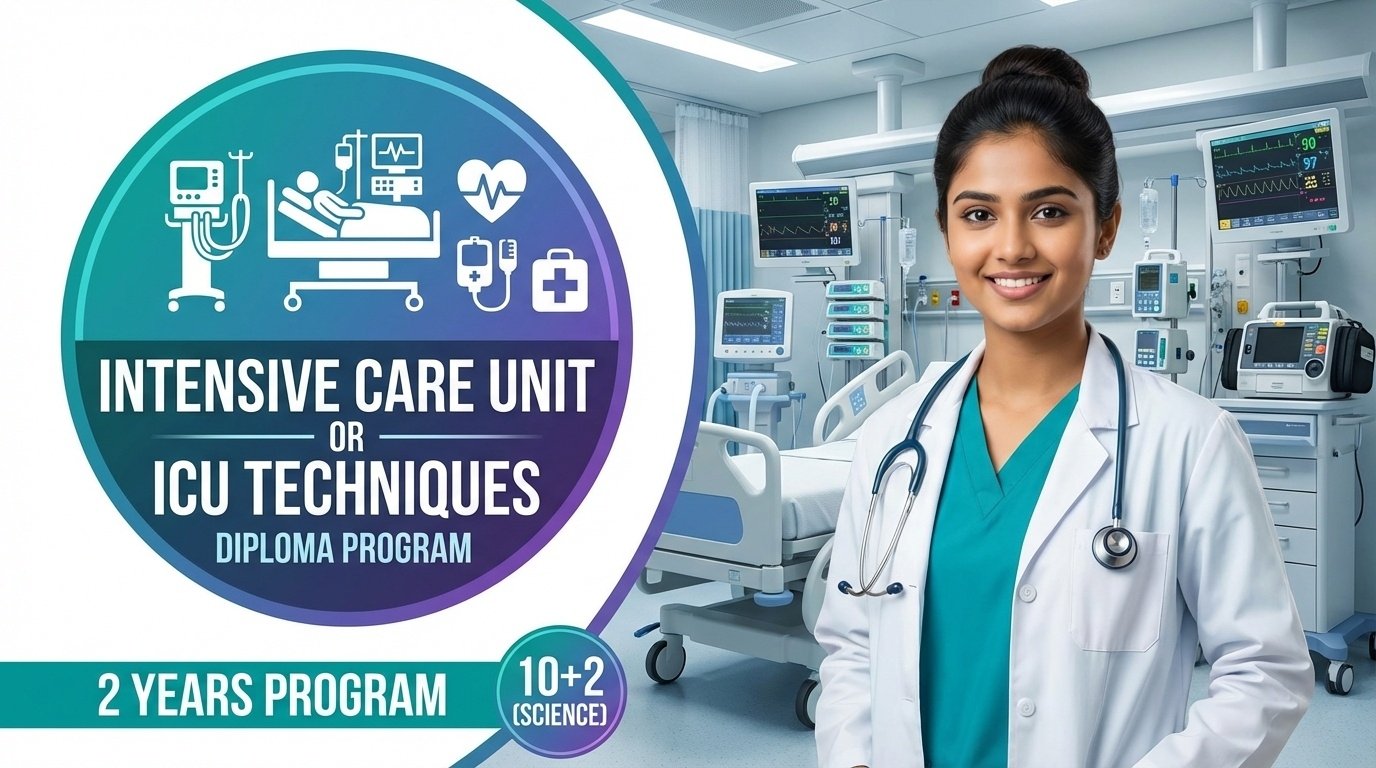
Diploma in Intensive Care Unit (ICU) Techniques
Mahatma Gandhi Ayurvigyan Vidyapeeth
Course Overview
The Diploma in Intensive Care Unit (ICU) Techniques is a specialized 2-year paramedical program meticulously designed to train expert ICU professionals who master the technical skills and clinical procedures essential for managing critically ill patients. This focused course emphasizes hands-on mastery of ICU equipment, advanced monitoring techniques, ventilator management, and specialized procedures that are the backbone of modern intensive care.
Unlike general critical care programs, this diploma specifically concentrates on ICU techniques—the practical, technical, and procedural aspects of intensive care that require precision, expertise, and continuous skill refinement. Graduates become indispensable technical specialists who bridge the gap between physicians and bedside care, operating sophisticated life-support equipment and performing critical procedures that sustain life.
In today's healthcare landscape, where technology drives critical care outcomes, ICU techniques specialists are highly sought after for their ability to operate ventilators, interpret hemodynamic data, manage invasive monitoring lines, and troubleshoot complex medical equipment with expertise and confidence.
Course Information
✅ Eligibility Criteria
- Educational Qualification: 10+2 (Science Stream) from a recognized board
- Mandatory Subjects: Physics, Chemistry, and Biology
- Minimum Percentage: 45-50% aggregate marks
- Age Limit: 17-35 years at the time of admission
- Physical Requirements: Good manual dexterity and hand-eye coordination
- Personal Aptitude:
- Strong interest in medical technology and equipment
- Attention to detail and precision
- Analytical and problem-solving mindset
- Ability to work under pressure
- Technical aptitude for equipment operation
- Team coordination skills
???? Comprehensive Course Curriculum
Year 1: Foundation & Core ICU Techniques
Semester 1: Fundamentals & Basic ICU Technology
- Human Anatomy & Physiology (Cardiopulmonary & Neurological Focus)
- Medical Physics and Electronics Basics
- Introduction to ICU - Layout, Equipment, and Workflow
- ICU Equipment Familiarization - Components and Functions
- Patient Monitoring Systems - Basic Principles
- Vital Signs - Advanced Measurement Techniques
- Medical Terminology for ICU Settings
- Basic Life Support (BLS) - Certification
- Infection Control and Aseptic Techniques in ICU
- Medical Ethics and ICU Documentation
- Healthcare Safety and Risk Management
- Biomedical Waste Handling in ICU
Semester 2: Core ICU Techniques - Level 1
- Applied Pathophysiology for Critical Illness
- Clinical Pharmacology - ICU Medications and Administration
- Airway Management Techniques
- Oral and nasopharyngeal airways
- Bag-valve-mask ventilation
- Intubation assistance
- Endotracheal tube management
- Suction techniques
- Oxygen Delivery Systems
- Nasal cannula, face masks, venturi masks
- Non-rebreather masks
- CPAP and BiPAP
- Basic Hemodynamic Monitoring
- Blood pressure - manual and automated
- Pulse oximetry
- Temperature monitoring
- ECG Techniques
- 12-lead ECG recording
- Continuous cardiac monitoring
- Basic rhythm recognition
- IV Access and Management
- Peripheral IV insertion
- IV fluid administration
- Infusion pump operation
- Specimen Collection - Blood, urine, sputum
Year 2: Advanced ICU Techniques & Specialization
Semester 3: Advanced ICU Techniques - Level 2
- Mechanical Ventilation - Comprehensive Training
- Ventilator modes (AC, SIMV, PSV, PRVC, etc.)
- Ventilator parameter setting and adjustment
- Ventilator graphics interpretation
- Troubleshooting ventilator alarms
- Ventilator-associated pneumonia prevention
- Weaning protocols
- Advanced Hemodynamic Monitoring
- Central venous pressure (CVP) monitoring
- Arterial line management
- Cardiac output monitoring
- Invasive pressure monitoring
- Arterial Blood Gas (ABG) Techniques
- Radial and femoral artery puncture
- Sample collection and handling
- ABG machine operation
- ABG interpretation
- Acid-base balance management
- Central Line Management
- Central line care and maintenance
- CVC dressing changes
- Infection prevention protocols
- Troubleshooting line problems
- Advanced Cardiac Monitoring
- Arrhythmia recognition
- ST-segment monitoring
- Cardiac output measurement
- Chest Physiotherapy Techniques
- Percussion and vibration
- Postural drainage
- Incentive spirometry
- Breathing exercises
- Renal Replacement Therapy (Dialysis Basics)
- CRRT (Continuous Renal Replacement Therapy)
- Machine setup and monitoring
- ICU Equipment Troubleshooting
Semester 4: Specialized ICU Techniques & Clinical Mastery
- Advanced Life Support Techniques
- ACLS algorithms
- Defibrillation and cardioversion
- Emergency medications
- Code blue protocols
- Specialized Monitoring Techniques
- Intracranial pressure (ICP) monitoring
- Neuromuscular blockade monitoring
- End-tidal CO2 monitoring
- Transcutaneous monitoring
- Advanced Ventilatory Support
- High-frequency oscillatory ventilation (HFOV)
- Prone positioning for ARDS
- Lung recruitment maneuvers
- Extracorporeal membrane oxygenation (ECMO) basics
- Nutritional Support Techniques
- Nasogastric tube insertion
- Feeding pump operation
- Enteral nutrition management
- Parenteral nutrition basics
- Wound Care and Drain Management
- Surgical wound care
- Chest tube management
- Drain output monitoring
- Pressure ulcer prevention
- Point-of-Care Testing (POCT)
- Bedside glucose monitoring
- Coagulation testing
- Electrolyte monitoring
- ICU-Specific Procedures Assistance
- Bronchoscopy assistance
- Tracheostomy care
- Lumbar puncture assistance
- Quality Assurance in ICU
- Hospital ICU Clinical Rotations (16-18 weeks)
- Medical ICU
- Surgical ICU
- Cardiac ICU
- Neuro ICU
- NICU (Neonatal)
- PICU (Pediatric)
- Comprehensive Practical Assessment
- Research Project - ICU Techniques-based Study
- Final Examination - Theory, Practical, and Equipment Viva
???? Key Learning Outcomes
Technical Mastery:
Equipment Operation Excellence:
- ✅ Ventilator Expertise: Operate 5+ ventilator models, set parameters, interpret graphics, troubleshoot alarms
- ✅ Monitoring Systems: Use multi-parameter monitors, cardiac monitors, hemodynamic monitors
- ✅ Infusion Systems: Program and manage infusion pumps, syringe pumps, PCA pumps
- ✅ Airway Devices: Manage all airway equipment including emergency airways
- ✅ Diagnostic Equipment: Operate ABG analyzers, ECG machines, POCT devices
- ✅ Life Support Equipment: Use defibrillators, IABP, ECMO (exposure)
Clinical Procedures Proficiency:
- ✅ Airway Techniques: Intubation assistance, suctioning, airway maintenance
- ✅ Hemodynamic Access: Assist with central lines, arterial lines, CVP monitoring
- ✅ ABG Collection: Perform arterial puncture with 95%+ success rate
- ✅ ECG Recording: 12-lead ECG placement and quality recordings
- ✅ Chest Physiotherapy: Effective respiratory therapy techniques
- ✅ Specimen Collection: All types of ICU specimens with proper handling
Monitoring & Interpretation:
- ✅ Vital Parameters: Continuous monitoring and trend analysis
- ✅ Ventilator Graphics: Interpret pressure-volume and flow-volume curves
- ✅ Cardiac Rhythms: Recognize basic and lethal arrhythmias
- ✅ ABG Analysis: Interpret acid-base status and oxygenation
- ✅ Hemodynamic Data: Understand CVP, MAP, cardiac output values
- ✅ Lab Values: Recognize critical lab values requiring intervention
Problem-Solving Skills:
- ✅ Equipment Troubleshooting: Diagnose and resolve technical problems
- ✅ Alarm Management: Differentiate true vs. false alarms
- ✅ Critical Thinking: Rapid assessment and appropriate action
- ✅ Patient Deterioration: Early recognition and escalation
Professional Competencies:
- ✅ Precision & Accuracy: Error-free technical procedures
- ✅ Documentation: Detailed ICU charting and reporting
- ✅ Team Collaboration: Work with intensivists, nurses, respiratory therapists
- ✅ Infection Control: Strict adherence to sterile techniques
- ✅ Emergency Response: Effective participation in code situations
???? Career Opportunities
Primary Job Roles:
- ICU Techniques Specialist
- Intensive Care Unit Technician
- Ventilator Management Specialist
- Hemodynamic Monitoring Specialist
- ICU Equipment Technologist
- Critical Care Procedures Technician
- Medical ICU Technician
- Surgical ICU Technician
- Cardiac ICU Specialist
- Neuro ICU Technician
- Neonatal ICU Technologist
- Pediatric ICU Technician
- Respiratory Care Practitioner
- ICU Quality Control Coordinator
- Clinical ICU Trainer
- ICU Research Coordinator
- Perfusion Technology Assistant
Specialized Roles:
- ECMO Specialist (with additional training)
- Ventilator Specialist
- Hemodynamic Monitoring Expert
- ICU Equipment Maintenance Coordinator
- ICU Clinical Application Specialist
- Biomedical Equipment Specialist (ICU Focus)
Employment Sectors:
Healthcare Institutions:
- Multi-specialty Hospitals (ICU Departments)
- Super-Specialty Critical Care Centers
- Teaching Hospitals and Medical Colleges
- Government Hospital ICUs
- Cardiac Care Hospitals
- Neurosciences Centers
- Trauma and Emergency Centers
- Transplant Units
- Cancer Treatment Centers
Equipment & Industry:
- Medical Equipment Manufacturers (Philips, GE, Drager, Medtronic)
- ICU Equipment Distributors
- Clinical Application Specialists for ventilator companies
- Product Training and Support Teams
- Hospital Equipment Management Departments
Education & Research:
- Paramedical Training Institutes (ICU Faculty)
- Nursing Colleges (ICU Techniques Instructor)
- Continuing Medical Education (CME) Trainers
- Clinical Research Organizations
- Medical Equipment Demonstration Centers
International Opportunities:
- Gulf Country Hospitals (UAE, Saudi Arabia, Qatar, Oman)
- International Hospital Chains
- Medical Tourism Destinations
- Cruise Ship Medical Centers
- Offshore Medical Facilities
???? Salary Expectations (2026)
ICU Techniques Specialist Compensation:
Specialization-Based Salary:
Location-Wise Salary Variations:
Top Employer Packages:
Equipment Company Roles (Higher Compensation):
Additional Benefits:
- Night Shift Allowance: ₹3,000-6,000/month
- Overtime: 1.5x-2x hourly rate
- Medical Insurance: Family coverage
- Performance Bonuses: 10-25% of annual salary
- Skill Certification Bonus: ₹10,000-50,000
- Food & Transport: ₹2,000-4,000/month
International Opportunities (Gulf):
- UAE: AED 7,000-12,000/month (₹1.6-2.8 Lakhs/month)
- Saudi Arabia: SAR 5,500-10,000/month (₹1.3-2.3 Lakhs/month)
- Qatar: QAR 7,000-11,000/month (₹1.7-2.6 Lakhs/month)
- Oman: OMR 600-1,000/month (₹1.3-2.2 Lakhs/month)
???? Why Choose ICU Techniques Diploma?
1. ???? Focused Specialization
Unlike broad critical care programs, this diploma focuses exclusively on ICU techniques—the hands-on technical skills that make you immediately employable and highly valuable.
2. ???? Excellent Value (₹80,000)
At just ₹80,000 for complete 2-year training, this represents outstanding ROI. Recover your investment in 4-8 months of employment!
3. ⚡ Hands-On Training Focus
60% practical training ensures you graduate with real equipment operation experience, not just theoretical knowledge.
4. ???? Universal Demand
Every ICU in every hospital needs techniques specialists. Zero geographic limitation on job opportunities.
5. ???? Quick Employment
Technical skills are immediately transferable to work. Most students receive job offers during final semester internships.
6. ???? Career Growth
Progress to senior specialist, equipment trainer, clinical application specialist, or even start equipment training business.
7. ???? Multiple Career Paths
Work in hospitals, equipment companies, training institutes, or international healthcare facilities.
8. ???? Global Recognition
ICU techniques are universal. Your skills are valued worldwide with minimal additional certification.
9. ???? Technical Expertise Premium
Technical specialists often earn more than general ICU staff due to specialized equipment operation skills.
10. ???? Pathway to Higher Studies
Foundation for B.Sc. Critical Care, Respiratory Therapy, or even Biomedical Engineering programs.
???? Unique Course Features
Equipment-Intensive Training:
- 6+ Ventilator Models - Hands-on training on multiple brands
- Complete ICU Setup - Fully functional ICU simulation lab
- Advanced Monitors - Multi-parameter, cardiac, hemodynamic
- Real Equipment - Not just simulators, actual clinical devices
- Troubleshooting Practice - Learn to diagnose and fix equipment issues
Technique-Focused Curriculum:
- Procedure-Based Learning - Master specific ICU techniques
- Skill Stations - Dedicated practice for each technique
- Repetition Training - Practice until proficiency achieved
- Competency Assessment - Objective skill evaluation
- Video-Based Learning - Slow-motion technique demonstration
Clinical Excellence:
- Extended ICU Rotations - 18 weeks in actual ICU settings
- Multiple Specialty Units - Exposure to 6+ different ICU types
- 24/7 Shift Experience - All shift timings including nights
- Real Patient Care - Supervised hands-on with actual patients
- Emergency Scenarios - Participate in code blue situations
Industry Connections:
- Equipment Company Tie-ups - Philips, GE, Drager partnerships
- Campus Recruitment - Direct hiring by hospital chains
- Equipment Training - Manufacturer-certified training
- Industry Workshops - Latest technology demonstrations
- Guest Lectures - Technical experts and senior intensivists
Certification Integration:
- BLS Certification - Included in curriculum
- ACLS Preparation - Advanced cardiac life support training
- Ventilator Certification - Equipment-specific certificates
- ICU Techniques Certificate - Specialized competency certificate
- Infection Control - Hospital infection prevention certification
???? Further Education & Career Advancement
Higher Education Options:
- B.Sc. in Critical Care Technology (Lateral Entry)
- B.Sc. in Respiratory Therapy
- B.Sc. in Cardiac Care Technology
- B.Sc. in Perfusion Technology
- Advanced Diploma in ICU Techniques
- M.Sc. in Critical Care
- Biomedical Engineering (Bridge programs)
Advanced Certifications:
- ACLS (Advanced Cardiac Life Support)
- ECMO Specialist Certification
- Ventilator Management Advanced Course
- Hemodynamic Monitoring Specialist
- Respiratory Therapy Certification
- Neonatal Resuscitation Program (NRP)
- PALS (Pediatric Advanced Life Support)
Career Progression:
Junior ICU Technician → ICU Techniques Specialist → Senior ICU Specialist → ICU Coordinator/Supervisor → Clinical Trainer → Equipment Application Specialist → ICU Manager
Specialization Tracks:
- Ventilator Specialist - Focus on respiratory support
- Hemodynamic Expert - Invasive monitoring specialist
- ECMO Specialist - Extracorporeal life support
- Pediatric ICU Specialist - NICU/PICU focus
- Equipment Trainer - Teaching role
- Clinical Application Specialist - Equipment company role
???? Why Choose Mahatma Gandhi Ayurvigyan Vidyapeeth?
- ✅ Equipment-Rich Lab: ₹50+ Lakhs invested in ICU equipment
- ✅ Multiple Ventilators: Train on 6+ different ventilator models
- ✅ Expert Faculty: Experienced ICU technologists and intensivists
- ✅ Hospital Partnerships: Clinical rotations in premier ICU facilities
- ✅ Technique Mastery Focus: 60% hands-on practical training
- ✅ Small Batch Size: Maximum 20-25 students for individual attention
- ✅ BLS/ACLS Training: Life support certifications included
- ✅ Equipment Company Tie-ups: Direct recruitment opportunities
- ✅ Placement Record: 90%+ placement within 4 months
- ✅ Affordable Fees: ₹80,000 for complete 2-year program
- ✅ Flexible Payment: Semester-wise or yearly payment options
- ✅ Lifetime Support: Career guidance and job assistance forever
???? Admission Process
Simple 6-Step Enrollment:
Step 1: Online Application ⏰
Step 2: Document Submission ????
- Submit required documents
- Ensure 10+2 Science marksheets are clear
- Include all certificates listed below
Step 3: Eligibility Verification ✅
- Institute reviews qualifications
- 45%+ in 10+2 Science required
- Typically processed in 2-3 days
Step 4: Counseling & Lab Tour ????
- Personal counseling session
- ICU equipment lab tour
- Meet faculty and current students
- Discuss career prospects
Step 5: Fee Payment ????
- Pay ₹80,000 (2 years) or ₹40,000 (yearly)
- Multiple payment modes
- Installment options available
- Receive admission confirmation
Step 6: Begin Training ????
- Attend orientation program
- Receive uniform and course materials
- Start ICU techniques journey!
???? Required Documents
Academic:
- ☑️ 10th Mark Sheet & Certificate
- ☑️ 12th Mark Sheet & Certificate (Science - PCB)
- ☑️ Transfer Certificate
- ☑️ Migration Certificate (if applicable)
- ☑️ Character Certificate
Identity & Medical:
- ☑️ Aadhar Card (mandatory)
- ☑️ PAN Card (if available)
- ☑️ Medical Fitness Certificate
- ☑️ COVID Vaccination Certificate
- ☑️ Blood Group Certificate
- ☑️ Passport Photos (8-10 copies)
Additional (if applicable):
- ☑️ Caste Certificate (for reservations)
- ☑️ Domicile Certificate
- ☑️ Income Certificate (for concessions)
- ☑️ GAP Certificate (if gap after 10+2)
???? Course Delivery & Assessment
Teaching Methodology:
Theory (20%):
- Classroom lectures with multimedia
- Case-based discussions
- Equipment technology sessions
- Guest lectures by technical experts
Laboratory Practice (40%):
- Equipment operation sessions
- Technique practice stations
- Troubleshooting workshops
- Simulation scenarios
- Competency drills
Clinical Training (35%):
- Hospital ICU rotations (18 weeks)
- Supervised patient care
- Equipment operation in real settings
- All shift experience
- Emergency response participation
Skill Development (5%):
- Communication workshops
- Team coordination training
- Documentation practice
- Ethical decision-making
Assessment Methods:
- Continuous Assessment: Weekly skill checks
- Theory Exams: Semester-end written tests
- Practical Exams: Hands-on equipment operation assessment
- OSCE: Objective Structured Clinical Examination
- Clinical Logbook: Documented procedures and cases
- Equipment Viva: Oral examination on equipment knowledge
- Final Comprehensive Exam: Theory + Practical + Viva
⚡ A Day in ICU: Skills You'll Use
Morning Shift Routine:
- 7:00 AM: Equipment check - Ventilator, monitors, infusion pumps
- 7:30 AM: Patient assessment - Vital signs, ventilator parameters
- 8:00 AM: Doctor rounds - Update parameters, discuss changes
- 9:00 AM: ABG collection - Arterial puncture for 3 patients
- 10:00 AM: Ventilator adjustment - Mode change per orders
- 11:00 AM: Chest physiotherapy - 4 patients
- 12:00 PM: Central line dressing change
- 1:00 PM: Troubleshoot ventilator alarm
- 2:00 PM: ECG recording for new admission
- 2:30 PM: Documentation and shift handover
Critical Skills in Action:
- Ventilator parameter adjustment for changing patient condition
- ABG interpretation showing respiratory acidosis - alert physician
- IV pump alarm - identify and resolve air in line
- Cardiac monitor showing ventricular tachycardia - alert code blue team
- Suction patient with increasing secretions
- Assist with central line insertion
???? Launch Your ICU Techniques Career!
Join the Diploma in Intensive Care Unit (ICU) Techniques program at Mahatma Gandhi Ayurvigyan Vidyapeeth and become a master of ICU technology. Operate sophisticated life-support equipment, perform critical procedures, and build a rewarding career as an indispensable ICU techniques specialist!