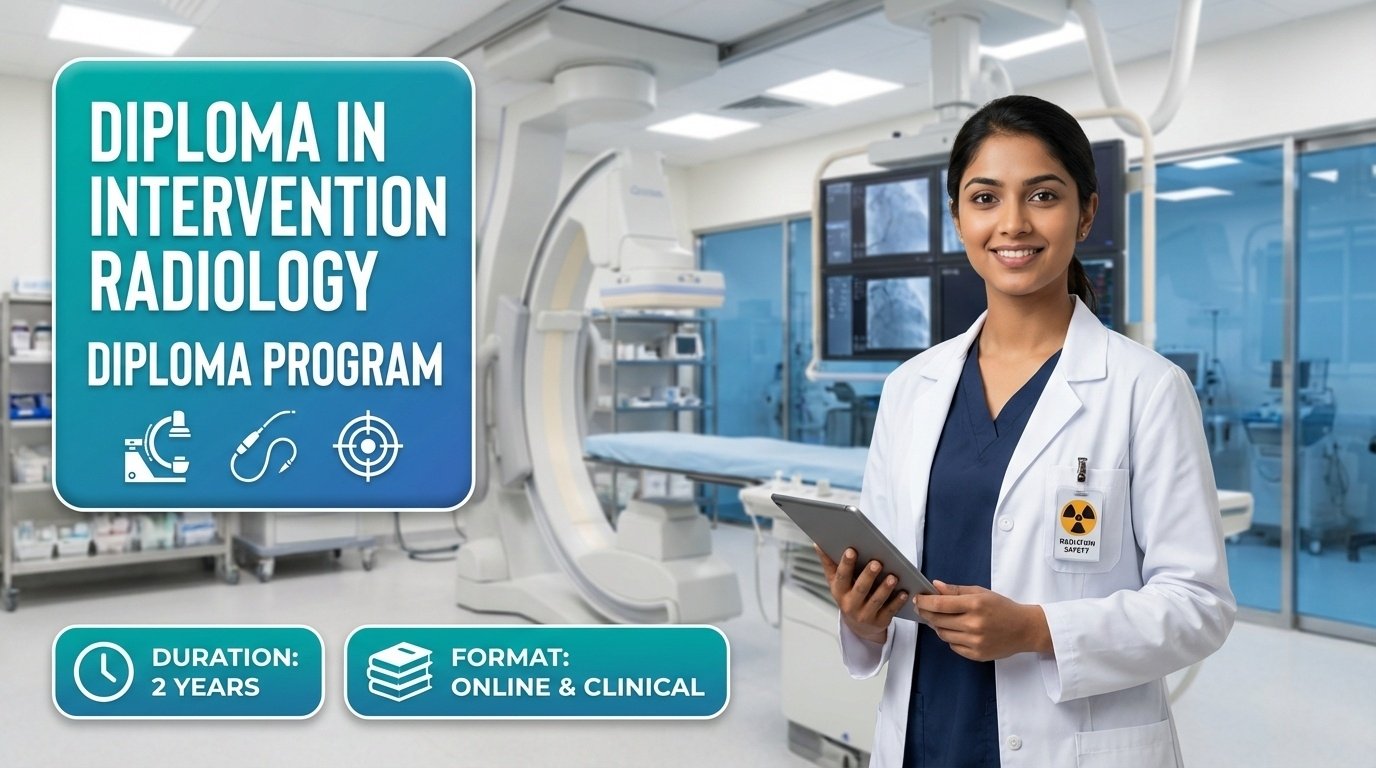
Diploma in Interventional Radiology
Program Overview
The Diploma in Interventional Radiology is a cutting-edge paramedical program designed to train skilled technologists in one of the most rapidly evolving and technologically advanced fields of modern medicine. Interventional Radiology (IR) combines diagnostic imaging with minimally invasive procedures, offering alternatives to traditional surgery. This comprehensive 2-year diploma equips students with expertise in operating sophisticated imaging equipment, assisting physicians during image-guided procedures, and managing patient care in interventional suites. As healthcare shifts toward less invasive treatments, IR professionals are becoming indispensable members of modern medical teams.
Program Highlights
- Category: Paramedical - Advanced Medical Imaging & Intervention
- Duration: 2 Years (Full-time with Extensive Clinical Training)
- Eligibility: 10+2 with Science stream (PCB/PCM)
- Total Fee: ₹1,20,000
- Institute: Mahatma Gandhi Ayurvigyan Vidyapeeth
- Mode: Regular/On-Campus with Hospital-Based Practical Training
- Career Focus: High-Tech Medical Imaging & Minimally Invasive Procedures
- Entry Point: Directly after 12th standard - Early career start!
What is Interventional Radiology? Understanding the Specialty
The Revolutionary Field:
Interventional Radiology (IR) is a medical specialty that uses advanced imaging techniques (X-rays, CT scans, ultrasound, MRI) to guide minimally invasive procedures for diagnosis and treatment of various diseases. Instead of large surgical incisions, IR procedures use tiny incisions, catheters, and specialized instruments guided by real-time imaging.
Why Interventional Radiology is the Future:
From Surgery to Intervention:
- Traditional surgery requiring large incisions → Replaced by pinhole-sized entry points
- Long hospital stays (7-14 days) → Same-day discharge or overnight observation
- General anesthesia → Local anesthesia with conscious sedation
- Weeks of recovery → Back to normal in days
- High complication rates → Significantly reduced risks
- Expensive surgical costs → More affordable procedures
Common IR Procedures:
Vascular Interventions:
- Angioplasty & Stenting: Opening blocked arteries (heart, legs, kidneys)
- Embolization: Stopping bleeding, treating tumors, managing fibroids
- Thrombolysis: Dissolving blood clots in arteries/veins
- Varicose Vein Treatment: Laser/radiofrequency ablation
- AV Fistula Creation: For dialysis patients
- IVC Filter Placement: Preventing pulmonary embolism
Oncological Interventions:
- Tumor Ablation: Destroying cancer with heat/cold (RFA, Microwave, Cryoablation)
- Chemoembolization (TACE): Delivering chemotherapy directly to liver tumors
- Y90 Radioembolization: Radioactive bead treatment for liver cancer
- Biopsy: Image-guided tissue sampling
- Port Catheter Insertion: For chemotherapy administration
Non-Vascular Interventions:
- Drainage Procedures: Abscesses, fluid collections
- Nephrostomy: Kidney drainage tubes
- Biliary Drainage: PTBD for bile duct obstruction
- Vertebroplasty/Kyphoplasty: Spine fracture treatment
- Joint Injections: Therapeutic pain management
- Gastrostomy Tube Placement: Feeding tubes
Women's Health:
- Uterine Fibroid Embolization (UFE): Non-surgical fibroid treatment
- Fallopian Tube Recanalization: Treating infertility
- Ovarian Vein Embolization: Pelvic pain management
The IR Technologist's Role:
As an IR Technologist, you will:
✓ Pre-Procedure Preparation:
- Patient assessment and education
- Equipment setup and sterility maintenance
- Contrast media preparation
- Safety protocol implementation
✓ During Procedures:
- Operating C-arm fluoroscopy and imaging systems
- Radiation safety monitoring
- Assisting physicians with catheter/device insertion
- Monitoring patient vital signs
- Managing emergency situations
- Documentation and image archiving
✓ Post-Procedure Care:
- Patient monitoring and recovery
- Complication identification and management
- Equipment cleaning and maintenance
- Quality assurance activities
✓ Administrative Functions:
- Scheduling and coordination
- Inventory management
- Quality improvement initiatives
- Training junior staff
Why Choose Interventional Radiology? The Compelling Advantages
???? Explosive Career Growth:
Market Expansion:
- Global IR market: $22.5 billion (2023) → Projected $42.8 billion by 2030
- India's IR growth: 18-20% annually
- Procedure volume increase: 25% year-over-year
- New IR centers opening: 50+ annually across India
- Government push: Integration of IR in district hospitals under health missions
Shortage of Trained Professionals:
- Less than 5,000 trained IR technologists in India
- Growing demand from 500+ interventional radiology centers
- Every major hospital establishing IR suites
- Corporate hospitals expanding IR departments
- Multiple job offers common for graduates
???? Attractive Compensation:
Salary Progression: