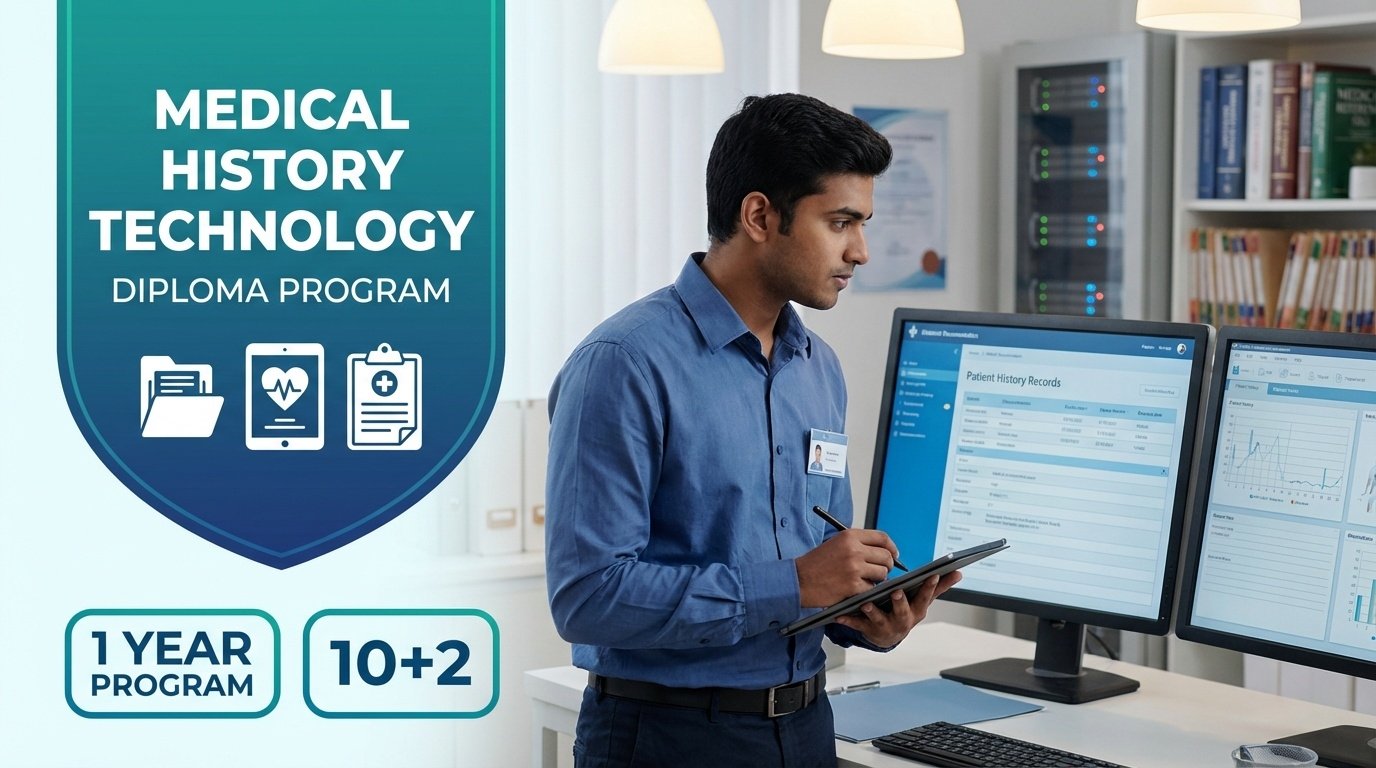
Diploma in Medical History Technology
Course Overview
The Diploma in Medical History Technology is a specialized paramedical program designed to train professionals in the systematic collection, documentation, and management of patient medical histories. This focused 1-year diploma prepares students to become Medical History Technologists who play a crucial role in healthcare delivery by ensuring accurate, comprehensive, and organized patient information—forming the foundation for diagnosis, treatment, and continuity of care.
Course Details
What is Medical History Technology?
Medical History Technology is the professional discipline focused on obtaining, recording, and managing comprehensive patient medical histories. Medical History Technologists are trained specialists who:
- Conduct detailed patient interviews to gather medical information
- Document patient complaints, symptoms, and health concerns
- Record past medical, surgical, and family histories
- Compile medication and allergy information
- Maintain accurate and organized health records
- Facilitate communication between patients and healthcare providers
- Ensure completeness and accuracy of medical documentation
- Support clinical decision-making through quality information
The Critical Role: Medical history forms the foundation of 70-80% of medical diagnoses. Accurate history-taking is essential for proper diagnosis, treatment planning, and patient safety.
Why Choose This Course?
Unique Specialization
- First point of contact in patient care journey
- Bridge between patients and medical professionals
- Critical role in accurate diagnosis
- Specialized skill set with limited competition
- Essential in every healthcare setting
Universal Demand
- Required in hospitals, clinics, and diagnostic centers
- Every OPD, emergency department needs history technologists
- Telemedicine creating new opportunities
- Insurance sector requires history documentation
- Medical-legal documentation needs
⚡ Quick Career Entry
- Only 1-year intensive program
- Fast-track to healthcare employment
- Start earning within 12-15 months
- Affordable course fee of ₹50,000
- Accessible eligibility (10+2 any stream)
Good Earning Potential
- Starting salary: ₹18,000 - ₹28,000/month
- Growth to ₹40,000+ with experience
- Multiple shift options (higher night shift pay)
- Additional income through documentation services
- Consulting opportunities
Work Flexibility
- Multiple shift timings available
- Part-time opportunities
- Telemedicine documentation roles
- Freelance medical transcription
- Work in diverse healthcare settings
Career Growth
- Advancement to senior documentation roles
- Medical records management positions
- Training and supervision roles
- Healthcare administration pathway
- Further education opportunities
Course Curriculum
Semester 1: Foundation & Core Skills (6 Months)
Module 1: Medical Fundamentals
Human Anatomy & Physiology
- Body systems overview
- Organ structure and functions
- Basic physiological processes
- Understanding disease mechanisms
- Age-related anatomical changes
Medical Terminology
- Root words, prefixes, and suffixes
- Anatomical terms and positions
- Medical abbreviations and symbols
- Disease terminology
- Procedural and diagnostic terms
- Pharmaceutical terminology
Common Diseases & Conditions
- Cardiovascular diseases
- Respiratory disorders
- Gastrointestinal conditions
- Endocrine disorders
- Neurological conditions
- Musculoskeletal problems
- Infectious diseases
- Chronic disease management
Module 2: History Taking Techniques
Principles of Medical History
- Components of comprehensive history
- Chief complaint identification
- History of present illness (HPI)
- Past medical history (PMH)
- Past surgical history (PSH)
- Medication history
- Allergy documentation
- Family history
- Social history
- Review of systems (ROS)
Interview Skills & Communication
- Building patient rapport
- Active listening techniques
- Effective questioning methods
- Open-ended vs. closed questions
- Handling difficult patients
- Cultural sensitivity
- Language barriers management
- Pediatric history taking
- Geriatric history considerations
- Psychiatric history special considerations
Documentation Standards
- SOAP format (Subjective, Objective, Assessment, Plan)
- Problem-oriented medical records
- Chronological documentation
- Accuracy and completeness
- Legibility and clarity
- Legal requirements
- HIPAA compliance
- Confidentiality protocols
Module 3: Specialized History Taking
Emergency Department History
- Rapid assessment techniques
- Triage documentation
- Trauma history
- Poisoning and overdose documentation
- Accident and injury details
- Time-critical information gathering
Surgical History
- Pre-operative assessment
- Anesthesia history
- Previous surgeries documentation
- Surgical complications history
- Post-operative follow-up documentation
Obstetric & Gynecological History
- Menstrual history
- Obstetric history (Gravida, Para)
- Pregnancy documentation
- Gynecological complaints
- Contraception history
- Sexual health documentation
Pediatric History
- Birth history
- Developmental milestones
- Immunization records
- Growth chart documentation
- Childhood illnesses
- Parent/guardian interview techniques
Module 4: Clinical Documentation Systems
Electronic Health Records (EHR)
- Introduction to EHR systems
- Data entry and retrieval
- Template-based documentation
- Voice recognition software
- Digital signature and authentication
- EHR navigation and workflow
Medical Records Management
- Paper vs. electronic records
- Filing and organization systems
- Record retention policies
- Medical records security
- Release of information procedures
- Legal aspects of medical records
Health Information Privacy
- HIPAA regulations
- Patient confidentiality
- Consent and authorization
- Privacy breach prevention
- Data security measures
- Legal and ethical considerations
Semester 2: Advanced Practice & Specialization (6 Months)
Module 5: Specialty-Specific Documentation
Cardiology History
- Chest pain characterization
- Cardiac risk factors
- Previous cardiac events
- Family cardiac history
- Functional capacity assessment
Respiratory History
- Dyspnea assessment
- Cough characterization
- Smoking history
- Occupational exposures
- Respiratory infection history
Gastrointestinal History
- Abdominal pain documentation
- Bowel habit changes
- Dietary history
- Weight changes
- Liver disease history
Neurological History
- Headache characterization
- Seizure documentation
- Cognitive assessment
- Sensory and motor symptoms
- Stroke risk factors
Psychiatric History
- Mental status assessment
- Mood and affect documentation
- Substance use history
- Suicide risk assessment
- Previous psychiatric treatment
Module 6: Medical Transcription
Transcription Fundamentals
- Transcription equipment and software
- Audio quality management
- Typing speed and accuracy
- Medical dictation understanding
- Formatting standards
Document Types
- History and physical (H&P) reports
- Consultation reports
- Operative reports
- Discharge summaries
- Progress notes
- Imaging and lab reports
Quality Assurance
- Proofreading techniques
- Error detection and correction
- Quality metrics
- Turnaround time management
- Client communication
Module 7: Healthcare IT & Data Management
Healthcare Information Systems
- Hospital Information Systems (HIS)
- Laboratory Information Systems (LIS)
- Radiology Information Systems (RIS)
- Pharmacy Information Systems
- Integration of systems
Data Quality & Analytics
- Data accuracy and completeness
- Data validation techniques
- Basic healthcare analytics
- Report generation
- Performance indicators
Technology Tools
- Microsoft Office proficiency (Word, Excel)
- Medical documentation software
- Voice recognition technology
- Mobile health applications
- Cloud-based health records
Module 8: Professional Development
Healthcare Environment
- Hospital organization structure
- Roles of healthcare team members
- Interdisciplinary collaboration
- Professional ethics
- Patient rights and advocacy
Quality & Patient Safety
- Patient identification protocols
- Medication safety
- Fall prevention documentation
- Infection control documentation
- Incident reporting
Legal & Ethical Aspects
- Medical-legal documentation
- Informed consent documentation
- Advance directives
- Living wills and healthcare proxies
- Ethical dilemmas in documentation
Module 9: Communication & Soft Skills
Professional Communication
- Verbal communication skills
- Written communication excellence
- Email and professional correspondence
- Telephone etiquette
- Conflict resolution
Customer Service
- Patient-centered care approach
- Handling complaints
- Cultural competence
- Empathy and compassion
- Service recovery
Time Management & Organization
- Prioritization skills
- Multitasking techniques
- Workflow efficiency
- Stress management
- Work-life balance
Module 10: Practical Training & Project
Clinical Internship (8-10 Weeks)
- OPD history documentation (3 weeks)
- Emergency department rotation (2 weeks)
- Inpatient documentation (2 weeks)
- Specialty clinic exposure (2 weeks)
- Medical records department (1 week)
Real-World Experience:
- Minimum 200+ patient histories
- 50+ emergency cases
- 30+ admission documentation
- Exposure to 10+ medical specialties
- EHR system hands-on practice
Capstone Project
- Quality improvement in documentation
- Documentation audit project
- EHR implementation case study
- Patient satisfaction survey
- Research paper or presentation
Career Prospects
Job Roles & Opportunities
1. Medical History Technologist
Primary Responsibilities:
- Conduct patient interviews in OPD settings
- Document chief complaints and symptoms
- Record comprehensive medical histories
- Update patient information in systems
- Ensure accuracy and completeness
Work Settings:
- Hospital outpatient departments
- Multi-specialty clinics
- Primary care centers
- Urgent care facilities
Salary Range: ₹18,000 - ₹28,000/month (Fresher)
With Experience: ₹30,000 - ₹45,000/month (3-5 years)
2. Emergency Department Documentation Specialist
Primary Responsibilities:
- Rapid history taking in emergency situations
- Triage documentation support
- Trauma patient history
- Critical care documentation
- Coordination with emergency team
Work Settings:
- Hospital emergency departments
- Trauma centers
- 24/7 emergency care facilities
Salary Range: ₹22,000 - ₹32,000/month
Higher pay due to shift work and critical nature
3. Medical Transcriptionist
Primary Responsibilities:
- Transcribe physician dictations
- Create medical reports and documents
- Maintain document formatting standards
- Ensure accuracy and timely delivery
- Quality control and proofreading
Work Settings:
- Transcription companies
- Hospitals and clinics
- Home-based/remote work
- Freelance opportunities
Salary Range: ₹20,000 - ₹35,000/month
Freelance: ₹150-₹400 per audio hour
4. Patient Registration & Admission Coordinator
Primary Responsibilities:
- Register new patients
- Document demographic information
- Insurance verification
- Admission documentation
- Patient data management
Work Settings:
- Hospital registration desks
- Admission offices
- Healthcare facilities
Salary Range: ₹18,000 - ₹28,000/month
5. Medical Records Assistant
Primary Responsibilities:
- Organize and maintain medical records
- File and retrieve patient documents
- Scan and digitize records
- Respond to record requests
- Ensure record security
Work Settings:
- Hospital medical records departments
- Clinics and healthcare facilities
- Health information management departments
Salary Range: ₹20,000 - ₹30,000/month
Primary Responsibilities:
- Data entry into health information systems
- Update and maintain databases
- Generate reports and statistics
- Support coding and billing teams
- Quality assurance activities
Work Settings:
- Healthcare IT departments
- Health information management companies
- Insurance companies
Salary Range: ₹22,000 - ₹35,000/month
7. Telemedicine Documentation Specialist
Primary Responsibilities:
- Document virtual patient consultations
- Manage electronic health records for telehealth
- Coordinate patient information across platforms
- Technical support for telemedicine systems
- Follow-up documentation
Work Settings:
- Telemedicine companies
- Remote healthcare services
- Healthcare apps and platforms
- Work-from-home opportunities
Salary Range: ₹25,000 - ₹40,000/month
8. Clinical Documentation Improvement Specialist
Primary Responsibilities:
- Review documentation for completeness
- Identify documentation gaps
- Educate staff on documentation standards
- Support quality improvement initiatives
- Compliance monitoring
Work Settings:
- Quality departments in hospitals
- Healthcare consulting firms
- Accreditation support organizations
Salary Range: ₹30,000 - ₹50,000/month (Requires 2-3 years experience)
9. Insurance Documentation Coordinator
Primary Responsibilities:
- Document patient information for insurance claims
- Verify and authenticate medical histories
- Support pre-authorization processes
- Claims documentation support
- Coordinate with insurance companies
Work Settings:
- Health insurance companies
- Third-party administrators (TPAs)
- Hospital insurance departments
Salary Range: ₹22,000 - ₹35,000/month
10. Medical-Legal Documentation Specialist
Primary Responsibilities:
- Prepare medical-legal reports
- Document medico-legal cases
- Support forensic documentation
- Assist in legal case preparation
- Maintain medico-legal records
Work Settings:
- Legal firms specializing in medical cases
- Government hospitals (medico-legal units)
- Insurance investigation departments
Salary Range: ₹28,000 - ₹45,000/month