
Mahatma Gandhi Ayurved Vidyapeeth
Loading...
ANNOUNCEMENT Admissions Open: 2025-26 : BNYS | DNYS| MHA | CMS & ED | Electropathy Course | BEMS | DEMS | Paramedical Diploma | MD Naturopathy | PG Diploma | Ayurvedacharya Guru Shishya Program
Professional Course

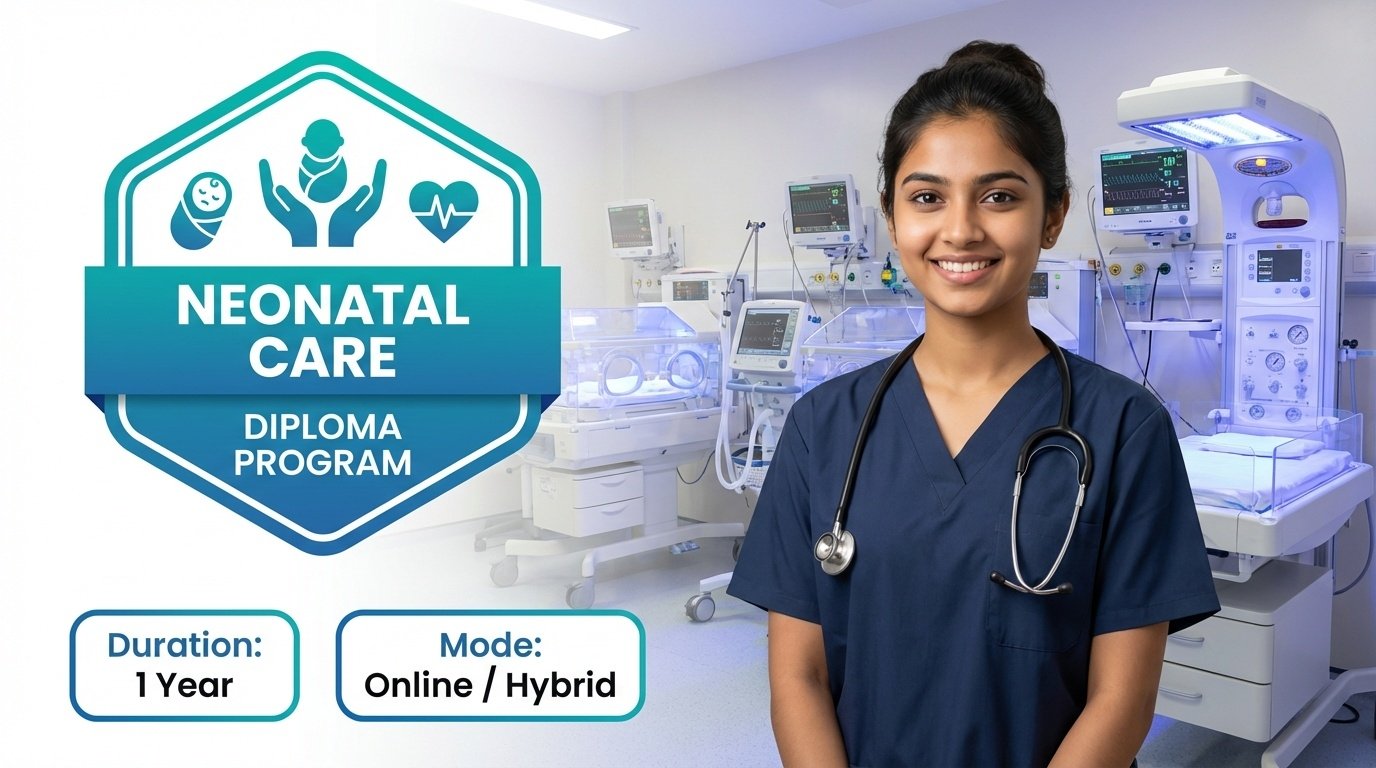
Diploma in Neonatal Care

Category: PARAMEDICAL
★★★★★
5.0
Created by mgavidyapeeth
Diploma in Neonatal Care
Course Preview

Course Overview

Everything you need to know about this course

Diploma in Neonatal Care

Course Overview

The Diploma in Neonatal Care is an advanced 2-year specialized paramedical program designed to train highly skilled healthcare professionals in the critical care of newborns, particularly premature and critically ill infants. This intensive course prepares you to become a Neonatal Intensive Care Unit (NICU) Specialist, equipped with the expertise to provide life-saving care to the most vulnerable patients—babies in their first 28 days of life. As NICU technology advances and neonatal survival rates improve, the demand for specialized neonatal care professionals has become critical in modern healthcare.


Course Details

Program Diploma in Neonatal Care
Category Paramedical (Critical Care Specialization)
Duration 2 Years (4 Semesters)
Eligibility 10+2 (Science Stream) from a recognized board
Course Fee ₹70,000 (Total Program Fee)
Institute Mahatma Gandhi Ayurvigyan Vidyapeeth

About the Program

The Diploma in Neonatal Care represents the pinnacle of specialized newborn healthcare training. This comprehensive 2-year program transforms you into a NICU expert capable of:

✅ Managing critically ill and premature newborns ✅ Operating advanced NICU equipment (ventilators, incubators, monitors) ✅ Performing neonatal resuscitation and emergency care ✅ Administering specialized neonatal medications ✅ Monitoring vital signs and clinical parameters ✅ Providing developmental care and family support ✅ Preventing and managing neonatal infections ✅ Supporting breastfeeding and neonatal nutrition ✅ Collaborating with neonatologists and multidisciplinary teams

With India's NICU beds increasing rapidly and premature birth rates at 13% (3.5 million preterm births annually), specialized neonatal care professionals are in critical shortage across the country.


Why Neonatal Care?

 Critical Healthcare Need

  • 26 million babies born in India annually
  • 3.5 million premature births (highest in the world)
  • NICU capacity expanding 20-25% annually
  • Critical shortage of specialized NICU nurses
  • Every major hospital has Level II or Level III NICU

 Premium Compensation

  • Starting Salary: ₹25,000 - ₹45,000/month
  • Experienced (3-5 years): ₹45,000 - ₹75,000/month
  • Senior Specialist (5-10 years): ₹75,000 - ₹1,20,000/month
  • NICU In-Charge/Coordinator: ₹1,00,000 - ₹1,80,000+/month
  • International (USA, Middle East): $55,000 - $95,000/year

 Elite Specialization

NICU nursing is considered one of the most prestigious and challenging nursing specializations—commanding respect and higher salaries.

 Life-Saving Impact

Every shift you work, you're saving tiny lives, giving babies a fighting chance, and bringing hope to families during their most vulnerable moments.

 Immediate Employment

100% placement rate—hospitals actively recruit NICU-trained professionals even before course completion.

Career Advancement

Clear progression path from NICU staff nurse → senior nurse → in-charge → clinical coordinator → nursing superintendent.

Global Opportunities

NICU expertise is universally recognized—work anywhere in India or internationally with additional certifications.

 Technology-Driven Field

Work with cutting-edge medical technology—ventilators, monitors, warmers, phototherapy, CPAP, surfactant therapy.


Comprehensive Curriculum

 YEAR 1: Foundations of Neonatal Care

Semester 1: Fundamentals & Basic Sciences

Module 1: Neonatal Anatomy & Physiology

  • Fetal development and embryology
  • Transition from fetal to neonatal life
  • Cardiovascular system (closure of ductus arteriosus, foramen ovale)
  • Respiratory system development and function
  • Neurological development
  • Gastrointestinal and metabolic systems
  • Renal and fluid balance
  • Immune system in newborns
  • Thermoregulation mechanisms
  • Hematologic system

Module 2: Normal Newborn Care

  • Delivery room management
  • Initial newborn assessment (APGAR scoring)
  • Physical examination of newborn
  • Gestational age assessment (Ballard, Dubowitz)
  • Newborn vital signs (normal ranges)
  • Immediate newborn care protocols
  • Cord care and eye prophylaxis
  • Vitamin K administration
  • Newborn screening tests
  • Routine immunizations
  • Discharge planning

Module 3: Neonatal Pharmacology

  • Drug metabolism in neonates
  • Dosage calculations for newborns
  • Intravenous medication administration
  • Antibiotic therapy in newborns
  • Cardiovascular medications
  • Respiratory medications (surfactant, caffeine)
  • Analgesics and sedatives
  • Emergency medications
  • Drug interactions and side effects
  • Medication safety protocols

Module 4: Neonatal Nutrition

  • Breastfeeding:
    • Benefits and promotion
    • Latch and positioning
    • Common breastfeeding problems
    • Lactation support
    • Human milk handling and storage
  • Formula Feeding:
    • Types of infant formulas
    • Preparation and administration
    • Special formulas (preterm, hypoallergenic)
  • Enteral Feeding:
    • Gavage feeding techniques
    • Orogastric and nasogastric tube placement
    • Feeding protocols and schedules
    • Feeding intolerance management
  • Parenteral Nutrition (TPN):
    • Indications and components
    • Administration and monitoring
    • Complications management

Semester 2: Neonatal Intensive Care Basics

Module 5: Neonatal Resuscitation (NRP)

  • Neonatal Resuscitation Program (NRP) certification
  • Anticipation and preparation
  • Initial steps of resuscitation
  • Positive pressure ventilation
  • Chest compressions
  • Intubation techniques
  • Medication administration (epinephrine, volume expanders)
  • Post-resuscitation care
  • Ethical considerations
  • Simulation-based training

Module 6: Respiratory Care in Neonates

  • Respiratory Distress Syndrome (RDS):
    • Pathophysiology and management
    • Surfactant replacement therapy
Need Help? Enquiry Now