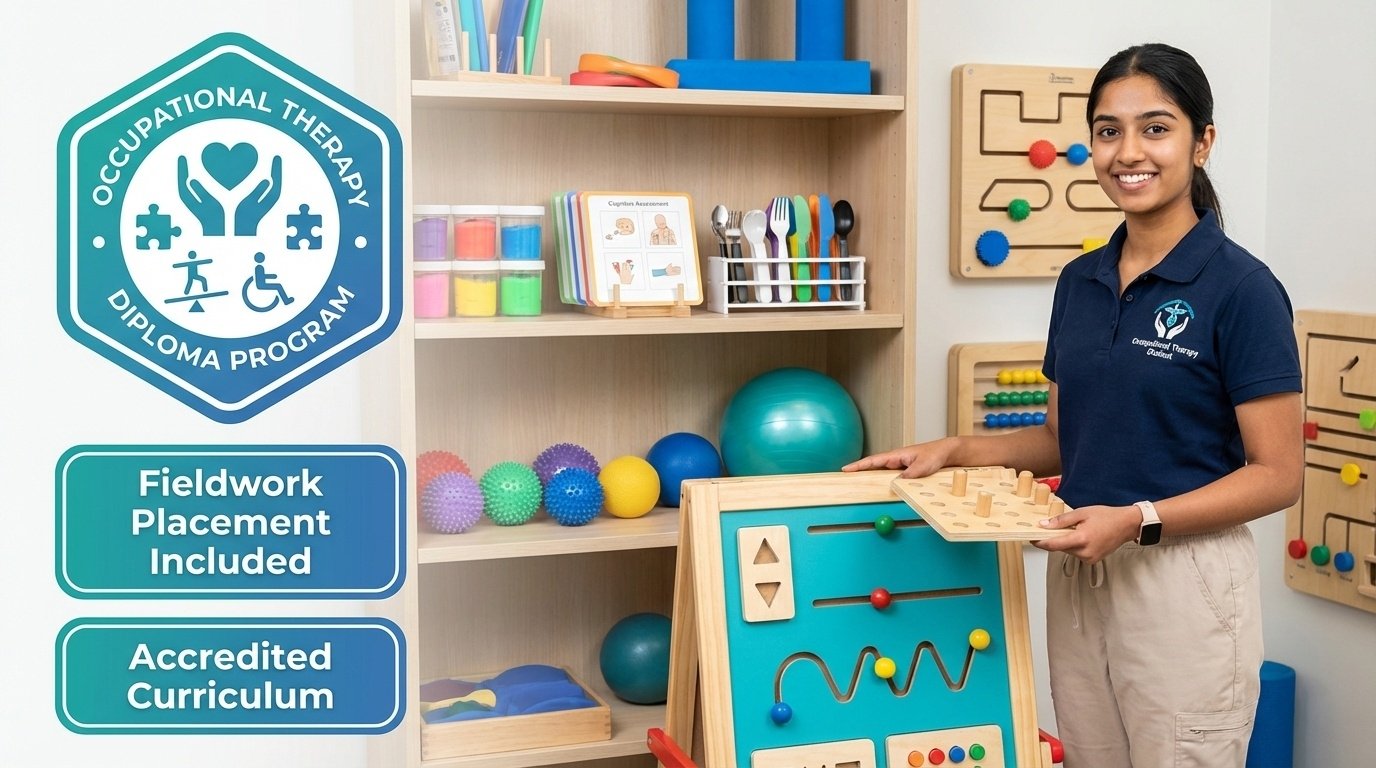
Diploma in Occupational Therapy (DOT)
Complete Course Guide & Career Pathway
Course Overview
The Diploma in Occupational Therapy (DOT) is a specialized paramedical program designed to train healthcare professionals who help individuals of all ages achieve independence and improve their quality of life through meaningful activities and therapeutic interventions. Occupational therapists work with people who have physical, mental, developmental, or emotional challenges, enabling them to participate fully in daily life activities.
Occupational Therapy (OT) is a holistic, client-centered health profession that focuses on promoting health and well-being through occupation. "Occupation" refers to everything people do during the course of daily life - from self-care activities like dressing and eating, to productive activities like work and school, to leisure activities like hobbies and social participation.
This comprehensive diploma program combines medical sciences, psychological principles, therapeutic techniques, and hands-on skills to prepare students for meaningful careers helping people overcome barriers to independence. Occupational therapists assess clients' abilities, design individualized treatment plans, adapt environments, and use creative therapeutic activities to help people live fuller, more independent lives.
Course at a Glance
Program Objectives
- Functional Independence: Enable clients to perform daily activities independently
- Holistic Assessment: Evaluate physical, cognitive, psychological, and environmental factors
- Therapeutic Intervention: Design and implement occupation-based treatment programs
- Adaptive Solutions: Modify tasks, environments, and equipment for accessibility
- Life Skills Development: Teach practical skills for self-care, work, and leisure
- Mental Health Support: Address psychological and emotional aspects of disability
- Community Integration: Facilitate social participation and community involvement
- Quality of Life Enhancement: Improve overall well-being through meaningful engagement
- Family-Centered Care: Involve caregivers in rehabilitation process
- Professional Practice: Deliver ethical, evidence-based occupational therapy services
Detailed Curriculum Structure
YEAR 1 - Foundation Sciences & Basic Occupational Therapy
Semester 1: Medical & Behavioral Sciences Foundation
Human Anatomy
- Skeletal system and joint structures
- Muscular system and movements
- Nervous system (CNS, PNS, sensory systems)
- Cardiovascular and respiratory systems
- Upper limb anatomy (detailed - hand function crucial)
- Lower limb anatomy
- Spine and posture
- Special senses (vision, hearing, touch)
- Practical: Bone identification, surface anatomy, cadaver study
Human Physiology
- Cell physiology and homeostasis
- Muscle physiology and motor control
- Neurophysiology (motor learning, sensory processing)
- Cardiopulmonary physiology
- Metabolic processes
- Endocrine system
- Sensory integration basics
- Practical: Physiological experiments, vital signs
Psychology
- General Psychology: Perception, attention, memory, learning
- Developmental Psychology: Lifespan development (infant to elderly)
- Cognitive Psychology: Problem-solving, decision-making
- Abnormal Psychology: Mental health conditions
- Health Psychology: Illness behavior, coping mechanisms
- Motivation & Behavior Change: Therapeutic relationship
- Psychological Assessment: Observation, interview techniques
- Practical: Case observations, psychological tests
Sociology & Anthropology
- Social structures and relationships
- Culture and disability perspectives
- Family systems and dynamics
- Community resources
- Social determinants of health
- Occupational roles in society
- Stigma and disability
- Rehabilitation in cultural context
- Community-based rehabilitation principles
Pathology & Microbiology
- Disease processes and pathogenesis
- Inflammation and healing
- Infectious diseases
- Chronic diseases
- Neurological pathology
- Musculoskeletal pathology
- Infection control in therapy settings
- Practical: Specimen examination, sterilization techniques
Semester 2: Occupational Therapy Foundations
Introduction to Occupational Therapy
- History and philosophy of OT
- Core concepts: occupation, activity, participation
- OT process: screening, evaluation, intervention, outcomes
- Theoretical frameworks (MOHO, CMOP-E, biomechanical approach)
- Professional roles and responsibilities
- Ethics and professional conduct
- OT in healthcare system
- Scope of practice
- Documentation fundamentals
Functional Anatomy & Biomechanics
- Joint mechanics and range of motion
- Muscle actions and functional movements
- Hand function and grip patterns
- Gait analysis
- Posture and ergonomics
- Movement analysis for ADLs
- Energy conservation principles
- Practical: Goniometry, functional movement assessment
Kinesiology for Occupational Therapy
- Principles of human movement
- Upper extremity kinesiology (shoulder to hand)
- Functional reach and grasp patterns
- Fine motor vs. gross motor control
- Bilateral coordination
- Body mechanics for therapy
- Activity analysis for movement
- Practical: Motion analysis, therapeutic positioning
Therapeutic Activities - I (Basics)
- Arts & Crafts: Drawing, painting, pottery, weaving
- Woodworking: Basic carpentry, woodcraft
- Textile Work: Sewing, embroidery, knitting
- Paper Crafts: Origami, card-making
- Games & Play: Therapeutic play techniques
- Therapeutic value analysis: Motor, cognitive, social benefits
- Activity gradation: Simple to complex progression
- Adaptation techniques: Modifying activities for limitations
- Practical: Hands-on activity sessions (6-8 hours/week)
Activities of Daily Living (ADL) - I
- Self-Care Activities:
- Grooming and hygiene
- Bathing and toileting
- Dressing (buttons, zippers, laces)
- Feeding and eating
- ADL Assessment: Functional evaluation tools
- Task Analysis: Breaking down activities into steps
- Safety Awareness: Fall prevention, burn safety
- Practical: ADL performance and assessment
Pharmacology for OT
- Common medications affecting function
- Psychotropic medications
- Pain medications
- Muscle relaxants
- Side effects impacting therapy
- Medication management as ADL
- Drug-activity interactions
First Aid & Emergency Care
- Basic life support
- Choking and airway management
- Seizure management
- Fall response
- Emergency protocols in therapy settings
- Practical: CPR training, emergency simulations
YEAR 2 - Clinical Occupational Therapy & Specializations
Semester 3: Clinical Practice - Part I
Physical Dysfunction Occupational Therapy - I
-
Orthopedic Conditions:
- Fractures and joint replacements
- Arthritis (rheumatoid, osteoarthritis)
- Hand injuries and surgeries
- Amputations and prosthetic training
- Spinal cord injuries
- Burns and scar management
-
Neurological Conditions:
- Stroke/CVA rehabilitation
- Traumatic brain injury (TBI)
- Spinal cord injury (SCI)
- Parkinson's disease
- Multiple sclerosis
- Peripheral nerve injuries
-
OT Assessment: Standardized tests (FIM, Barthel Index)
-
Intervention Techniques: Strengthening, ROM, coordination
-
Compensatory Strategies: One-handed techniques, energy conservation
-
Practical: Clinical case studies, treatment planning
Therapeutic Activities - II (Advanced)
- Advanced Crafts: Leatherwork, metalwork, macramé
- Functional Activities: Cooking, gardening, home maintenance
- Computer-Based Activities: Typing, software use, adaptive technology
- Recreational Activities: Sports adaptations, leisure planning
- Cognitive Activities: Puzzles, memory games, problem-solving tasks
- Social Activities: Group dynamics, communication exercises
- Activity Gradation: Progressive difficulty levels
- Purposeful Activity Design: Goal-oriented task creation
- Practical: Design and conduct activity groups
Splinting & Orthotics
- Hand Splinting Principles: Indications, contraindications
- Static Splints: Resting splints, protective splints
- Dynamic Splints: Mobilization splints
- Materials: Thermoplastic materials, foam, straps
- Splint Fabrication: Measuring, cutting, molding, fitting
- Common Splints: Cock-up splint, thumb spica, resting hand splint
- Upper Limb Orthotics: Wrist-hand-finger orthoses
- Practical: Fabricate 8-10 different splints
Assistive Technology & Adaptive Equipment
- Mobility Aids: Wheelchairs, walkers, canes, crutches
- ADL Equipment: Reachers, dressing sticks, sock aids, button hooks
- Eating Aids: Built-up handles, plate guards, adaptive utensils
- Bathroom Equipment: Grab bars, shower chairs, raised toilet seats
- Home Modifications: Ramps, stairlifts, accessible kitchens
- Communication Devices: AAC (augmentative and alternative communication)
- Computer Adaptations: Screen readers, ergonomic keyboards
- Environmental Control: Smart home technologies
- Practical: Assess needs, recommend equipment, train usage
Sensory Integration Therapy
- Sensory processing and modulation
- Sensory defensiveness and seeking
- Vestibular and proprioceptive systems
- Tactile discrimination
- Sensory diet development
- Sensory room equipment
- Assessment tools (Sensory Profile)
- Practical: Sensory activities, equipment use
Semester 4: Clinical Practice - Part II & Community OT
Psychosocial Occupational Therapy
-
Mental Health Conditions:
- Depression and anxiety disorders
- Schizophrenia and psychotic disorders
- Bipolar disorder
- Personality disorders
- Post-traumatic stress disorder (PTSD)
- Substance abuse disorders
- Eating disorders
-
OT in Mental Health:
- Activity-based therapy
- Group therapy facilitation
- Life skills training
- Stress management
- Social skills training
- Vocational rehabilitation
-
Therapeutic Relationships: Empathy, active listening
-
Crisis Intervention: Suicide risk, acute episodes
-
Practical: Role-plays, therapeutic groups
Pediatric Occupational Therapy
-
Developmental Disorders:
- Cerebral palsy
- Down syndrome
- Autism spectrum disorder (ASD)
- Developmental delay
- Learning disabilities
- ADHD
- Sensory processing disorder
-
Pediatric Assessment: Developmental screening, standardized tests
-
Play-Based Therapy: Therapeutic play techniques
-
School-Based OT: Handwriting, classroom adaptations
-
Early Intervention: Infant and toddler programs
-
Family-Centered Care: Parent training, home programs
-
Feeding Therapy: Oral motor skills, picky eating
-
Practical: Pediatric case management, play sessions
Geriatric Occupational Therapy
-
Aging Process: Physical, cognitive, psychosocial changes
-
Common Geriatric Conditions:
- Dementia and Alzheimer's disease
- Osteoporosis and osteoarthritis
- Falls and mobility issues
- Vision and hearing loss
- Depression in elderly
-
Fall Prevention Programs: Balance, environmental safety
-
Cognitive Stimulation: Memory exercises, reality orientation
-
Leisure and Social Participation: Activity engagement
-
End-of-Life Care: Comfort, dignity, meaning
-
Caregiver Support: Training, respite care
-
Practical: Geriatric assessments, home safety evaluations
Vocational Rehabilitation
- Work capacity assessment
- Job analysis and matching
- Work hardening programs
- Workplace ergonomics
- Disability accommodations
- Supported employment
- Prevocational training
- Return-to-work planning
- Sheltered workshops
- Practical: Vocational assessments, job site visits
Community-Based Rehabilitation (CBR)
- CBR principles and matrix
- Community needs assessment
- Home-based therapy
- Inclusive education support
- Livelihood programs
- Self-help groups
- Disability rights advocacy
- Rural rehabilitation challenges
- Community resources mapping
- Practical: Community visits, outreach programs
Research Methods & Evidence-Based Practice
- Research basics and ethics
- Literature review and critical appraisal
- Quantitative and qualitative methods
- Data collection and analysis
- Evidence-based OT practice
- Clinical reasoning
- Outcome measurement
- Case report writing
- Project: Research proposal or case study
Professional Practice & Management
- Clinical documentation (SOAP notes)
- Treatment planning and goal setting
- Discharge planning
- Interdisciplinary collaboration
- Professional ethics and dilemmas
- Legal aspects (consent, confidentiality)
- Quality assurance
- Practice management basics
- Marketing OT services
- Insurance and billing
Clinical Training Components
Clinical Rotations (Throughout 2 Years):
- Physical Rehabilitation: 8-10 weeks (orthopedic, neuro)
- Pediatric Settings: 6-8 weeks (schools, early intervention)
- Mental Health Units: 6-8 weeks (psychiatry, de-addiction)
- Geriatric Care: 4 weeks (nursing homes, geriatric hospitals)
- Community Settings: 4 weeks (CBR programs, NGOs)
- Hand Therapy Clinic: 2-3 weeks
- Vocational Centers: 2 weeks
6-Month Compulsory Internship:
- Rotations through multiple specialties
- Supervised independent practice
- Comprehensive case management
- Activity planning and facilitation
- Equipment fabrication
- Documentation and reporting
- Multidisciplinary team meetings
- Case presentations and journal club
- Final evaluation and viva voce
Practical Skills Lab (Weekly Throughout Course):
- Activity workshops (4-6 hours/week)
- ADL training sessions
- Splint fabrication practice
- Equipment demonstration
- Therapeutic group facilitation
- Assessment practice
- Role-play sessions
Logbook & Portfolio:
- Minimum 50 detailed case reports
- Activity analysis documentation
- Splint fabrication records
- Home assessment reports
- Community visit reports
- Reflective journal entries
Hospital & Clinical Settings
1. Occupational Therapist - General Hospital
- Rehabilitation department
- Inpatient and outpatient services
- Post-surgical rehabilitation
- Salary: ₹18,000 - ₹35,000/month
- Employers: Multi-specialty hospitals, medical colleges
2. Neuro-Rehabilitation Occupational Therapist
- Stroke, TBI, SCI patients
- Neuroplasticity-based interventions
- ADL retraining
- Salary: ₹22,000 - ₹45,000/month
- Employers: Neuro-rehab centers, stroke units
3. Orthopedic Occupational Therapist
- Hand therapy specialization
- Post-fracture, joint replacement rehabilitation
- Splint fabrication
- Salary: ₹20,000 - ₹42,000/month
- Employers: Orthopedic hospitals, hand clinics
4. Hand Therapist
- Specialized hand injury treatment
- Fine motor rehabilitation
- Custom splinting
- Salary: ₹25,000 - ₹55,000/month
- Employers: Plastic surgery centers, specialized hand clinics
5. Burn Rehabilitation Specialist
- Burn wound care support
- Scar management and compression
- Functional rehabilitation post-burns
- Salary: ₹22,000 - ₹48,000/month
Mental Health & Psychiatric Settings
6. Mental Health Occupational Therapist
- Psychiatric hospitals and clinics
- Activity therapy groups
- Life skills training
- Salary: ₹20,000 - ₹40,000/month
- Employers: Psychiatric hospitals, mental health centers (NIMHANS, etc.)
7. De-Addiction & Rehabilitation Counselor
- Substance abuse programs
- Vocational skills training
- Social reintegration
- Salary: ₹18,000 - ₹38,000/month
- Employers: Rehab centers, NGOs
8. Geriatric Mental Health Specialist
- Dementia care programs
- Cognitive stimulation therapy
- Reality orientation
- Salary: ₹22,000 - ₹45,000/month
Developmental delay intervention
- Cerebral palsy, autism, Down syndrome
- Sensory integration therapy
- Salary: ₹20,000 - ₹45,000/month
- Employers: Children's hospitals, special schools, early intervention centers
10. School-Based Occupational Therapist
- Inclusive education support
- Handwriting and fine motor skills
- Classroom accommodations
- Salary: ₹25,000 - ₹50,000/month
- Employers: Special education schools, international schools
11. Early Intervention Specialist
- 0-3 years developmental programs
- Parent training
- Home-based therapy
- Salary: ₹18,000 - ₹40,000/month
- Employers: Early intervention centers, NGOs
12. Sensory Integration Therapist
- Sensory processing disorder treatment
- Sensory gym setup and use
- Sensory diet development
- Salary: ₹22,000 - ₹50,000/month
Geriatric & Long-Term Care
13. Geriatric Occupational Therapist
- Nursing home programs
- Fall prevention
- Cognitive activities
- Salary: ₹18,000 - ₹38,000/month
- Employers: Old age homes, geriatric care centers
14. Dementia Care Specialist
- Alzheimer's programs
- Memory care units
- Caregiver education
- Salary: ₹22,000 - ₹45,000/month
15. Home Healthcare OT
- Home-based elderly care
- Environmental modifications
- ADL support
- Income: ₹25,000 - ₹70,000/month (established practice)
Vocational & Industrial Settings
16. Vocational Rehabilitation Specialist
- Disability employment programs
- Job coaching and placement
- Workplace accommodations
- Salary: ₹22,000 - ₹45,000/month
- Employers: Vocational training centers, government disability programs
17. Ergonomics Consultant
- Workplace ergonomic assessments
- Injury prevention programs
- Workstation modifications
- Consultancy: ₹10,000 - ₹50,000/project
- Employers: Corporate offices, IT companies, manufacturing
18. Return-to-Work Coordinator
- Work capacity evaluations
- Graded return programs
- Employer liaison
- Salary: ₹25,000 - ₹50,000/month
Community & Public Health
19. Community Occupational Therapist
- Community-based rehabilitation (CBR)
- Rural health programs
- Home visits and assessments
- Salary: ₹18,000 - ₹35,000/month
- Employers: NGOs, government health programs
20. Disability Rights Advocate
- Accessibility audits
- Policy advocacy
- Awareness campaigns
- Salary: ₹20,000 - ₹40,000/month
- Employers: Disability rights organizations, UN agencies
21. Assistive Technology Consultant
- Assessment for assistive devices
- Custom equipment recommendations
- Training and follow-up
- Consultancy: ₹8,000 - ₹40,000/assessment
Private Practice & Entrepreneurship
22. Private Occupational Therapy Clinic
- Independent practice
- Specialized services (hand therapy, pediatrics)
- Multi-disciplinary clinic
- Income: ₹40,000 - ₹2,00,000/month (established)
- Investment: ₹3-15 lakhs setup
23. Home-Based OT Services
- Pediatric home visits
- Elderly home care
- Post-discharge follow-up
- Income: ₹30,000 - ₹90,000/month
24. Activity Center / Therapeutic Workshop
- Craft and activity workshops
- Therapeutic groups
- Skill training programs
- Income: Variable based on scale
25. Sensory Gym / Therapy Center
- Sensory integration equipment
- Specialized pediatric services
- Parent workshops
- Income: ₹50,000 - ₹1,50,000/month (established)
Education & Training
26. OT Lecturer / Faculty
- Teaching in colleges
- Clinical supervision
- Curriculum development
- Salary: ₹30,000 - ₹60,000/month (requires BOT/MOT)
- Employers: Paramedical colleges, universities
27. Clinical Instructor / Supervisor
- Student training
- Fieldwork coordination
- Skills lab management
- Salary: ₹25,000 - ₹50,000/month
28. Continuing Education Trainer
- Workshops for therapists
- Splinting courses
- Sensory integration certification
- Fees: ₹5,000 - ₹25,000/workshop
International & Specialized
29. International OT (Gulf, UK, Australia)
- Expatriate positions
- Higher compensation
- Salary: $2,000 - $4,500/month (requires BOT + registration)
30. Medical Tourism Coordinator
- International patient rehabilitation
- Cultural mediation
- Salary: ₹30,000 - ₹70,000/month
31. NGO / Humanitarian OT
- Disaster rehabilitation
- Refugee support programs
- Community development
- Compensation: Variable + benefits
- Organizations: MSF, ICRC, Handicap International
Research & Product Development
32. Clinical Research Coordinator
- Rehabilitation research projects
- Data collection and analysis
- Salary: ₹25,000 - ₹50,000/month
- Employers: Research institutes, universities
33. Assistive Device Developer
- Product design consultation
- User testing
- Training material development
- Salary: ₹30,000 - ₹65,000/month
- Employers: Medical device companies, startups
Salary Progression
Salary Influencing Factors:
- Specialization (hand therapy, pediatrics command premium)
- Location (metros 30-50% higher)
- Setting (private practice > corporate > NGO)
- Additional certifications
- Bilingual/multilingual abilities
- Equipment fabrication skills
Skills & Competencies Developed
Assessment & Evaluation:
- ✅ Comprehensive occupational profile
- ✅ Functional capacity evaluation
- ✅ ADL and IADL assessment
- ✅ Cognitive assessment (memory, attention, problem-solving)
- ✅ Sensory processing evaluation
- ✅ Hand function assessment (grip strength, dexterity)
- ✅ Developmental screening
- ✅ Home and workplace assessments
- ✅ Standardized test administration (Barthel Index, FIM, COPM)
Therapeutic Intervention Skills:
- ✅ Activity analysis and gradation
- ✅ Purposeful and occupation-based activities
- ✅ Therapeutic use of self
- ✅ Group therapy facilitation
- ✅ Task modification and adaptation
- ✅ Environmental modifications
- ✅ Compensatory strategy training
- ✅ Cognitive rehabilitation techniques
- ✅ Sensory integration activities
- ✅ Social skills training
Technical & Fabrication Skills:
- ✅ Splint design and fabrication (10+ types)
- ✅ Adaptive equipment prescription and training
- ✅ Assistive technology assessment
- ✅ Craft and activity expertise (15+ modalities)
- ✅ Wheelchair assessment and modifications
- ✅ Home modification recommendations
- ✅ Communication board creation
- ✅ Sensory equipment use
Specialized Clinical Skills:
- ✅ Hand therapy techniques
- ✅ Pediatric play therapy
- ✅ Sensory integration therapy
- ✅ Cognitive rehabilitation
- ✅ Mental health activity groups
- ✅ Feeding and eating interventions
- ✅ Visual-perceptual training
- ✅ Dysphagia basics (swallowing)
- ✅ Mobility and transfer training
- ✅ Energy conservation techniques
Professional & Management Skills:
- ✅ Clinical documentation (SOAP, narrative)
- ✅ Treatment planning and goal setting (SMART goals)
- ✅ Discharge and transition planning
- ✅ Multidisciplinary team collaboration
- ✅ Case management
- ✅ Program planning and development
- ✅ Quality improvement
- ✅ Resource management
- ✅ Budget and inventory management
- ✅ Marketing and outreach
Interpersonal & Communication Skills:
- ✅ Therapeutic relationship building
- ✅ Patient and family education
- ✅ Caregiver training
- ✅ Motivational interviewing
- ✅ Cultural competence
- ✅ Conflict resolution
- ✅ Advocacy and empowerment
- ✅ Professional presentation
- ✅ Report writing
Creative & Analytical Skills:
- ✅ Problem-solving and clinical reasoning
- ✅ Creative activity design
- ✅ Resourcefulness with limited materials
- ✅ Critical thinking
- ✅ Evidence-based practice
- ✅ Outcome measurement
- ✅ Reflective practice
⭐ Why Choose Diploma in Occupational Therapy?
Unique & Holistic Profession
- Only profession focused on enabling independence through meaningful activities
- Addresses physical, cognitive, emotional, and social aspects
- Creative, activity-based approach to healing
- Highly individualized, client-centered practice
Growing Demand & Opportunities
- India needs 1,00,000+ occupational therapists
- Current ratio: 1 OT per 1,00,000+ people
- Pediatric OT demand skyrocketing (autism, ADHD awareness)
- Geriatric care sector expanding rapidly
- Mental health awareness driving demand
- Inclusive education creating school-based opportunities
Creative & Fulfilling Work
- Use arts, crafts, and activities therapeutically
- Design innovative solutions
- Every day is different
- See tangible improvements
- Build meaningful relationships with clients
- Help people achieve life goals
Diverse Work Settings
- Hospitals, clinics, schools, homes
- Mental health facilities, rehab centers
- Community programs, NGOs
- Corporate wellness, ergonomics
- Private practice, tele-therapy
- Research, product development
Work with All Ages
- Newborns to elderly
- Variety prevents monotony
- Specialize or remain generalist
- Understand entire lifespan
Professional Autonomy
- Independent assessment and treatment
- Creative freedom in interventions
- Client-driven goals
- Holistic decision-making
Career Growth Potential
- Specialize in niche areas (hand therapy, sensory integration)
- Private practice entrepreneurship
- Teaching and academia (with BOT/MOT)
- Management and leadership roles
- International opportunities
Global Recognition
- OT practiced worldwide
- Universal principles
- International career mobility (with BOT)
- WHO-recognized profession
Personal Development
- Develop empathy and compassion
- Creative problem-solving skills
- Patience and resilience
- Communication mastery
- Life-long learning mindset
⚖️ Work-Life Balance
- Generally standard hours
- Minimal on-call duties
- Part-time options available
- Private practice flexibility
- Family-friendly profession
Eligibility Criteria
Academic Qualifications:
- ✓ 10+2 with Science stream (PCB mandatory)
- ✓ Physics, Chemistry, Biology compulsory
- ✓ Minimum 50% aggregate (45% for SC/ST/OBC)
- ✓ English as subject
- ✓ Recognized board (CBSE, State, ICSE, NIOS)
Age Requirements:
- ✓ Minimum: 17 years at admission
- ✓ Maximum: 35 years (varies by state/institute)
- ✓ Age relaxation for reserved categories
Physical & Medical Fitness:
- ✓ Good general health
- ✓ Manual dexterity (for crafts and splinting)
- ✓ Physical ability to demonstrate activities
- ✓ Good vision (color vision important for some activities)
- ✓ Hearing ability (for communication)
- ✓ Emotional stability
Personal Attributes (Highly Valued):
- ✓ Creativity and imagination
- ✓ Patience and empathy
- ✓ Problem-solving mindset
- ✓ Good communication skills
- ✓ Interest in helping people
- ✓ Artistic/craft skills (helpful but not mandatory)
- ✓ Observational skills
- ✓ Flexibility and adaptability
Other Requirements:
- Valid ID proof (Aadhar)
- Character certificate
- Transfer certificate
- Medical fitness certificate
- Caste/domicile certificates (if applicable)
Admission Process
Step 1: Entrance Examination (State/Institute-wise)
Common Entrance Tests:
- State Paramedical CET (varies by state)
- Institute-specific entrance exams
- Merit-based (some states use 10+2 marks directly)
Exam Pattern:
- Subjects: Biology (major focus), Chemistry, Physics, General Knowledge
- Format: 100-200 MCQs
- Duration: 2-3 hours
- Topics: Human anatomy, physiology, biology from 11th-12th
Preparation Tips:
- Strong focus on human body systems
- NCERT Biology thorough reading
- Previous year papers practice
- Current affairs in healthcare
Step 2: Application
- Online/offline form submission
- Complete personal and academic details
- Upload documents:
- ✓ 10th & 12th certificates and mark sheets
- ✓ Transfer certificate
- ✓ Character certificate
- ✓ Caste/domicile certificates
- ✓ Passport photos
- ✓ ID proof
- Application fee: ₹500 - ₹2,000
Step 3: Counseling & Selection
- Merit list based on entrance rank/12th marks
- Centralized or institute counseling
- Choice filling (college preferences)
- Seat allotment rounds
- Reporting to allotted college
Step 4: Document Verification
- Original certificates verification
- Authenticity check
- Cross-verification of information
Step 5: Medical Screening
- Physical examination
- Vision and hearing tests
- General fitness assessment
- Dexterity evaluation (sometimes)
- Immunization status
Step 6: Admission Confirmation
- Fee payment (admission + first installment)
- Enrollment completion
- Receive student ID, course schedule
- Uniform and kit requirements briefed
- Orientation program
Additional Certifications & Specializations
Post-Diploma Certifications:
Specialized Training Courses:
- Advanced Hand Therapy: ₹40,000 - ₹1,50,000
- Sensory Integration Certification: ₹50,000 - ₹2,00,000 (Level 1 & 2)
- Pediatric OT Specialization: ₹30,000 - ₹1,00,000
- Bobath Concept (NDT): ₹80,000 - ₹2,50,000
- Cognitive Rehabilitation: ₹25,000 - ₹80,000
- Mental Health OT: ₹20,000 - ₹60,000
- Assistive Technology Specialist: ₹30,000 - ₹90,000
- Ergonomics & Work Rehabilitation: ₹25,000 - ₹70,000
International Certifications:
- Certified Hand Therapist (CHT): International credential
- SI Certification (Sensory Integration): USC programs
- COTA (Certified OT Assistant): US-based
Related Skills Training:
- Pilates instructor
- Yoga therapy
- Art therapy basics
- Music therapy introduction
- Animal-assisted therapy
- Horticultural therapy
Value of Certifications:
- Salary boost: ₹8,000 - ₹25,000/month
- Niche practice opportunities
- Private practice credibility
- Teaching eligibility
- International job prospects
Further Education Pathways
⚠️ Important Note: Like physiotherapy, many states are moving toward requiring BOT for full practice rights. Check regulations.
Upgrade Options:
1. Bachelor of Occupational Therapy (BOT)
- Lateral Entry: Some universities admit DOT holders to 2nd year BOT
- Bridge Courses: 1-2 year programs
- Regular BOT: 4.5 years if starting fresh
- Benefits: Full independent practice, better opportunities, teaching eligibility
2. Bachelor's in Related Fields:
- B.Sc. in Rehabilitation Sciences
- B.Sc. in Disability Studies
- Bachelor in Special Education
- B.Sc. in Psychology
3. After BOT - Master's Programs:
- Master of Occupational Therapy (MOT): 2 years
- Specializations: Pediatrics, Neurosciences, Hand Therapy, Mental Health, Community OT
- M.Sc. in Rehabilitation Sciences
- M.Sc. in Special Education
- MBA in Healthcare Management
- M.Sc. in Clinical Psychology
- MPH (Master of Public Health)
4. Doctoral Programs:
- Ph.D. in Occupational Therapy (requires MOT)
- Ph.D. in Rehabilitation Sciences
- OTD (Doctor of Occupational Therapy) - emerging in India
Career Benefits of Higher Education:
- Teaching in colleges (BOT/MOT required)
- Research and academic careers
- Hospital department head positions
- Policy development roles
- International practice opportunities
- Salary increase: ₹25,000 - ₹60,000/month additional
Selection Criteria:
- ✓ Affiliation and recognition verification
- ✓ Clinical training hospitals (variety and quality)
- ✓ Faculty qualifications (BOT/MOT holders)
- ✓ Activity lab and equipment
- ✓ Splinting lab and materials
- ✓ Sensory gym (for pediatric training)
- ✓ Community fieldwork arrangements
- ✓ Internship placements
- ✓ Pass rates and alumni success
- ✓ Fee affordability
- ✓ Location and accommodation
Red Flags:
- ❌ No proper recognition
- ❌ Limited clinical exposure
- ❌ Faculty without OT qualifications
- ❌ No activity/craft workshops
- ❌ Poor infrastructure
- ❌ No internship arrangements
Day in the Life of an Occupational Therapist
Hospital Setting (8 AM - 4 PM):
- 8:00 AM: Review patient list, read overnight notes
- 8:30 AM: Ward rounds - assess new admissions
- 9:00 AM: Session 1 - Stroke patient (ADL training - dressing practice)
- 10:00 AM: Session 2 - Hand injury patient (splint fabrication and fitting)
- 11:00 AM: Session 3 - Pediatric cerebral palsy (play-based therapy)
- 12:00 PM: Group session - craft activity for psychiatric patients
- 1:00 PM: Lunch break
- 1:30 PM: Home assessment for discharge patient
- 2:30 PM: Documentation and progress notes
- 3:15 PM: Team meeting with doctors, nurses, physiotherapists
- 4:00 PM: End shift
Pediatric Clinic (Private Practice):
- 9:00 AM: Autism assessment - sensory profile
- 10:00 AM: Fine motor therapy - handwriting program
- 11:00 AM: Sensory gym session - vestibular activities
- 12:00 PM: Parent counseling and home program training
- 1:00 PM: Lunch and administrative work
- 2:00 PM: Feeding therapy session
- 3:00 PM: Group social skills class
- 4:00 PM: Documentation, material preparation
- 5:00 PM: Planning next week's activities
Challenges:
- Slow progress in some conditions (requires patience)
- Patient/family non-compliance
- Limited resources in some settings
- Explaining OT role (lesser known than PT)
- Physical demands (pediatric transfers, standing)
- Emotional involvement
- Material and equipment costs
Rewards:
- Child's first independent button fastening
- Stroke survivor cooking again
- Patient returning to work
- Caregiver's grateful tears
- Creative freedom in treatment
- Building therapeutic relationships
- Witnessing functional independence achieved
❓ Frequently Asked Questions
Q1: What's the difference between Occupational Therapy and Physiotherapy? A: Physiotherapy focuses on movement, strength, and pain relief through exercises and modalities. Occupational Therapy focuses on enabling independence in daily activities (dressing, eating, work, play) through purposeful activities, environmental modifications, and adaptive strategies. OT is more holistic, addressing physical, cognitive, emotional, and social aspects.
Q2: Do I need to be artistic or good at crafts? A: While creativity helps, it's not mandatory. These skills are taught during the course. More important are empathy, problem-solving, and desire to help people.
Q3: Can I specialize in pediatrics with just DOT? A: Yes, you can work in pediatric settings and take short certification courses. However, formal specialization (Master's) requires BOT first.
Q4: What's the difference between DOT and BOT? A: DOT is 2.5 years with foundational training. BOT is 4.5 years with comprehensive depth. BOT provides full independent practice rights, teaching eligibility, and better career prospects. Many states are phasing out DOT recognition.
Q5: Is OT recognized and in demand in India? A: Yes, but awareness is lower than physiotherapy. Demand is rapidly growing, especially in pediatrics (autism, ADHD), geriatrics, and mental health. However, BOT is increasingly becoming the standard.
Q6: Can I work internationally with DOT? A: Very limited. Most countries require Bachelor's or Master's in OT plus national registration. Consider BOT for international career.
Q7: What's the job availability like? A: Growing but competitive in metros. Better opportunities in:
- Pediatric clinics (autism boom)
- Schools (inclusive education)
- Geriatric care (aging population)
- Mental health (awareness increasing)
- Private practice (entrepreneurial)
- Rural/community (less competitive)
Q8: Is the work emotionally challenging? A: Yes, especially in pediatrics and mental health. Working with disabilities, slow progress, and family stress can be draining. However, the rewards and professional support help. Self-care and supervision are important.
Q9: Do I need my own craft materials and tools? A: During training, institutes provide basics. For practice, you'll gradually build your own collection. Initial investment: ₹10,000-30,000 for starter kit.
Q10: Can I open my own OT clinic? A: Yes, especially in pediatric or hand therapy niches. Initial investment: ₹3-10 lakhs depending on scale. Sensory gyms require higher investment (₹10-25 lakhs) but have good returns.
Q11: Should I do DOT or BOT? A: BOT is recommended if you can afford time and fees because:
- Full practice rights in all states
- Better job prospects and salary
- Teaching career option
- Postgraduate pathways (MOT)
- International recognition
- Professional credibility
Choose DOT only if:
- Severe budget constraints
- Want to test the field first
- Plan to upgrade to BOT
- State still recognizes DOT practice
DOT vs BOT Comparison
Is Diploma in Occupational Therapy Right for You?
✅ Choose DOT/OT if you:
- Love helping people achieve independence
- Are creative and enjoy hands-on activities
- Have patience for slow, gradual progress
- Want holistic (not just physical) healthcare role
- Enjoy working with diverse populations
- Like problem-solving and innovation
- Want meaningful, purpose-driven career
- Are comfortable with intimate care (ADL training)
- Enjoy teaching and empowering others
- Want flexibility in specialization
❌ Reconsider if you:
- Want quick, dramatic results
- Prefer purely medical/clinical approach
- Dislike hands-on crafts and activities
- Cannot handle emotional involvement
- Want strictly 9-5 desk job
- Expect very high starting salaries
- Prefer well-known, mainstream professions
- Lack patience for repetitive training
- Uncomfortable with disabilities
✅ DOT vs BOT Decision: Choose BOT if:
- You want maximum career flexibility
- Teaching/academia interests you
- International career is a possibility
- You can invest 4.5 years
- Higher education (MOT) is in your plan
- You want strong professional standing
Consider DOT only if:
- Serious budget constraints (government college)
- Want to test OT before longer commitment
- Plan definite upgrade to BOT within 2-3 years
- State currently recognizes DOT
- Private practice is primary goal
Take Your Next Step
Ready to Enable Independence & Transform Lives?
Occupational Therapy is more than a profession - it's a calling to help people live fuller, more meaningful lives despite challenges. Every day, you'll use creativity, compassion, and clinical skills to make independence possible.
Your Journey Begins:
- Research Institutes: Find recognized colleges offering DOT/BOT
- Understand the Role: Watch OT videos, read case studies, visit clinics
- Assess Fit: Self-reflect on patience, creativity, empathy
- Check Finances: Calculate costs, explore scholarships/loans
- Verify Recognition: Confirm current state regulations
- Prepare for Entrance: Focus on Biology, especially human body systems
- Plan Career Path: DOT → BOT → MOT or direct BOT route
- Apply & Commit: Once decided, give it your full dedication