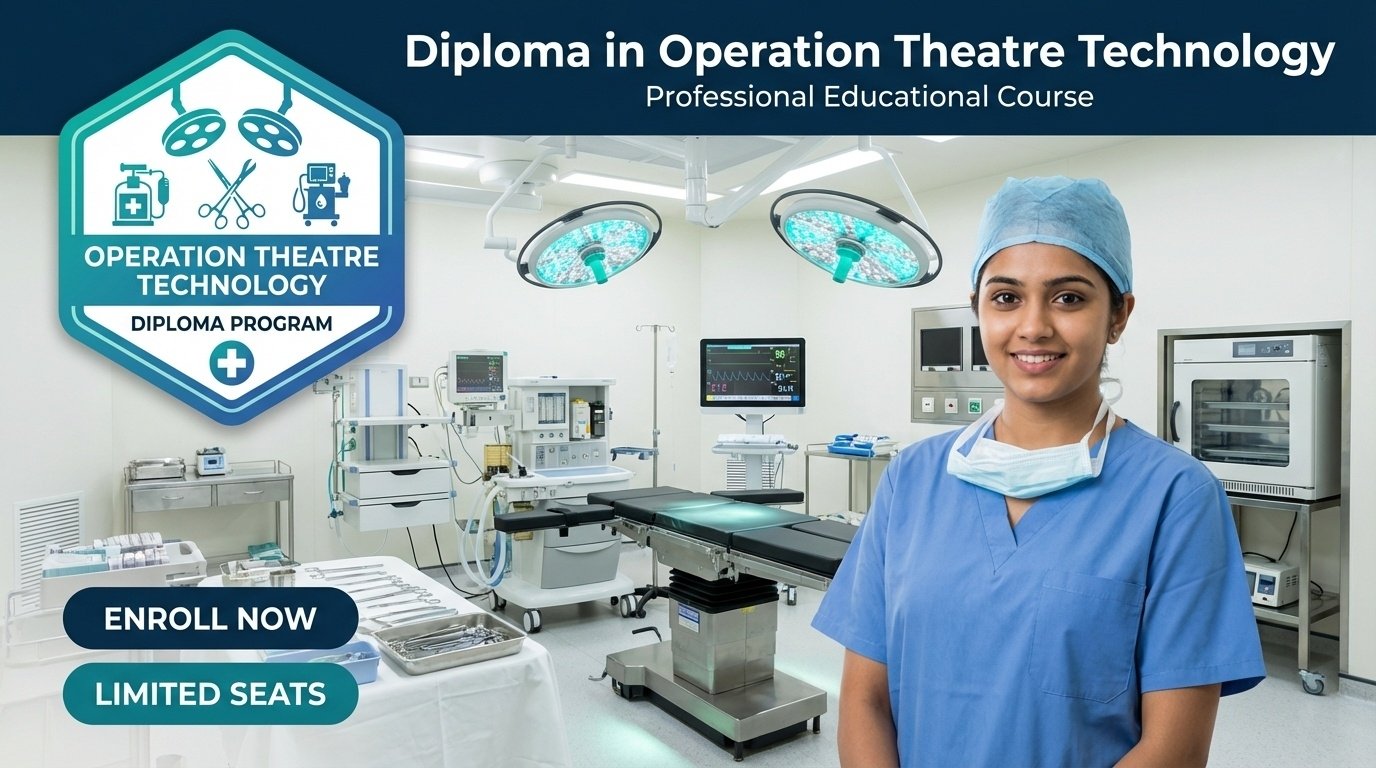
he Diploma in Operation Theatre Technology is a specialized paramedical program designed to train skilled professionals who play a crucial role in the success of surgical procedures. Offered by Mahatma Gandhi Ayurvigyan Vidyapeeth, this intensive 2-year program prepares students to become competent Operation Theatre (OT) Technicians—healthcare specialists who ensure the smooth functioning of operation theatres, maintain sterility, prepare surgical equipment, and assist surgical teams during procedures.
OT Technicians are the backbone of every surgical department, working behind the scenes to ensure patient safety and surgical success.
Program Highlights
What is an Operation Theatre Technician?
An Operation Theatre (OT) Technician is a trained healthcare professional responsible for preparing and managing the operation theatre environment before, during, and after surgical procedures. They work as vital members of the surgical team, ensuring that all equipment is sterile, properly functioning, and readily available.
Core Responsibilities:
✓ Pre-Surgery Preparation: Setting up the OT, sterilizing instruments, arranging surgical equipment
✓ Maintaining Sterility: Ensuring aseptic conditions throughout surgical procedures
✓ Assisting Surgical Team: Passing instruments to surgeons, managing equipment during surgery
✓ Patient Care: Preparing patients for surgery, positioning, draping
✓ Equipment Management: Operating, maintaining, and troubleshooting OT equipment
✓ Post-Surgery Tasks: Cleaning, decontamination, restocking supplies
✓ Emergency Readiness: Quick response to surgical emergencies
In simple terms: OT Technicians are the unsung heroes who make sure surgeons have everything they need to perform life-saving operations safely and efficiently.
Why Choose Operation Theatre Technology?
Critical Healthcare Role
Every surgery depends on a well-prepared operation theatre. OT Technicians are indispensable in ensuring surgical success and patient safety.
Competitive Salary
- Starting Salary: ₹1.5-3 LPA (₹15,000-25,000/month)
- Mid-Career (3-5 years): ₹3-5 LPA (₹25,000-40,000/month)
- Senior Level (5+ years): ₹5-8 LPA (₹40,000-70,000/month)
- International (Gulf, UK, Australia): ₹8-15 LPA or more
High Demand
- Every hospital with surgical facilities needs OT Technicians
- Growing number of hospitals and surgical centers
- Shortage of trained OT professionals
- Near 100% employment rate after certification
Quick Entry into Healthcare
- Only 2 years to become job-ready
- Start working immediately after diploma
- No NEET exam required
- Direct employment in hospitals
Global Career Opportunities
- High demand in Middle East (Dubai, Saudi Arabia, Qatar)
- Opportunities in UK, Australia, New Zealand
- International certifications available
- Competitive overseas salaries
Diverse Work Settings
- Multi-specialty hospitals
- Surgical specialty centers
- Trauma and emergency centers
- Day surgery units
- Military and defense medical services
- Private clinics and nursing homes
Foundation for Growth
- Pathway to B.Sc. in Operation Theatre Technology
- Specialization in specific surgical fields
- Advancement to OT Supervisor/Manager roles
- Teaching and training positions
Comprehensive Curriculum
YEAR 1: Foundation & Basic Sciences
Semester 1: Medical Sciences Fundamentals
Module 1: Anatomy & Physiology
- Human body systems overview
- Surgical anatomy (regional and systemic)
- Cardiovascular and respiratory systems
- Nervous system and musculoskeletal anatomy
- Digestive and genitourinary systems
- Understanding surgical landmarks
Module 2: Microbiology & Infection Control
- Medical microbiology basics
- Bacteria, viruses, fungi, and parasites
- Chain of infection and transmission
- Hospital-acquired infections (HAIs)
- Antisepsis and asepsis principles
- Sterilization and disinfection methods
- Universal precautions and infection prevention
Module 3: Pharmacology for OT Technicians
- Basic drug classification
- Anesthetic agents (general, local, regional)
- Analgesics and sedatives
- Antibiotics and antimicrobials
- Emergency drugs in OT
- Drug storage and handling
- Common drug interactions
Module 4: Introduction to Operation Theatre
- History and evolution of surgery
- OT layout and design
- Zones and areas in OT complex
- OT furniture and fixtures
- Air quality and temperature control
- Lighting requirements
- Safety standards and protocols
Module 5: Surgical Instruments & Equipment
- Classification of surgical instruments
- General surgery instruments
- Cutting instruments (scalpels, scissors, saws)
- Grasping and holding instruments (forceps, clamps)
- Retractors and tissue spreaders
- Needle holders and suture materials
- Diathermy and electrosurgical units
- Suction apparatus
Semester 2: Sterilization & OT Procedures
Module 6: Sterilization Technology
- Principles of sterilization
- Physical methods: Heat (dry, moist), Radiation
- Chemical methods: Ethylene oxide, formaldehyde
- Autoclaving procedures and monitoring
- Pre-vacuum and gravity displacement autoclaves
- Steam sterilization indicators
- Cold sterilization techniques
- Sterile storage and expiry management
Module 7: Central Sterile Supply Department (CSSD)
- CSSD organization and workflow
- Decontamination area protocols
- Inspection and assembly area
- Sterilization processes
- Sterile storage guidelines
- Distribution and tracking systems
- Quality control measures
- Record keeping and documentation
Module 8: Aseptic Techniques & Scrubbing
- Surgical hand scrub procedures
- Gowning and gloving techniques
- Creating and maintaining sterile fields
- Draping procedures
- Sterile technique violations and corrections
- Movement in sterile areas
- Handling sterile supplies
- Breaking sterility: recognition and response
Module 9: Patient Preparation & Positioning
- Pre-operative patient assessment
- Patient identification and verification
- Skin preparation and shaving
- Surgical site marking
- Patient positioning for different surgeries
- Positioning equipment and accessories
- Prevention of pressure injuries
- Safe patient transfer techniques
Module 10: Practical Training - Phase 1
- OT observation and orientation
- Instrument identification and handling
- Basic sterilization procedures
- Hand scrubbing and gowning practice
- Draping exercises
- Simulated surgical setups
- Equipment operation basics
YEAR 2: Advanced Skills & Clinical Practice
Semester 3: Surgical Specialties
Module 11: General Surgery
- Laparotomy and abdominal surgeries
- Appendectomy, hernia repair, cholecystectomy
- Gastrointestinal surgeries
- Breast surgery procedures
- Thyroidectomy
- Required instruments and equipment
- OT setup for general surgery cases
Module 12: Orthopedic Surgery
- Fracture fixation procedures
- Joint replacement surgeries (hip, knee)
- Arthroscopy
- Spinal surgeries
- Orthopedic instruments and implants
- Power tools and equipment
- Cast application and removal
- Traction equipment
Module 13: Cardiovascular & Thoracic Surgery
- Open heart surgery procedures
- Coronary artery bypass grafting (CABG)
- Valve replacement surgeries
- Thoracotomy and lung surgeries
- Cardiopulmonary bypass equipment
- Specialized cardiac instruments
- Sterile technique in cardiac OT
Module 14: Neurosurgery
- Craniotomy procedures
- Brain tumor surgeries
- Spinal cord surgeries
- Microsurgical techniques
- Neurosurgical instruments
- Operating microscopes
- Specialized positioning and draping
Module 15: Obstetrics & Gynecology Surgery
- Cesarean section (C-section)
- Hysterectomy
- Laparoscopic gynecological procedures
- Episiotomy and repair
- Neonatal resuscitation basics
- Maternal positioning
- Emergency obstetric procedures
Module 16: Specialty Surgeries
- ENT Surgery: Tonsillectomy, adenoidectomy, ear surgeries
- Ophthalmology: Cataract surgery, retinal procedures
- Urology: TURP, nephrectomy, lithotripsy
- Plastic & Reconstructive Surgery: Skin grafts, flaps, cosmetic procedures
- Pediatric Surgery: Special considerations for children
Semester 4: Advanced Techniques & Professional Practice
Module 17: Minimally Invasive Surgery
- Laparoscopic surgery principles
- Endoscopic procedures
- Robotic-assisted surgery
- Laparoscopic instruments and equipment
- Insufflation and pneumoperitoneum
- Camera and monitor setup
- Trocar placement assistance
- Laparoscopic equipment maintenance
Module 18: Emergency & Trauma Surgery
- Trauma OT setup and protocols
- Emergency laparotomy
- Hemorrhage control procedures
- Multiple casualty management
- Crash cart management
- Rapid sterilization techniques
- Prioritization in emergency surgeries
- ATLS (Advanced Trauma Life Support) principles
Module 19: Anesthesia Technology Basics
- Types of anesthesia (general, regional, local)
- Anesthesia equipment and monitors
- Airway management devices
- Ventilators and breathing circuits
- Assisting anesthesiologists
- Anesthesia emergencies
- Patient monitoring during surgery
Module 20: OT Management & Quality Assurance
- OT scheduling and logistics
- Inventory management
- Equipment maintenance protocols
- Cost control and waste management
- Quality indicators in OT
- Incident reporting and analysis
- Continuous quality improvement
- Accreditation standards (NABH, JCI)
Module 21: Biomedical Waste Management
- Biomedical waste categories
- Color-coded waste segregation
- Safe handling and disposal
- Sharps management
- Chemical waste disposal
- Radioactive waste protocols
- Legal regulations and compliance
- Staff safety measures
Module 22: Professional Ethics & Communication
- Patient rights and confidentiality
- Medical ethics in surgical care
- Informed consent process
- Professional conduct and appearance
- Team communication skills
- Conflict resolution
- Stress management
- Cultural sensitivity
Module 23: Clinical Internship (6 Months)
- Extensive hands-on training in operation theatres
- Rotation through different surgical specialties
- Minimum 200+ surgical case exposure
- Independent preparation of OT setups
- Scrubbing and assisting in actual surgeries
- Equipment handling and troubleshooting
- Emergency procedure participation
- Competency assessment and certification
Key Skills You Will Master
Technical Skills:
✓ Sterile Technique: Perfect aseptic practices
✓ Instrument Management: Identification, handling, and organization
✓ Equipment Operation: OT lights, tables, electrosurgical units, suction, monitors
✓ Scrubbing & Gowning: Flawless surgical hand hygiene and sterile dressing
✓ Draping: Proper surgical field creation
✓ Positioning: Safe and appropriate patient positioning
✓ Counting Procedures: Instrument, sponge, and needle counts
✓ Sterilization: Operation of autoclaves and sterilization equipment
Clinical Skills:
✓ Patient Care: Pre-operative and post-operative patient assistance
✓ Surgical Assistance: Anticipating surgeon needs and passing instruments
✓ Emergency Response: Quick reaction in critical situations
✓ Monitoring: Observing patient condition during procedures
✓ Documentation: Accurate record-keeping and reporting
✓ Quality Control: Ensuring standards and protocols
Professional Skills:
✓ Attention to Detail: Zero-tolerance for errors
✓ Time Management: Efficient OT preparation and turnover
✓ Team Collaboration: Working seamlessly with surgical teams
✓ Stress Management: Remaining calm under pressure
✓ Problem-Solving: Quick thinking in challenging situations
✓ Communication: Clear and effective interaction with teams
✓ Responsibility: Accountability for OT safety and readiness
Career Opportunities
Job Roles & Positions:
1. OT Technician / Surgical Technologist ₹1.5-3 LPA
- Prepare and manage operation theatres
- Assist during surgical procedures
- Maintain equipment and instruments
- Work Settings: Hospitals, surgical centers
2. Scrub Nurse Assistant ₹2-4 LPA
- Work directly with surgical team during operations
- Pass instruments to surgeons
- Maintain sterile field
- Work Settings: Multi-specialty hospitals
3. CSSD Technician ₹2-3.5 LPA
- Manage sterilization processes
- Quality control of sterile supplies
- Equipment maintenance
- Work Settings: Hospital CSSD departments
4. Anesthesia Assistant ₹2.5-4 LPA
- Support anesthesiologists
- Manage anesthesia equipment
- Monitor patients during procedures
- Work Settings: Anesthesia departments
5. Surgical Instrument Technician ₹2-4 LPA
- Maintain and repair surgical instruments
- Inventory management
- Quality assurance
- Work Settings: Hospitals, instrument companies
6. OT Supervisor / Manager ₹4-8 LPA (with experience)
- Oversee OT operations
- Staff management and training
- Resource planning
- Work Settings: Hospital administration
7. Medical Equipment Representative ₹3-6 LPA
- Sales and technical support for surgical equipment
- Product demonstrations
- Client training
- Work Settings: Medical device companies
8. Clinical Instructor ₹3-5 LPA
- Teaching in paramedical colleges
- Clinical training supervision
- Curriculum development
- Work Settings: Educational institutions
Employment Sectors:
Healthcare Facilities:
- Multi-specialty hospitals (Apollo, Fortis, Max, Manipal)
- Super-specialty surgical centers
- Government hospitals (AIIMS, PGI, District hospitals)
- Private hospitals and nursing homes
- Day surgery centers
- Ambulatory surgical centers
Emergency & Trauma Services:
- Trauma centers
- Emergency departments
- Accident and emergency units
- Disaster management teams
⚔️ Defense & Armed Forces:
- Army Medical Corps
- Naval hospitals
- Air Force medical facilities
- Military hospitals
- CAPF (Central Armed Police Forces) hospitals
International Opportunities:
Middle East (UAE, Saudi Arabia, Qatar, Kuwait)
- Salary: AED 4,000-8,000/month (₹90,000-1,80,000)
- Tax-free income
- Excellent benefits
United Kingdom
- Salary: £22,000-32,000 annually
- NHS and private hospitals
Australia & New Zealand
- Competitive salaries
- Immigration pathways
- High standard of living
Other Opportunities:
- Medical equipment companies
- Pharmaceutical companies
- Healthcare consultancy firms
- Medical tourism companies
- Insurance companies (claims assessment)
- Research organizations
Salary Progression
Experience-Based Salary:
Location-Based Salary:
- Metro Cities (Delhi, Mumbai, Bangalore): Higher salaries (20-30% above average)
- Tier 2 Cities: Moderate salaries
- Government Hospitals: Stable salaries with benefits
- Private Hospitals: Performance-based increments
Day in the Life of an OT Technician
Morning Shift (7:00 AM - 3:00 PM):
7:00 AM - Report to OT, check schedule and case list
7:15 AM - Inspect OT cleanliness and equipment functionality
7:30 AM - Prepare for first surgery: instrument setup, sterile draping
8:00 AM - Receive patient, assist with positioning
8:15 AM - Scrub, gown, and glove; join surgical team
8:30 AM - 12:00 PM - Assist during surgery, pass instruments, maintain sterility
12:15 PM - Post-op: Clean instruments, restock supplies
1:00 PM - Lunch break
1:30 PM - Prepare for next case or assist in emergency surgery
3:00 PM - Shift handover, documentation
Key Activities:
- Setting up 3-5 OTs per day
- Participating in 2-4 surgical procedures
- Sterilization and equipment checks
- Inventory management
- Emergency preparedness
- Team meetings and briefings
Eligibility & Admission
Educational Qualification:
- Minimum: 10+2 (Higher Secondary) from recognized board
- Stream: Science with Physics, Chemistry, Biology (PCB) OR Physics, Chemistry, Mathematics (PCM)
- Minimum Marks: 45-50% aggregate (relaxation for reserved categories)
- Age: 17-35 years (generally)
Preferred Attributes:
- Good manual dexterity and hand-eye coordination
- Ability to stand for long hours
- Attention to detail and precision
- Team player mentality
- Good physical fitness
- Interest in healthcare and surgery
- Emotional stability
Admission Process
Step 1: Online Application
Submit application form with academic documents through the official website.
Step 2: Entrance Test (If Applicable)
- General aptitude
- Science knowledge (Biology, Chemistry)
- Logical reasoning
- English comprehension
Step 3: Personal Interview
- Understanding of OT Technician role
- Career motivation
- Communication skills assessment
- Problem-solving abilities
Step 4: Medical Fitness Certificate
- Physical examination
- Vision and hearing tests
- General health assessment
- No specific height/weight requirements
Step 5: Document Verification & Enrollment
- Original certificate verification
- Fee payment
- Course enrollment
- Orientation program
Required Documents:
- 10th and 12th mark sheets and certificates
- Transfer/Migration certificate
- Character certificate
- Medical fitness certificate
- ID proof (Aadhar/PAN/Passport)
- 6 passport-size photographs
- Caste certificate (if applicable)
- Domicile certificate (if applicable)
Program Features
Hands-On Training
70% practical training with extensive exposure to real surgical procedures in partner hospitals.
Hospital Partnerships
Clinical training at premier hospitals with exposure to diverse surgical specialties.
Experienced Faculty
Learn from qualified OT technicians, surgeons, nurses, and healthcare professionals.
Modern OT Labs
Fully equipped simulation labs with actual surgical instruments and equipment for practice.
Updated Curriculum
Aligned with current surgical practices and international standards.
100% Placement Assistance
Strong hospital network ensures excellent job placement opportunities.
Certification
Government-recognized diploma qualifying you for OT technician positions nationwide.
Industry Exposure
Regular OT visits, guest lectures, workshops, and surgical conference participation.
About Mahatma Gandhi Ayurvigyan Vidyapeeth
Mahatma Gandhi Ayurvigyan Vidyapeeth is a progressive, government-approved private university in Nagpur, Maharashtra, committed to excellence in healthcare education. The institution offers this Diploma in Operation Theatre Technology to meet the growing demand for skilled OT professionals.
Why MGAV for OTT Training?
✓ Comprehensive Training: Balance of theory and extensive practical exposure
✓ Modern Infrastructure: Well-equipped OT simulation labs
✓ Hospital Network: Partnerships with leading hospitals for clinical training
✓ Qualified Faculty: Experienced OT professionals and surgical specialists
✓ Affordable Fees: Quality education at accessible cost
✓ Strong Placement: Excellent employment record of graduates
✓ Continuous Support: Career guidance and alumni network
Further Education Pathways
After completing this diploma, you can pursue:
Advanced Education:
- B.Sc. in Operation Theatre Technology (Lateral entry)
- Diploma in Anesthesia Technology
- Diploma in Critical Care Technology
- Certificate Courses in specialized surgical areas
- Hospital Management Courses
Specializations:
- Cardiac OT Technician
- Neurosurgery OT Specialist
- Orthopedic OT Technician
- Laparoscopic Surgery Specialist
- Pediatric Surgery Technician
Investment in Your Future
Program Fee: ₹90,000 (Total for 2 years)
What's Included:
✓ Comprehensive theoretical instruction
✓ Practical training in simulation labs
✓ Clinical internship (6 months)
✓ Study materials and manuals
✓ OT uniforms and scrubs
✓ Protective equipment during training
✓ Access to hospital OTs for training
✓ Certification upon completion
✓ Placement assistance and career counseling
✓ Alumni network access
Payment Options:
- Semester-wise installments available
- Education loan assistance
- Merit-based scholarships
- Financial aid for economically weaker sections
Return on Investment:
- Program Cost: ₹90,000
- Starting Salary: ₹1.8-3 LPA minimum
- Payback Period: 1-2 years
- Career Earnings: ₹1.5-5 Crores over 30-year career
- High Job Security: Essential healthcare profession
Frequently Asked Questions
Q: Can I work immediately after completing the diploma?
A: Yes! This diploma qualifies you for OT technician positions in hospitals and surgical centers nationwide.
Q: Do I need to pass NEET for this course?
A: No, NEET is not required. Only 10+2 with science background is needed.
Q: Is there job security in this field?
A: Absolutely! Every hospital with surgical facilities needs OT technicians. It's one of the most stable healthcare careers.
Q: Can I work in government hospitals?
A: Yes, many government hospitals recruit diploma-qualified OT technicians through competitive exams.
Q: What is the work schedule like?
A: OT technicians work in shifts (morning, evening, night). Schedule includes weekends and on-call duties.
Q: Is this course physically demanding?
A: Yes, you'll need to stand for long hours during surgeries. Good physical fitness is beneficial.
Q: Can I specialize in a particular surgical field?
A: Yes, after gaining experience, you can specialize in cardiac, neuro, orthopedic, or other surgical areas.
Q: Are there opportunities abroad?
A: Yes, especially in Middle East, UK, Australia. Additional certifications may be required for some countries.
Q: Can I pursue higher education after this diploma?
A: Yes, you can pursue B.Sc. in OTT, anesthesia technology, or critical care courses.
Q: What is the difference between OT Technician and OT Assistant?
A: OT Technician has formal training and broader responsibilities. OT Assistant typically has on-job training with limited duties.
Why This Career is Perfect for You
✓ Meaningful Work
Be part of life-saving surgical teams, contributing directly to patient recovery and well-being.
✓ Stable Employment
Surgery is an essential medical service. OT technicians are always in demand regardless of economic conditions.
✓ Respect & Recognition
Valued member of the surgical team with professional status in healthcare hierarchy.
✓ Continuous Learning
Exposure to latest surgical techniques, equipment, and medical technology.
✓ Team Environment
Work closely with surgeons, nurses, anesthesiologists, and other healthcare professionals.
✓ No Monotony
Every surgical case is different, offering variety and intellectual stimulation.
✓ Career Growth
Clear pathway from technician to supervisor to manager positions.
✓ Social Contribution
Direct impact on patient outcomes and healthcare quality in your community.
Apply Now - Limited Seats Available!
Only 60 seats per batch to ensure quality training and individual attention.
Start Your OT Career Today!
Join a profession that combines medical knowledge, technical skills, and the satisfaction of helping save lives. Become a crucial member of surgical teams performing life-changing procedures.
Apply Now
SECURE YOUR SEAT - APPLY NOW
- Institute: Mahatma Gandhi Ayurvigyan Vidyapeeth
- Location: Nagpur, Maharashtra, India
- Website: mgavidyapeeth.com
- Admission Helpline: Available on website
- Email: Contact through official website
Important Dates:
- Application Period: Check website for current dates
- Entrance Test: As per admission schedule
- Interview: After entrance results
- Course Commencement: July/August (Annual intake)
- Last Date to Apply: Check official website
Don't Miss This Opportunity!
Operation Theatre Technology offers:
- Quick Career Entry (2 years)
- Affordable Education (₹90,000)
- High Employability (Near 100% placement)
- Good Salary (₹1.5-8 LPA career range)
- Job Security (Essential healthcare profession)
- Growth Opportunities (Advancement to supervisory roles)
Seats Fill Fast - Apply Today!