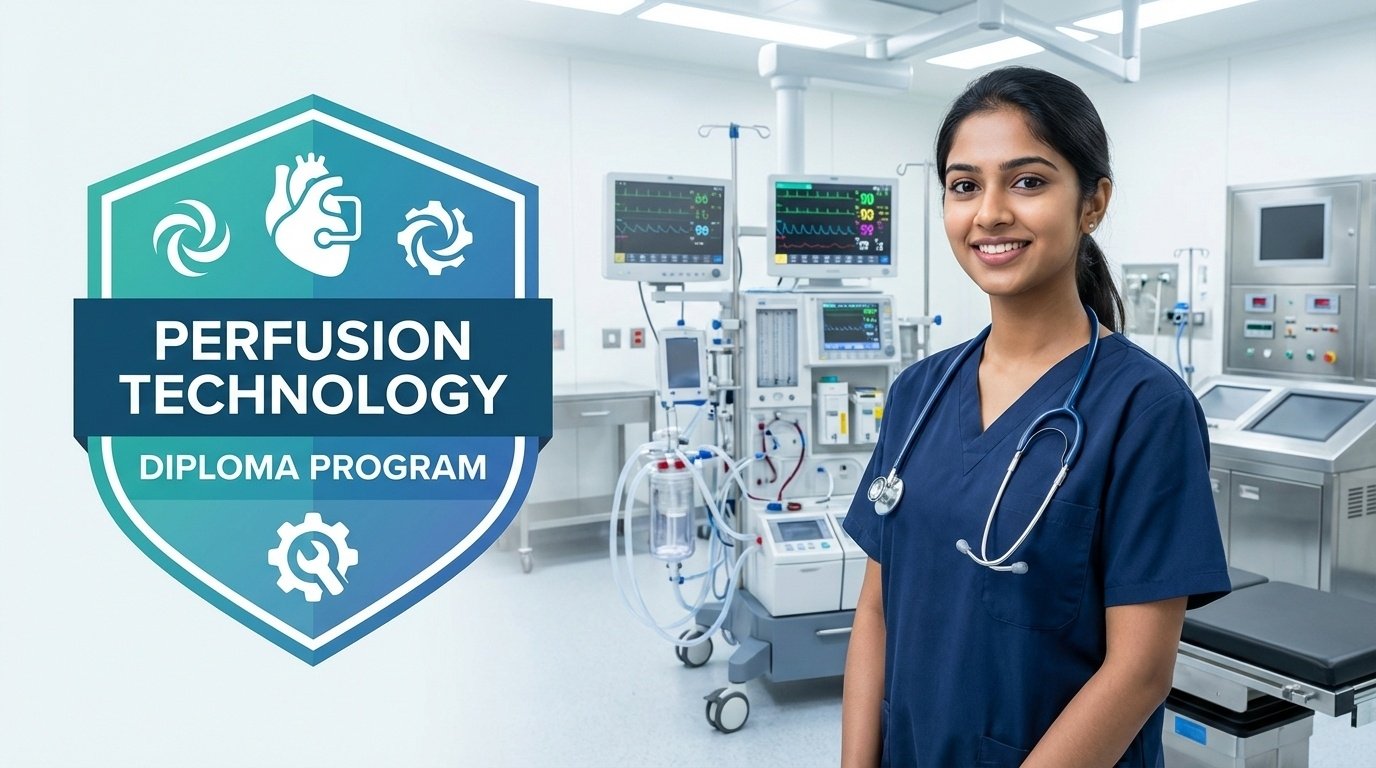
Course Overview
The Diploma in Perfusion Technology is an elite, specialized paramedical program designed to train healthcare professionals who play life-saving roles during cardiac and cardiothoracic surgeries. Offered by Mahatma Gandhi Ayurvigyan Vidyapeeth, this intensive 2-year program prepares students to become skilled Perfusion Technologists—critical members of cardiac surgical teams who operate the heart-lung machine (cardiopulmonary bypass equipment), maintaining patients' circulatory and respiratory functions during open-heart surgery.
This is one of the most specialized and high-responsibility careers in healthcare, where perfusionists literally keep patients alive while surgeons operate on the heart.
Program Highlights
What is a Perfusion Technologist?
A Perfusion Technologist (also called Cardiac Perfusionist or Clinical Perfusionist) is a highly specialized healthcare professional who operates the cardiopulmonary bypass (CPB) machine or heart-lung machine during cardiac surgery and other medical procedures requiring mechanical circulatory and respiratory support.
Critical Role & Responsibilities:
✓ Operating Heart-Lung Machine: Temporarily taking over the functions of the patient's heart and lungs
✓ Maintaining Circulation: Ensuring continuous blood flow and oxygenation during surgery
✓ Monitoring Vital Parameters: Real-time tracking of blood pressure, oxygen levels, temperature
✓ Blood Management: Managing anticoagulation, blood products, and autotransfusion
✓ Emergency Response: Immediate action during critical situations
✓ Equipment Maintenance: Preparing, testing, and maintaining perfusion equipment
✓ Team Coordination: Working closely with cardiac surgeons, anesthesiologists, and OR staff
In Simple Terms: When a cardiac surgeon stops the heart to perform surgery, the perfusion technologist keeps the patient alive by mechanically pumping and oxygenating blood throughout the body.
Why Choose Perfusion Technology?
Life-Saving Impact
You'll directly save lives every single day during cardiac surgeries, making a profound difference in patients' survival and recovery.
Excellent Compensation
- Starting Salary: ₹3-4.5 LPA (₹25,000-40,000/month)
- Mid-Career (3-5 years): ₹5-8 LPA (₹40,000-70,000/month)
- Senior Level (5+ years): ₹8-15 LPA (₹70,000-1,25,000/month)
- International (USA/UK/Middle East): $70,000-$130,000 annually (₹60 Lakhs - 1 Cr+)
Critical Shortage of Professionals
- Severe shortage of trained perfusionists globally
- Very few training programs in India (high demand, low supply)
- Almost guaranteed employment after certification
- High demand in cardiac hospitals and surgical centers
Elite Professional Status
- Member of the elite cardiac surgery team
- Work with top cardiac surgeons
- High level of professional respect and autonomy
- Recognized as critical care specialist
International Career Opportunities
- High demand in USA, UK, Canada, Australia, Middle East
- Competitive international salaries
- Immigration pathways through skilled worker programs
- Global certifications available (CCP - Certified Clinical Perfusionist)
Quick Entry into Specialized Field
- Only 2 years for diploma certification
- Direct pathway to working in cardiac surgery
- Can pursue B.Sc./M.Sc. for further advancement
- Start earning within 2-3 years
Cutting-Edge Technology
- Work with advanced medical equipment
- Constant technological innovation
- Intellectually stimulating career
- Continuous learning opportunities
Comprehensive Curriculum
YEAR 1: Foundation & Core Sciences
Semester 1: Medical Sciences & Cardiovascular Basics
Module 1: Human Anatomy & Physiology
- Cardiovascular system anatomy
- Heart chambers, valves, and coronary circulation
- Cardiac conduction system
- Blood vessels and circulatory pathways
- Respiratory system anatomy
- Lung structure and gas exchange
- Pulmonary circulation
- Other body systems (renal, nervous, endocrine)
- Surgical anatomy for cardiac procedures
- Fetal circulation and congenital anomalies
Module 2: Cardiovascular Physiology
- Cardiac cycle and heart sounds
- Cardiac output and stroke volume
- Blood pressure regulation
- Hemodynamics and fluid dynamics
- Oxygen transport and delivery
- Acid-base balance
- Electrophysiology of the heart
- Exercise physiology
Module 3: Cardiopulmonary Pathophysiology
- Congenital heart diseases
- Atrial Septal Defect (ASD)
- Ventricular Septal Defect (VSD)
- Tetralogy of Fallot
- Patent Ductus Arteriosus (PDA)
- Acquired heart diseases
- Coronary artery disease
- Valvular heart diseases
- Cardiomyopathies
- Heart failure and shock
- Arrhythmias
- Pulmonary diseases affecting cardiac function
Module 4: Biochemistry & Hematology
- Blood composition and functions
- Coagulation cascade
- Anticoagulation principles
- Blood gas analysis (ABG)
- Electrolyte balance
- Acid-base disorders
- Transfusion medicine
- Inflammatory markers
Module 5: Pharmacology for Perfusionists
- Cardiovascular drugs
- Inotropes and vasopressors
- Vasodilators
- Antiarrhythmics
- Anesthetic agents
- Anticoagulants (Heparin) and reversal agents (Protamine)
- Blood products and volume expanders
- Emergency medications
- Drug interactions and side effects
Semester 2: Perfusion Equipment & Techniques
Module 6: Introduction to Perfusion Technology
- History of cardiac surgery and perfusion
- Evolution of heart-lung machines
- Principles of cardiopulmonary bypass (CPB)
- Role of perfusionist in surgical team
- Professional ethics and responsibilities
- Legal aspects and liability
- Patient safety protocols
Module 7: Cardiopulmonary Bypass Equipment
- Heart-Lung Machine Components:
- Pumps (roller pumps, centrifugal pumps)
- Oxygenators (membrane, bubble)
- Heat exchangers
- Reservoirs and venous drainage
- Arterial filters
- Cardiotomy reservoir and suction
- Tubing and connectors
- Monitoring devices and sensors
- Safety features and alarms
- Equipment maintenance and testing
Module 8: Perfusion Circuit Setup
- Circuit assembly and priming
- Sterile techniques
- Air detection and removal
- Pressure monitoring points
- Flow calculations
- Troubleshooting common issues
- Quality control checks
- Documentation procedures
Module 9: Cardiopulmonary Bypass Techniques
- Patient preparation and assessment
- Anticoagulation management (ACT monitoring)
- Cannulation strategies
- Arterial cannulation sites
- Venous cannulation techniques
- Initiation of CPB
- Maintaining bypass
- Flow rate management
- Pressure control
- Temperature regulation
- Weaning from bypass
- Decannulation procedures
- Protamine administration
Module 10: Myocardial Protection
- Cardioplegia principles
- Types of cardioplegia solutions
- Crystalloid vs. Blood cardioplegia
- Antegrade vs. Retrograde delivery
- Cold vs. Warm cardioplegia
- Delivery techniques and equipment
- Monitoring myocardial protection
- Ischemia-reperfusion injury
YEAR 2: Advanced Techniques & Clinical Mastery
Semester 3: Clinical Perfusion Applications
Module 11: Adult Cardiac Surgery
- Coronary Artery Bypass Grafting (CABG)
- On-pump vs. Off-pump CABG
- Perfusion strategies
- Graft protection
- Valve Surgery
- Aortic valve replacement
- Mitral valve repair/replacement
- Multiple valve procedures
- Combined Procedures
- CABG + Valve surgery
- Complex cardiac surgeries
Module 12: Pediatric & Neonatal Perfusion
- Unique challenges in pediatric perfusion
- Congenital heart disease repairs
- Circuit modifications for small patients
- Neonatal vs. Infant vs. Pediatric considerations
- Deep hypothermic circulatory arrest (DHCA)
- Selective cerebral perfusion
- Blood prime and miniaturized circuits
- Developmental considerations
Module 13: Aortic & Vascular Surgery
- Thoracic aortic aneurysm repair
- Aortic dissection surgery
- Arch replacement procedures
- Hypothermic circulatory arrest
- Cerebral protection strategies
- Peripheral vascular support
Module 14: Cardiac Transplantation
- Heart transplant procedures
- Donor organ preservation
- Recipient preparation
- Transplant perfusion techniques
- Post-transplant support
- Complications and management
Module 15: Blood Management Strategies
- Blood Conservation Techniques:
- Acute normovolemic hemodilution
- Retrograde autologous priming (RAP)
- Minimized perfusion circuits
- Autotransfusion:
- Cell salvage techniques
- Red cell processing
- Wash protocols
- Ultrafiltration:
- Conventional ultrafiltration
- Modified ultrafiltration (MUF)
- Zero-balance ultrafiltration
Semester 4: Advanced Support & Professional Practice
Module 16: Mechanical Circulatory Support
- ECMO (Extracorporeal Membrane Oxygenation)
- Veno-arterial (VA) ECMO
- Veno-venous (VV) ECMO
- ECMO cannulation strategies
- Patient management on ECMO
- Weaning from ECMO
- Complications and troubleshooting
- Ventricular Assist Devices (VAD)
- Types of VADs
- Implantation support
- Long-term VAD management
- Intra-Aortic Balloon Pump (IABP)
- Principles and indications
- Timing and troubleshooting
Module 17: Hemodynamics & Monitoring
- Advanced hemodynamic monitoring
- Pressure monitoring (arterial, venous, PA)
- Cardiac output measurement
- Mixed venous oxygen saturation
- Cerebral oximetry (NIRS)
- Point-of-care testing
- Transesophageal echocardiography (TEE) basics
- Interpreting monitoring data
Module 18: Complications & Crisis Management
- Perfusion Complications:
- Air embolism (detection and management)
- Oxygenator failure and replacement
- Pump malfunction
- Massive hemorrhage
- Protamine reactions
- Emergency Protocols:
- Power failure
- Equipment malfunction
- Cardiac arrest on bypass
- Catastrophic events
- Coagulation Disorders:
- Heparin resistance
- Heparin-induced thrombocytopenia (HIT)
- Disseminated intravascular coagulation (DIC)
Module 19: Quality Assurance & Safety
- Perfusion safety protocols
- Pre-bypass checklist
- Equipment testing and validation
- Incident reporting and analysis
- Quality metrics and benchmarking
- Continuous quality improvement
- Accreditation standards
- Risk management
Module 20: Research & Evidence-Based Practice
- Research methodology in perfusion
- Literature review and critical appraisal
- Data collection and analysis
- Clinical trials in perfusion
- Outcome measurement
- Publishing and presentation skills
- Current trends in perfusion technology
Module 21: Professional Development
- Hospital perfusion department operations
- Equipment procurement and budgeting
- Staff training and supervision
- Communication with surgical team
- Patient and family interaction
- Professional organizations and networking
- Continuing education requirements
- Career advancement pathways
Module 22: Clinical Internship (6-8 Months)
- Intensive Hands-On Training:
- Rotation through cardiac surgery programs
- Minimum 100+ cardiac surgery cases
- Progressive independence under supervision
- All age groups (neonatal to geriatric)
- Emergency procedures participation
- ECMO case experience
- Competency assessments
- Case presentations and reviews
Core Competencies You Will Master
Technical Skills:
✓ CPB Operation: Expert proficiency in heart-lung machine operation
✓ Circuit Assembly: Rapid, sterile, error-free setup
✓ Cannulation Assistance: Supporting surgeons during vascular access
✓ Blood Gas Management: Maintaining optimal patient physiology
✓ Temperature Control: Precise hypothermia and rewarming
✓ Emergency Response: Quick troubleshooting and crisis management
✓ ECMO Management: Setting up and managing extracorporeal support
✓ Equipment Maintenance: Ensuring device readiness and safety
Clinical Skills:
✓ Patient Assessment: Pre-operative perfusion planning
✓ Anticoagulation Management: Heparin and protamine administration
✓ Hemodynamic Monitoring: Interpreting complex physiological data
✓ Blood Product Management: Transfusion decisions and conservation
✓ Myocardial Protection: Optimal cardioplegia delivery
✓ Pediatric Perfusion: Specialized techniques for children
✓ Record Keeping: Detailed perfusion documentation
Professional Skills:
✓ Critical Thinking: Split-second decision-making abilities
✓ Team Communication: Clear interaction with surgical teams
✓ Stress Management: Composure in life-threatening situations
✓ Attention to Detail: Zero-tolerance for errors
✓ Leadership: Directing perfusion operations
✓ Continuous Learning: Staying current with technology
✓ Ethical Practice: Professional standards and patient safety
Career Opportunities
Job Roles & Employment:
1. Junior Perfusion Technologist ₹3-4.5 LPA
- Assist senior perfusionists
- Learn advanced techniques
- Build case experience
- Work Settings: Cardiac hospitals
2. Staff Perfusionist ₹5-8 LPA
- Independent practice
- Complex case management
- Work Settings: Multi-specialty cardiac centers
3. Senior Perfusionist ₹8-12 LPA
- Advanced procedures
- Training junior staff
- Quality oversight
- Work Settings: Tertiary cardiac institutes
4. Chief Perfusionist ₹12-20 LPA
- Department leadership
- Program development
- Work Settings: Hospital administration
5. ECMO Specialist ₹8-15 LPA
- Mechanical circulatory support
- Critical care perfusion
- Work Settings: ICU and cardiac centers
6. Pediatric Perfusionist ₹7-12 LPA
- Congenital heart surgery
- Neonatal perfusion
- Work Settings: Children's cardiac hospitals
7. Perfusion Educator ₹6-10 LPA
- Teaching in medical colleges
- Clinical training
- Work Settings: Educational institutions
8. Medical Device Specialist ₹5-10 LPA
- Sales and technical support
- Product training
- Work Settings: Medical equipment companies
Employment Sectors:
Healthcare Facilities:
- Top Cardiac Hospitals:
- AIIMS (All India Institute of Medical Sciences)
- Fortis Escorts Heart Institute
- Narayana Health (Narayana Hrudayalaya)
- Apollo Hospitals
- Medanta - The Medicity
- Asian Heart Institute
- Manipal Hospitals
- Max Healthcare
- Government cardiac centers
- Private cardiac specialty hospitals
- Multi-specialty hospitals with cardiac programs
- Teaching hospitals
International Opportunities:
United States
- Salary: $70,000 - $130,000 annually
- Certification: CCP (Certified Clinical Perfusionist) required
- High demand, excellent benefits
- Immigration pathways available
United Kingdom
- Salary: £30,000 - £55,000 annually
- NHS and private hospitals
- Professional registration required
Middle East (UAE, Saudi Arabia, Qatar, Kuwait)
- Tax-free salaries: AED 12,000 - 25,000/month (₹2.7-5.6 Lakhs)
- Modern cardiac centers
- Excellent packages and benefits
- High demand for trained professionals
Australia & Canada
- Competitive salaries
- Immigration opportunities
- High quality of life
Academic & Research:
- Faculty in perfusion programs
- Clinical instructors
- Research scientists
- Simulation lab coordinators
Industry:
- Medical device companies (Medtronic, Terumo, Sorin, Maquet)
- Clinical research positions
- Product development
- Technical sales and support
Salary Progression
Additional Income:
- Freelance/Per-case fees: ₹8,000-25,000 per surgery
- On-call duties: Extra compensation
- Training programs: Teaching income
- Consulting: Advisory roles
Eligibility & Admission
Educational Qualification:
- Required: 10+2 (Higher Secondary) from recognized board
- Stream: Science with Physics, Chemistry, Biology (PCB)
- Minimum Marks: 50-60% aggregate (varies by institution)
- Age: 17-35 years (generally)
Preferred Attributes:
- Strong aptitude for science and technology
- Good manual dexterity
- Ability to work under extreme pressure
- Excellent attention to detail
- Team player mentality
- Emotional resilience
- Good physical fitness
Admission Process
Step 1: Online Application
Submit application with academic documents through official website.
Step 2: Entrance Test
- Science knowledge (Biology, Chemistry, Physics)
- Mathematics and logical reasoning
- English comprehension
- General aptitude
Step 3: Personal Interview
- Motivation assessment
- Understanding of perfusion role
- Stress management abilities
- Communication skills
- Career goals
Step 4: Medical Fitness
- Physical examination
- Vision and hearing tests
- Manual dexterity assessment
- Psychological fitness evaluation
Step 5: Enrollment
- Document verification
- Fee payment
- Orientation program
Required Documents:
- 10th and 12th mark sheets and certificates
- Transfer/Migration certificate
- Character certificate
- Medical fitness certificate
- ID proof (Aadhar/PAN/Passport)
- 6 passport-size photographs
- Caste certificate (if applicable)
- Domicile certificate (if applicable)
Program Features
Comprehensive Clinical Training
Extensive hands-on experience with 100+ cardiac surgery cases across all age groups.
Premier Hospital Partnerships
Training at top cardiac centers with exposure to diverse procedures and equipment.
Expert Faculty
Learn from experienced perfusionists, cardiac surgeons, and cardiovascular specialists.
Advanced Simulation Lab
Practice on heart-lung machine simulators before working with actual patients.
International Standards
Curriculum aligned with global perfusion education standards for international certification eligibility.
Excellent Placement
Strong demand ensures employment opportunities in prestigious cardiac hospitals.
Professional Development
Workshops, conferences, and continuing education throughout the program.
Global Perspective
Preparation for international certifications like CCP (Certified Clinical Perfusionist).
About Mahatma Gandhi Ayurvigyan Vidyapeeth
Mahatma Gandhi Ayurvigyan Vidyapeeth is a government-approved private university in Nagpur, Maharashtra, dedicated to excellence in healthcare education. The institution offers this specialized Diploma in Perfusion Technology to address the critical shortage of trained perfusion professionals.
Why MGAV for Perfusion Training?
✓ Specialized Program: One of few institutions offering perfusion training
✓ Experienced Faculty: Certified perfusionists and cardiac specialists
✓ Clinical Excellence: Partnerships with leading cardiac hospitals
✓ Modern Equipment: Access to latest perfusion technology
✓ Affordable Quality: Premium training at accessible fees
✓ Strong Network: Connections in cardiac healthcare industry
✓ Career Support: Placement assistance and mentorship
Investment in Your Future
Program Fee: ₹1,50,000 (Total for 2 years)
What's Included:
✓ Comprehensive theoretical training
✓ Extensive clinical internship (6-8 months)
✓ Perfusion simulation lab access
✓ Study materials and resources
✓ Hospital rotation expenses
✓ Professional attire during training
✓ Certification upon completion
✓ Placement assistance
✓ Professional liability insurance during training
✓ Conference participation opportunities
✓ Alumni network access
Payment Options:
- Semester-wise installments
- Education loan assistance
- Merit-based scholarships
- Financial aid for eligible students
Return on Investment:
- Program Cost: ₹1,50,000
- Starting Salary: ₹3-4.5 LPA minimum
- Payback Period: 3-4 years
- Career Earnings: ₹5-10 Crores+ over 30-year career
- International Potential: $70,000-$130,000 annually abroad
Further Education Pathways
After completing this diploma, you can pursue:
Advanced Degrees:
- B.Sc. in Perfusion Technology (Lateral entry)
- M.Sc. in Perfusion Technology
- Post-Graduate Diploma in Cardiac Perfusion
Certifications:
- CCP (Certified Clinical Perfusionist) - USA
- ECMO Specialist Certification
- Advanced Cardiovascular Life Support (ACLS)
- Pediatric Advanced Life Support (PALS)
Specializations:
- Pediatric & Neonatal Perfusion
- ECMO Specialist
- Minimally Invasive Perfusion
- Research in Perfusion Science
Frequently Asked Questions
Q: Is perfusion technology in high demand?
A: Yes! There's a severe shortage of trained perfusionists. Almost guaranteed employment after certification.
Q: Can I work internationally?
A: Yes, with additional certifications like CCP, you can work in USA, UK, Middle East, and other countries with excellent salaries.
Q: What's the difference between diploma and B.Sc. in Perfusion?
A: Diploma is 2 years, B.Sc. is 3-4 years. Both lead to perfusionist careers; B.Sc. offers more depth and better advancement opportunities.
Q: Is this physically demanding?
A: Yes, long hours standing during surgeries. Good stamina and stress management required.
Q: Can I specialize in pediatric perfusion?
A: Yes, after gaining experience, you can specialize in pediatric, ECMO, or other perfusion areas.
Q: What's the work schedule like?
A: Perfusionists work in shifts with on-call duties for emergencies, including nights and weekends.
Q: Is there job security?
A: Excellent! Cardiac surgery is growing, and perfusionists are critically short. Very stable career.
Q: Can diploma holders pursue higher education?
A: Yes, you can pursue B.Sc. (lateral entry) and eventually M.Sc. in Perfusion Technology.
Apply Now - Limited Seats!
Only 20-30 seats per batch to ensure quality training and individual attention.
Join the Elite Profession
Perfusion technology is not just a career—it's a calling for those who want to be in the heart of life-saving action, working with the best cardiac surgeons and operating the most advanced medical technology.
Start Your Perfusion Career Today!
SECURE YOUR SEAT - APPLY NOW
- Institute: Mahatma Gandhi Ayurvigyan Vidyapeeth
- Location: Nagpur, Maharashtra, India
- Website: mgavidyapeeth.com
- Admission Helpline: Available on website
- Email: Contact through official website
Important Dates:
- Application Period: Check website
- Entrance Exam: As per schedule
- Interview: After entrance results
- Course Commencement: July/August
- Last Date: Check official website
Don't Miss This Opportunity!
Perfusion Technology offers:
- Elite Profession (Critical cardiac care specialist)
- High Demand (Severe shortage of professionals)
- Excellent Salary (₹3-20 LPA in India, $70K-$130K abroad)
- Job Security (Essential for cardiac surgery)
- Global Opportunities (Work anywhere in the world)
- Life-Saving Impact (Direct contribution to patient survival)
Seats are extremely limited - Apply Today!