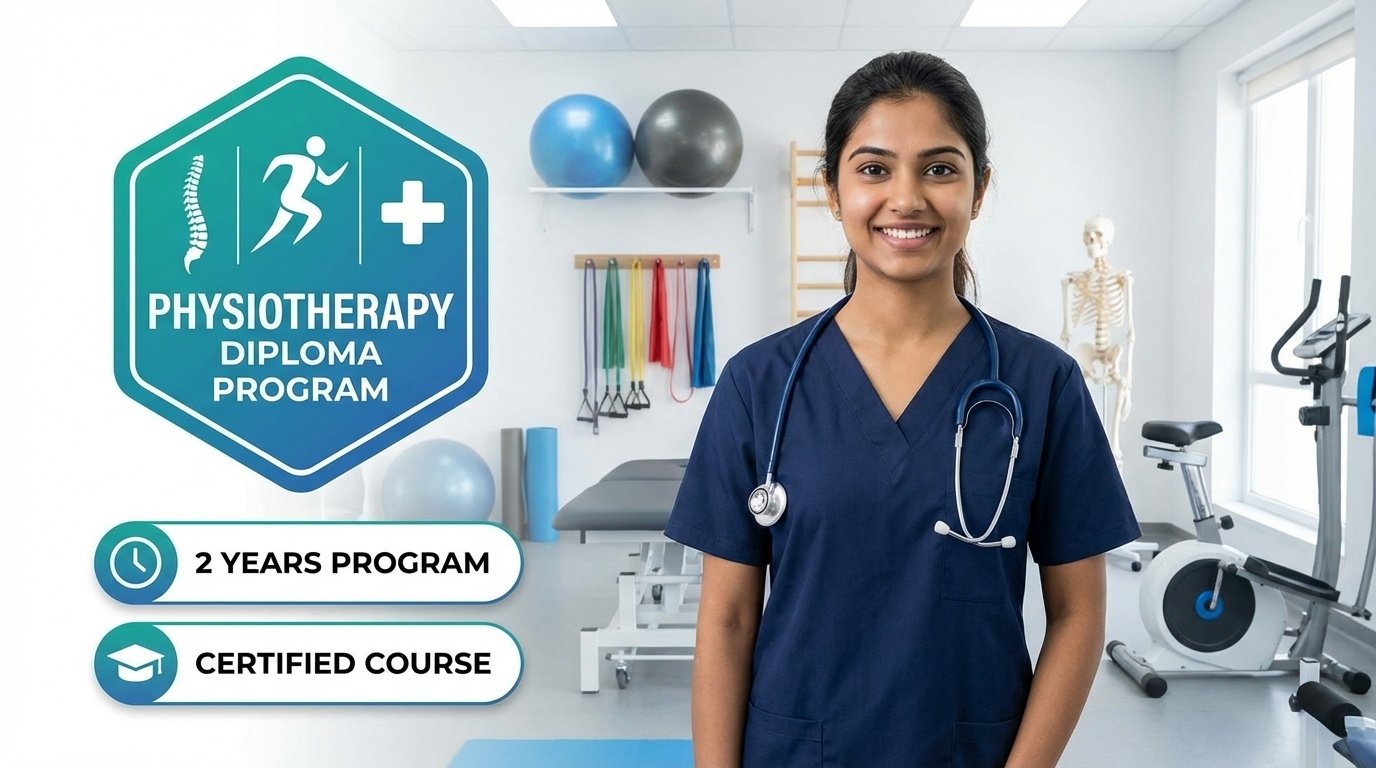
Diploma in Physiotherapy (DPT)
Complete Course Guide & Career Pathway
Diploma in Physiotherapy
Course Overview
The Diploma in Physiotherapy (DPT) is a comprehensive 2-year paramedical program designed to train skilled healthcare professionals in physical rehabilitation, therapeutic exercise, and patient care. This intensive course equips students with the knowledge and practical skills to help patients recover from injuries, manage chronic conditions, improve mobility, and enhance their quality of life through evidence-based physiotherapy interventions.
Physiotherapy is one of the fastest-growing healthcare professions globally, addressing the increasing need for rehabilitation services due to lifestyle diseases, sports injuries, aging populations, and post-surgical recovery. This diploma program provides a solid foundation for students to enter this rewarding and in-demand healthcare career.
Course Details at a Glance
Why Choose Physiotherapy?
Explosive Growth in Healthcare Sector
The physiotherapy profession is experiencing unprecedented growth:
- Rising Lifestyle Diseases: Increasing cases of diabetes, obesity, cardiovascular issues requiring physical rehabilitation
- Sports Industry Boom: Growing demand for sports physiotherapists
- Aging Population: Elderly care and geriatric rehabilitation needs
- Workplace Injuries: Corporate wellness and occupational health programs
- Post-COVID Recovery: Respiratory physiotherapy and rehabilitation
Diverse Career Opportunities
Physiotherapy offers versatility in career paths:
- Clinical practice in hospitals and clinics
- Sports teams and athletic organizations
- Private practice and home-based care
- Corporate wellness programs
- Research and academics
- International opportunities
Meaningful Impact
Physiotherapists make tangible differences by:
- Helping stroke patients regain mobility
- Supporting athletes in injury recovery
- Reducing chronic pain without medications
- Improving quality of life for the elderly
- Preventing disabilities through early intervention
- Empowering patients to lead active, independent lives
Eligibility Criteria
- Academic Qualification: Candidates must have completed 10+2 (Higher Secondary) with Science stream
- Mandatory Subjects: Physics, Chemistry, and Biology
- Minimum Marks: Generally 45-50% aggregate in qualifying examination
- Age Limit: Typically 17-35 years
- Physical Requirements: Good physical fitness (as the work involves patient handling and demonstrations)
- Personal Qualities: Patience, empathy, communication skills, and genuine interest in helping others
Comprehensive 2-Year Curriculum
The program is structured to provide both theoretical knowledge and extensive practical training:
Year 1: Foundation Studies
Semester 1
Basic Medical Sciences
- Human Anatomy: Detailed study of musculoskeletal, nervous, cardiovascular, and respiratory systems
- Physiology: Body functions, homeostasis, and physiological responses to exercise
- Biochemistry: Metabolic processes, nutrition, and energy systems
- Psychology: Understanding patient behavior, motivation, and mental health
- Sociology: Social determinants of health and rehabilitation
Foundational Physiotherapy
- Introduction to Physiotherapy: History, scope, and professional ethics
- Biomechanics: Principles of movement, posture, and body mechanics
- Kinesiology: Study of human movement and muscle function
- First Aid & CPR: Emergency response and life-saving techniques
- Medical Terminology: Healthcare communication and documentation
Practical Training
- Anatomy laboratory sessions
- Basic assessment techniques
- Patient handling and positioning
- Communication skills development
- Clinical observation (hospital visits)
Semester 2
Clinical Sciences
- Pathology: Disease processes and their impact on physical function
- Microbiology: Infection control and prevention
- Pharmacology: Basic knowledge of medications affecting rehabilitation
- General Medicine & Surgery: Understanding common medical and surgical conditions
- Orthopedics Fundamentals: Bone, joint, and muscle disorders
Core Physiotherapy Subjects
- Exercise Therapy I: Therapeutic exercises and their applications
- Electrotherapy I: Introduction to electrical modalities (TENS, ultrasound, shortwave diathermy)
- Manual Therapy Basics: Massage techniques and joint mobilization
- Rehabilitation Science I: Principles of physical rehabilitation
- Therapeutic Modalities: Heat, cold, hydrotherapy applications
Clinical Practice
- Exercise prescription practicals
- Electrotherapy equipment handling
- Massage and manual therapy practice
- Patient assessment skills
- Clinical case discussions
Year 2: Advanced Training & Specialization
Semester 3
Specialized Physiotherapy Areas
- Orthopedic Physiotherapy: Management of fractures, arthritis, joint replacements, spinal disorders
- Neurological Physiotherapy: Stroke rehabilitation, Parkinson's disease, spinal cord injuries, cerebral palsy
- Cardiopulmonary Physiotherapy: Heart disease rehabilitation, respiratory conditions, breathing exercises
- Sports Physiotherapy: Sports injury management, taping techniques, performance enhancement
- Pediatric Physiotherapy: Developmental delays, congenital disorders, childhood disabilities
Advanced Therapeutic Techniques
- Exercise Therapy II: Advanced strengthening, stretching, and conditioning programs
- Electrotherapy II: Advanced modalities (laser therapy, iontophoresis, biofeedback)
- Manual Therapy Advanced: Joint mobilization, spinal manipulation, soft tissue techniques
- Therapeutic Exercises: Proprioceptive training, balance and coordination exercises
- Rehabilitation Science II: Advanced rehabilitation protocols
Clinical Rotations
- Orthopedic department (4 weeks)
- Neurology department (4 weeks)
- Outpatient physiotherapy clinic (4 weeks)
- Hands-on patient treatment under supervision
- Case study presentations
Semester 4
Specialized & Community Physiotherapy
- Geriatric Physiotherapy: Age-related conditions, fall prevention, mobility aids
- Women's Health Physiotherapy: Prenatal/postnatal care, pelvic floor rehabilitation
- Community Based Rehabilitation (CBR): Disability management in community settings
- Occupational Physiotherapy: Workplace injury prevention, ergonomics
- Pain Management: Chronic pain management techniques
Professional Development
- Research Methodology: Evidence-based practice, research basics
- Healthcare Management: Clinic management, documentation, billing
- Professional Ethics & Communication: Patient rights, confidentiality, interprofonal skills
- Prosthetics & Orthotics: Understanding assistive devices
- Physical Fitness & Wellness: Health promotion and preventive care
Comprehensive Clinical Internship
- Minimum 6 months mandatory internship
- Rotations through multiple departments:
- General physiotherapy OPD
- ICU and critical care
- Orthopedic ward
- Neurology unit
- Sports injury clinic
- Community health center
- Independent patient management under supervision
- Case documentation and presentations
- Final project/dissertation
Skills You Will Develop
Clinical Assessment Skills
- Patient history taking and physical examination
- Postural analysis and gait assessment
- Range of motion and strength testing
- Neurological assessment
- Functional capacity evaluation
- Pain assessment and documentation
Treatment Techniques
- Therapeutic exercise prescription
- Manual therapy and manipulation
- Electrotherapy modalities operation
- Taping and strapping techniques
- Respiratory physiotherapy
- Hydrotherapy and aquatic therapy
- Home exercise program design
Patient Management
- Treatment planning and goal setting
- Progress monitoring and outcome measurement
- Patient education and counseling
- Family involvement and home program training
- Discharge planning and follow-up
- Interdisciplinary team collaboration
Professional Competencies
- Critical thinking and clinical reasoning
- Evidence-based practice application
- Professional documentation
- Ethical decision-making
- Time management and organization
- Communication with patients and healthcare teams
- Continuous learning and professional development
Career Opportunities
Diploma in Physiotherapy graduates can pursue diverse career paths:
Healthcare Facilities
- Multi-specialty Hospitals: Government and private hospitals with physiotherapy departments
- Rehabilitation Centers: Specialized facilities for neurological, orthopedic, and cardiac rehabilitation
- Sports Medicine Clinics: Sports injury management and performance optimization
- Orthopedic Clinics: Joint replacement, arthritis, and spine care centers
- Pediatric Centers: Children's hospitals and developmental therapy centers
- Geriatric Care Facilities: Nursing homes and elderly care centers
- Home Healthcare Services: In-home physiotherapy for homebound patients
Specialized Settings
- Sports Teams & Clubs: Professional and amateur sports organizations
- Fitness Centers & Gyms: Wellness and preventive care programs
- Corporate Offices: Occupational health and workplace wellness
- Schools & Colleges: Special education and school health programs
- Military & Defense: Armed forces rehabilitation centers
- Yoga & Wellness Centers: Integrative health facilities
Government Sector
- Government hospital physiotherapy departments
- Community health centers (CHCs) and primary health centers (PHCs)
- Disability rehabilitation programs
- National Health Mission projects
- State health department positions
Job Roles Available
- Physiotherapy Technician
- Rehabilitation Therapist
- Sports Physiotherapist
- Orthopedic Physiotherapy Assistant
- Neuro Physiotherapy Technician
- Cardiac Rehabilitation Specialist
- Pediatric Physiotherapist
- Geriatric Care Specialist
- Community Physiotherapy Worker
- Occupational Health Physiotherapist
- Wellness Coach
- Clinical Research Coordinator (Physiotherapy)
Entrepreneurial Opportunities
- Private Physiotherapy Clinic: Independent practice
- Home Care Services: Mobile physiotherapy business
- Sports Training Academy: Fitness and injury prevention programs
- Wellness Consultancy: Corporate wellness programs
- Rehabilitation Equipment Sales: Medical device distribution
Salary Expectations in India
Entry-Level (0-2 years experience)
- Annual Salary: ₹2.0 - 3.5 Lakhs per annum
- Monthly Earnings: ₹15,000 - ₹30,000 per month
Mid-Level (2-5 years experience)
- Annual Salary: ₹3.5 - 5.5 Lakhs per annum
- Monthly Earnings: ₹30,000 - ₹45,000 per month
Senior-Level (5+ years experience)
- Annual Salary: ₹5.5 - 8.0 Lakhs per annum
- Monthly Earnings: ₹45,000 - ₹70,000+ per month
Specialized Positions (Sports, Private Practice)
- Annual Salary: ₹6 - 12 Lakhs per annum
- Private Practice: ₹50,000 - ₹1,50,000+ per month (varies by clientele and location)
Government Positions
- Starting Salary: ₹25,000 - ₹35,000 per month (with benefits)
- Additional Benefits: Job security, pension, medical benefits, allowances
International Opportunities
- Middle East: ₹6 - 10 Lakhs per annum (tax-free)
- Western Countries: $35,000 - $60,000 per annum (after credential evaluation)
Salary Influencing Factors
- Type of healthcare facility (corporate hospitals pay more)
- Geographic location (metro cities offer higher packages)
- Specialization (sports physiotherapy commands premium)
- Additional qualifications and certifications
- Private practice vs. employment
- Patient volume and reputation
Higher Education Pathways
After completing the diploma, students can pursue advanced qualifications:
Bachelor's Degree
- Bachelor of Physiotherapy (BPT) - 4.5 years (with lateral entry options)
- Recognized by Indian Association of Physiotherapists
- Opens doors to independent practice and advanced roles
Specialized Certifications
- Mulligan Concept Manual Therapy
- Maitland Manual Therapy
- Dry Needling Certification
- Sports Taping & Strapping
- Neurological Rehabilitation (Bobath, NDT)
- Women's Health & Pelvic Floor Rehabilitation
- Pediatric Physiotherapy Certification
- Pilates & Clinical Exercise Instructor
- Orthopedic Manual Therapy
Postgraduate Options (After BPT)
- M.P.T. (Master of Physiotherapy) in various specializations
- M.Sc. in Sports Physiotherapy
- M.Sc. in Neuro Rehabilitation
- MBA in Healthcare Management
Future Scope & Emerging Trends
Physiotherapy is evolving with technology and research:
Technological Integration
- Tele-rehabilitation: Remote physiotherapy consultations and monitoring
- Virtual Reality (VR): Immersive rehabilitation exercises
- Robotics: Robotic-assisted gait training and therapy
- AI & Wearables: Smart devices for movement analysis and monitoring
- 3D Motion Analysis: Advanced biomechanical assessment
- Electromyography (EMG) Biofeedback: Real-time muscle activity monitoring
Growing Specializations
- Geriatric Care: Aging population creates massive demand
- Sports Medicine: Booming sports industry in India
- Women's Health: Specialized pelvic floor and pregnancy care
- Chronic Disease Management: Diabetes, cardiac, pulmonary rehabilitation
- Workplace Ergonomics: Corporate wellness programs
- Preventive Healthcare: Wellness and fitness industry integration
Market Trends
- Increasing health insurance coverage for physiotherapy
- Government initiatives for disability rehabilitation
- Growing awareness about non-pharmacological pain management
- Integration with fitness and wellness industry
- Medical tourism creating international opportunities
Program Highlights at Mahatma Gandhi Ayurvigyan Vidyapeeth
✓ Experienced Faculty: Qualified physiotherapists and medical professionals
✓ Modern Infrastructure: Well-equipped physiotherapy lab with latest equipment
✓ Clinical Exposure: Extensive hands-on training in affiliated hospitals
✓ Multi-disciplinary Approach: Exposure to orthopedics, neurology, cardiology departments
✓ Sports Facilities: Access to sports medicine and athletic training
✓ Community Outreach: Participation in health camps and rural programs
✓ Placement Assistance: Career guidance and hospital placements
✓ Affordable Fee: ₹80,000 for the complete 2-year program
✓ Industry Collaborations: Tie-ups with leading hospitals and rehabilitation centers
✓ Certification Support: Training for additional professional certifications
Who Should Apply?
This course is ideal for students who:
- Have genuine interest in healthcare and helping others
- Enjoy physical activities and understanding body mechanics
- Possess good communication and interpersonal skills
- Want a hands-on, patient-centered healthcare career
- Are interested in sports, fitness, and wellness
- Have patience and empathy for working with patients
- Seek a career with good work-life balance
- Want opportunities for independent practice
- Are interested in continuous learning and skill development
Course Advantages
Professional Benefits
- High Demand: Growing need for physiotherapy services across sectors
- Job Security: Essential healthcare service with consistent demand
- Career Flexibility: Multiple specialization and work setting options
- Global Mobility: International practice opportunities
- Independent Practice: Option to establish own clinic
- Work-Life Balance: Generally regular working hours
- Continuous Growth: Opportunities for specialization and advancement
- Respected Profession: Recognition as healthcare professionals
Personal Rewards
- Direct Patient Impact: Visible improvements in patient recovery
- Hands-On Work: Active, engaging work environment
- Diverse Patients: Work with different age groups and conditions
- Physical Activity: Active job, not desk-bound
- Job Satisfaction: High levels of professional fulfillment
- Lifelong Learning: Continuously evolving field with new techniques
Day in the Life of a Physiotherapy Technician
Morning Session (8:00 AM - 1:00 PM)
- Review patient appointments and treatment plans
- Conduct initial assessments for new patients
- Provide therapeutic exercises to orthopedic patients
- Administer electrotherapy treatments (ultrasound, TENS, IFT)
- Perform manual therapy and massage
- Guide patients through home exercise programs
- Document patient progress and treatment notes
Afternoon Session (2:00 PM - 6:00 PM)
- Sports injury rehabilitation sessions
- Neurological patient therapy (stroke, spinal cord injury)
- Pediatric therapy sessions
- Group exercise classes for chronic pain management
- Patient education and counseling
- Equipment maintenance and preparation
- Team meetings and case discussions
- Health camps and awareness programs
- Corporate wellness sessions
- School screening programs
- Home visits for bedridden patients
- Sports team support during events
Real-World Success Stories
Physiotherapy professionals have transformed lives:
- Stroke Recovery: Helping paralyzed patients walk again
- Sports Comebacks: Enabling athletes to return to competition
- Pain Freedom: Chronic pain patients reducing medication dependence
- Child Development: Supporting children with cerebral palsy to achieve milestones
- Elderly Independence: Helping seniors maintain mobility and quality of life
- Accident Recovery: Restoring function after traumatic injuries
Admission Process
Step-by-Step Application
- Online Application: Complete the form at mgavidyapeeth.com/addmission-form
- Document Submission: Upload 10th, 12th marksheets, ID proof, photographs
- Entrance/Merit Assessment: Based on 12th-grade marks or entrance test
- Personal Interview: Assess aptitude and commitment to physiotherapy
- Counseling Session: Course orientation and career guidance
- Medical Fitness Certificate: Basic health check-up
- Fee Payment: Secure your seat with initial payment
- Enrollment: Complete admission formalities
Important Documents Required
- 10th and 12th standard mark sheets and passing certificates
- Transfer certificate from previous institution
- Character certificate from school/college
- Migration certificate (for students from other boards)
- Recent passport-size photographs (8 copies)
- Identity proof (Aadhar card/PAN card)
- Caste certificate (if applicable for reservations)
- Domicile certificate (if applicable)
- Medical fitness certificate
- Fitness certificate for physical activities
Frequently Asked Questions
Q: Can I practice independently after completing Diploma in Physiotherapy?
A: The diploma qualifies you to work as a physiotherapy technician/assistant. For independent practice and registration with state physiotherapy councils, a Bachelor of Physiotherapy (BPT) is typically required. However, diploma holders can work under qualified physiotherapists.
Q: Is the Diploma in Physiotherapy recognized?
A: Yes, when offered by recognized institutions affiliated to state medical faculties or universities. Always verify the institution's affiliation before enrollment.
Q: Can I pursue BPT after completing the diploma?
A: Yes, many universities offer lateral entry into BPT programs (usually 2nd or 3rd year) for diploma holders, reducing the total study duration.
Q: What is the difference between a physiotherapist and physiotherapy technician?
A: BPT graduates are physiotherapists who can practice independently, while diploma holders work as physiotherapy technicians/assistants under physiotherapists. Both are valuable healthcare professionals.
Q: Are there government jobs for diploma holders?
A: Yes, government hospitals, community health centers, and rehabilitation programs recruit physiotherapy technicians through various health department recruitments.
Q: Can I work in sports teams with a diploma?
A: Yes, diploma holders can work as sports physiotherapy assistants with sports teams, fitness centers, and athletic clubs, especially with additional sports certifications.
Q: Is physical fitness required for this course?
A: Yes, reasonable physical fitness is important as the work involves patient handling, demonstrations, and being on your feet for extended periods.
Q: Can I open my own clinic after the diploma?
A: Regulations vary by state. Typically, independent practice requires BPT qualification. However, you can work in partnership with qualified physiotherapists or provide home-based services under supervision.
Q: What is the scope for international work?
A: International opportunities exist, but most countries require BPT or equivalent qualification and country-specific licensing. Middle Eastern countries often hire diploma holders as physiotherapy assistants.
Q: Is there scope in rural areas?
A: Yes, there's significant demand for physiotherapy services in rural areas through government health centers, NGOs, and community-based rehabilitation programs.
Career Advancement Timeline
Years 0-2: Foundation Phase
- Work as physiotherapy technician in hospitals/clinics
- Gain practical experience across different specializations
- Build patient handling and assessment skills
- Network with healthcare professionals
Years 2-5: Skill Development Phase
- Pursue additional certifications (manual therapy, sports, pediatric)
- Consider lateral entry into BPT program
- Develop specialization in preferred area
- Increase patient load and responsibility
Years 5-10: Specialization Phase
- Complete BPT and consider MPT
- Establish reputation in specialized area
- Supervise junior staff
- Consider private practice or consultancy
Years 10+: Leadership Phase
- Senior physiotherapist or clinic manager
- Own physiotherapy clinic or multiple centers
- Teaching and training roles
- Consulting for corporate wellness programs
Professional Organizations & Networking
Join professional bodies for continuous learning and networking:
- Indian Association of Physiotherapists (IAP)
- State Physiotherapy Councils
- Sports Physiotherapy Association of India
- Indian Association of Chartered Physiotherapists
Benefits of membership:
- Access to workshops and conferences
- Continuing education opportunities
- Professional networking
- Latest research and practice updates
- Career advancement resources
Industry Demand Analysis
Current Market Trends (2026)
- Healthcare Sector Growth: 15-20% annual growth in allied health services
- Job Openings: Estimated 50,000+ physiotherapy positions annually in India
- Sports Industry: IPL, ISL, and Olympic training creating specialized demand
- Corporate Wellness: Over 10,000 companies launching employee wellness programs
- Elderly Care: 138 million Indians above 60 years needing rehabilitation services
- Medical Tourism: India targeting $13 billion healthcare tourism industry
Top Employers
- Apollo Hospitals, Fortis Healthcare, Max Healthcare
- Manipal Hospitals, Narayana Health
- Sports Authority of India, IOC training centers
- Indian cricket, football, and Olympic teams
- HealthCare atHome, Portea Medical (home healthcare)
- Government medical colleges and hospitals
Ready to Transform Lives Through Physical Rehabilitation?
Join Mahatma Gandhi Ayurvigyan Vidyapeeth and become a skilled Physiotherapy Professional in just 2 years!
Help patients recover, athletes perform, and individuals live pain-free, active lives through evidence-based physiotherapy care.
Contact Information
For admission inquiries, course details, and campus visits:
Important Notice
- Admission Deadlines: Check website for current academic year dates
- Seat Availability: Limited seats - early application recommended
- Affiliation Verification: Confirm institutional recognition before enrollment
- Clinical Training: Mandatory internship in affiliated hospitals
- Physical Requirements: Candidates must be physically fit for practical training
- Fee Structure: Verify current fees with the institute
- Career Counseling: Available for prospective students