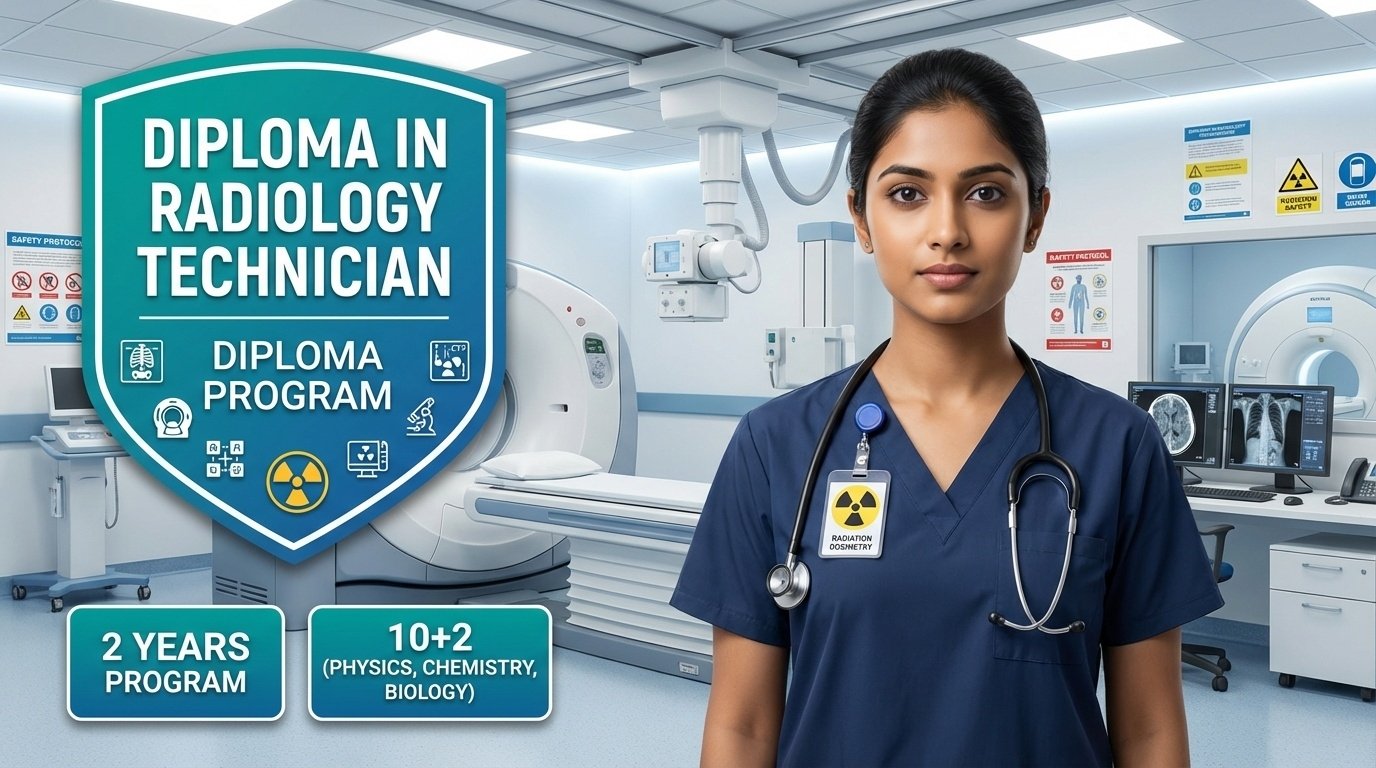
Diploma in Radiology Technician
Course Overview
The Diploma in Radiology Technician is a comprehensive 2-year paramedical program designed to train skilled healthcare professionals in the field of medical imaging and diagnostic radiology. This program equips students with the theoretical knowledge and practical skills required to operate advanced radiological equipment and assist physicians in accurate disease diagnosis and treatment planning.
Course Details at a Glance
Why Choose This Course?
Growing Healthcare Demand
With the rapid expansion of diagnostic centers, hospitals, and imaging facilities across India, the demand for qualified radiology technicians has increased significantly. Medical imaging is a critical component of modern healthcare, making this profession both stable and rewarding.
Essential Healthcare Role
Radiology technicians play a vital role in:
- Operating X-ray machines, CT scanners, MRI equipment, and other imaging devices
- Assisting radiologists in capturing high-quality diagnostic images
- Ensuring patient safety during radiological procedures
- Maintaining and calibrating imaging equipment
Eligibility Criteria
- Academic Qualification: Candidates must have completed 10+2 (Higher Secondary) with Science stream
- Subjects: Physics, Chemistry, and Biology/Mathematics
- Minimum Marks: Generally 45-50% aggregate in qualifying examination
- Age Limit: Typically 17-35 years (may vary)
Curriculum Highlights
The 2-year diploma program includes comprehensive training in:
Year 1: Foundation Studies
- Anatomy and Physiology: Understanding human body structure and functions
- Radiographic Physics: Principles of radiation and imaging technology
- Radiation Protection: Safety measures and protocols
- Basic Radiography Techniques: Introduction to X-ray imaging
- Patient Care and Management: Communication and handling skills
- Medical Ethics: Professional conduct and responsibilities
Year 2: Advanced Training
- Advanced Radiographic Techniques: Specialized imaging procedures
- CT Scan Technology: Computed Tomography principles and operation
- MRI Technology: Magnetic Resonance Imaging fundamentals
- Ultrasound Imaging: Sonography techniques
- Fluoroscopy: Real-time X-ray imaging
- Radiation Dosimetry: Measuring and monitoring radiation exposure
- Quality Control: Equipment maintenance and image quality assurance
- Clinical Practice: Hands-on training in hospitals and diagnostic centers
Career Prospects
Graduates of this program can pursue diverse career opportunities in the healthcare sector:
Employment Opportunities
- Hospitals: Government and private multi-specialty hospitals
- Diagnostic Centers: Imaging and radiology clinics
- Research Institutions: Medical research laboratories
- Medical Colleges: Teaching hospitals and educational institutions
- Mobile Imaging Services: Portable diagnostic units
- Healthcare Startups: Telemedicine and digital health platforms
Job Roles
- Radiology Technician/Technologist
- X-Ray Technician
- CT Scan Operator
- MRI Technician
- Ultrasound Technician
- Radiographic Equipment Specialist
- Quality Control Technician
Salary Expectations in India
Fresher Level
- Starting Salary: ₹2.1 - 2.5 Lakhs per annum
- Monthly Range: ₹12,000 - ₹22,000 per month
Mid-Career (2-5 years experience)
- Annual Salary: ₹2.8 - 4.5 Lakhs per annum
- Monthly Range: ₹22,000 - ₹35,000 per month
Experienced (5-10 years experience)
- Annual Salary: ₹5 - 8 Lakhs per annum
- Specialized Technicians: ₹8 - 12 Lakhs per annum (MRI, CT Scan specialists)
Salaries vary based on location, employer type, specialization, and individual skills.
Higher Education Pathways
After completing the diploma, students can pursue:
- B.Sc. in Medical Imaging Technology
- B.Sc. in Radiology and Imaging Technology
- Advanced Diploma in Specialized Imaging (MRI, CT, Ultrasound)
- Certification Courses in specific imaging modalities
Skills Developed
- Technical proficiency in operating radiological equipment
- Understanding of radiation safety and protection protocols
- Patient positioning and care skills
- Image quality assessment and optimization
- Equipment maintenance and troubleshooting
- Attention to detail and precision
- Effective communication with healthcare teams
- Emergency response capabilities
Why Mahatma Gandhi Ayurvigyan Vidyapeeth?
- Experienced faculty with clinical expertise
- Modern laboratories and imaging equipment
- Clinical training in reputed hospitals
- Industry-relevant curriculum
- Placement assistance
- Affordable fee structure (₹50,000 for 2 years)
- Recognized certification
Future Scope
The field of medical imaging is continuously evolving with technological advancements:
- Digital Radiography: Transition from film-based to digital imaging
- 3D Imaging: Advanced visualization techniques
- AI Integration: Artificial intelligence in image analysis
- Interventional Radiology: Minimally invasive procedures
- Portable Imaging: Mobile diagnostic solutions
Ready to Start Your Healthcare Career?
Join Mahatma Gandhi Ayurvigyan Vidyapeeth and become a skilled Radiology Technician in just 2 years!
Contact Information
For admission inquiries and course details: