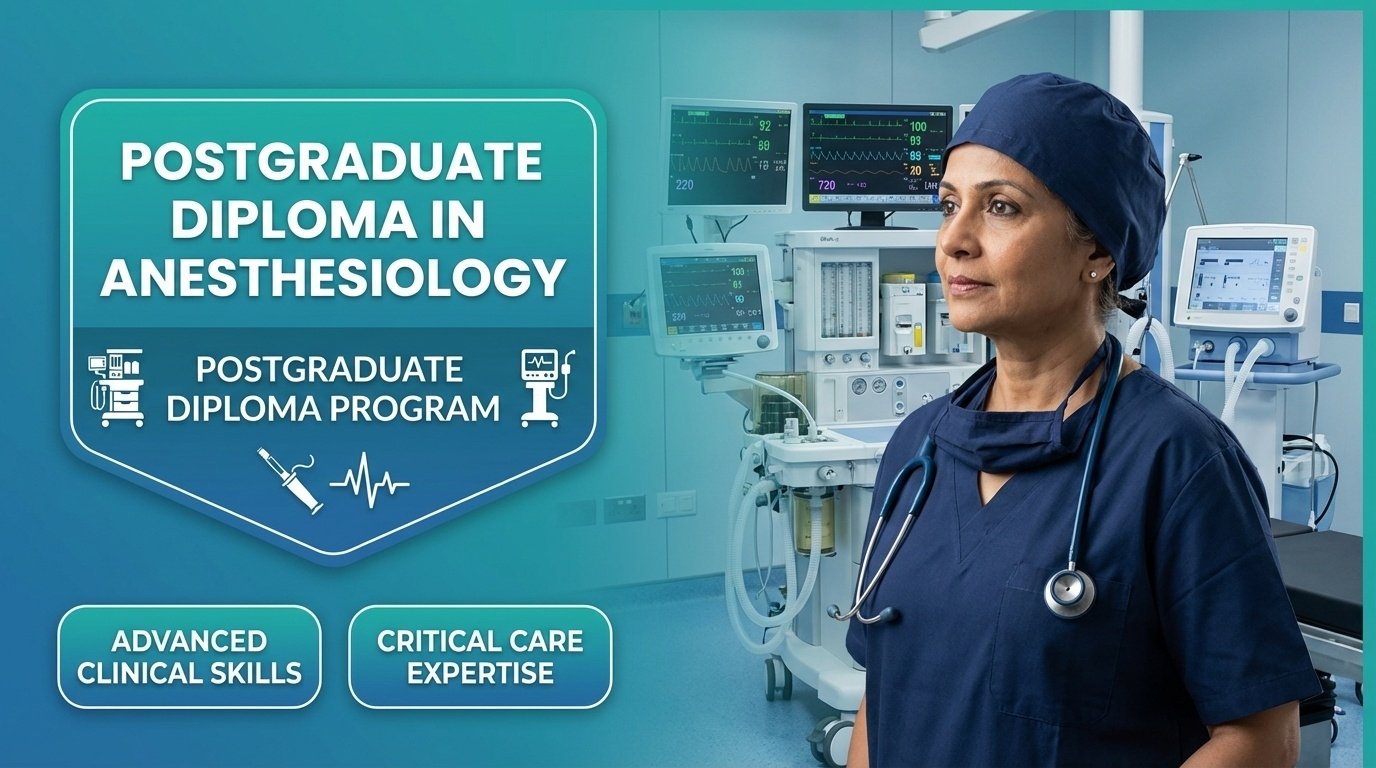
Postgraduate Diploma in Anesthesiology
Overview
The Postgraduate Diploma in Anesthesiology is an elite advanced paramedical program designed for science graduates aspiring to become expert anesthesia technologists and critical care specialists. This comprehensive two-year course provides mastery-level training in anesthesia techniques, critical care management, pain management, advanced life support, and perioperative care. As anesthesia professionals are integral to every surgical procedure and critical care intervention, this program prepares you to work alongside anesthesiologists in operation theatres, intensive care units, and emergency departments, making you an indispensable member of the surgical and critical care team.
Course Details
About the Program
Anesthesiology at the postgraduate level represents the pinnacle of perioperative and critical care expertise in paramedical sciences. Modern surgical medicine depends entirely on safe, effective anesthesia delivery and comprehensive patient monitoring. This advanced program goes beyond basic anesthesia assistance to develop:
- Expert anesthesia technique proficiency across all surgical specialties
- Advanced airway management mastery including difficult airway scenarios
- Critical care competencies for ICU and emergency settings
- Pain management expertise for acute and chronic pain conditions
- Advanced monitoring skills using sophisticated technology
- Emergency response excellence in life-threatening situations
- Regional anesthesia techniques for specialized procedures
- Leadership capabilities for managing anesthesia departments
- Research aptitude contributing to anesthesia science advancement
Key Subjects Covered
Year 1: Foundations & Core Anesthesiology
Semester 1: Fundamental Sciences & Basic Anesthesia
-
Advanced Anatomy & Physiology for Anesthesia
- Cardiovascular system and hemodynamics
- Respiratory system and gas exchange
- Nervous system anatomy (central and peripheral)
- Autonomic nervous system
- Endocrine system and stress response
- Renal physiology and fluid balance
- Hepatic function and drug metabolism
- Neuroanatomy for regional anesthesia
- Spinal cord and vertebral column anatomy
- Brachial plexus and peripheral nerve anatomy
- Airway anatomy in detail
- Physiological changes in pregnancy
- Pediatric anatomical considerations
- Geriatric physiological changes
-
Pharmacology of Anesthetic Agents
Inhalational Anesthetics:
- Nitrous oxide, Isoflurane, Sevoflurane, Desflurane
- Pharmacokinetics and pharmacodynamics
- Minimum alveolar concentration (MAC)
- Uptake and distribution
- Metabolism and elimination
- Adverse effects and contraindications
Intravenous Anesthetics:
- Propofol, Thiopentone, Ketamine, Etomidate
- Mechanism of action
- Dosing and administration
- Context-sensitive half-time
- Side effects and complications
Opioids:
- Morphine, Fentanyl, Remifentanil, Sufentanil, Alfentanil
- Receptor pharmacology
- Equianalgesic dosing
- Tolerance and dependence
- Opioid-induced hyperalgesia
Muscle Relaxants:
- Depolarizing (Succinylcholine)
- Non-depolarizing (Rocuronium, Vecuronium, Atracurium, Cisatracurium)
- Neuromuscular blockade monitoring
- Reversal agents (Neostigmine, Sugammadex)
Local Anesthetics:
- Amide and ester types
- Lidocaine, Bupivacaine, Ropivacaine, Levobupivacaine
- Mechanism of action
- Systemic toxicity and management (LAST)
- Maximum safe doses
- Additives (Epinephrine, Clonidine, Dexmedetomidine)
Adjuvant Medications:
- Anticholinergics (Atropine, Glycopyrrolate)
- Antiemetics (Ondansetron, Metoclopramide, Dexamethasone)
- Vasopressors and inotropes
- Antihypertensives
- Bronchodilators
-
Anesthesia Equipment & Technology
- Anesthesia machine components and function
- Vaporizers and gas delivery systems
- Breathing circuits (Mapleson, circle systems)
- Carbon dioxide absorption
- Anesthesia ventilators and modes
- Oxygen delivery systems
- Suction apparatus
- Laryngoscopes (direct and video)
- Endotracheal tubes and airways
- Supraglottic airway devices (LMA, i-gel)
- Difficult airway equipment cart
- Monitoring equipment (see below)
- Infusion pumps and syringe drivers
- Warming devices
- Equipment sterilization and maintenance
- Safety checks and preventive maintenance
- Troubleshooting common problems
-
Patient Monitoring in Anesthesia
- Standard monitoring (ASA guidelines)
- Non-invasive blood pressure monitoring
- Electrocardiography (ECG) and arrhythmia recognition
- Pulse oximetry principles and limitations
- Capnography and end-tidal CO2 monitoring
- Temperature monitoring
- Invasive arterial blood pressure monitoring
- Central venous pressure (CVP) monitoring
- Pulmonary artery catheterization
- Cardiac output monitoring (PiCCO, FloTrac)
- Neuromuscular monitoring (TOF)
- Depth of anesthesia monitoring (BIS, Entropy)
- Transesophageal echocardiography (TEE) basics
- Point-of-care ultrasound
- Blood gas analysis
- Coagulation monitoring
Semester 2: General Anesthesia & Airway Management
-
Airway Management - Advanced
- Preoperative airway assessment (Mallampati, thyromental distance)
- Basic airway management techniques
- Bag-mask ventilation mastery
- Orotracheal intubation techniques
- Nasotracheal intubation
- Rapid sequence intubation (RSI)
- Difficult airway algorithms (ASA, DAS)
- Video laryngoscopy techniques
- Flexible fiberoptic intubation
- Awake intubation techniques
- Supraglottic airway devices insertion
- Cannot intubate, cannot oxygenate (CICO) scenarios
- Emergency cricothyroidotomy
- Extubation strategies
- Airway exchange catheters
- Airway management in special situations
- Pediatric airway management
- Obstetric airway considerations
-
General Anesthesia Techniques
- Preoperative assessment and preparation
- ASA physical status classification
- NPO guidelines and aspiration prophylaxis
- Premedication strategies
- Induction techniques (IV, inhalational, rapid sequence)
- Maintenance of anesthesia (balanced, TIVA)
- Total intravenous anesthesia (TIVA) with TCI
- Anesthesia depth management
- Neuromuscular blockade management
- Intraoperative fluid therapy
- Blood transfusion protocols
- Hemodynamic management
- Temperature regulation
- Emergence from anesthesia
- Postoperative nausea and vomiting prevention
- Recovery room care
- Handover protocols
-
Regional Anesthesia & Nerve Blocks
- Principles of regional anesthesia
- Local anesthetic pharmacology review
- Spinal anesthesia (subarachnoid block)
- Epidural anesthesia techniques
- Combined spinal-epidural (CSE)
- Caudal epidural block
- Ultrasound-guided regional anesthesia
- Upper limb blocks:
- Interscalene block
- Supraclavicular block
- Infraclavicular block
- Axillary block
- Lower limb blocks:
- Femoral nerve block
- Sciatic nerve block
- Popliteal block
- Ankle block
- Truncal blocks:
- TAP (Transversus Abdominis Plane) block
- Rectus sheath block
- Paravertebral block
- Intercostal nerve blocks
- Head and neck blocks
- Complications of regional anesthesia
- Contraindications and patient selection
-
Specialty Anesthesia I
Cardiovascular Anesthesia:
- Anesthesia for cardiac surgery
- Coronary artery bypass grafting (CABG)
- Valve surgeries
- Cardiopulmonary bypass management
- Off-pump cardiac surgery
- Anticoagulation and reversal
- Post-cardiac surgery care
Thoracic Anesthesia:
- One-lung ventilation techniques
- Double-lumen tubes and bronchial blockers
- Anesthesia for lung resection
- VATS (Video-Assisted Thoracoscopic Surgery)
- Mediastinal mass anesthesia
Neurosurgical Anesthesia:
- Intracranial pressure management
- Brain protection strategies
- Anesthesia for craniotomy
- Spine surgery positioning and care
- Neuromonitoring during surgery
- Awake craniotomy techniques
Year 2: Advanced Anesthesia & Critical Care
Semester 3: Specialized Anesthesia & Emergency Management
-
Specialty Anesthesia II
Obstetric Anesthesia:
- Physiological changes in pregnancy
- Anesthesia for cesarean section
- Labor analgesia (epidural, spinal, CSE)
- Complications in obstetric anesthesia
- Pre-eclampsia and eclampsia management
- Postpartum hemorrhage
- High-risk obstetric cases
Pediatric Anesthesia:
- Neonatal and infant physiology
- Pediatric airway management
- Anesthesia for common pediatric surgeries
- Fluid and drug dosing in children
- Postoperative pain management in children
- Emergence delirium
- Ex-premature infants and apnea risk
Geriatric Anesthesia:
- Age-related physiological changes
- Cognitive assessment and delirium prevention
- Medication dosing adjustments
- Common comorbidities management
- Postoperative cognitive dysfunction
Ambulatory/Day-Care Anesthesia:
- Patient selection criteria
- Fast-track anesthesia techniques
- Discharge criteria
- Postoperative instructions
Trauma Anesthesia:
- Initial assessment and stabilization
- Damage control surgery support
- Massive transfusion protocols
- Coagulopathy management
- Polytrauma anesthesia considerations
-
Critical Care & Intensive Care Management
- ICU organization and protocols
- Ventilator management (modes, settings, weaning)
- ARDS management
- Hemodynamic monitoring and support
- Shock management (septic, cardiogenic, hemorrhagic)
- Vasopressor and inotrope therapy
- Acute kidney injury and renal replacement therapy
- Neurological critical care
- Sedation and analgesia in ICU
- Delirium assessment and management
- Nutrition in critically ill patients
- Infection control in ICU
- Multi-organ dysfunction syndrome
- End-of-life care and palliative care
- Family communication
- ICU scoring systems (APACHE, SOFA)
-
Pain Management
- Acute pain pathophysiology
- Chronic pain mechanisms
- WHO pain ladder
- Multimodal analgesia
- Patient-controlled analgesia (PCA)
- Epidural analgesia for postoperative pain
- Regional techniques for pain management
- Opioid management and monitoring
- Non-opioid analgesics
- Adjuvant medications for pain
- Interventional pain procedures
- Chronic pain management principles
- Cancer pain management
- Neuropathic pain treatment
- Pain assessment tools
-
Emergency & Resuscitation Medicine
- Basic Life Support (BLS) - instructor level
- Advanced Cardiac Life Support (ACLS)
- Pediatric Advanced Life Support (PALS)
- Cardiac arrhythmia recognition and management
- Defibrillation and cardioversion
- Emergency drug administration
- Airway emergencies
- Anaphylaxis management
- Malignant hyperthermia crisis
- Local anesthetic systemic toxicity (LAST)
- Massive hemorrhage protocols
- Transfusion reactions
- Aspiration management
- Post-operative complications
- Medical emergency response teams
Semester 4: Leadership, Research & Super-Specialization
-
Advanced Topics in Anesthesiology
- Enhanced Recovery After Surgery (ERAS) protocols
- Goal-directed fluid therapy
- Perioperative medicine and optimization
- Anesthesia for minimally invasive surgery
- Robotic surgery considerations
- Anesthesia for organ transplantation
- Anesthesia outside the operating room
- Office-based anesthesia
- Sedation for procedures (conscious, moderate, deep)
- Electroconvulsive therapy (ECT) anesthesia
- MRI anesthesia and safety
- Anesthesia for interventional radiology
- Remote anesthesia challenges
-
Quality, Safety & Risk Management
- Patient safety in anesthesia
- Medication safety and error prevention
- WHO surgical safety checklist
- Anesthesia-related complications
- Critical incident reporting
- Root cause analysis
- Simulation-based training
- Crisis resource management
- Quality improvement initiatives
- Morbidity and mortality reviews
- Medico-legal aspects of anesthesia
- Documentation and record-keeping
- Informed consent
- Professional liability and insurance
-
Anesthesia Department Management
- Operating room management and scheduling
- Equipment procurement and lifecycle
- Drug inventory and controlled substances
- Staffing and rostering
- Budget planning and cost containment
- Performance metrics and KPIs
- Accreditation standards (NABH, JCI)
- Pre-anesthesia clinic organization
- Post-anesthesia care unit (PACU) management
- Leadership and team building
- Conflict resolution
- Continuing medical education coordination
- Research and academic activities
-
Research Methodology & Evidence-Based Practice
- Research question formulation
- Study design (RCT, observational, case-control)
- Literature review and meta-analysis
- Data collection and management
- Statistical analysis for anesthesia research
- Research ethics and consent
- Grant writing and funding
- Scientific writing and publication
- Presentation skills
- Critical appraisal of literature
- Evidence-based anesthesia practice
- Clinical practice guidelines
-
Major Research Project / Clinical Dissertation
- Topic selection in anesthesiology
- Protocol development and ethics approval
- Clinical data collection
- Patient recruitment and consent
- Data analysis using statistical software
- Results interpretation
- Thesis writing and documentation
- Presentation and defense
- Manuscript preparation for publication
- Conference abstract submission
-
Advanced Clinical Training & Electives
Choose 1-2 Specialization Areas:
- Cardiac Anesthesia Fellowship
- Neuro-Anesthesia Specialization
- Pediatric Anesthesia Focus
- Obstetric Anesthesia Concentration
- Critical Care Medicine
- Pain Medicine Specialty
- Trauma & Emergency Anesthesia
- Regional Anesthesia & Ultrasound
Practical Training & Clinical Exposure
Students receive extensive hands-on clinical training including:
✓ Operating Theatre Rotations - All surgical specialties (general, orthopedic, cardiac, neuro, pediatric, obstetric)
✓ Anesthesia Technique Mastery - General, regional, sedation across patient populations
✓ Airway Management - 500+ intubations, difficult airway scenarios
✓ Regional Anesthesia - 200+ spinal/epidural procedures, peripheral nerve blocks
✓ ICU Clinical Posting - Ventilator management, critical care procedures
✓ Pain Clinic - Acute and chronic pain management exposure
✓ Emergency Department - Trauma resuscitation, emergency procedures
✓ Pre-Anesthesia Clinic - Patient assessment and optimization
✓ PACU (Recovery Room) - Post-anesthetic care and monitoring
✓ Equipment Maintenance - Daily checks, troubleshooting, calibration
✓ Simulation Training - Crisis scenarios, difficult airway, cardiac arrest
✓ Multidisciplinary Rounds - Surgical planning, case discussions
✓ Quality Improvement Projects - Data collection, analysis, presentations
✓ Teaching Practice - Training junior staff, undergraduate students
✓ Night Duty Exposure - Emergency surgeries, critical situations
✓ Conference Participation - Case presentations, journal clubs
Clinical Competency Requirements:
- Minimum 1000 anesthesia cases (all types)
- 500+ intubations with 90%+ success rate
- 200+ regional anesthesia procedures
- 100+ pediatric anesthesia cases
- 50+ obstetric anesthesia cases
- 50+ cardiac/thoracic cases
- ICU procedures certification
- BLS/ACLS/PALS certification
- Simulation scenario completions
Training Facilities:
- Multi-specialty hospital operation theatres
- Super-specialty cardiac, neuro, pediatric OTs
- Adult and pediatric ICUs
- Pain management clinics
- Emergency departments
- Simulation and skills laboratories
- Research facilities
Career Opportunities
Postgraduate diploma holders command premium anesthesia positions:
✅ Senior Anesthesia Technologist in premier hospitals
✅ Chief Anesthesia Technician heading anesthesia departments
✅ Cardiac Anesthesia Specialist in heart hospitals
✅ Neuro-Anesthesia Technologist in neurosciences centers
✅ Pediatric Anesthesia Specialist in children's hospitals
✅ Critical Care Technologist in ICU/CCU units
✅ Pain Management Specialist in pain clinics
✅ Trauma Anesthesia Expert in emergency departments
✅ Operating Room Manager managing theatre operations
✅ Quality Assurance Officer for anesthesia services
✅ Clinical Application Specialist for anesthesia equipment companies
✅ Product Manager in pharmaceutical/device companies
✅ Research Coordinator in clinical trials
✅ Academic Faculty in paramedical colleges
✅ Anesthesia Consultant for hospital setup projects
✅ Medical Device Sales Specialist (anesthesia/critical care)
✅ Training Manager for equipment manufacturers
✅ ICU Coordinator managing critical care units
✅ Perfusionist (with additional certification)
✅ Flight Paramedic in air ambulance services
Why Choose PG Diploma in Anesthesiology?
✓ Elite Specialization
Master the most critical and respected specialty in perioperative medicine.
✓ Exceptional Compensation
Among the highest-paid paramedical professionals, with salaries comparable to some medical positions.
✓ Universal Demand
Every surgical procedure requires anesthesia - guaranteed employment everywhere.
✓ Life-Saving Skills
Directly responsible for patient safety during surgery and critical illness.
✓ High Responsibility, High Respect
Work as integral member of surgical teams with significant clinical autonomy.
✓ Diverse Work Settings
Operation theatres, ICUs, pain clinics, emergency departments, research centers.
✓ Continuous Innovation
Field constantly evolving with new drugs, techniques, and technology.
✓ International Mobility
Anesthesia skills are universally needed and recognized globally.
✓ Research Opportunities
Contribute to anesthesia science through clinical research and trials.
✓ Career Velocity
Reach senior positions within 3-5 years with postgraduate credentials.
✓ Job Security
Critical healthcare service ensures stable, recession-proof employment.
✓ Intellectual Challenge
Complex physiology, pharmacology, and decision-making every day.
Skills You'll Master
Core Clinical Skills:
- General anesthesia induction and maintenance
- Advanced airway management (including difficult airways)
- Regional anesthesia techniques (spinal, epidural, peripheral blocks)
- Hemodynamic monitoring and management
- Mechanical ventilation
- Invasive line insertion (arterial, central venous)
- Rapid sequence intubation
- Pediatric anesthesia techniques
- Obstetric anesthesia procedures
- Cardiac anesthesia support
- Emergency resuscitation
- Critical care procedures
- Pain management interventions
Technical Competencies:
- Anesthesia machine operation and troubleshooting
- Monitoring equipment use and interpretation
- Ultrasound for regional anesthesia
- Fiberoptic intubation
- Video laryngoscopy
- Point-of-care testing
- Infusion pump programming
- Emergency equipment operation
- Equipment maintenance and QC
Pharmacological Expertise:
- Anesthetic drug selection and dosing
- Opioid management
- Muscle relaxant administration
- Emergency medication protocols
- Drug interaction awareness
- Local anesthetic calculations
- Vasoactive drug titration
- Reversal agent use
Professional Competencies:
- Preoperative patient assessment
- Risk stratification
- Anesthetic plan formulation
- Crisis management
- Team communication and leadership
- Clinical decision-making under pressure
- Quality improvement participation
- Research methodology
- Teaching and mentoring
- Ethical practice
Admission Requirements
Eligibility Criteria:
- Educational Qualification: Bachelor's degree (B.Sc.) from recognized university
- Preferred Subjects: Biology, Chemistry, Physiology, Anatomy, or Operation Theatre Technology
- Minimum Marks: 50% aggregate (45% for reserved categories)
- Strong Preference for:
- B.Sc. Anesthesia Technology/OT Technology graduates
- B.Sc. Life Sciences graduates with healthcare interest
- Candidates with operation theatre/ICU work experience
- Valid academic certificates
- Physical fitness for demanding work
Desired Attributes:
- Excellent stress management abilities
- Quick decision-making skills
- Attention to detail and precision
- Strong manual dexterity
- Team collaboration aptitude
- Empathy and patient care orientation
- Continuous learning mindset
- Emotional stability
Admission Process:
- Online Application: Complete comprehensive form
- Document Submission: Degree, marksheets, ID, medical certificate
- Entrance Examination: Biology, chemistry, general aptitude, anesthesia basics
- Personal Interview: Clinical aptitude, motivation, stress response assessment
- Merit List: Entrance (40%) + Interview (30%) + Academic record (30%)
- Medical Fitness: Physical exam, vision test, infectious disease screening
- Background Verification: Academic and character references
- Provisional Admission: Fee payment and documentation
- Final Admission: Original certificate verification
- Orientation: Pre-course training, safety protocols, expectations
Course Structure & Pedagogy
Integrated Learning Approach:
Theory (25%):
- Lectures by anesthesiologists and intensivists
- Pharmacology and physiology deep-dives
- Case-based discussions
- Journal clubs
- Grand rounds participation
- Guest lectures from specialists
Clinical Training (60%):
- Operating room hands-on experience
- ICU clinical rotations
- Pain clinic exposure
- Emergency department shifts
- Supervised procedures
- Progressive responsibility model
- Night duty rotations
Simulation & Skills (10%):
- High-fidelity simulation scenarios
- Crisis resource management
- Difficult airway workshops
- Regional anesthesia workshops
- Procedural skills practice
- Team-based simulations
Research (5%):
- Research project execution
- Data collection and analysis
- Literature reviews
- Thesis preparation and defense
Assessment Methods:
- Continuous Evaluation: Weekly case discussions, procedure logs (20%)
- Mid-Semester Exams: Theory and practical (15%)
- End-Semester Exams: Comprehensive assessment (25%)
- Clinical Competency: Direct observation, OSCEs (25%)
- Dissertation: Research project evaluation (10%)
- Viva Voce: Oral examination by external experts (5%)
- Logbook: Minimum case requirements verification