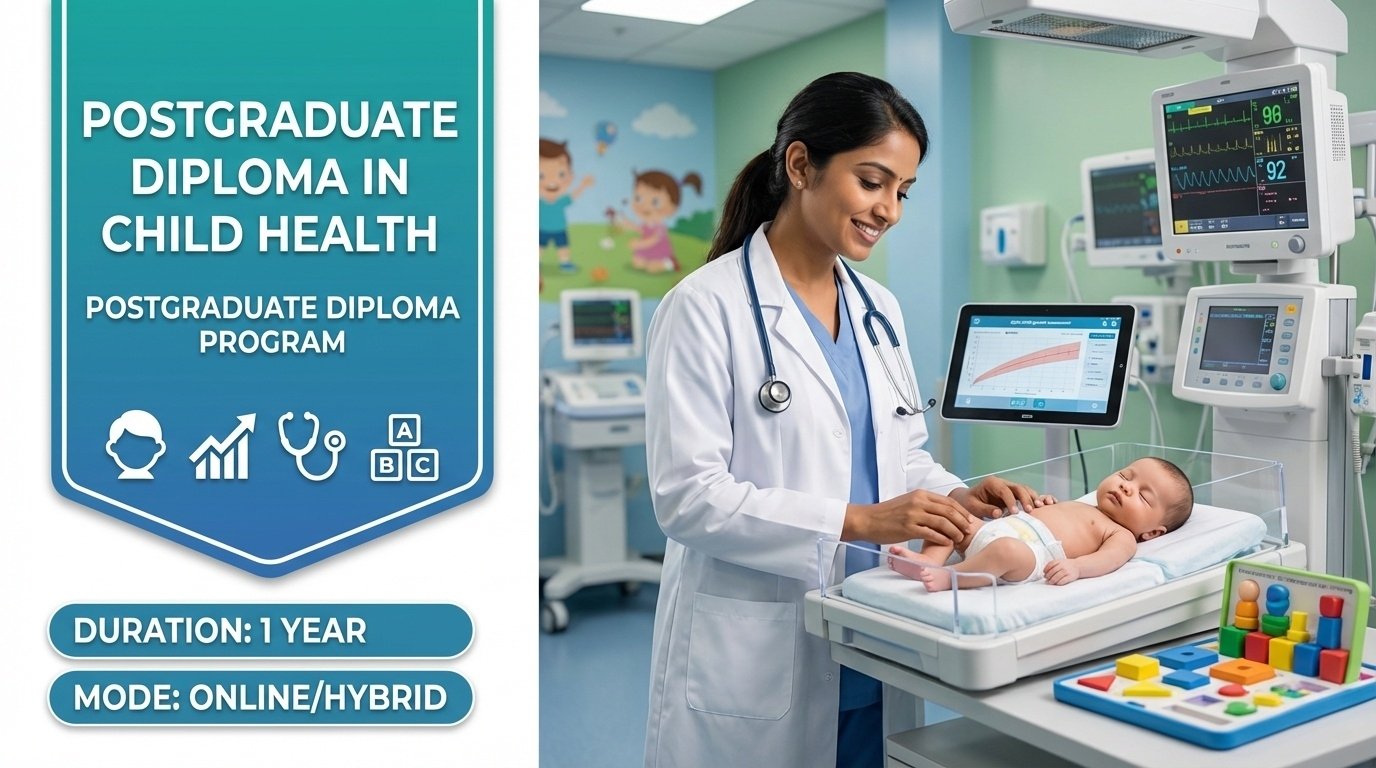
Postgraduate Diploma in Child Health
Overview
The Postgraduate Diploma in Child Health is a specialized advanced paramedical program designed for science graduates passionate about pediatric healthcare. This comprehensive two-year course provides expert-level training in child health management, pediatric nursing care, neonatal intensive care, growth and development monitoring, childhood diseases, pediatric emergencies, and family-centered care. As children require specialized healthcare approaches distinct from adults, this program prepares you to become a highly skilled pediatric healthcare professional capable of providing compassionate, evidence-based care to infants, children, and adolescents in various healthcare settings.
Course Details
About the Program
Pediatric healthcare represents one of the most rewarding and critical specializations in medical sciences. Children are not simply small adults—they have unique physiological, psychological, and developmental needs requiring specialized knowledge and skills. This advanced program transcends basic child care to develop:
- Comprehensive pediatric assessment skills across all age groups from neonates to adolescents
- Advanced neonatal care expertise for premature and critically ill newborns
- Childhood disease management from common illnesses to complex conditions
- Pediatric emergency response for life-threatening situations
- Growth and development monitoring identifying developmental delays early
- Family-centered care approaches supporting parents and caregivers
- Vaccination and preventive care promoting child health and wellness
- Pediatric nutrition expertise ensuring optimal growth
- Psychosocial support skills addressing mental health needs
- Research capabilities contributing to child health science
Key Subjects Covered
Year 1: Foundations of Child Health
Semester 1: Fundamentals & Normal Child Development
-
Pediatric Anatomy & Physiology
- Fetal development and neonatal transition
- Organ system maturation from birth to adolescence
- Cardiovascular system in children
- Respiratory system peculiarities
- Nervous system development
- Gastrointestinal system maturation
- Renal and urinary system
- Endocrine system changes
- Immune system development
- Musculoskeletal growth
- Sensory system development
- Reproductive system maturation
- Age-specific physiological parameters
- Thermoregulation in children
- Fluid and electrolyte balance
-
Child Growth & Development
- Principles of growth and development
- Stages of child development (neonate, infant, toddler, preschool, school-age, adolescent)
- Physical growth monitoring (weight, height, head circumference)
- Motor development milestones (gross and fine motor)
- Cognitive development (Piaget's stages)
- Language and communication development
- Social and emotional development
- Psychosexual development
- Moral development
- Growth charts and percentiles (WHO, IAP)
- Developmental screening tools
- Early identification of developmental delays
- Factors affecting growth and development
- Nutrition and growth relationship
- Play and development
-
Pediatric Nutrition
- Nutritional requirements across age groups
- Breastfeeding promotion and support
- Infant feeding (exclusive breastfeeding, complementary feeding)
- Formula feeding guidelines
- Weaning and introduction of solids
- Nutrition for toddlers and preschoolers
- School-age nutrition
- Adolescent nutritional needs
- Micronutrient requirements (iron, vitamin D, calcium)
- Malnutrition (protein-energy malnutrition, marasmus, kwashiorkor)
- Obesity in children
- Nutritional assessment methods
- Therapeutic nutrition in illness
- Special diets (allergies, metabolic disorders)
- Nutrition counseling for parents
-
Child Health Assessment
- Pediatric health history taking
- Communication with children of different ages
- Parent interview techniques
- Physical examination of children
- Vital signs measurement (age-specific norms)
- Anthropometric measurements
- Developmental assessment
- Nutritional assessment
- System-wise examination
- Pain assessment in children
- Mental health screening
- Vision and hearing screening
- Dental health assessment
- Documentation and record-keeping
- Identifying red flags
Semester 2: Common Childhood Illnesses & Preventive Care
-
Common Childhood Diseases
Respiratory Disorders:
- Upper respiratory tract infections (URTI)
- Pneumonia and bronchiolitis
- Asthma in children
- Croup and epiglottitis
- Tuberculosis
- Pertussis (whooping cough)
Gastrointestinal Disorders:
- Diarrheal diseases and dehydration
- Acute gastroenteritis
- Persistent diarrhea
- Constipation
- Gastroesophageal reflux
- Inflammatory bowel disease
- Celiac disease
- Food allergies
Infectious Diseases:
- Measles, mumps, rubella
- Chickenpox and herpes zoster
- Dengue fever
- Malaria
- Typhoid fever
- Viral hepatitis
- HIV/AIDS in children
- Meningitis and encephalitis
Skin Disorders:
- Eczema and atopic dermatitis
- Diaper dermatitis
- Impetigo and other bacterial infections
- Fungal infections
- Scabies and pediculosis
- Allergic reactions
-
Immunization & Preventive Health
- Principles of immunization
- National Immunization Schedule (India)
- WHO-recommended vaccines
- Vaccine-preventable diseases
- Vaccine administration techniques
- Cold chain management
- Adverse events following immunization (AEFI)
- Catch-up immunization
- Special circumstances (preterm, immunocompromised)
- Parent education on vaccines
- Vaccine hesitancy management
- Growth monitoring and promotion
- Developmental surveillance
- Well-child visits
- Health education and counseling
- Accident prevention and safety
-
Pediatric Pharmacology
- Principles of drug therapy in children
- Drug dosage calculations (body weight, BSA)
- Age-specific drug responses
- Drug absorption, distribution, metabolism in children
- Common pediatric medications
- Antibiotics in children
- Antipyretics and analgesics
- Anticonvulsants
- Bronchodilators and corticosteroids
- ORS and fluid therapy
- Vitamin and mineral supplements
- Drug administration routes
- Medication safety and error prevention
- Herbal and alternative medicines
- Adverse drug reactions in children
-
Pediatric Procedures & Skills
- Vital signs monitoring
- Oxygen therapy in children
- Nebulization techniques
- Intravenous access and fluid administration
- Nasogastric tube insertion and feeding
- Urinary catheterization
- Specimen collection (blood, urine, stool)
- Injection administration (IM, SC, ID, IV)
- Basic wound care and dressing
- Suction techniques
- Restraining techniques
- CPR for infants and children
- Choking management
- Temperature measurement methods
- Phototherapy for jaundice
Year 2: Advanced Pediatric Care & Specializations
Semester 3: Neonatal & Critical Care
-
Neonatal Intensive Care
- Neonatal assessment (APGAR scoring)
- Care of normal newborn
- Immediate newborn care
- Thermoregulation and kangaroo mother care
- Neonatal resuscitation (NRP protocols)
- Prematurity and low birth weight management
- Respiratory distress syndrome
- Neonatal jaundice (phototherapy, exchange transfusion)
- Neonatal sepsis
- Birth asphyxia and hypoxic-ischemic encephalopathy
- Necrotizing enterocolitis
- Intraventricular hemorrhage
- Retinopathy of prematurity
- Congenital anomalies recognition
- NICU equipment and monitoring
- Feeding in preterm infants
- Developmental care in NICU
- Discharge planning and follow-up
-
Pediatric Critical Care
- Pediatric ICU organization
- Critically ill child assessment
- Pediatric Advanced Life Support (PALS)
- Shock management in children
- Respiratory failure and mechanical ventilation
- Fluid and electrolyte management
- Sepsis and septic shock
- Acute kidney injury
- Diabetic ketoacidosis
- Status epilepticus
- Acute liver failure
- Multi-organ dysfunction syndrome
- Hemodynamic monitoring
- Sedation and analgesia in PICU
- Nutritional support in critical illness
- Infection control in PICU
- End-of-life care and palliative care
- Family support and communication
-
Pediatric Emergencies
- Emergency assessment (Pediatric Assessment Triangle)
- Triage in pediatric emergencies
- Respiratory emergencies (severe asthma, croup, foreign body)
- Cardiovascular emergencies (cardiac arrest, arrhythmias)
- Neurological emergencies (seizures, raised ICP, coma)
- Gastrointestinal emergencies (intussusception, appendicitis)
- Trauma management in children
- Burns in children
- Poisoning and toxic ingestion
- Near-drowning
- Anaphylaxis
- Diabetic emergencies
- Hematological emergencies (sickle cell crisis)
- Emergency procedures
- Disaster management involving children
- Mass casualty pediatric response
-
Chronic Diseases in Children
- Congenital heart diseases
- Chronic lung diseases (asthma, cystic fibrosis)
- Diabetes mellitus type 1
- Epilepsy and seizure disorders
- Cerebral palsy
- Chronic kidney disease
- Sickle cell disease and thalassemia
- Juvenile idiopathic arthritis
- Inflammatory bowel disease
- Leukemia and childhood cancers
- HIV/AIDS in children
- Chronic liver disease
- Muscular dystrophies
- Autism spectrum disorders
- Attention deficit hyperactivity disorder (ADHD)
- Long-term management and family support
-
Developmental & Behavioral Pediatrics
- Developmental disabilities
- Intellectual disability
- Learning disabilities
- Attention deficit hyperactivity disorder (ADHD)
- Autism spectrum disorders
- Cerebral palsy rehabilitation
- Down syndrome
- Speech and language disorders
- Hearing impairment
- Visual impairment
- Behavioral problems in children
- Sleep disorders
- Toileting problems (enuresis, encopresis)
- Feeding difficulties
- Early intervention programs
- Special education needs
- Family counseling and support
- Multi-disciplinary team approach
-
Adolescent Health
- Physical changes in adolescence
- Psychosocial development
- Adolescent nutrition
- Menstrual disorders
- Teenage pregnancy
- Sexually transmitted infections
- Substance abuse (tobacco, alcohol, drugs)
- Mental health issues (depression, anxiety, eating disorders)
- Suicide prevention
- Acne management
- Obesity and fitness
- Sports medicine for adolescents
- Sexual and reproductive health
- Confidentiality and consent issues
- Adolescent-friendly services
- Peer pressure and risk-taking behavior
- Career and academic stress
-
Child Health in Community
- Community pediatrics concepts
- Integrated Management of Neonatal and Childhood Illness (IMNCI)
- Mother and Child Health programs
- Nutritional programs (ICDS, Mid-Day Meal)
- National Health Programs for children
- School health programs
- Rashtriya Bal Swasthya Karyakram (RBSK)
- Home-based newborn care
- Diarrhea and pneumonia control programs
- Micronutrient supplementation programs
- Urban health initiatives for children - Rural child health challenges - Community participation - Health education in communities - Surveillance and disease reporting - Traditional practices and child health
-
Child Protection & Rights
- Child rights and legislation
- Child abuse (physical, sexual, emotional, neglect)
- Recognition and reporting of abuse
- Child protection services
- Juvenile Justice Act
- POCSO Act
- Rights of disabled children
- Rights of hospitalized children
- Medical ethics in pediatrics
- Informed consent and assent
- Confidentiality issues
- Advocacy for children
- Child labor and health impacts
- Street children health issues
- Children in difficult circumstances
-
Research Methodology & Evidence-Based Practice
- Research in child health
- Literature review in pediatrics
- Study designs for pediatric research
- Ethical considerations in pediatric research
- Data collection from children and families
- Statistical analysis
- Quality improvement in child health
- Evidence-based pediatric practice
- Clinical guidelines and protocols
- Research proposal development
- Scientific writing and publication
- Grant applications
- Presentation skills
-
Major Research Project / Dissertation
- Topic selection in child health
- Research protocol development
- Ethics committee approval
- Data collection from pediatric populations
- Parental consent and child assent
- Statistical analysis
- Results interpretation
- Thesis writing and documentation
- Dissertation defense
- Manuscript preparation for publication