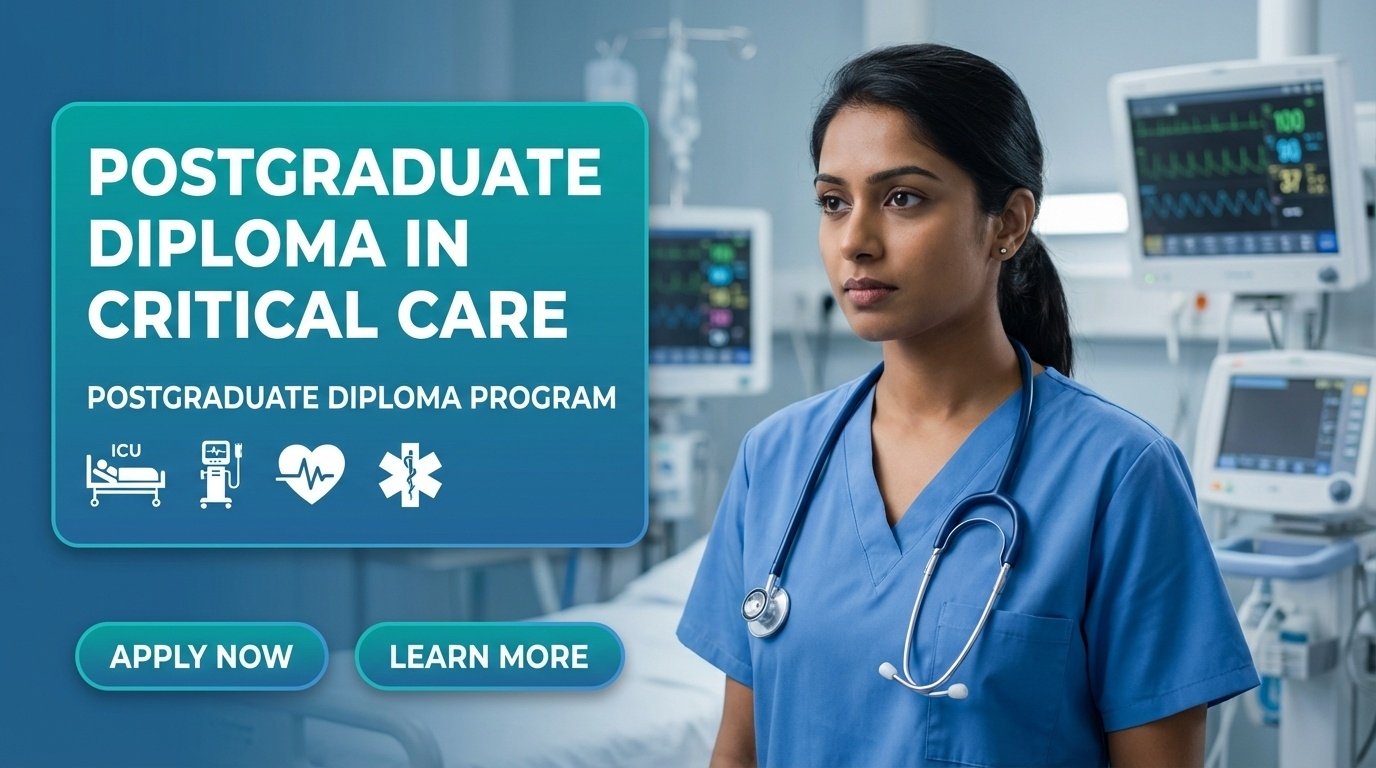
Postgraduate Diploma in Critical Care
Course Overview
The Postgraduate Diploma in Critical Care is an advanced, specialized program designed to train highly skilled healthcare professionals for intensive care units (ICUs), emergency departments, and critical care settings. Offered by Mahatma Gandhi Ayurvigyan Vidyapeeth, this comprehensive 2-year program equips graduates with the expertise to manage critically ill patients, operate advanced life support equipment, and deliver life-saving interventions in high-pressure medical environments.
Critical care professionals are the backbone of modern healthcare, providing round-the-clock specialized care to patients with life-threatening conditions, multi-organ failure, and post-surgical complications.
Program Highlights
What is Critical Care?
Critical Care (also known as Intensive Care) is a specialized branch of healthcare focused on the diagnosis and management of life-threatening conditions requiring sophisticated organ support and invasive monitoring. Critical care professionals work in:
✓ Intensive Care Units (ICU) - General critical care
✓ Cardiac Care Units (CCU) - Heart-related emergencies
✓ Neurological ICU (NICU) - Brain and nervous system critical cases
✓ Surgical ICU (SICU) - Post-operative critical care
✓ Pediatric ICU (PICU) - Critical care for children
✓ Neonatal ICU (NICU) - Critical care for newborns
✓ Emergency Departments - Acute care and trauma
✓ High Dependency Units (HDU) - Intermediate care
Why Choose Critical Care as Your Career?
High Demand & Job Security
- Critical shortage of trained critical care professionals
- Every hospital requires ICU specialists
- Pandemic demonstrated critical need for skilled ICU staff
- Growing aging population increases demand
- 100% placement opportunities
Excellent Compensation
- Starting Salary: ₹3-6 LPA (₹25,000-50,000/month)
- Mid-Career (3-5 years): ₹6-12 LPA
- Senior Level (5+ years): ₹12-22 LPA
- ICU In-charge/Manager: ₹15-25 LPA
- International (Middle East/UK): $40,000-70,000 annually
Life-Saving Impact
- Directly save lives every single day
- Work with critically ill patients during their most vulnerable moments
- Witness remarkable recoveries
- Make a profound difference in patient outcomes
Rapid Career Advancement
- Fast-track promotions due to skill shortage
- Leadership opportunities (ICU In-charge, Department Head)
- Specialization options (trauma, cardiac, neuro, pediatric)
- Teaching and training roles
Global Opportunities
- High demand worldwide, especially in developed countries
- Work in UAE, Saudi Arabia, UK, USA, Canada, Australia
- International certifications add value
- Medical tourism creating new opportunities
Advanced Technology Exposure
- Work with cutting-edge medical equipment
- Ventilators, ECMO, dialysis machines
- Advanced monitoring systems
- Continuous learning environment
Comprehensive Curriculum
YEAR 1: Foundation & Core Critical Care Sciences
Semester 1: Basic Sciences & Critical Care Fundamentals
Module 1: Advanced Anatomy & Physiology
- Cardiovascular system in depth
- Respiratory system and gas exchange
- Renal physiology and fluid balance
- Neurological anatomy and function
- Gastrointestinal system
- Endocrine system and metabolism
- Integration of body systems in critical illness
Module 2: Pathophysiology of Critical Illness
- Shock (cardiogenic, hypovolemic, septic, anaphylactic)
- Multi-organ dysfunction syndrome (MODS)
- Systemic inflammatory response syndrome (SIRS)
- Acute respiratory distress syndrome (ARDS)
- Acute kidney injury (AKI)
- Acute liver failure
- Sepsis and septic shock
- Metabolic disorders in critical illness
Module 3: Critical Care Pharmacology
- Vasoactive drugs (vasopressors, inotropes)
- Sedatives and analgesics
- Neuromuscular blocking agents
- Antibiotics and antimicrobial therapy
- Anticoagulants and thrombolytics
- Electrolyte replacement
- Emergency medications
- Drug interactions in critical care
Module 4: Introduction to Intensive Care Unit
- ICU setup and organization
- Types of ICUs (Medical, Surgical, Cardiac, Neuro, Pediatric)
- Patient admission criteria
- Triage and prioritization
- ICU equipment overview
- Infection control in ICU
- Patient safety protocols
- Family communication and ethics
Module 5: Basic Life Support & Advanced Cardiac Life Support (BLS & ACLS)
- CPR techniques (adult, pediatric, infant)
- Automated External Defibrillator (AED)
- Airway management basics
- Recognition of cardiac arrest
- Post-cardiac arrest care
- Advanced airway techniques
- Cardiac rhythm interpretation
- ACLS algorithms and protocols
Semester 2: Monitoring & Life Support Systems
Module 6: Hemodynamic Monitoring
- Arterial blood pressure monitoring
- Central venous pressure (CVP)
- Pulmonary artery catheterization
- Cardiac output measurement
- Mixed venous oxygen saturation
- Advanced hemodynamic parameters
- Interpretation of waveforms
- Troubleshooting monitoring systems
Module 7: Respiratory Support & Mechanical Ventilation
- Oxygen therapy (nasal cannula, masks, high-flow)
- Non-invasive ventilation (NIV, BiPAP, CPAP)
- Indications for intubation
- Mechanical Ventilation:
- Ventilator modes (Assist-Control, SIMV, PSV, PRVC)
- Ventilator settings and adjustments
- Lung protective ventilation strategies
- Management of ARDS
- Weaning from mechanical ventilation
- Ventilator-associated complications
- Troubleshooting ventilator alarms
Module 8: Arterial Blood Gas (ABG) Analysis
- ABG sampling techniques
- Interpretation of pH, PaCO2, PaO2, HCO3
- Acid-base disorders (acidosis, alkalosis)
- Respiratory vs. metabolic disorders
- Compensation mechanisms
- Oxygenation assessment
- Clinical correlation and management
Module 9: Fluid, Electrolyte & Nutrition Management
- Fluid balance assessment
- Types of IV fluids (crystalloids, colloids)
- Electrolyte imbalances (Na, K, Ca, Mg)
- Fluid resuscitation in shock
- Nutritional assessment in critical illness
- Enteral nutrition administration
- Parenteral nutrition (TPN)
- Feeding protocols and complications
Module 10: Clinical Practicum - Phase 1
- ICU orientation and familiarization
- Patient assessment and monitoring
- Equipment handling and maintenance
- Documentation and record-keeping
- Observation of critical procedures
- Interdisciplinary team collaboration
YEAR 2: Advanced Critical Care & Specialized Training
Semester 3: Organ System Management & Specialized Care
Module 11: Cardiovascular Critical Care
- Acute coronary syndromes (ACS)
- Heart failure management
- Cardiogenic shock
- Arrhythmia recognition and management
- Post-cardiac surgery care
- Intra-Aortic Balloon Pump (IABP)
- Cardiac arrest management
- 12-lead ECG interpretation
Module 12: Neurological Critical Care
- Traumatic brain injury (TBI)
- Stroke (ischemic and hemorrhagic)
- Status epilepticus
- Intracranial pressure monitoring
- Glasgow Coma Scale assessment
- Neuroprotection strategies
- Brain death determination
- Spinal cord injuries
Module 13: Renal Replacement Therapy
- Acute kidney injury management
- Indications for dialysis
- Hemodialysis principles
- Continuous renal replacement therapy (CRRT)
- Peritoneal dialysis
- Vascular access management
- Complications and troubleshooting
- Fluid and electrolyte monitoring
Module 14: Trauma & Emergency Care
- Primary and secondary survey (ATLS principles)
- Trauma resuscitation
- Management of polytrauma
- Burns and inhalation injury
- Poisoning and overdose management
- Snake bite and envenomation
- Environmental emergencies
- Mass casualty management
Module 15: Infection Control & Sepsis Management
- Hospital-acquired infections (HAI)
- Ventilator-associated pneumonia (VAP)
- Catheter-related bloodstream infections
- Sepsis identification and management
- Septic shock protocols
- Source control strategies
- Antibiotic stewardship
- Isolation precautions
Semester 4: Specialized Populations & Professional Excellence
Module 16: Pediatric & Neonatal Critical Care
- Differences in pediatric physiology
- Pediatric emergency assessment
- Respiratory distress in children
- Congenital heart disease management
- Neonatal resuscitation
- Prematurity complications
- Pediatric sepsis
- Family-centered care
Module 17: Post-Operative Critical Care
- Post-anesthesia recovery
- Major surgery complications
- Enhanced recovery after surgery (ERAS)
- Pain management in ICU
- Surgical site infections
- Respiratory complications
- Cardiovascular instability
- Early mobilization protocols
Module 18: Advanced Procedures & Interventions
- Endotracheal intubation assistance
- Arterial line insertion
- Central venous catheterization support
- Chest tube management
- Nasogastric tube insertion
- Urinary catheterization
- Wound care and dressing
- Emergency defibrillation
Module 19: Critical Care Technology & Equipment
- Advanced Life Support Equipment:
- Multipara monitors
- Ventilators (various brands and models)
- Infusion pumps and syringe pumps
- Defibrillators and cardioversion
- Ultrasound basics for procedures
- Blood gas analyzers
- Point-of-care testing devices
- Equipment troubleshooting
- Preventive maintenance
- Safety checks and calibration
Module 20: Professional Development & Leadership
- ICU team management
- Communication skills
- Conflict resolution
- Quality improvement in critical care
- Evidence-based practice
- Research methodology
- Ethical dilemmas in ICU
- End-of-life care and palliative care
- Stress management and burnout prevention
Module 21: Clinical Internship - Phase 2
- Intensive 9-12 month clinical training
- Rotations through different ICUs
- Hands-on patient management
- Emergency response participation
- Night duty experience
- Minimum 150+ critical care cases
- Competency-based assessments
- Case presentations and discussions
Core Competencies & Skills
Clinical Skills:
✓ Patient Assessment: Comprehensive ICU patient evaluation
✓ Vital Signs Monitoring: Interpretation of complex parameters
✓ Ventilator Management: Setting, adjusting, troubleshooting
✓ ABG Interpretation: Quick acid-base disorder analysis
✓ IV Access & Medication: Safe drug administration
✓ Hemodynamic Support: Managing vasopressors and inotropes
✓ Wound Care: Advanced dressing techniques
✓ Infection Control: Strict aseptic practices
Technical Skills:
✓ Equipment Operation: Proficiency with all ICU devices
✓ Emergency Response: Rapid intervention during codes
✓ Documentation: Accurate and detailed record-keeping
✓ Procedure Assistance: Supporting doctors during interventions
✓ Sample Collection: Blood, urine, sputum for diagnostics
✓ ECG & Monitor Interpretation: Recognizing abnormalities
✓ Dialysis Support: Assisting with renal replacement
Professional Skills:
✓ Critical Thinking: Rapid problem-solving under pressure
✓ Teamwork: Effective collaboration with multidisciplinary teams
✓ Communication: Clear handoffs and patient/family updates
✓ Leadership: Taking charge during emergencies
✓ Empathy: Compassionate care for patients and families
✓ Adaptability: Handling unpredictable situations
✓ Attention to Detail: Zero-error mindset for patient safety
Career Opportunities
Healthcare Facilities:
Hospitals (Public & Private)
- Multi-specialty hospital ICUs
- Super-specialty hospitals
- Teaching hospitals
- Trauma centers
- Corporate hospitals
Top Employers in India:
- AIIMS (All India Institute of Medical Sciences)
- Fortis Healthcare
- Apollo Hospitals
- Manipal Hospitals
- Max Healthcare
- Narayana Health
- Medanta - The Medicity
- Columbia Asia
- Kokilaben Dhirubhai Ambani Hospital
Emergency Services:
- Ambulance services with advanced life support
- Emergency departments
- Disaster management teams
- Mobile ICU services
- Air ambulance services
Academic & Training:
- Faculty in nursing/paramedical colleges
- Clinical instructor for critical care programs
- Simulation lab coordinator
- Continuing education trainer
- Workshop and seminar conductor
International Opportunities:
Middle East (UAE, Saudi Arabia, Qatar, Oman)
- Tax-free salaries: 8,000-18,000 AED/month
- Excellent benefits (housing, health insurance, flights)
- Modern hospitals with advanced equipment
- Opportunity to save significantly
United Kingdom
- NHS hospitals: £25,000-£40,000 annually
- Private hospitals with higher pay
- Pathway to permanent residency
- Professional development opportunities
United States
- Critical care technician/specialist roles
- After additional certifications: $50,000-$80,000
- High demand in ICUs nationwide
- Continuing education support
Australia & Canada
- Immigration pathways available
- Competitive salaries and benefits
- High quality of life
- Multicultural work environments
Job Roles & Responsibilities
ICU Technician / Critical Care Specialist
- Monitor critically ill patients 24/7
- Operate and maintain life support equipment
- Assist with emergency procedures
- Administer medications as prescribed
- Document patient progress
- Salary: ₹3-6 LPA
Senior ICU Technician
- Independent patient management
- Train junior staff
- Quality assurance activities
- Complex case handling
- Salary: ₹6-10 LPA
ICU In-charge / Shift Coordinator
- Supervise ICU operations during shift
- Staff allocation and management
- Emergency response coordination
- Policy implementation
- Salary: ₹10-15 LPA
Critical Care Manager / Department Head
- Overall ICU management
- Budget and resource planning
- Staff recruitment and training
- Quality improvement initiatives
- Salary: ₹15-25 LPA
Specialized Roles:
- ECMO Specialist: ₹8-15 LPA
- Dialysis Coordinator: ₹6-12 LPA
- Trauma Team Member: ₹7-14 LPA
- Flight Paramedic (Air Ambulance): ₹10-18 LPA
Salary Progression
Fresh Graduate (0-2 years):
₹3-6 LPA (₹25,000-50,000/month)
- Entry-level ICU technician
- General ICU duties
- Learning and skill development
Experienced (3-5 years):
₹6-12 LPA (₹50,000-1,00,000/month)
- Senior technician roles
- Specialized unit experience
- Training responsibilities
Senior Professional (5-10 years):
₹12-20 LPA (₹1,00,000-1,65,000/month)
- ICU coordinator/in-charge
- Department management
- Policy development
Leadership Level (10+ years):
₹20-30 LPA+ (₹1,65,000-2,50,000/month)
- Critical care manager
- Multiple department oversight
- Strategic planning
- Consulting roles
Additional Income Sources:
- Per-diem shifts at multiple hospitals
- Home ICU setup consulting
- Training and workshop fees
- Private duty nursing for critical patients
Eligibility & Admission
Educational Qualification:
Required: Bachelor's degree in Science stream from a recognized university
Preferred Backgrounds:
- B.Sc. in Medical Laboratory Technology
- B.Sc. in Life Sciences/Biotechnology
- B.Sc. in Emergency & Trauma Care
- B.Pharma (Pharmacy graduates)
- B.Tech in Biomedical Engineering
- B.Sc. Nursing (for career advancement)
- Any B.Sc. with Biology/Chemistry
Eligibility Criteria:
- Minimum aggregate: 50% in graduation
- Age: Typically 21-35 years (relaxation for reserved categories)
- Medical fitness certificate
- Good physical and mental health
- No color blindness
Desired Attributes:
- Passion for patient care
- Ability to work under extreme pressure
- Strong emotional resilience
- Excellent observational skills
- Quick decision-making ability
- Team player mentality
- Willingness to work irregular hours (nights, weekends, holidays)
Admission Process
Step 1: Online Application
Complete application form on official website with academic documents and personal information.
Step 2: Entrance Test
Written examination covering:
- General Science (Biology, Chemistry, Physics)
- Basic Anatomy & Physiology
- General awareness in healthcare
- Logical reasoning
- English language proficiency
Step 3: Personal Interview
Assessment of:
- Motivation for critical care
- Understanding of the field
- Stress management capabilities
- Communication skills
- Career aspirations
Step 4: Medical Fitness Test
- Physical examination
- Vision and hearing assessment
- Psychological fitness evaluation
- Ability to handle stressful situations
Step 5: Document Verification & Enrollment
- Original certificate verification
- Fee payment (installment options available)
- Orientation program
- Uniform and ID card issuance
Required Documents:
- Bachelor's degree certificate and mark sheets
- 10th and 12th certificates
- Transfer/Migration certificate
- Character certificate
- Medical fitness certificate
- ID proof (Aadhar/PAN/Passport)
- 6 passport-size photographs
- Category certificate (if applicable)
- Employment certificate (if working)
Program Features
Hands-On Clinical Training
Over 70% of the program involves practical training in ICUs, giving you real-world experience with actual patients.
Multi-ICU Exposure
Rotations through Medical ICU, Surgical ICU, Cardiac ICU, Neuro ICU, Pediatric ICU, and Emergency Department.
Expert Faculty
Learn from experienced intensivists, critical care nurses, and specialists with decades of ICU experience.
State-of-the-Art Simulation Lab
Practice on high-fidelity mannequins and simulators before working with real patients, ensuring confidence and safety.
Internationally Aligned Curriculum
Program designed according to global critical care standards, preparing you for international certifications.
Guaranteed Placement Support
Strong hospital partnerships ensure 100% placement assistance with top healthcare institutions.
Certification Preparation
Prepare for additional certifications like BLS, ACLS, PALS, and international critical care credentials.
24/7 Learning Environment
Experience all shifts including nights and weekends to understand round-the-clock ICU operations.
About Mahatma Gandhi Ayurvigyan Vidyapeeth
Mahatma Gandhi Ayurvigyan Vidyapeeth is a premier government-approved private university in Nagpur, Maharashtra, dedicated to excellence in healthcare education. The institution offers this specialized Postgraduate Diploma in Critical Care to meet the growing demand for skilled critical care professionals.